

Englewood Cliffs Basement Waterproofing: Prevent Water Damage
Basement waterproofing in Englewood Cliffs means preventing groundwater, surface runoff, and seepage from compromising your home’s structure, air quality, and long-term value. This guide explains how water enters basements in this part of New Jersey, how to recognize early warning signs, and which technical solutions—drainage, sump pumps, French drains, crawl space encapsulation, and foundation repair—work best for local soils and weather. Homeowners will learn practical detection steps, maintenance checklists, and a clear comparison of interior versus exterior approaches so they can decide when to call a professional. The article covers common symptoms of water intrusion, the mechanics of hydrostatic pressure, the role of sump pumps and battery backups, and how targeted repairs like carbon fiber straps or underpinning stabilize foundations. As you read, expect actionable lists, comparison tables, and step-by-step guidance on what to expect during a free inspection so you can protect indoor air quality and prevent mold. After the technical sections we outline how Effective Basement Solutions tailors services for New Jersey homes and how to request a free consultation.
What Are the Common Signs of Basement Water Damage in Englewood Cliffs?
Basement water damage presents with visible, olfactory, and structural cues that indicate active moisture problems and potential long-term deterioration. Visible signs include standing water, damp patches, peeling paint, efflorescence, and mold colonies on walls or floors; these occur because water migrates through cracks or capillary action in masonry materials. Structural indicators include horizontal or stair-step cracks, slightly bowed walls, or mortar loss, which suggest hydrostatic pressure or soil settlement acting on the foundation. Detecting these signs early reduces repair scope and cost while protecting indoor air quality and preventing mold growth which thrives in humid basements. The following practical checklist helps homeowners identify immediate symptoms and prioritize professional assessment if multiple signs coexist.
- Standing water on floor surfaces after heavy rain or snowmelt.
- White powdery deposits (efflorescence) on masonry surfaces.
- Peeling paint, bubbling drywall or warped baseboards near foundation walls.
- Musty, persistent odors or visible mold growth on walls, insulation, or stored items.
Recognizing these signs leads to purposeful early-detection tasks and simple DIY checks described next, which help separate cosmetic issues from those requiring structural or drainage remediation.
How to Detect Basement Leaks and Moisture Issues Early
Early detection starts with systematic inspection and targeted measurement to distinguish transient dampness from persistent intrusion that requires remediation. Regularly inspect visible junctions—floor-to-wall seams, window wells, plumbing penetrations, and foundation wall cracks—and pay attention to odors and discoloration that increase after rain. Use affordable tools such as a handheld moisture meter and portable humidity monitor to record relative humidity and pinpoint damp spots behind finishes, and run a simple tape-and-plastic test on suspicious areas to check for condensation versus seepage. If you find persistent elevated humidity (above about 50% RH) or recurring damp patches after storms, schedule a professional inspection since these thresholds commonly precede mold growth and structural degradation. Taking these steps early improves the effectiveness of subsequent waterproofing strategies outlined in the next section.
What Are the Health Risks of Mold and Mildew in Basements?
Mold and mildew in basements are more than an aesthetic problem; they can provoke allergic reactions, respiratory symptoms, and exacerbate asthma, particularly in sensitive individuals and children. Mold thrives where moisture persists: behind insulation, under carpets, or in poorly ventilated crawl spaces, producing spores and microbial volatile organic compounds (MVOCs) that can degrade indoor air quality. Short-term exposure commonly causes nasal congestion, coughing, and eye irritation, while longer-term exposure to elevated spore loads can increase the risk of chronic respiratory issues and complicate existing conditions. Immediate mitigation involves reducing humidity, addressing the moisture source, and cleaning small areas with appropriate protective measures, while larger infestations need professional remediation combined with waterproofing and ventilation improvements to prevent recurrence. Understanding the health link motivates prompt action and leads naturally into professional waterproofing options that relieve the underlying moisture pathways.
How Does Professional Basement Waterproofing Protect Your Englewood Cliffs Home?
Professional basement waterproofing protects homes by stopping water entry, redirecting groundwater, and controlling indoor humidity to prevent structural damage and mold formation. Effective systems combine drainage (French drains), active removal (sump pumps), wall and floor seals, and crawl space encapsulation to interrupt hydrostatic pressure and seepage mechanisms that otherwise push water through small openings. The result is reduced lateral pressure on foundations, stabilized moisture levels that protect finishes and stored items, and improved indoor air quality as mold conditions are corrected; these outcomes preserve home value and reduce long-term maintenance costs. A layered approach—correct grading, gutters and downspout management, perimeter drains, and interior vapor barriers—works best in NJ soils where heavy precipitation, freeze-thaw cycles, and groundwater elevation can combine to push moisture into basements. Below we compare the primary methods suitable for New Jersey homes and explain how each relieves hydrostatic pressure.
What Basement Waterproofing Methods Are Best for New Jersey Homes? — overview leads into method comparison and trade-offs discussed in the next subsection and practical selection criteria.
What Basement Waterproofing Methods Are Best for New Jersey Homes?
Selecting the right method depends on the source of water, soil type, foundation construction, and how disruptive the homeowner will permit the work to be. Exterior waterproofing—excavation and application of membrane plus exterior drainage—stops water before it reaches the foundation and is ideal when perimeter access and landscaping disruption are acceptable; interior solutions—perimeter drains and interior vapor barriers—are less invasive and effective for managing seepage and interior water accumulation. Coatings and crystalline sealers can work for minor seepage but do not relieve hydrostatic pressure, so they are best paired with drainage systems when groundwater is the cause. In Englewood Cliffs, where soils and storm runoff can elevate groundwater near foundations, combining interior drainage with a reliable sump pump often provides a practical balance of effectiveness and minimal exterior disturbance. The next subsection explains how these systems mitigate hydrostatic pressure to protect structural elements.
How Does Waterproofing Prevent Foundation Damage and Hydrostatic Pressure?
Hydrostatic pressure forms when groundwater accumulates against foundation walls and beneath slabs, creating lateral and uplift forces that drive water through cracks and joints and can cause wall movement over time. Drainage systems such as French drains intercept subsurface water and redirect it to a sump basin where a pump safely discharges it away from the foundation, lowering the water table next to the wall and reducing lateral forces. Vapor barriers, interior sealants, and exterior membranes prevent water vapor migration and slow capillary rise in porous materials, further reducing moisture transfer and efflorescence that weakens finishes. Maintaining lower groundwater levels around the foundation also prevents soil saturation that can cause settlement or heave; combined system benefits preserve both structural integrity and indoor environmental quality, which is the central aim of comprehensive waterproofing strategies discussed below.
For homeowners looking for tailored installation and inspection, the following section describes typical sump pump benefits and backup options.
After explaining system mechanics, it is natural to consider active removal methods such as sump pumps that work with drainage to maintain a dry basement and reduce the load on passive barriers.
What Are the Benefits of Sump Pump Installation in Englewood Cliffs Basements?
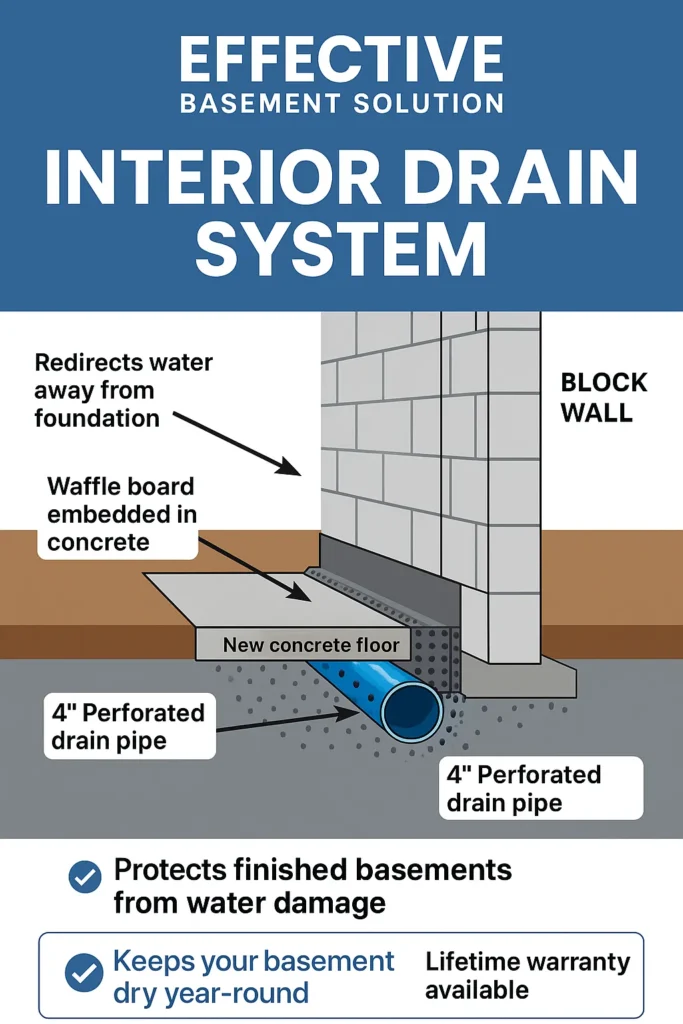
A sump pump actively removes collected groundwater from a basin and discharges it away from the foundation, providing continuous protection during heavy rains and rapid snowmelt events. Installing a sump pump reduces the risk of standing water, lowers indoor humidity, and protects finished basements as well as stored belongings from water damage; it also serves as a central component in most interior waterproofing systems. A reliable pump paired with a properly designed discharge route and a check valve minimizes the chance of backflow and prevents groundwater from repeatedly re-entering the basin. Battery backup options are crucial in storm-driven power outages, maintaining operation when primary power fails—this is particularly relevant for Englewood Cliffs homeowners facing coastal storms or severe weather. Below is a concise comparison of common pump types and their attributes to help homeowners choose the appropriate solution.
Different sump pump types and backup options compared:
| Pump Type | Power Source | Typical Flow / Application |
|---|---|---|
| Submersible | House mains (primary) | High flow, quiet; good for finished basements |
| Pedestal | House mains (primary) | Easier service access, lower upfront cost |
| Battery Backup | Battery reserve (secondary) | Provides runtime during outages; pairs with primary pump |
| Combination (primary + backup) | Mains + Battery | Redundant protection for storm events and power loss |
This table highlights that combining a primary submersible pump with a battery backup delivers both capacity and continuity, which is especially valuable where extended outages coincide with heavy rainfall.
How Do Battery Backup Sump Pumps Ensure Continuous Protection?
Battery backup sump pumps automatically engage when primary power is lost or when the main pump fails, maintaining discharge and preventing flood-level buildup in the sump basin. Typical battery backup systems provide several hours of runtime depending on battery capacity and pump draw, and some include smart charging and automatic switch-over mechanisms that reduce homeowner oversight. Regular testing—monthly float tests and seasonal battery checks—ensures the backup will function when needed; manufacturers and installers often recommend scheduled battery replacement to maintain reliable runtime. For homes with finished basements or high-value contents, a backup pump is an inexpensive investment relative to potential repair costs after a flood event. Understanding maintenance and expected runtimes is essential, which leads into the next subsection’s maintenance checklist.
What Are the Maintenance Tips for Sump Pumps in NJ Homes?
Routine maintenance preserves pump reliability and extends service life, improving readiness for storms common in New Jersey and preventing unexpected failures that lead to basement flooding. Homeowners should perform visual inspections quarterly to check the discharge pipe for obstructions, test the float switch for free movement, and ensure the check valve functions to prevent backflow into the basin. Annually, have a qualified technician inspect the electrical connections, clean the basin of sediment, and test the backup battery under load; documented service reduces the likelihood of surprise failures and maintains warranty compliance where applicable. Keep a simple seasonal checklist and photograph the basin and discharge routing after service so you can track changes over time; consistent maintenance improves performance and integrates neatly into a broader waterproofing plan that reduces long-term costs.
For homeowners interested in professional installation or paired backup options, Effective Basement Solutions installs and configures sump pumps and battery backups as part of tailored waterproofing systems and offers free inspections to evaluate capacity and redundancy needs.
The EAV comparison above and the maintenance checklist together guide homeowners to select the right pump configuration for their property, which leads into how French drains integrate with pumps to relieve pressure.
How Can French Drain Systems Prevent Basement Flooding in Englewood Cliffs?
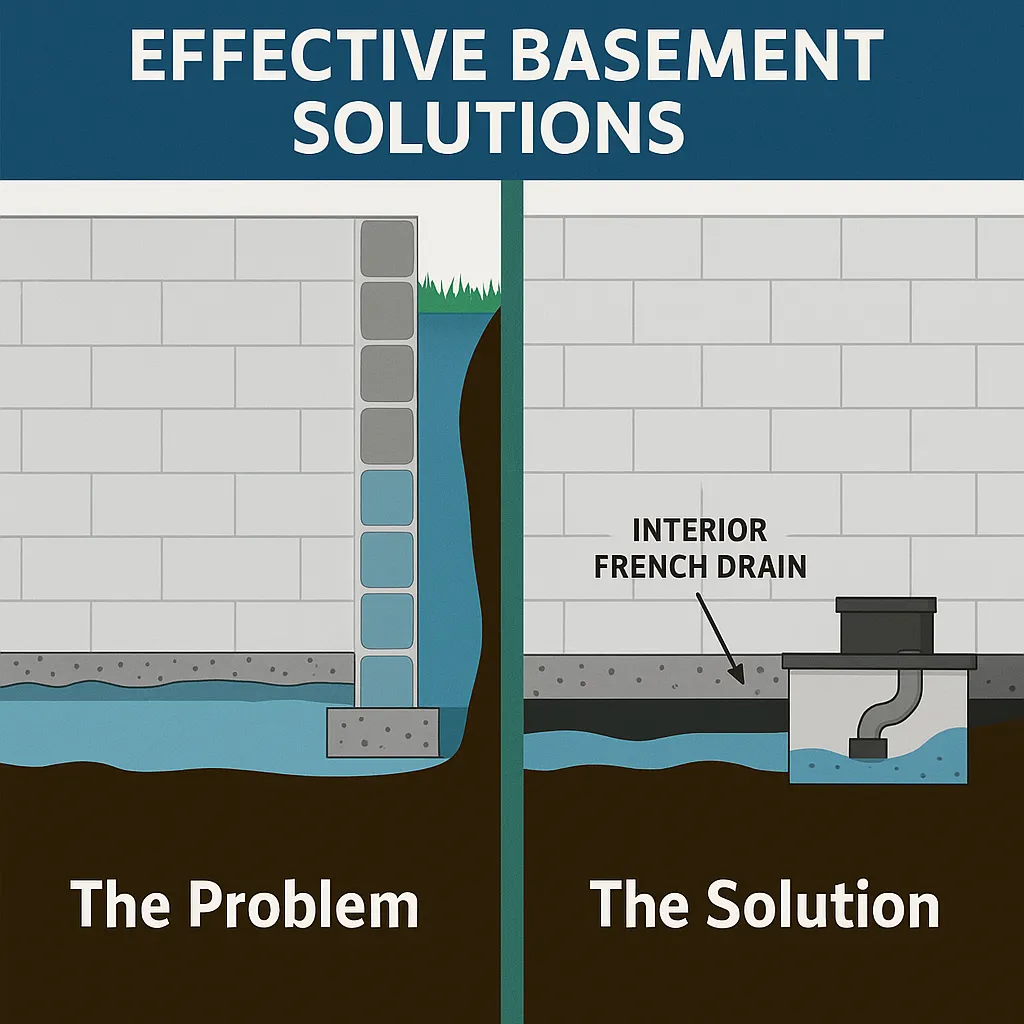
French drain systems collect groundwater at the foundation perimeter and redirect it to a collection point—commonly a sump basin—thereby lowering local groundwater levels and relieving hydrostatic pressure on walls. These drains use perforated pipe laid in drainage aggregate to create a preferential water pathway, which prevents saturation of soils adjacent to the foundation and reduces seepage through walls and slabs. Proper grade, cleanouts, and a connection to a sump pump or daylight discharge are essential for long-term performance; poorly designed discharge routing or blocked pipes can negate the benefits. French drains work best when matched to the property’s layout, soil permeability, and landscaping, and they often form a central component of interior and exterior waterproofing strategies. Below is a direct comparison of interior versus exterior French drains to help homeowners weigh cost, disruption, and effectiveness.
Interior vs exterior French drain comparison — table introduction and purpose follows.
| Approach | Installation Impact | Best Use Case |
|---|---|---|
| Interior French Drain | Minimal landscaping disturbance; trench at floor-wall seam | Effective for seepage and finished basements with limited exterior access |
| Exterior French Drain | Significant excavation; membrane and gravel bed | Ideal to stop water before it reaches the foundation when exterior access is available |
| Combination Approach | Interior drain + exterior surface grading | Maximum protection: addresses both subsurface and surface water sources |
What Is the Difference Between Interior and Exterior French Drains?
Interior French drains are installed at the floor-wall junction inside the basement and direct collected water into an internal discharge system, usually a sump pump; installation minimally affects landscaping but may require removal of finished floors. Exterior French drains involve excavating around the foundation perimeter, installing a drainage pipe and aggregate, and often applying an exterior membrane; this method intercepts groundwater before it contacts the foundation but requires significant excavation and landscape restoration. Cost, property access, and the presence of finished interior spaces drive the decision: interior drains are often chosen when exterior excavation would be disruptive or costly, while exterior drains are preferred when long-term prevention at the perimeter is the priority. The choice also depends on soil permeability and how groundwater approaches the foundation, which naturally brings us to how these drains relieve hydrostatic pressure.
How Do French Drains Relieve Hydrostatic Pressure Around Foundations?
French drains relieve hydrostatic pressure by providing a low-resistance pathway that captures and conveys subsurface water away from the foundation, preventing lateral saturation that pushes against walls. The perforated pipe in a gravel bed lowers the local water table near the foundation, transforming what would be diffuse pressure acting on basement walls into directed flow toward the sump or daylight discharge. When combined with a reliable sump pump, the system continuously evacuates intercepted groundwater, keeping soil moisture at manageable levels and significantly reducing the risk of wall bowing, crack propagation, and slab uplift. Properly designed drains include inspection ports and slope calculations to ensure gravity-assisted flow or effective pump-assisted removal, and when installed with correct materials and workmanship they form a durable defense against seasonal groundwater cycles.
Effective Basement Solutions has experience designing and installing both interior and exterior French drain systems as tailored solutions for New Jersey homes and offers free inspections to determine which approach best suits each property’s subsurface conditions.
With drainage and pumps addressed, the next major concern is recognizing when foundation issues require structural repair rather than only waterproofing.
When Is Foundation Repair Necessary for Englewood Cliffs Basements?
Foundation repair becomes necessary when observed movement, cracking, or wall deformation indicates structural stress rather than only superficial moisture-related damage. Cosmetic hairline cracks often result from shrinkage or temperature cycles and can be managed with sealants and waterproofing, but horizontal cracks, significant stair-step cracks in block walls, or visible bowing signify load-bearing issues requiring engineered repairs. Early signs like doors and windows binding, uneven floors, or persistent settlement should prompt a professional structural evaluation because timely intervention preserves building safety and avoids escalating costs. Common repair methods include carbon fiber straps to stabilize bowing walls, underpinning or helical piers for settlement, and wall anchors where appropriate; the table below summarizes typical methods, use cases, and expected disruption. Understanding these options helps homeowners match urgency and repair invasiveness to observed symptoms.
Foundation repair methods compared — table introduction and guidance follows.
| Repair Method | Typical Use Case | Disruption / Longevity |
|---|---|---|
| Carbon Fiber Straps | Bowing or flexing walls with moderate movement | Low interior disruption; long-term stabilization |
| Wall Anchors | Lateral wall movement that can be pulled toward soil anchors | Requires exterior access; adjustable solution |
| Underpinning / Piers | Severe settlement or loss of bearing capacity | Significant work; permanent foundation support |
How Do Carbon Fiber Wall Straps Stabilize Bowing Basement Walls?
Carbon fiber wall straps stabilize bowing walls by bonding high-strength fiber plates to the interior wall surface, increasing tensile capacity and resisting lateral soil pressure that causes inward movement. Installation is minimally invasive relative to masonry reconstruction: straps are adhered and mechanically anchored to the wall and transfer load from the bulging section to the stable interior structure, effectively halting progressive movement. This approach is ideal for walls with modest-to-moderate deformation where soil pressure is the primary driver and where owners want a durable, low-maintenance solution that preserves interior finishes. While straps do not correct severe settlement or foundation footings issues, they are a cost-effective, proven method to restore wall alignment and reduce the need for more disruptive interventions, which leads to evaluating crack types and appropriate repairs next.
What Are the Signs of Foundation Cracks and How Are They Repaired?
Different crack patterns indicate different failure mechanisms and therefore require different repairs: hairline vertical cracks often reflect shrinkage and are least urgent; stair-step cracks in block walls often indicate differential settlement; horizontal cracks signal significant lateral pressure and are high priority. Repair options range from epoxy injection for non-structural hairline cracks to polyurethane grouts for active water-leaking cracks, and to structural stabilization methods—carbon fiber, anchors, or underpinning—when movement or load-bearing capacity is compromised. Timely monitoring using measurements or crack gauges helps determine whether a crack is active and whether immediate structural intervention is needed; professionals typically prioritize stopping water ingress and stabilizing loads before cosmetic finishes are restored. After repair, monitoring and integrating waterproofing measures prevents recurrence, ensuring longevity of the structural fix.
Why Is Crawl Space Encapsulation Important for Basement Waterproofing in NJ?
Crawl space encapsulation controls ground moisture and improves whole-house moisture management by sealing the crawl space with a continuous vapor barrier, sealing vents, and often installing a dehumidifier to maintain target relative humidity. This approach prevents ground moisture from migrating into living spaces, reduces radon and soil gas ingress, and protects wooden members and insulation from rot and mold. Key components include a durable vapor barrier on the floor and walls, sealing of rim joists and penetrations, and integrated dehumidification sized for the space; together these measures stabilize humidity and complement basement waterproofing systems. Encapsulation also reduces energy loss by moderating extremes under the floor and extends the service life of structural elements, making it an important part of an overall moisture-control strategy for New Jersey homes. The following subsection explains how vapor barriers and dehumidifiers function to improve air quality and moisture metrics.
Crawl Space Waterproofing Solutions
ABSTRACT: Cabrera, Juan Miguel. San Diego State University. ProQuest Dissertations & Theses, 2021. 28721213.
Crawl Space, 2021
How Do Vapor Barriers and Dehumidification Improve Basement Air Quality?
Vapor barriers interrupt the path of ground moisture migrating upward into crawl spaces and basements by creating a low-permeability membrane that prevents capillary rise and evaporation into conditioned spaces. Dehumidifiers actively control relative humidity, keeping it in a recommended range (commonly 50% or lower for basements) which suppresses mold spore proliferation and reduces MVOC production that degrades indoor air. Sizing the dehumidifier correctly requires accounting for space volume, infiltration rates, and local climate; properly sized units maintain stable humidity even during humid summer months typical in the region. Together, barriers and dehumidification reduce the moisture sources that feed mold and mildew, thereby improving indoor air quality, occupant comfort, and the longevity of building materials; the next subsection covers long-term economic and health benefits.
What Are the Long-Term Benefits of Crawl Space Moisture Control?
Long-term benefits include reduced HVAC load and energy consumption as conditioned air exchange with damp crawl spaces is minimized, lower risk of mold remediation costs, and prolonged life of joists, subflooring, and insulation. Encapsulation stabilizes indoor humidity, which decreases the likelihood of structural decay and pest attraction, and can also improve resale value by removing a common seller’s disclosure concern. Regular maintenance of encapsulation systems—periodic inspections of the vapor barrier, drainage checks, and dehumidifier servicing—keeps performance high and protects the investment. Over time, comprehensive moisture control complements foundation and basement waterproofing to deliver a healthier, more durable home environment for occupants.
The discussion of moisture control naturally leads to targeted strategies to prevent mold and mildew in finished basements, which is the next topic.
What Are the Most Effective Solutions for Mold and Mildew Prevention in Basements?
Preventing mold and mildew requires eliminating moisture sources, controlling humidity, and maintaining good airflow so that spores cannot colonize surfaces. Effective measures include robust waterproofing systems (drainage, sump pumps), crawl space encapsulation, dehumidification sized to the space, and targeted ventilation to avoid stagnant air pockets where humidity accumulates. Remediation of existing mold often requires specialized cleaning and source correction; without addressing the underlying moisture pathways, mold will recur. Below is a practical prevention checklist for homeowners, plus maintenance practices that reduce recurrence and improve indoor air quality over time.
- Stop water entry: Repair grading, gutters, and install drainage or sump systems as needed.
- Control humidity: Run dehumidifiers and monitor relative humidity with hygrometers.
- Improve airflow: Use mechanical ventilation or targeted fans to prevent stagnant, humid zones.
- Prompt repairs: Fix plumbing leaks and cracks immediately to eliminate continuous moisture sources.
Implementing these steps reduces mold risk and improves living conditions; the next subsection describes how waterproofing specifically improves air quality.
How Does Basement Waterproofing Improve Indoor Air Quality?
Basement waterproofing improves indoor air quality by eliminating the primary conditions mold needs: moisture and damp surfaces. By redirecting groundwater, sealing points of ingress, and lowering humidity through drainage and dehumidification, waterproofing reduces mold spore production and MVOC emissions that contribute to musty odors and respiratory irritants. Over time, lowering basement humidity also reduces dust mite populations and associated allergens, creating healthier air throughout the home since basement air commonly exchanges with living spaces. Combining structural measures with routine cleaning, adequate ventilation, and HVAC integration yields measurable improvements in indoor environmental quality and occupant comfort. This leads directly into maintenance practices homeowners should adopt to keep mold from returning.
What Maintenance Practices Help Prevent Mold Growth in NJ Basements?
Consistent maintenance is the last line of defense against mold recurrence: check sump pumps and drainage in spring and fall, inspect vapor barriers and crawl spaces annually, and replace dehumidifier filters and service units per manufacturer recommendations. Monitor humidity continuously with affordable hygrometers and set alarms or reminders to act if relative humidity rises above recommended thresholds; logging trends helps anticipate seasonal spikes and schedule preventive service. Promptly dry and disinfect areas affected by spills or leaks, and keep storage off the floor on pallets to allow air circulation and reduce trapped moisture against boxes and fabrics. These maintenance steps, combined with periodic professional inspections, create a proactive program that prevents mold, prolongs system life, and protects home health.
After learning how to detect, repair, and prevent moisture problems, homeowners need clear instructions on how to request a professional inspection—covered in the next section with what to expect and how services are tailored locally.
How Can Homeowners in Englewood Cliffs Request a Free Basement Waterproofing Consultation?
Requesting a free basement waterproofing consultation begins with identifying symptoms and gathering basic property information to help the inspector prioritize assessment points and diagnostic tests. When homeowners request an inspection, they should be prepared to describe observed signs (visible moisture, odors, crack patterns), note recent weather-related events, and point out any finished basement areas or landscaping constraints that affect potential repairs. The inspection typically includes a visual walk-through, moisture readings with a meter, assessment of grading and guttering, and evaluation of existing drainage and sump systems; a technician will document findings and develop prioritized recommendations. After the assessment homeowners receive a written estimate and a recommended work plan that explains options, timelines, and warranty terms where applicable. The following subsection explains what specifically happens during an inspection and how to prepare for it.
What Should You Expect During a Free Basement Inspection?
During a free basement inspection, expect the inspector to perform a structured evaluation that includes visual checks for cracks, efflorescence, and mold, moisture measurements of walls and floors, and an assessment of exterior drainage elements such as gutters and grading. Inspectors often photograph key areas, open accessible panels, and remove minor obstructions to fully evaluate wall and floor junctions; they may test sump pump operation and look for signs of past water penetration. The inspector will then synthesize findings into prioritized recommendations with estimated scopes of work, projected timelines, and notes on maintenance needs; homeowners typically receive the written estimate within a short period after the visit. Preparing the space—clearing stored items near suspected problem areas and noting recent incidents—helps the inspector be thorough and speeds the diagnostic process. The final deliverable clarifies next steps and remediation options, which transitions into how services are tailored for local homes.
How Does Effective Basement Solutions Tailor Waterproofing Services for NJ Homes?
Effective Basement Solutions customizes waterproofing plans by assessing local factors—soil type, foundation construction, grading, and weather exposure—to specify the combination of drainage, pumps, wall stabilization, and crawl space encapsulation that best addresses a property’s unique risks. The company emphasizes licensed, in-house crews to deliver consistent workmanship without subcontractor variability and provides free inspections to diagnose causes and propose tailored solutions that balance effectiveness with homeowner preferences on disruption. Offered services include basement waterproofing, sump pump installation with battery backup options, French drain installation (interior and exterior), structural reinforcement such as carbon fiber straps, crawl space encapsulation, dehumidification systems, and professional maintenance programs designed for New Jersey conditions. After the inspection the team provides prioritized recommendations and explains warranty coverage and follow-up service expectations so homeowners understand the investment and long-term protection strategy.
This tailored approach helps homeowners transition from diagnosis to durable solutions that prevent reoccurrence and protect property value without unnecessary interventions.
