
Basement Waterproofing in Westfield, NJ — A Practical Guide to Protecting Your Home from Water Damage
Basement waterproofing is the combination of techniques and products used to stop water intrusion, control humidity, and protect a home’s foundation and indoor air. In Westfield, NJ, local soils and seasonal rainfall create specific risks—seepage, hydrostatic pressure, and mold—that homeowners should understand before choosing repairs. This guide explains what causes basement water problems in Westfield, how common solutions work, what local costs typically look like, and how to pick a trustworthy contractor. You’ll learn to spot early leak indicators, compare interior drainage, French drains, sump pumps, crawl space encapsulation, and structural reinforcement, and follow seasonal maintenance to keep basements dry. Practical checklists, comparison summaries, and cost-driver explanations follow so you can make an informed choice and act before minor issues become major repairs. Start by identifying the most common Westfield basement waterproofing problems and their local drivers so you can match the right solution to your property.
What Are the Common Basement Water Issues in Westfield NJ?
Basement water problems in Westfield usually come from three related causes: surface runoff that overwhelms exterior drains, poor grading that funnels water toward foundations, and hydrostatic pressure from saturated soils pushing on foundation walls. These drivers create visible damage and hidden threats that can lower indoor air quality, ruin finishes, and endanger structural components. Understanding these root causes helps homeowners choose repairs that address both symptoms and the underlying problem. The sections below list the signs to watch for and explain how Westfield’s basement waterproofing services raise the risk.
How to Spot Basement Leaks and Moisture Problems
Homeowners often notice basement moisture through visual and sensory clues well before structure is affected. Look for white powdery efflorescence on masonry, peeling or blistering paint, dark stains where walls meet floors, and small active drips during heavy rain. Musty smells or worsening allergy symptoms indoors point to elevated humidity or hidden mold. Physically, warped wood, soft spots in flooring, and spreading mold on drywall are clear red flags that call for documentation and a professional inspection. Early detection, photos with dates, and a simple timeline make repair planning easier and can reduce the chance of needing major foundation work later.
How Local Soil and Weather Affect Westfield Basements
Westfield’s seasonal rainfall and local soil types strongly influence hydrostatic pressure and how well foundations drain. Heavy spring rains and summer storms can saturate slow-draining soils, increasing lateral pressure against foundation walls; clay-rich areas hold water and transmit pressure more than sandy soils. Freeze–thaw cycles can alter exterior grade and open new pathways for surface water, especially when gutters or downspouts are clogged. Properties with older grading or shallow footings are especially vulnerable, so check exterior slopes and downspouts after storms to see if professional waterproofing is needed. Knowing these local drivers helps you choose between interior drainage, exterior membranes, or structural reinforcement.
Which Basement Waterproofing Solutions Work Best for Westfield Homes?
The right waterproofing approach depends on the cause, site access, budget, and whether your priority is flood control, seepage reduction, or foundation protection. Common Westfield solutions include interior drainage systems, sump pumps (with battery backup), French drains (interior or exterior), crawl space encapsulation, and structural reinforcement for damaged walls. Each solution targets a different part of the water problem—collection, removal, or barrier—and the right combination reduces recurrence and improves indoor air. Below are plain explanations of the primary options, followed by a comparison to help you match solutions to conditions.
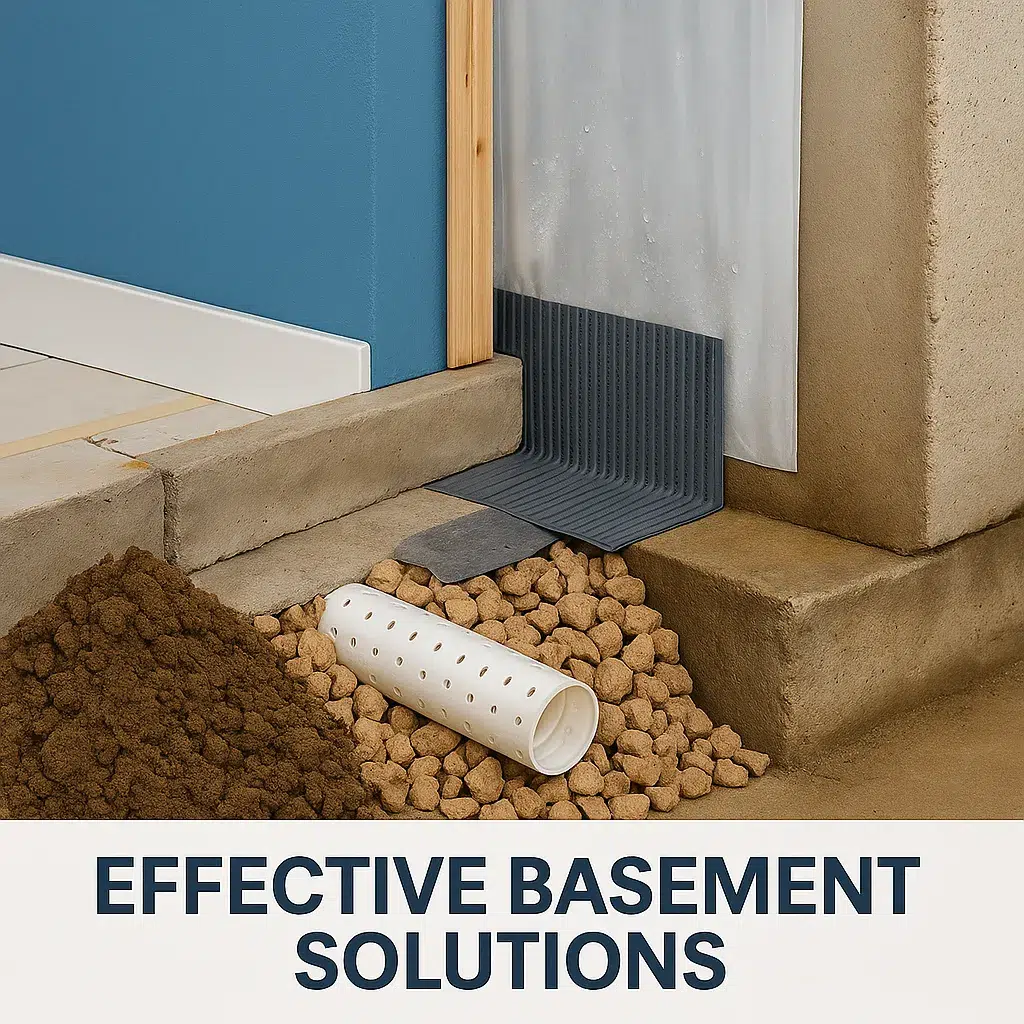
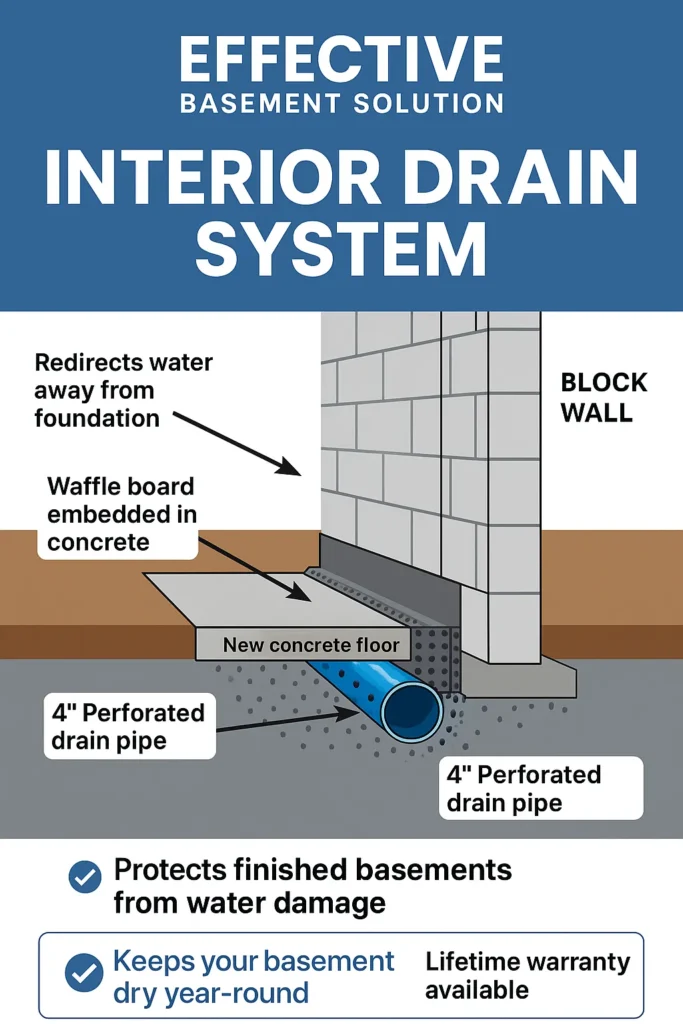
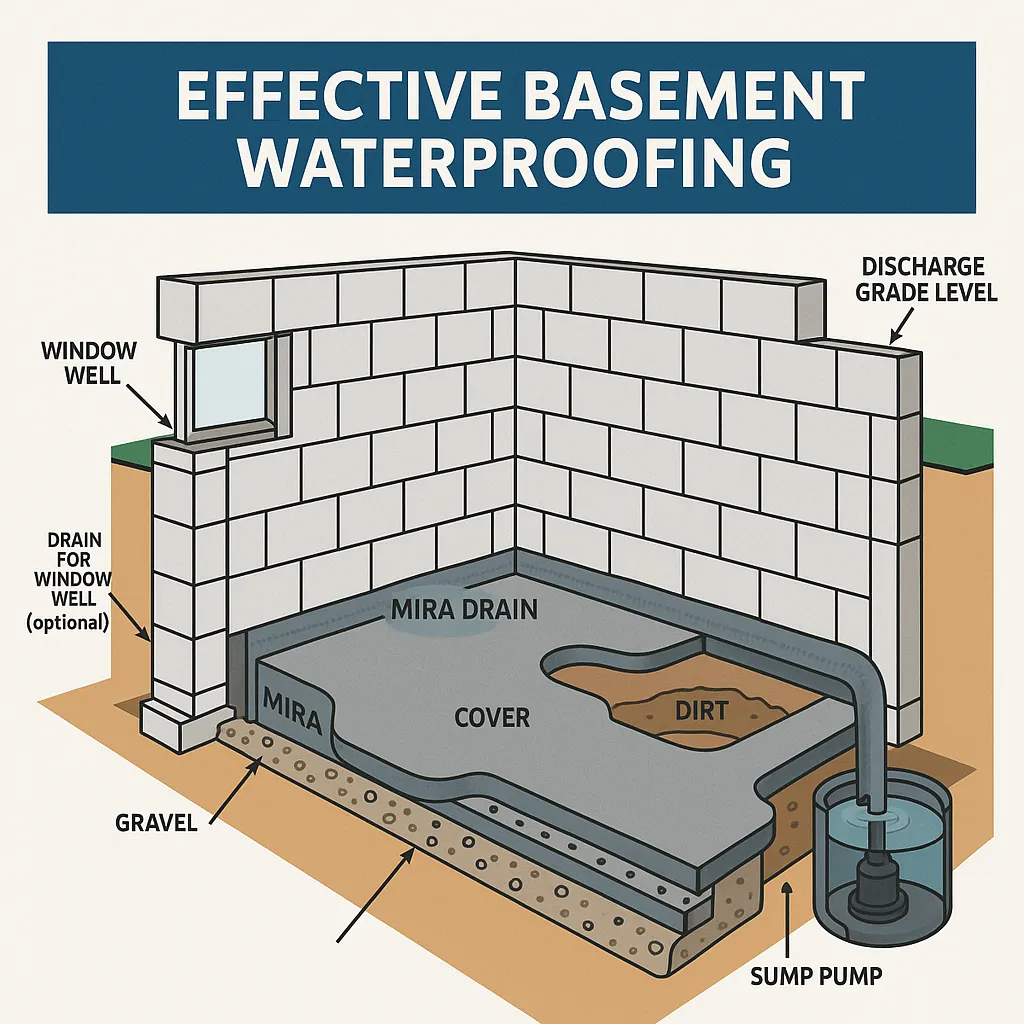
Interior drainage systems capture groundwater that seeps through walls or floor joints and channel it to a sump pit for removal. Typical components are perforated drain tile, crushed stone, and an interior channel that intercepts water before it spreads over the floor. Interior systems work well when exterior excavation isn’t practical and usually cause less landscaping disruption. By lowering the local water table at the wall, interior drainage reduces hydrostatic pressure and routes water efficiently to a pump.
Sump pump systems actively remove collected water and are the main defense against basement flooding in heavy storms. A typical setup pairs a submersible pump with a sump pit; when water rises, the pump discharges it away from the foundation. A battery backup is critical in Westfield during storm-related power outages so the pump keeps working when risk is highest. Regular maintenance—testing float switches, clearing debris, and replacing worn seals—keeps the system reliable and extends its life.
French drains, installed either outside along the footing or inside around the basement perimeter, give groundwater a low-resistance path away from foundation walls and reduce hydrostatic pressure. Exterior French drains require excavation and a conduit to a daylight outlet or storm system, while interior French drains collect water that has already entered and route it to a sump. Both use drain tile and filter fabric to limit clogging; choosing interior versus exterior depends on access, landscaping impact, and budget.
Crawl space encapsulation seals the crawl area with a vapor barrier, pairs vapor control with dehumidification, and protects subfloor framing while improving whole-house air quality. Encapsulation usually includes a heavy polyethylene liner with sealed seams, wall and rim insulation, and a dehumidifier sized for the space. This keeps soil moisture out of living areas and removes the humid microclimate that encourages mold. Because crawl space conditions affect basement humidity and indoor air, encapsulation often complements drainage systems.
Structural reinforcement is required when water-driven movement causes bowed walls, large vertical cracks, or failed anchors. Solutions range from carbon fiber strips and steel wall anchors to underpinning for settled footings; the goal is to restore load capacity and resist future hydrostatic forces. A structural assessment determines whether local repairs or full underpinning are needed. Proper reinforcement stabilizes the foundation and protects the performance of any waterproofing installed afterward.
Different waterproofing approaches suit different problems; the table below summarizes common options and ideal use cases so you can match solutions to what you observe. basement waterproofing services
Different waterproofing solutions address specific basement problems and installation limits.
| Solution | Best for | Key benefit |
|---|---|---|
| Interior drainage system | Basements with seepage but limited exterior access | Intercepts water at the wall/floor junction and routes it to a sump for removal |
| Sump pump (with battery backup) | Homes at risk of flooding during storms | Actively removes water and maintains protection during power outages with a backup |
| Interior French drain | When exterior excavation is impractical | Low-disruption way to reduce hydrostatic pressure inside the basement |
| Exterior French drain | Homes with an accessible perimeter and tolerance for landscaping work | Stops water before it soaks foundation walls, reducing wall saturation |
| Crawl space encapsulation | Homes with high subfloor humidity or mold concerns | Controls vapor entry and improves whole-house air quality |
This comparison highlights trade-offs: interior systems limit exterior work while exterior drains prevent wall saturation before it starts. For homeowners seeking professional help, Effective Basement Solutions offers free inspections, licensed in-house crews, and tailored waterproofing plans; their 30-year warranty can make a big difference for long-term protection and peace of mind. Request a free inspection to get a site-specific recommendation based on your property and budget.
How Much Does Basement Waterproofing Cost in Westfield NJ?
Costs in Westfield vary with system type, job complexity, access, and whether structural repairs are needed. Typical price drivers include whether exterior excavation is required, the length of drainage runs, the choice of sump pump and battery backup, material quality, and any foundation repairs. Transparent estimates show ranges rather than fixed prices; understanding the factors below helps homeowners compare bids and anticipate budget impacts. After reviewing cost drivers, a free inspection gives an accurate, site-specific estimate.
Common cost factors influence estimates in predictable ways. Small interior drainage projects generally cost less than full exterior excavation, while structural reinforcement raises scope and price. Tight basements, finished walls, or extensive landscaping increase labor time and expense. Choosing higher-quality components—reliable battery backups, robust pumps, and dehumidifiers—adds upfront cost but lowers long-term risk and service needs. The table below links cost drivers to their typical impact so you know where budgets go.
Key cost drivers explain why estimates vary and what to watch for during bidding.
| Cost Factor | Impact on Price | Typical Range/Note |
|---|---|---|
| Exterior excavation required | Large increase due to labor and disposal | Significant—depends on yard restoration and access |
| Interior drainage + sump pump | Moderate | Common mid-range choice for seepage control |
| Sump pump with battery backup | Moderate addition | Battery backup adds storm resilience and peace of mind |
| Crawl space encapsulation | Moderate | Cost varies with space size and dehumidifier capacity |
| Structural reinforcement | High | Price depends on method (carbon fiber, anchors, or underpinning) |
Knowing these drivers helps homeowners compare proposals fairly and ask focused questions during estimates. Many local contractors offer financing or payment plans; scheduling a free inspection will clarify scope, financing options, and warranty coverage so you can weigh long-term value against upfront cost.
What Factors Influence Basement Waterproofing Prices?
Estimates reflect a mix of scope, materials, and site conditions rather than a single industry rate. Major variables include the chosen system (interior vs. exterior), drain-run length, condition of existing walls and floors, excavation depth and access, and the need for structural repair or permits. Labor intensity—demolishing finishes, restoring floors, or working in tight spaces—also raises cost. Adding components such as a high-capacity dehumidifier or a battery-backed sump increases the initial investment but improves reliability and reduces future repair risk.
Are Financing Options Available for Basement Waterproofing?
Homeowners often finance waterproofing with home equity loans, personal loans, or contractor financing programs; availability varies by lender and provider. When comparing payment plans, check APR, loan term, and any required down payment. Ask contractors to present financing options during the free inspection so you can compare monthly payments against long-term benefits. A clear financing plan plus a solid warranty can make larger projects manageable without cutting quality.
What Is the Long-Term Value of Waterproofing Your Basement?
Waterproofing prevents escalating costs from mold remediation, structural repairs, and damaged finishes, and it preserves usable square footage that can boost resale value. Eliminating chronic moisture reduces health risks, improves energy efficiency, and avoids repeated remediation events that add up over time. Long warranties and durable components increase return on investment by lowering maintenance and replacement costs. When a waterproofing solution matches the property’s moisture cause, the long-term savings and better indoor environment typically justify the upfront outlay.
How to Choose a Trusted Basement Waterproofing Contractor in Westfield NJ?
Picking a reliable contractor means checking credentials, local experience, warranty terms, and references for similar Westfield work. Prioritize contractors that use licensed in-house crews rather than subcontractors, provide written long-term warranties, and offer free inspections with written recommendations. Careful vetting reduces the risk of poor workmanship or hidden charges and helps ensure the chosen solution addresses root causes instead of temporary fixes. The H3 sections below give a checklist of questions to ask, explain why in-house crews and warranties matter, and show how to evaluate local reviews.
What Questions Should You Ask Your Waterproofing Contractor?
A short set of questions reveals workmanship standards and post-installation support and makes comparing bids easier. Ask whether crews are licensed and in-house or subcontracted, what the warranty covers and for how long, and which permits or inspections the contractor handles. Request references for recent Westfield projects with similar scopes and ask to see before-and-after photos and timelines. Clarify maintenance requirements and how follow-up service is handled so the contract sets realistic expectations.
- Confirm whether the crew is licensed and employed in-house.
- Request written warranty terms and details of coverage.
- Ask for local references and project photos with dates.
Why Licensed In-House Crews and Warranties Matter
Licensed in-house crews give the hiring company direct control over training, supervision, and quality—reducing mistakes tied to multiple subcontractors. Warranties provide formal assurance the system will perform and outline remedies if problems occur, which protects your investment and supports resale value. Contractors that combine licensed in-house teams with long warranties show confidence in their work; verify warranty transferability and required maintenance to keep coverage valid. Choosing firms with these attributes lowers long-term risk and creates a clearer path to remediation if issues recur.
How Do Local Reviews and Case Studies Reflect Contractor Reliability?
Local reviews and Westfield case studies reveal a contractor’s consistency, timeliness, and communication. Focus on reviews that include project details—scope, schedule, cleanup, and whether promised outcomes were met—instead of vague praise. Ask for case studies with photos and dates from Union County or neighborhoods like yours; when possible, contact previous clients. Specific, local evidence is a stronger predictor of future performance than broad, non-local claims.
| Contractor Attribute | What to verify | Why it matters |
|---|---|---|
| Licensed in-house crew | Proof of licensing and direct employment | Ensures consistent quality control and accountability |
| Free inspection | Written, site-specific recommendations | Gives an accurate scope and cost projection |
| Warranty (long-term) | Length and coverage details | Protects homeowner investment and resale value |
| Local project references | Photos, dates, and contactable clients | Demonstrates experience with Westfield properties |
Using this checklist helps you narrow candidates to contractors who combine technical skill with local trust. For example, Effective Basement Solutions highlights licensed in-house crews, free inspections, custom waterproofing for New Jersey homes, and a 30-year warranty—attributes you can request and verify during the estimate process. If those align with your priorities, schedule a free consultation to compare written proposals.
What Are the Best Practices for Maintaining a Dry Basement in Westfield?
Keeping a basement dry mixes seasonal tasks, mechanical upkeep, and quick action on early warning signs to avoid major repairs. Regular maintenance stops small problems from becoming structural and extends the life of drainage systems. The checklist below covers seasonal tasks, sump and dehumidifier upkeep, and when to call a pro for an inspection.
Seasonal maintenance for Westfield homes focuses on directing water away from foundations and keeping mechanical systems ready. In spring, clear gutters and downspouts and inspect grading after freeze–thaw; in summer, monitor humidity and run dehumidifiers as needed; in fall, confirm downspouts discharge well away from the house and test sump pumps before winter storms. Monthly sump checks—pour water into the pit to confirm activation—and quarterly dehumidifier filter checks maintain reliable operation. Promptly seal small cracks and manage landscaping to prevent pooling and reduce seepage risk during heavy rains.
- Clean gutters and downspouts at least twice a year.
- Test the sump pump by running water into the pit monthly.
- Check exterior grading and correct soil that directs water toward the house.
Seasonal Maintenance Checklist for Westfield Homeowners
A short seasonal checklist helps you stay proactive and catch problems early. In spring, inspect the foundation perimeter for new cracks and test the sump pump; in summer, watch humidity and run dehumidifiers; in fall, clear gutters and confirm downspout extensions; before winter, secure pipes and ensure battery backups are charged. Keep a dated log of maintenance for warranty compliance and to help contractors evaluate system performance.
How Early Warning Signs Prevent Costly Basement Damage
Intervening early is almost always cheaper than delayed structural repair. If you notice recurring damp spots, new efflorescence, or changing odors, take dated photos and schedule a professional inspection. Simple fixes—improving downspout discharge or adding a short interior drain—can stop progression, while persistent problems require a full diagnostic. Acting within weeks of discovery usually preserves finishes and reduces the chance of mold and foundation movement.
If you’re ready to act after reviewing maintenance and risk sections, schedule a free inspection to get a site-specific plan and cost estimate. Effective Basement Solutions offers free inspections, licensed in-house crews, and a 30-year warranty on qualifying waterproofing systems—features to request and verify during any estimate so you can compare written proposals with confidence.
What Are the Health and Safety Risks of Basement Water Damage in Westfield NJ?
Basement water damage affects both structural integrity and indoor air quality, creating health hazards and costly repairs. Water intrusion encourages mold growth, which releases spores and microbial volatile compounds that can worsen respiratory conditions. Long-term moisture also promotes wood rot, insect infestation, and foundation settlement—conditions that compromise safety. Understanding these risks makes timely waterproofing and remediation a clear investment in health and property value.
How Mold Growth Affects Indoor Air Quality and Health
Mold thrives in damp basements and can degrade indoor air by releasing spores and microbial volatile organic compounds; sensitive people may experience nasal congestion, wheezing, or worsening asthma. Controlling moisture through waterproofing, encapsulation, and dehumidification removes the root cause of mold growth. Professional mold remediation is necessary for widespread contamination or when structural materials are damaged; combining remediation with long-term moisture control prevents recurrence and protects occupants.
Leaking basements are a widespread issue nationwide, often rooted in systemic failures such as deteriorated downspout drains and walls unable to resist hydrostatic pressure.
The Leaking Basement Epidemic: Causes, Cures, and Consequences
This analysis examines the common causes, financial impact, and practical solutions for the widespread problem of leaking basements in the United States. It highlights how systemic issues—like aging downspout drains losing function and wall systems under-designed for hydrostatic loads—contribute to recurring failures. Remedies range from routine maintenance to engineered structural reinforcement, while increased public awareness and careful evaluation during property transfers can reduce liability and surprise repairs.
What Are the Risks of Foundation Damage and Wood Rot?
Ongoing moisture can cause wood rot in sill plates, joists, and framing, weakening structural connections and increasing repair complexity and cost. Foundation cracking and settlement from hydrostatic pressure may require reinforcement or underpinning if not addressed promptly, and repair timelines grow longer as damage progresses. Early signs—sticking doors, new vertical cracks, or sloping floors—should prompt a structural inspection so waterproofing and stabilization can be coordinated.
Well-designed waterproofing often includes external drainage engineered to manage groundwater and relieve hydrostatic pressure on foundation walls.
Groundwater Assessment and Foundation Waterproofing Design
Engineered external drainage systems—perimeter drains, French drains, or other subsurface solutions—can intercept and divert groundwater away from foundations to reduce hydrostatic pressure on walls. Proper assessment and design tailor these systems to site-specific conditions for long-term performance.
This guide outlined common Westfield basement problems, explained primary waterproofing systems, clarified major cost drivers, and offered practical criteria for choosing contractors and maintaining dry basements. Use the diagnostic lists and comparison tables above to match solutions to your property; if you need a site-specific plan, request a free inspection from a licensed in-house contractor to receive a written estimate and warranty details.
Implementing Hydrostatic Pressure Relief (HPR) can be an important part of protecting basements by dissipating high subsurface water pressure and preventing common issues like leakage and moisture intrusion.
Mitigating Hydrostatic Pressure for Effective Basement Waterproofing
Hydrostatic Pressure Relief (HPR) techniques dissipate high groundwater pressure to help prevent water intrusion and related damage in basements. Incorporating HPR into waterproofing strategies increases long-term reliability and should be considered where subsurface pressure is significant.
