Basement Waterproofing NJ: Your Complete Guide to Keeping New Jersey Homes Dry and Protected
Water in the basement is one of the biggest headaches New Jersey homeowners face — it harms the structure, fuels mold, and can lower property value if ignored. This guide walks through how water reaches basements in NJ, the forces behind common problems like hydrostatic pressure and poor grading, and practical fixes — from interior and exterior drainage to crawl space encapsulation, dehumidification, and foundation repair — that restore a dry, healthier home. You’ll learn how to spot early signs of leaks and mold, weigh which waterproofing options fit your foundation and lot, and understand the cost factors that shape estimates in New Jersey. We map a clear path from diagnosis to repair and explain how systems like French drains, battery-backed sump pumps, and vapor barriers work together to stop water and protect finishes. Local conditions — NJ soils, freeze-thaw cycles, and storm patterns — are woven throughout so you can decide when a targeted repair makes sense versus a full exterior excavation. Read on to compare solutions, learn cost drivers, and see how Effective Basement Solutions can help with a free inspection and a tailored plan.
What Are the Common Causes of Basement Water Problems in New Jersey?
Most basement water issues in New Jersey come from a few predictable sources: groundwater pressure, poor surface drainage, clogged or failing gutters and downspouts, foundation defects, and concentrated runoff after heavy storms. Hydrostatic pressure from a high water table or saturated soils pushes groundwater through cracks and porous materials, while surface water routed toward the foundation by bad grading or blocked gutters creates focused flow paths. NJ’s variable soils and freeze-thaw cycles accelerate these problems by increasing porosity and promoting cracks over time. Finding the dominant cause for a given property tells you whether the right fix is a surface correction, an interior drainage system, an exterior membrane, or structural repair. After pinpointing root causes, many homeowners schedule a professional assessment — Effective Basement Solutions offers a free inspection for New Jersey homes to diagnose issues and recommend a prioritized plan.
Diagnosis starts with observation and follows with targeted testing; the next sections unpack the mechanics and the signs to watch for in NJ homes.
How Does Hydrostatic Pressure Cause Basement Leaks in NJ Homes?
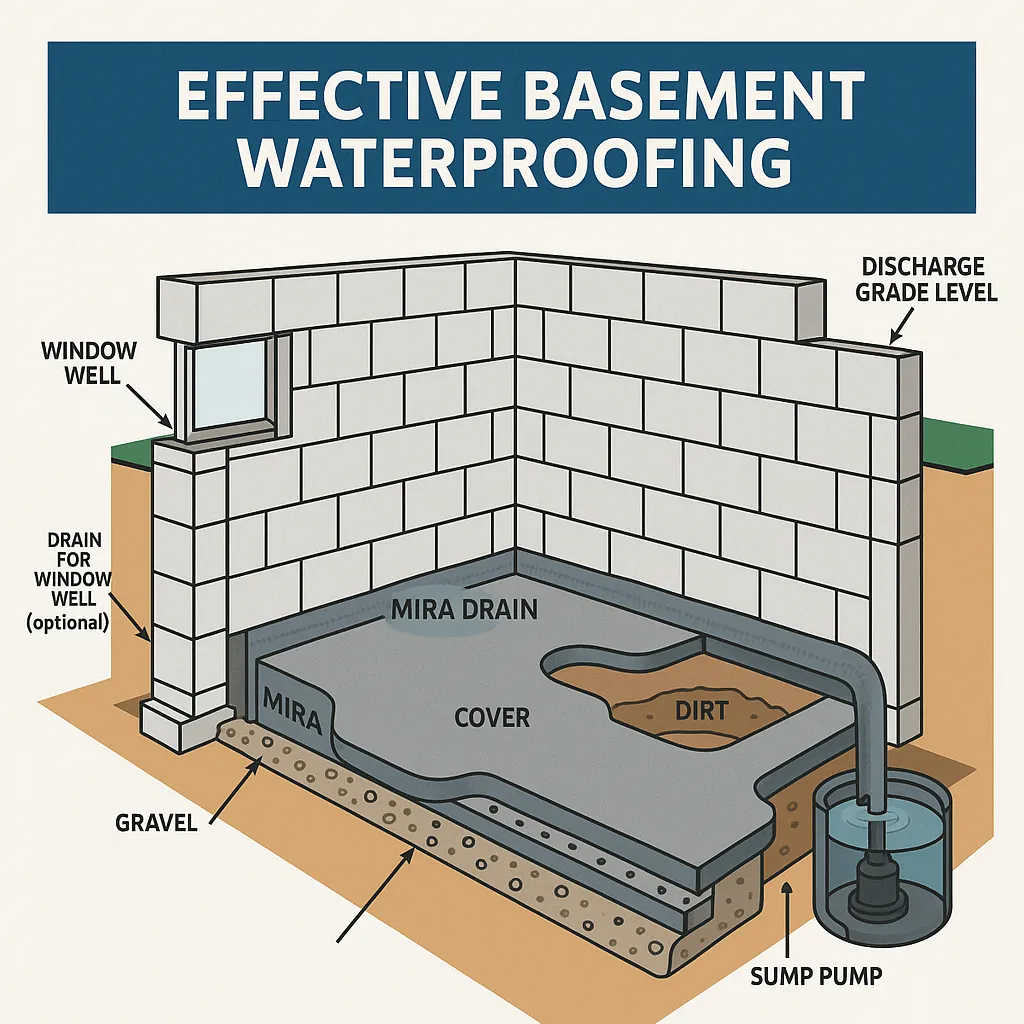
Hydrostatic pressure is the force groundwater exerts against basement walls and floors when surrounding soil becomes saturated — and it’s a leading cause of below-grade water entry in New Jersey. After heavy rain or prolonged wet spells the water table can rise, forcing water through mortar joints, construction seams, hairline cracks, and porous concrete. It often shows up first as weeping or dampness at the floor-wall junction. Because the water is being pushed in under pressure, treatments that only seal interior surfaces (paint or topical sealants) usually fail over time. Effective solutions either reduce that outside pressure (exterior drainage and membranes) or capture and remove the water once it enters (interior French drains and sump pumps). That’s why paired systems — drainage plus active removal — are commonly recommended for lasting protection.
Causes, Remediation, and Ramifications of Basement Water Infiltration
A comprehensive case review shows basement leaks are usually the result of multiple system failures rather than a single cause. One recurring issue is deteriorated downspout and surface drainage systems that no longer move water away from foundations. Poor design and neglected maintenance allow hydrostatic loads to build up against walls, increasing the chance of leaks and structural stress. Recommended responses include routine drainage maintenance and, where required, structural reinforcement of walls to restore reliability.
The Leaking Basement Epidemic – Causes, Cures and Consequences
Understanding hydrostatic-driven leaks leads naturally into recognizing the visible and smell-based signs of active water problems and potential mold growth.
What Signs Indicate Basement Water Damage and Mold Growth?
Water damage and early mold in basements show up in visual, tactile, and smell-based ways that NJ homeowners can spot during routine checks. Look for musty odors, efflorescence (white mineral deposits) on concrete, water stains or discoloration on walls and floors, peeling paint, warped or buckled flooring, and persistent dampness or repeat puddling after storms. Health clues — worsening allergies or new respiratory irritation — can also point to hidden mold fed by ongoing moisture. Take photos with dates to help professionals judge severity during an inspection and prioritize fixes like moisture testing, targeted waterproofing, or professional remediation. If you see any of these signs, a diagnostic inspection will determine whether the issue stems from surface drainage, hydrostatic pressure, foundation defects, or a combination.
This quick checklist helps homeowners take immediate action and prepares you for a professional assessment.
Basement and mold indicators to monitor:
- Musty Smell: Persistent damp odors that return after airing out.
- Visible Stains or Efflorescence: White powdery deposits or dark water stains on walls or floors.
- Warped Materials: Buckling wood, peeling paint, or distorted flooring that suggest chronic moisture.
Which Basement Waterproofing Solutions Are Best for NJ Homes?
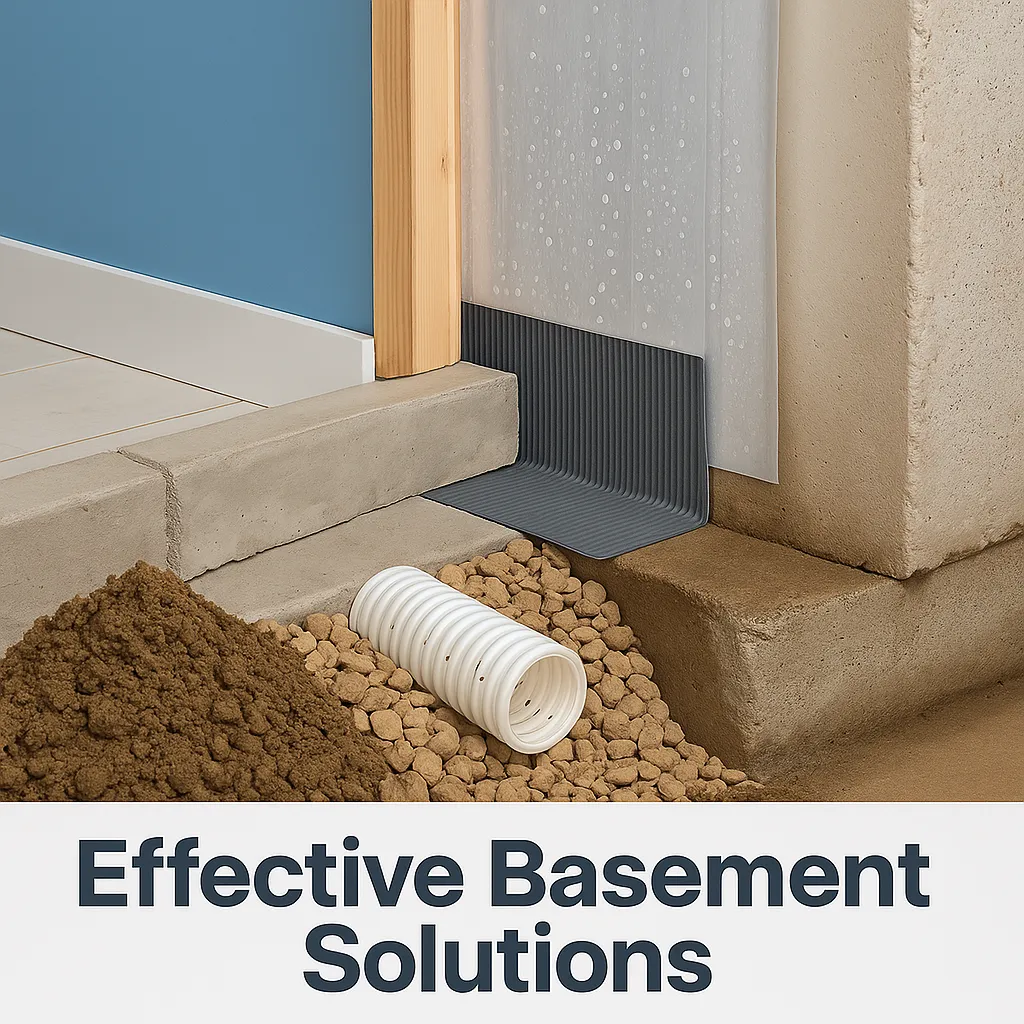
Picking the right waterproofing solution in New Jersey depends on the root cause, site constraints, homeowner goals, and how much disruption you’ll tolerate. Common options include interior drainage systems with sump pumps, exterior excavation with membrane application, French drains, crack injection, and crawl space encapsulation. Interior systems (interior French drains and sump pumps) capture and remove water with less exterior disturbance and often lower cost. Exterior membranes and excavation stop water before it reaches the foundation and handle porous walls and heavy hydrostatic pressure, but they cost more and disturb landscaping. When foundation movement contributes to leaks, structural reinforcement and crack repair are essential and are usually combined with drainage for a durable result. Effective Basement Solutions installs all these systems — Basement Waterproofing Service, Sump Pump Installation, French Drain Installation, and Structural Reinforcement — using quality materials and tailoring solutions to NJ conditions. After comparing methods, homeowners can choose a phased interior-first approach or a full exterior remediation based on severity and budget.
Below is a comparison table to help you weigh trade-offs between the main approaches.
Introductory summary: The table compares common waterproofing methods by cost, disruption, lifespan, and ideal use case so New Jersey homeowners can evaluate their options.
| Approach | Typical Cost Range | Disruption Level | Ideal Use Case |
|---|---|---|---|
| Interior French drain + sump pump | Moderate ($5,000–$15,000) | Low–Moderate (interior work) | Active water entry at floor-wall joint; limited exterior access |
| Exterior excavation + membrane | High ($15,000–$30,000+) | High (landscaping and excavation) | Severe hydrostatic pressure; porous walls; repeated seepage |
| Crack injection & local repair | Low–Moderate ($500–$4,000) | Low | Isolated cracks without widespread hydrostatic pressure |
| Crawl space encapsulation | Moderate ($3,000–$10,000) | Moderate | Moist crawl spaces affecting HVAC and basement humidity |
How Do Interior and Exterior Waterproofing Methods Compare?
Interior and exterior approaches tackle water at different stages of the flow path. Exterior solutions — excavation, membrane, drainage stone, and correct grading — stop water before it reaches the foundation and are the most definitive against hydrostatic flow, but they require higher budgets and more site work. Interior systems — perimeter drains, interior French drains, and sump pumps — collect water at the floor-wall junction or under a new slab and pump it away; they’re often chosen when exterior access is limited or when a quicker fix is needed. Maintenance differs too: interior pumps need regular testing and often a battery backup for outages, while exterior membranes depend on durable materials and good surface drainage. For severe hydrostatic pressure or failing foundation systems, exterior work is more permanent; for many NJ homes, a combined strategy balances cost, disruption, and long-term protection.
This comparison helps you decide whether to pursue excavation or an interior capture strategy. Next we explain how French drains and sump pumps work together in practice.
What Role Do French Drains and Sump Pumps Play in Basement Waterproofing?
French drains and sump pumps are a paired solution: the French drain gathers subsurface water and routes it to a sump basin; the sump pump then moves the water away from the foundation. Interior French drains use perforated pipe in gravel along the perimeter under the slab or at the floor-wall joint, sloped toward a sump basin; exterior French drains do the same outside the footing. Sump pumps are available as submersible or pedestal units and vary by horsepower and discharge capacity — proper sizing and a battery backup are important for New Jersey storms that can cause power outages. Regular maintenance — test the pump, check float switches, and keep discharge lines clear — extends reliability. Because these systems relieve hydrostatic inflow by collecting and removing water, they’re often the practical backbone of many NJ waterproofing plans, especially where exterior excavation is impractical.
Next, we look at crawl space encapsulation and how it supports overall below-grade moisture control.
Crawl Space Encapsulation Boosts NJ Basement Waterproofing
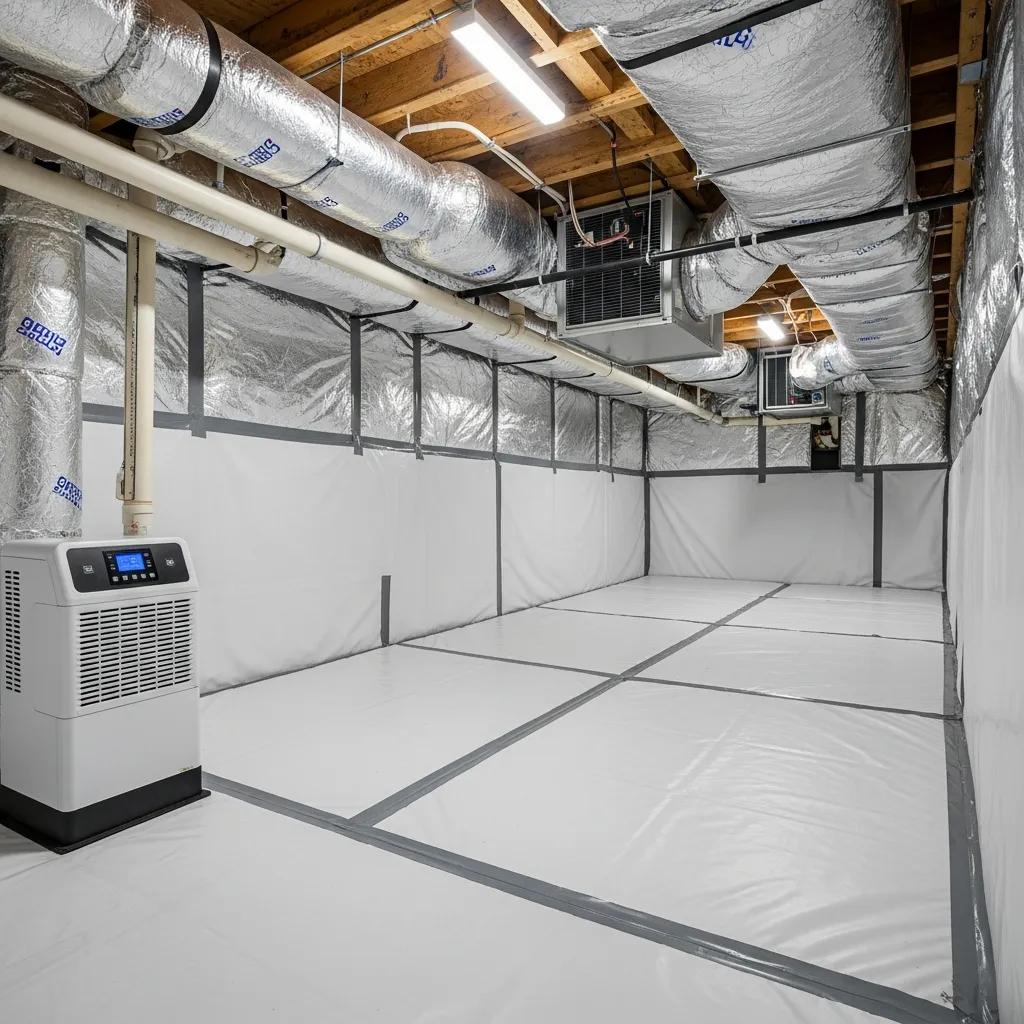
Crawl space encapsulation seals the ground and walls with a continuous vapor barrier, closes vents and penetrations, and often adds dehumidification to control relative humidity. This reduces moisture migration through sub-slab soils and lowers indoor humidity — helping basement waterproofing perform better. By sealing the crawl space you keep moist soil gases (including radon and moisture-laden air) out of the conditioned area, reducing the load on basement finishes and HVAC systems. In New Jersey, humid summers and variable soils can drive moisture upward; encapsulation stabilizes conditions under the house and lowers mold and pest risk. Effective encapsulation includes a durable vapor barrier, sealed seams and taped joints, and connections to mechanical dehumidification when needed, creating a controlled sub-surface envelope. Paired with insulation and proper drainage, encapsulation can also save energy and improve indoor air quality by interrupting one of the key moisture sources feeding basements.
Because homeowners want measurable benefits, the sections below outline specific advantages and how encapsulation deters mold and pests.
What Are the Benefits of Sealing Crawl Spaces Against Moisture and Radon?
Sealing a crawl space with a continuous vapor barrier and closing penetrations delivers clear benefits for health, structure, and energy: it cuts humidity-driven mold risk, reduces pathways for radon entry when combined with active mitigation, and lowers heat loss from subfloor convective flows. Less sub-surface moisture slows wood rot, corrosion, and pest-friendly conditions; a sealed crawl space also improves HVAC efficiency because ducts and cavities leak into a drier envelope. When paired with soil depressurization or other radon controls, encapsulation helps manage soil gas. For New Jersey homeowners focused on indoor air quality and long-term durability, encapsulation is a cost-effective preventive measure that complements waterproofing. Testing and periodic monitoring after encapsulation confirm humidity reductions and radon status to ensure the work is performing as expected.
How Does Crawl Space Encapsulation Prevent Mold and Pest Problems?
Encapsulation prevents mold and pests by removing the moisture and entry routes they need: a continuous vapor barrier reduces ground moisture evaporation, sealed seams and taped joints block insect and rodent access, and lower relative humidity makes conditions inhospitable for mold spores to grow. Target humidity levels (often near 50% RH) cut off the moisture source that allows mold to colonize wood and insulation. Pest pressure drops because many critters seek damp, sheltered spaces; sealing gaps and drying the crawl space removes their attractant. Maintenance is simple — inspect the barrier, confirm drainage is working, and keep dehumidifiers set correctly when mechanical systems are installed. These protections create a drier envelope beneath the home that supports overall waterproofing goals and extends the life of structural materials.
What Are the Signs That Your New Jersey Home Needs Foundation Repair?
Foundation problems that affect waterproofing often appear as visible cracks, bowed or leaning walls, doors or windows that stick, uneven floors, or widening gaps at corners — signs of movement that waterproofing alone won’t reliably fix. Small hairline cracks can allow some seepage and may be handled with local repair if movement is absent, but horizontal cracks, pronounced stair-step patterns, or wall bowing usually point to active settlement or lateral pressure that requires structural solutions. Structural changes open new water paths, so coordinate waterproofing with foundation stabilization when needed to ensure lasting results. A thorough inspection separates cosmetic cracks from structural faults and recommends sequencing — stabilize first, then waterproof — to avoid wasted expense and recurring leaks. Catching issues early reduces repair scope and cost compared with letting damage progress.
How Do Cracks and Bowing Walls Affect Basement Waterproofing?
Different crack patterns mean different risks. Vertical hairline shrinkage cracks often cause minor seepage and can be injected or sealed, while horizontal cracks, large stair-step cracks, and wall bowing indicate lateral earth pressure or settlement that compromise stability and can allow significant water entry. When walls are bowed or actively moving, applying coatings or membranes without fixing the load problem will likely fail because materials can’t bridge ongoing deformation. Structural signals also change waterproofing design — bowed walls may require internal reinforcement (carbon fiber straps, steel I-beams) or external support before drainage systems can be fully effective. A coordinated plan that stabilizes movement and then installs drainage or membranes produces the most durable outcome. Proper sequencing — diagnose, stabilize, then waterproof — prevents repeat repairs.
What Structural Reinforcement Options Are Available for NJ Basements?
Common reinforcement options for New Jersey basements include carbon fiber wall reinforcement, wall anchors and plates, helical piers for underpinning and settlement correction, and interior steel solutions like I-beams. Carbon fiber straps are a low-profile fix for moderate bowing by adding tensile strength without excavation; wall anchors apply an exterior stabilizing force using soil anchors and interior plates but typically need exterior access. Helical piers and underpinning address settlement by transferring loads to deeper, stable soils and are chosen when the foundation has lost bearing capacity. Which method fits depends on whether the issue is lateral pressure or settlement and on site constraints like access, landscaping, and utilities. Integrating reinforcement with waterproofing is important because many stabilization methods are installed alongside or before membranes and drainage to make sure waterproofing holds once movement stops.
How Much Does Basement Waterproofing Cost in New Jersey?
Costs for basement waterproofing in New Jersey vary widely depending on method, foundation condition, accessibility, and whether structural repairs are needed. Expect anything from modest expenses for targeted crack repair to substantially higher investment for exterior excavation and membrane installation. Major cost drivers include the degree of hydrostatic pressure, basement size and layout, material quality, need for reinforcement, landscape restoration after excavation, and whether systems like dehumidifiers or battery-backed sump pumps are included. Because each property is different, an on-site inspection that documents conditions, performs moisture testing, and defines scope is the most reliable way to get an accurate, transparent estimate. Effective Basement Solutions offers a free inspection for NJ homeowners so inspectors can diagnose causes, document findings, and provide a detailed estimate that lets you compare options and budgets confidently.
To help homeowners compare services, the table below outlines common service types, typical cost drivers, and factors that tend to raise or lower price.
Introductory summary: The table shows how service type and usual site conditions influence budget expectations and which variables commonly change costs in New Jersey.
| Service Type | Typical Cost Drivers | Factors That Increase/Decrease Price |
|---|---|---|
| Interior French drain + sump pump | Basement size, slab removal, pump capacity | Increase: deep floors or poor access; Decrease: partial access, smaller basement |
| Exterior excavation + membrane | Linear footage, landscaping, soil conditions | Increase: steep slopes, ledge or utilities; Decrease: easy access, minimal landscaping |
| Crawl space encapsulation | Square footage, vapor barrier grade, dehumidifier | Increase: high moisture, necessary repairs; Decrease: small crawl space, phased work |
| Crack injection & local repair | Crack length and type, accessibility | Increase: many cracks or structural movement; Decrease: single hairline crack |
What Factors Influence the Cost of Basement Waterproofing in NJ?
Key variables that drive waterproofing cost in New Jersey include the chosen method (interior vs. exterior), the size and complexity of the basement, presence of structural damage, soil and site access conditions, and the quality of materials and equipment specified. Labor intensity and local permits can add cost, and landscape restoration after excavation often represents a significant share of exterior work expense. Regional conditions — NJ soils, bedrock, or a high water table — determine how extensive drainage or underpinning must be and affect both materials and labor. Phased or targeted repairs lower upfront expense but may leave residual risk if hydrostatic pressure isn’t fully addressed; a comprehensive exterior approach often has higher initial cost but can deliver greater long-term durability. A detailed inspection helps homeowners weigh short-term budget constraints against long-term risk and maintenance costs.
How Does Investing in Waterproofing Increase Your Home’s Value and Energy Efficiency?
Waterproofing protects structural assets, reduces future repair costs for buyers, and improves interior conditions — all of which boost a home’s marketability and perceived value in New Jersey. A dry, mold-free basement creates usable square footage and buyer confidence, which can positively affect appraisal and sales outcomes. Controlling moisture also helps preserve insulation and HVAC ductwork, supporting better energy efficiency. Preventing repeat water intrusion cuts long-term maintenance expenses and potential insurance claims, and pairing waterproofing with crawl space encapsulation and dehumidification can reduce HVAC runtime by lowering moisture-related heat loads. Exact ROI varies by local market and scope of work, but many homeowners find the combination of reduced future risk, better air quality, and added living space justifies the investment. A no-cost inspection is the best way to get a transparent, project-specific estimate of costs versus value.
Why Choose Effective Basement Solutions for Waterproofing Services in New Jersey?
Effective Basement Solutions is a local New Jersey specialist in basement waterproofing and foundation repair. We emphasize a few things that set us apart: a licensed in-house crew (no subcontractors), a free inspection for New Jersey homeowners, custom solutions tailored to local homes, and high-quality materials for durable results. These selling points highlight accountability, consistent workmanship, and a consultative process that starts with an inspection to find root causes and propose practical options. Our free inspection delivers a documented diagnosis with photos and a clear estimate so homeowners understand scope, timeline, and expected outcomes before committing. For NJ property owners who want a single local partner for French drains, sump pump installs, crawl space encapsulation, dehumidification, battery backup pumps, and structural reinforcement, our in-house expertise and no-cost evaluation simplify decisions and implementation.
What Makes Our Licensed In-House Crew Different from Other NJ Waterproofing Companies?
Having a licensed in-house crew means tighter quality control, accountable workmanship, and consistent communication through every project phase — unlike models that rely heavily on subcontractors. When crews are trained and employed directly by the company, material choices, installation standards, and warranty handling are standardized and managed by the same team, reducing coordination errors and schedule drift. That continuity improves responsiveness on complex jobs that need coordination between drainage, reinforcement, and mechanical systems like dehumidifiers and battery backups. For homeowners, working with an in-house licensed crew lowers the risk of mismatched workmanship and simplifies warranty claims because one company owns the job from inspection through completion. The result is clearer expectations, more predictable outcomes, and a single point of accountability for New Jersey waterproofing projects.
How Does Our Free Inspection Process Help NJ Homeowners Prevent Water Damage?
Our free inspection starts with a visual check of exterior grading, gutter and downspout routing, and visible wetness patterns, then moves inside for moisture mapping, floor-wall junction checks, and documentation of cracks, efflorescence, or mold signs — ending with a diagnostic report and a tailored estimate. Inspectors photograph problem areas, perform moisture testing when relevant, and evaluate structural indicators that may need reinforcement or underpinning before waterproofing. The report includes clear recommendations, phased or comprehensive options, timelines, and a transparent cost breakdown so homeowners can compare approaches and budget accordingly. This structured process helps you prioritize repairs, understand trade-offs between interior and exterior solutions, and budget for durable fixes that address causes rather than symptoms. Scheduling a no-cost inspection is the practical first step to prevent escalating damage and restore a dry, healthy basement.
What Are the Benefits of Installing Basement Dehumidification and Battery Backup Systems in NJ?
Basement dehumidification and battery backup for sump pumps are complementary defenses: dehumidifiers control ambient relative humidity to prevent mold and protect finishes, while battery backup pumps maintain flood protection during power outages that often accompany storms. Dehumidification reduces condensation on cold surfaces, protects stored items and finishes, and lowers biological risk from mold; aiming for about 50% relative humidity is a practical target for many NJ basements. Battery backup pumps address the biggest vulnerability — loss of pumping when grid power fails during heavy storms — by providing runtime to handle runoff until power returns or a generator starts. Together, these systems reduce the chance of catastrophic water events and help preserve materials and indoor air quality. Proper sizing, correct installation location, and routine maintenance are key to getting the expected benefits.
The EAV table below compares dehumidifiers and battery backup options by capacity, power use, benefits, and estimated cost factors so homeowners can match systems to basement size and risk tolerance.
Introductory summary: The table outlines typical dehumidifier and battery backup pump attributes to guide system selection for New Jersey basements.
| System | Attribute | Typical Value / Consideration |
|---|---|---|
| Dehumidifier | Capacity | 30–70 pints/day depending on basement size and severity |
| Dehumidifier | Power usage | Moderate; varies by model and runtime — consider energy efficiency |
| Battery backup pump | Runtime | Depends on amp-hour capacity; size for expected storm duration |
| Battery backup pump | Benefit | Maintains pump operation during outages to prevent flooding |
How Do Dehumidification Systems Maintain a Healthy Basement Environment?
Dehumidifiers pull warm, humid basement air across cold coils where moisture condenses and is collected or drained; this lowers relative humidity to levels that inhibit mold growth and condensation. Properly sized units for your basement’s cubic footage and moisture load keep RH near 50%, which reduces musty odors and protects finishes and stored items. Place units near the most humid or cold spots for best results and route condensate to an existing drain or the sump basin for easy maintenance. Regular tasks — clean coils, replace filters, and check condensate drains — keep systems running efficiently. Energy-efficient models provide reliable long-term operation with modest power use, making dehumidification a practical element of comprehensive basement health strategies.
Why Is a Battery Backup Pump Essential for Reliable Basement Flood Protection?
A battery backup pump is essential because severe floods often happen when power is out, leaving primary sump pumps unable to evacuate collected water at the most critical moment. Backup solutions — from standalone battery packs to integrated battery-operated pumps or generator-ready systems — provide emergency runtime designed to bridge the gap until power is restored. Choosing the right capacity means estimating peak inflow during extreme events and picking batteries rated to keep the pump running for the expected duration; routine testing and battery maintenance ensure readiness. Backups reduce the chance of catastrophic basement flooding during storms, protect finished spaces and stored belongings, and give homeowners peace of mind in regions where severe weather can disrupt utilities. Adding a backup pump into your broader waterproofing plan completes the redundancy needed for resilient flood protection.
How Can NJ Homeowners Identify and Prevent Mold Growth Related to Basement Water Issues?
Identifying mold early and preventing its return starts with addressing moisture at the source: stop leaks and water entry first, then remediate existing colonies and install controls like dehumidification and encapsulation to prevent recurrence. Mold clues include visible colonies (black, green, or white), persistent musty smells, worsening allergy symptoms indoors, and staining on wood, drywall, or carpets. Large or health-impacting infestations need professional remediation; prevention focuses on eliminating water sources, improving ventilation or dehumidification, and keeping humidity below levels that support growth. Waterproofing measures — drainage systems, membranes, crawl space encapsulation — reduce the environmental conditions that allow mold, and follow-up monitoring confirms remediation and moisture control remain effective. Take a source-first approach: repair water entry, then remediate to ensure long-term control and avoid repeat costs.
What Are the Health Risks of Mold in New Jersey Basements?
Mold exposure can trigger or worsen respiratory symptoms, allergies, and asthma, particularly for children, the elderly, and people with weakened immune systems — which is why basement moisture control matters for public health as well as structure. Long-term exposure to damp indoor environments increases the chance of chronic symptoms and lowers indoor air quality, affecting comfort and productivity. While not all molds are toxigenic, visible colonies and persistent musty odors indicate conditions that should be addressed. Immediate homeowner steps include isolating affected areas, limiting exposure, documenting findings, and arranging a professional assessment when infestations are extensive or occupants have pronounced symptoms. Preventing recurrence relies on repairing the moisture source through waterproofing and maintaining ongoing humidity controls.
Which Waterproofing and Remediation Services Effectively Control Mold?
Sustainable mold control depends on sequencing: first eliminate the moisture source with appropriate waterproofing — drainage, membranes, encapsulation, or structural repair — then remediate contaminated materials and install ongoing humidity control like dehumidifiers. Effective services include professional remediation for damaged materials, encapsulation to control soil moisture and radon, dehumidification to maintain low RH, and sump pump systems to remove subsurface water. Fixing infiltration paths before remediation prevents regrowth — for example, correcting grading or installing an interior French drain lowers the moisture that allows mold to return. Follow-up monitoring and maintenance, including periodic moisture checks and HVAC inspections, confirm that mold control measures remain effective. Combining waterproofing and remediation in a planned sequence protects health and preserves your investment in repairs.
Basement maintenance checklist to prevent recurrence:
- Inspect gutters and downspouts seasonally; make sure they discharge well away from the foundation.
- Test sump pumps and backup systems twice yearly; replace batteries per manufacturer guidance.
- Monitor basement humidity and run a dehumidifier as needed to keep RH near 50%.
Frequently Asked Questions
What is the best time of year to perform basement waterproofing in New Jersey?
Late spring and early fall are generally the best windows for waterproofing in New Jersey. These drier periods reduce the risk of rain during work and make excavation and grading easier. That said, specific property conditions matter — consult a professional to pick the optimal time for your site.
How long does basement waterproofing typically last?
Longevity depends on the method, materials, and maintenance. Interior systems like French drains and sump pumps can last 10–20 years with proper care; exterior membranes and comprehensive excavation solutions often last longer, commonly 20–30 years or more. Regular inspections and upkeep are crucial to maintaining performance.
Can I perform basement waterproofing myself, or should I hire a professional?
Some minor tasks — sealing small cracks or improving surface grading — are DIY-friendly. Most comprehensive waterproofing jobs, especially those involving drainage systems, structural repairs, or exterior excavation, are best left to professionals. Experts bring the tools, experience, and warranties that give long-term protection and peace of mind.
What maintenance is required after waterproofing my basement?
Regular maintenance keeps systems working: clean gutters and downspouts seasonally, test sump pumps and battery backups periodically, monitor humidity with a dehumidifier, and inspect waterproofing components for wear. Scheduling periodic professional inspections helps catch issues before they grow.
How can I tell if my basement waterproofing system is working effectively?
Watch for signs of moisture: damp spots, mold growth, musty odors, or recurrent puddles. Check that the sump pump cycles during heavy rain and that discharge lines are clear. If you see persistent humidity or water, have the system inspected and serviced.
Are there any health risks associated with basement water damage?
Yes. Water damage promotes mold growth and poor indoor air quality, which can trigger respiratory issues, allergies, and asthma — especially in children, seniors, and people with weakened immune systems. Stagnant water can also attract pests. Addressing water intrusion promptly is important for both health and home value.
Conclusion
Keeping your New Jersey home protected from water damage preserves its structure, value, and indoor air quality. Understanding the causes and choosing the right waterproofing approach — from targeted interior systems to full exterior remediation — helps you make informed decisions. Don’t wait for a small leak to become a major repair: schedule your free inspection with Effective Basement Solutions today and get a clear, tailored plan to keep your basement dry and your home secure.

a1lzob