Improving Basement Air Quality: Essential Solutions and Tips for New Jersey Homeowners
A damp, musty basement can harbor allergens, mold spores, and radon gas that directly jeopardize your family’s respiratory health and the structural integrity of your home. This guide shows New Jersey homeowners why basement air quality matters, what drives poor air in below-ground spaces, and which proven solutions—ranging from professional waterproofing and sump pump systems to dehumidifiers, ventilation upgrades, and mold remediation—deliver lasting comfort and safety. You’ll discover:
- The health risks and home-wide impact of stale, polluted basement air
- Key causes in New Jersey: humidity, mold growth, inadequate airflow, water intrusion, and radon
- Interior and exterior waterproofing methods that prevent moisture at its source
- Dehumidification and ventilation strategies—including natural options—that regulate humidity and remove stale air
- Professional mold prevention and remediation steps for a clean, healthy environment
- DIY and professional testing approaches to monitor air quality over time
- Why Effective Basement Solutions’ local expertise and free consultation ensure customized, long-term results
Why Is Basement Air Quality Important for Your Health and Home?
Basement air quality affects both respiratory well-being and building performance by trapping moisture and pollutants in low-circulation spaces, which can aggravate asthma, induce allergies, and undermine drywall, framing, and finishes. Recognizing how contaminants build up below grade lays the foundation for effective remediation and prevention.
What Health Risks Are Linked to Poor Basement Air Quality?
Poor basement air quality can trigger a range of respiratory and allergic conditions by exposing occupants to high concentrations of mold spores, dust mites, and volatile organic compounds.
- Asthma attacks increase when damp-loving fungi release airborne spores.
- Chronic coughing or wheezing can develop from prolonged exposure to radon or VOCs.
- Skin rashes, eye irritation, and sinus congestion often arise from mold byproducts indoors.
Exposure to poor indoor air quality can significantly worsen symptoms for individuals with chronic lung diseases and increase the risk of developing respiratory conditions like asthma. (newsroom.clevelandclinic.org)
Mold-related allergies and radon-induced lung cancer illustrate how breathing untreated basement air poses serious health concerns and underscores the need for targeted solutions.
How Does Basement Air Quality Affect Indoor Living Spaces?
Stagnant, polluted air in the basement migrates upward through floor cracks, vents, and stairwells, compromising comfort and safety throughout your home.
- Airborne spores and odors move into living areas, reducing overall indoor air quality.
- Rising humidity can warp hardwood flooring and delaminate engineered wood products upstairs.
- Hidden moisture spots foster structural rot and lead to costly foundation repairs.
Enhancing basement ventilation and moisture control thus yields benefits for every room above, creating a healthier, more durable home environment.
Which Common Pollutants Threaten Basement Air Quality?
Below-grade spaces harbor several threats that undermine air quality and health.
| Pollutant | Primary Source | Health Impact |
|---|---|---|
| Mold spores | Condensation, leaks, organic debris | Allergic reactions, asthma exacerbation |
| Radon gas | Soil gas infiltration through cracks | Increased risk of lung cancer |
| VOCs | Paint, cleaning products, stored chemicals | Headaches, throat irritation, neurological symptoms |
| Dust mites | Humid, carpeted or textile surfaces | Respiratory irritation, skin allergies |
Indoor air quality is perhaps the worst in winter and during extremely hot temperatures due to a lack of ventilation, when we keep our windows closed and stay inside for extended periods. (health.clevelandclinic.org)
Basement pollutants often coexist, so a consolidated approach to moisture control, sealing, and air exchange is essential for meaningful improvement.
What Are the Main Causes of Poor Basement Air Quality in New Jersey?
High humidity, mold growth, limited airflow, foundation leaks, and radon accumulation are core reasons that basements in New Jersey suffer from stale, unhealthy air. Addressing each cause at its root supports a comprehensive remediation strategy.
How Does High Humidity and Condensation Harm Basement Air?
Basement humidity levels above 60 percent create an environment where condensation forms on walls and floors, fostering microbial growth and stagnant air.
- Excess moisture weakens insulation and promotes fungal colonization.
- Condensation droplets attract dust and pollen, exacerbating allergies.
- Elevated humidity accelerates corrosion of metal supports and ductwork.
Controlling humidity with proper waterproofing and dehumidification prevents condensation-driven contamination and maintains balanced indoor conditions.
Why Is Mold Growth a Serious Basement Air Quality Issue?
Mold thrives on damp surfaces and organic materials, releasing spores and mycotoxins that degrade air quality and threaten health.
- Visible colonies often indicate hidden growth behind drywall or insulation.
- Airborne spores spread rapidly when disturbed, igniting allergic responses.
- Continued mold activity undermines structural components and finishes.
Professional remediation and ongoing prevention are vital to eliminate mold at the source and protect long-term air quality.
How Does Inadequate Ventilation Contribute to Stale Basement Air?
A lack of fresh-air exchange traps pollutants and moisture, turning the basement into a closed environment where contaminants concentrate.
- Insufficient ducting prevents proper circulation of conditioned air.
- Blocked or missing vents limit natural airflow and amplify musty odors.
- Poor exhaust fan coverage fails to expel stale air after activities like laundry or workshop use.
Installing dedicated basement ventilation systems or utilizing existing HVAC ducts improves air turnover and reduces pollutant buildup.
What Role Do Water Intrusion and Foundation Cracks Play?
Water infiltration through foundation cracks or joint failures introduces moisture and dissolved contaminants that fuel mold and radon entry.
| Entry Point | Mechanism | Consequence |
|---|---|---|
| Wall or floor cracks | Hydrostatic pressure | Water seepage, efflorescence |
| Window wells or bulkheads | Surface runoff | Flooding, sediment transfer |
| Poor exterior grading | Standing water around foundation | Soil erosion, undermined support |
Sealing foundation defects and managing exterior drainage ensure that water intrusion no longer serves as a vector for air-quality degradation.
How Does Radon Gas Affect Basement Air Quality?
Radon is an odorless, radioactive gas released from soil that can accumulate to hazardous levels in below-grade areas.
- Radon decays release alpha particles that damage lung tissue when inhaled.
- The U.S. EPA estimates radon causes thousands of lung cancer deaths annually.
- Testing and mitigation systems reduce radon concentrations by venting gas outdoors.
Radon is a naturally occurring radioactive gas that is a significant cause of lung cancer, particularly in non-smokers, with estimates suggesting thousands of deaths annually. (ccjm.org)
How Can Basement Waterproofing Improve Air Quality?
Basement waterproofing directly prevents moisture intrusion that leads to mold growth, musty odors, and elevated humidity—key contributors to poor air quality.
What Are the Interior and Exterior Waterproofing Methods?
Interior and exterior strategies each block water at different stages, combining to form a robust moisture barrier.
- Interior drain systems channel infiltrating water into a sump pump basin.
- Waterproof coatings and sealants fill hairline cracks to stop seepage.
- Exterior excavation and membrane installation keep groundwater at bay.
- French drains and exterior weeping tile systems divert water away from the foundation.
A dual approach ensures that moisture never penetrates building materials, preserving dry, healthy air and structural integrity.
How Do Sump Pump Systems Prevent Basement Moisture?
A sump pump intercepts collected water from interior drainage and expels it outside, eliminating standing water and humidity sources.
- Perimeter drains funnel water into a sump basin installed at the lowest basement point.
- Automatic pump operation activates when water reaches a preset level.
- Discharge pipes route water safely away from the foundation.
Maintaining a properly sized, high-capacity sump pump prevents periodic flooding and keeps airborne moisture—and mold risks—under control.
Why Is Crawl Space Encapsulation Vital for Moisture Control?
Encapsulating the crawl space seals off a common source of humidity and pollutant entry beneath your basement floor.
| Step | Approach | Benefit |
|---|---|---|
| Vapor barrier | Heavy-duty polyethylene lining | Blocks ground moisture and gas migration |
| Insulation | Closed-cell foam or panels | Stabilizes temperature and reduces condensation |
| Dehumidifier outlet | Dedicated drainage | Maintains optimal humidity below grade |
| Airtight sealing | Sealing vents and penetrations | Prevents outdoor air and pest intrusion |
Encapsulation transforms a damp underfloor cavity into a climate-controlled envelope that supports improved basement air quality throughout your home.
Which Dehumidification and Ventilation Systems Best Improve Basement Air?
Studies demonstrate that comprehensive moisture control strategies, including basement waterproofing, crawl space encapsulation, and the use of dehumidifiers, are effective in significantly improving indoor air quality. (ccjm.org)
How Do Different Types of Dehumidifiers Work in Basements?
Desiccant and refrigerant dehumidifiers remove moisture by distinct mechanisms suited to varying basement conditions.
- Refrigerant units cool incoming air to condense and collect water, ideal for warmer basements.
- Desiccant models use moisture-attracting materials to adsorb water, performing well at lower temperatures.
- Hybrid systems combine both technologies for broad-range efficiency.
Choosing the right dehumidifier type ensures reliable humidity reduction year-round and prevents the humidity spikes that feed mold growth.
What Are the Benefits of Using a Basement Dehumidifier?
Installing a dehumidifier stabilizes indoor moisture, safeguards finishes, and improves air freshness.
- Keeps relative humidity between 40 – 50 percent, limiting mold and dust mite activity.
- Protects wood framing, cabinetry, and stored items from swelling and decay.
- Reduces musty odors by removing condensation that carries microbial byproducts.
Consistent dehumidification supports a healthier living environment and prolongs the lifespan of basement materials.
How Can Ventilation Systems Enhance Basement Air Circulation?
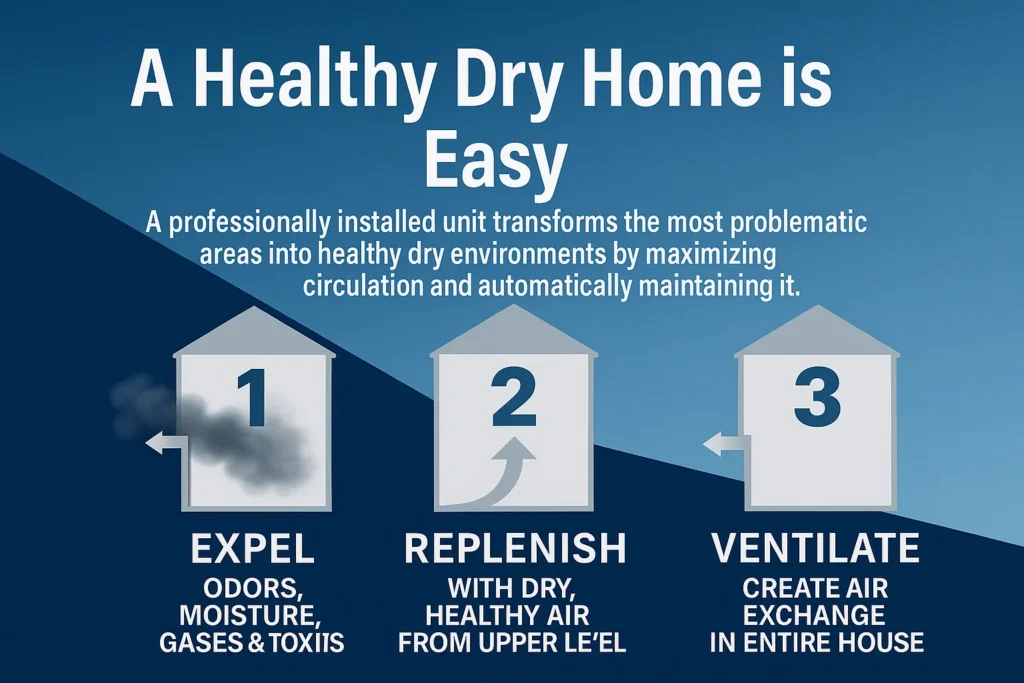
Mechanical ventilation systems exchange indoor air with fresh outdoor air, preventing pollutant accumulation.
| System Type | Mechanism | Application |
|---|---|---|
| Exhaust fans | Expel stale basement air | Effective for continuous air removal in workshops |
| Heat-recovery ventilators | Exchange and temper incoming air | Improves energy efficiency while ventilating |
| Duct-integrated vents | Leverage existing HVAC airflow | Minimal installation disruption |
Integrating ventilation with humidity control ensures a balanced basement climate that remains fresh and pollutant-free.
What Are Natural Ventilation Options for Basements?
When mechanical systems aren’t feasible, simple natural strategies can improve airflow and reduce stagnant air.
- Opening window wells or bulkhead vents when outdoor conditions are mild.
- Installing screened air bricks to allow passive cross-ventilation.
- Using portable fans to draw fresh air through windows and stairwell openings.
Combining natural airflow methods with dehumidification delivers measurable air-quality gains at minimal cost.
How Does Professional Mold Prevention and Remediation Improve Basement Air?
Expert mold services identify hidden colonies, safely remove contamination, and implement measures to prevent regrowth—ensuring consistently clean, breathable air.
How Can You Identify Signs of Mold in Your Basement?
Early mold detection relies on visual, olfactory, and environmental indicators.
- Dark spots or fuzzy patches on walls, flooring, or stored items.
- Persistent musty odor even after cleaning and ventilation.
- Elevated humidity readings above 60 percent on a hygrometer.
Spotting these signs early allows targeted remediation that stops mold spread before serious contamination occurs.
What Are the Steps in Effective Mold Remediation Services?
Professional mold removal follows a systematic process to ensure thorough decontamination and lasting protection.
- Inspection and containment of affected areas to prevent cross-contamination.
- HEPA vacuuming and scraping of visible colonies.
- Application of EPA-registered antimicrobial treatments to kill spores and inhibit regrowth.
- Drying and dehumidification to restore optimal humidity levels.
- Final clearance testing to verify safe spore counts before re-occupancy.
This comprehensive protocol eliminates mold hazards and restores high-quality basement air.
How Does Mold Prevention Protect Your Basement's Air Quality?
Ongoing prevention keeps mold from returning by removing moisture sources and maintaining clean surfaces.
- Regular humidity monitoring with automatic alerts when levels rise.
- Application of moisture-resistant paints or sealants on vulnerable surfaces.
- Prompt repair of leaks, cracks, and drainage issues at first sign of dampness.
Proactive prevention ensures that basement air remains fresh, allergen-free, and structurally sound over time.
How Can You Test and Monitor Basement Air Quality Effectively?
Routine air-quality assessments empower homeowners to detect issues early and maintain healthy conditions below grade.
What Are the Signs of Poor Basement Air Quality to Watch For?
Visible and sensory cues often signal declining basement air quality before readings confirm the problem.
- Musty, mildew-like smells that intensify in enclosed corners.
- Condensation forming on windows, pipes, or cool surfaces.
- Frequent allergic or respiratory symptoms among occupants.
Spotting these early signs leads to timely interventions and prevents full-scale remediation later.
How Do You Conduct a Basement Air Quality Self-Assessment?
A structured self-audit employs simple tools and observations to gauge environmental health.
- Measure temperature and humidity at multiple locations with a digital hygrometer.
- Visually inspect walls, floors, and stored items for mold, efflorescence, or staining.
- Use a DIY radon test kit following manufacturer instructions for accurate readings.
- Note odors, dust accumulation, and airflow obstructions during a walkthrough.
This assessment yields actionable data that guides targeted improvements in ventilation, dehumidification, or waterproofing.
When Should You Schedule Professional Air Quality Testing?
Professional testing is recommended when DIY results exceed safe thresholds or when health symptoms persist.
- Radon levels above 4 pCi/L require certified mitigation solutions.
- Mold spore counts significantly higher than outdoor baselines call for remediation experts.
- VOC measurements that trigger headaches, nausea, or dizziness indicate hidden chemical sources.
Engaging specialists ensures precise diagnostics and tailored recommendations for comprehensive air-quality control.
Why Choose Effective Basement Solutions for Improving Your Basement Air Quality in New Jersey?
Effective Basement Solutions combines local expertise with a full suite of moisture-control, ventilation, and remediation services to deliver healthier basements and peace of mind.
Our New Jersey-based team understands regional soil conditions, seasonal humidity shifts, and common foundation challenges that drive basement air problems. We integrate interior and exterior waterproofing, sump pump installation, crawl space encapsulation, advanced dehumidification, and custom ventilation systems into a coordinated plan that attacks root causes rather than chasing symptoms.
By offering a complimentary inspection and consultation, we empower homeowners with transparent recommendations, accurate cost estimates, and a clear roadmap for lasting results. Our ongoing support and maintenance programs preserve air quality year after year, ensuring your family breathes clean, comfortable air in every corner of the home.
Improving basement air quality begins with understanding the unique factors at play in below-grade environments and ends with tailored solutions that control moisture, eliminate pollutants, and promote continuous airflow. By combining professional waterproofing, dehumidification, ventilation upgrades, and expert mold services, New Jersey homeowners can protect health, enhance comfort, and safeguard property value. Connect with Effective Basement Solutions today for a free consultation and take the first step toward a healthier basement and home.

83hr1k