Basement Waterproofing Bergen County, NJ: Complete Solutions to Protect Your Home
Basement waterproofing in Bergen County tackles recurring water intrusion, mold risk, and structural damage—issues that lower property value and affect household health. This guide walks homeowners through why basements leak here, how common waterproofing systems work, and when foundation repair or crawl space encapsulation is the better long-term choice. You’ll learn to spot signs of hydrostatic pressure, weigh interior versus exterior drainage, and understand the cost drivers so you know when to call a pro. The article traces causes, compares proven solutions like sump pumps and French drains, outlines foundation reinforcement options, and offers practical cost and financing guidance. Local factors—heavy rain, snowmelt, and local soil—are woven throughout so you get clear, actionable next steps for a dry, durable basement.
What Are the Common Causes of Basement Leaks in Bergen County?
Basement leaks in Bergen County most often come from groundwater pressure, surface runoff, and foundation defects that let water bypass exterior protections and enter living spaces. Saturated soil builds hydrostatic pressure that forces water through cracks or porous materials, while poor grading and clogged gutters concentrate surface water near foundations. Identifying the root cause helps you prioritize the right fixes—everything from re-grading and gutter work to interior drainage or full exterior excavation and membranes. Understanding how runoff and foundation condition interact points homeowners to targeted, cost-effective repairs.
Common leak causes we see locally include:
- High groundwater and hydrostatic pressure behind foundation walls during heavy rain or snowmelt.
- Foundation cracks or deteriorating mortar that become direct entry points for water.
- Inadequate exterior drainage, poor yard slope, or blocked downspouts that funnel runoff toward the foundation.
- Older or missing interior drainage systems and failed sump pumps that leave basements exposed to seepage.
These conditions produce clear diagnostic clues—efflorescence, musty odors, and visible cracks—that guide the right remediation and lead into how Bergen County’s climate intensifies these problems.
How Does Bergen County’s Climate Affect Basement Water Issues?
Bergen County’s seasonal pattern—heavy rain events and spring snowmelt—raises soil moisture and the local water table, increasing hydrostatic pressure on foundations. Freeze-thaw cycles can widen small cracks, while intense storms can overload poor drainage and gutters. Though Bergen County is inland, localized flooding during storms can still impact low-lying basements, especially where grading or drainage is poor. Recognizing these climate-driven factors helps homeowners prioritize pressure-relief measures (interior drains, sump pumps) and surface water controls (grading, downspout extensions).
These weather-driven stresses translate into foundation load and movement issues, which we address next when looking at how foundation problems invite water intrusion and when structural repair is required.
What Foundation Problems Lead to Basement Water Intrusion?
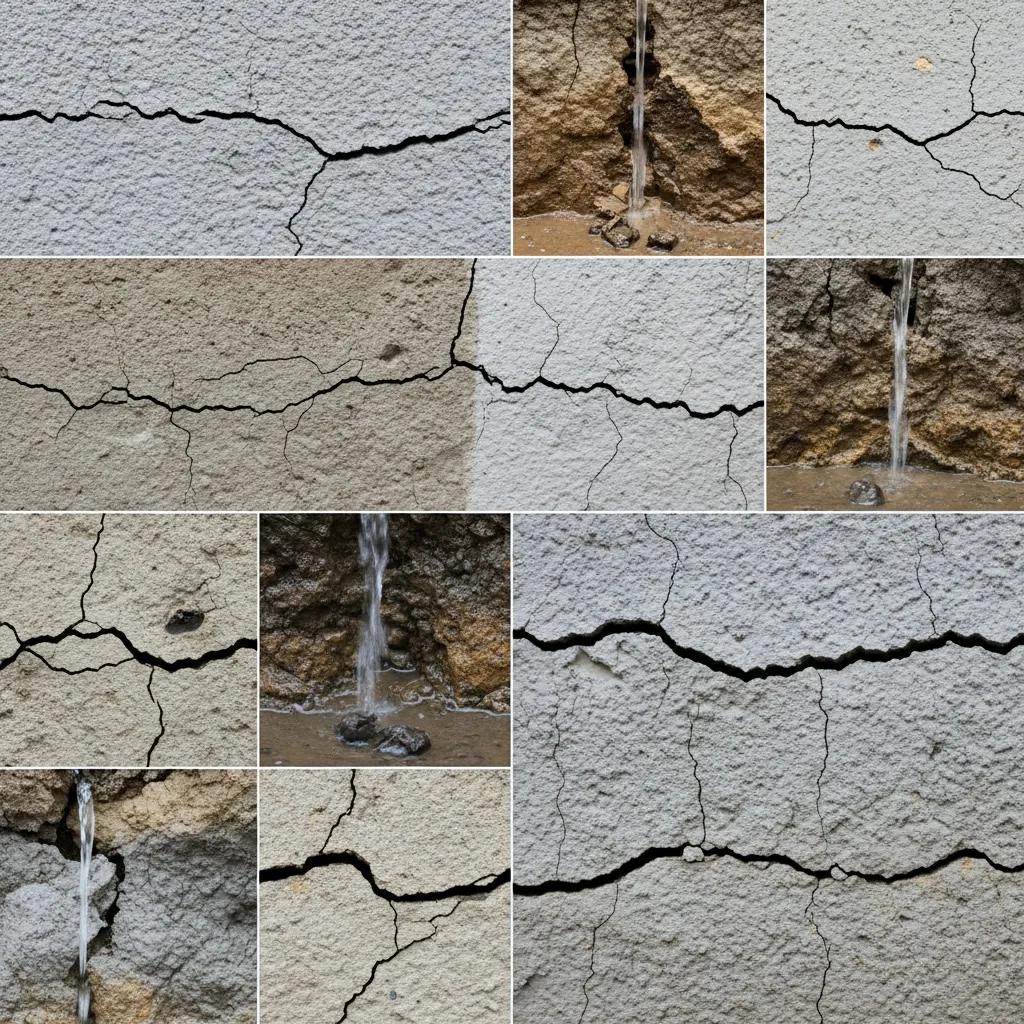
Foundation deterioration—hairline, vertical, and stair-step cracks—creates direct water paths when soils are saturated and hydrostatic pressure rises. Small hairline cracks often cause slow seepage and mineral staining; larger structural cracks signal movement or settlement that usually needs reinforcement plus waterproofing. Lateral soil pressure or poorly compacted backfill can cause wall bowing, which both weakens the structure and creates new leak points. A timely assessment separates cosmetic cracks that can be injected from deeper structural problems that require underpinning or wall stabilization to stop repeat leaks.
Matching the crack type with local soil and drainage conditions determines whether a non-structural seal or a combined structural repair plus waterproofing strategy is the correct approach—details we cover in the next section.
Which Basement Waterproofing Solutions Are Most Effective in Bergen County?
Effective waterproofing here combines relief of hydrostatic pressure, redirection of groundwater, and prevention of surface runoff from reaching the foundation. Common systems include sump pumps with interior drainage, interior French drains, and exterior waterproof membranes with proper grading. Each solution targets a specific mechanism: sump systems remove collected water, French drains intercept perimeter seepage, and exterior membranes stop water at the wall face. The right choice depends on how you use the basement, how much excavation you’ll tolerate, and how severe soil saturation or foundation damage is.
Below is a concise comparison of primary waterproofing systems to help homeowners weigh tradeoffs and expected outcomes.
| System | Typical Cost Range | Typical Lifespan | Installation Disruption | Primary Benefit |
|---|---|---|---|---|
| Sump pump with interior drainage | Moderate | 10–20 years (pump dependent) | Low to moderate (pit cut) | Rapid removal of collected groundwater and flood protection |
| Interior French drain (perimeter) | Moderate–High | 15–30 years | Moderate (trench along perimeter) | Controls seepage at the foundation-floor interface without exterior excavation |
| Exterior membrane and drainage | High | 20+ years | High (excavation around foundation) | Stops water at the source and relieves hydrostatic pressure externally |
This snapshot shows how systems differ in cost, longevity, and homeowner disruption and helps frame the choice between interior-focused fixes and more permanent exterior solutions. After selecting a system, consider complementary measures—dehumidification and battery backups—to keep conditions dry and protection continuous.
How Do Sump Pump Systems Prevent Basement Flooding?
Sump pump systems collect groundwater or surface infiltration in a pit and actively discharge it away from the foundation through a dedicated line. A typical system includes a pit, primary pump, check valve, and often a battery backup or secondary pump for power outages. Using a properly sized pump and pit reduces short cycling and extends service life, while a check valve prevents backflow. Routine maintenance—cleaning the pit, testing the float, and checking discharge clearances—is essential to avoid failures during storms.
Well-designed sump systems work with interior French drains or floor drains to collect water efficiently, and choosing a battery-backed unit preserves protection during the outages that often accompany severe Bergen County storms.
Are French Drain Systems Effective for Bergen County Basements?
French drains work well here when groundwater or perimeter seepage is the main source of dampness—especially where hydrostatic pressure bears against foundation walls. Interior French drains capture water at the base of walls and route it to a sump pump, which often avoids the need for exterior excavation and offers a cost-effective retrofit. Exterior French drains combined with waterproof membranes are the most permanent defense because they intercept water before it ever reaches the foundation, though they require more disruption and expense. Maintenance is generally low—keeping the outlet and sump clear—but correct installation with filter fabric and slope is critical for long-term performance.
In tight yards or built-up neighborhoods, interior French drains paired with a dependable sump pump are often the best practical option for older Bergen County homes.
Effective Basement Solutions installs sump pumps, interior French drains, and exterior membranes with licensed, in-house crews, tailoring systems to each home’s soil, access, and risk profile. An in-house team delivers consistent workmanship and coordination across drainage, dehumidification, and battery backup when needed. If you’re weighing cost and disruption, a free inspection will clarify which combination—sump, French drain, or exterior membrane—best protects your home long term.
How Can Foundation Repair and Structural Reinforcement Protect Your Basement?
Foundation repair and structural reinforcement fix the movements and failures that let water enter basements, turning recurring leaks into resolved structural conditions. Solutions range from crack injections that stop seepage to reinforcement systems that resist lateral soil pressure and correct settlement. The right repair depends on wall condition, movement rate, and whether the problem is hydraulic (water-driven) or mechanical (soil pressure/settlement). Combining structural repair with waterproofing ensures the wall is sound while interior or exterior systems manage groundwater.
The table below links common foundation repair methods to the wall conditions they best address, helping homeowners pick targeted reinforcement strategies.
| Repair Method | Typical Use Case | Expected Outcome |
|---|---|---|
| Epoxy or polyurethane injection | Non-moving vertical or hairline cracks | Stops leaks and restores concrete integrity for many years |
| Carbon fiber straps | Bowing or minor lateral movement | Stabilizes wall with minimal excavation and permanent restraint |
| Steel I-beam reinforcement | Significant bowing or heavy lateral loads | Provides rigid support to halt movement and permit load transfer |
| Underpinning (micropiles/pressure piers) | Foundation settlement or subsidence | Restores bearing capacity and lifts settled sections to level |
What Methods Are Used to Repair Foundation Cracks in Bergen County?
Repair starts with a diagnosis to determine whether cracks are active, structural, or cosmetic, then selects the appropriate technique. Epoxy injection bonds structural concrete and restores load transfer across static cracks. Polyurethane injections expand to form a flexible waterstop for active or seasonally moving cracks. Exterior excavation and membrane sealing are used when stopping water before it contacts the wall is necessary. Choosing the right method balances durability, invasiveness, and compatibility with nearby waterproofing systems.
Correct crack repair prevents repeat leaks and is often paired with interior drainage or exterior membranes to manage the groundwater pressure that caused the crack in the first place.
When Is Structural Reinforcement Needed for Bowing Basement Walls?
Structural reinforcement is needed when wall deflection exceeds safe limits, cracks widen, or movement continues—signs that lateral earth pressure is exceeding wall stiffness. Evaluations consider the amount of bowing (inches of displacement), presence of horizontal cracks, and whether movement is ongoing. Carbon fiber straps are a low-profile fix for moderate bowing; steel I-beams or wall anchors handle more severe movement with greater rigidity. Tradeoffs include cost, disruption, and permanence; decisions should account for long-term hydrostatic and surcharge loads so the wall remains watertight after stabilization.
Prompt reinforcement stabilizes conditions that would otherwise cause repeat leaks, letting waterproofing systems perform without recurring structural failure.
What Are the Benefits of Crawl Space Waterproofing and Moisture Control in Bergen County?
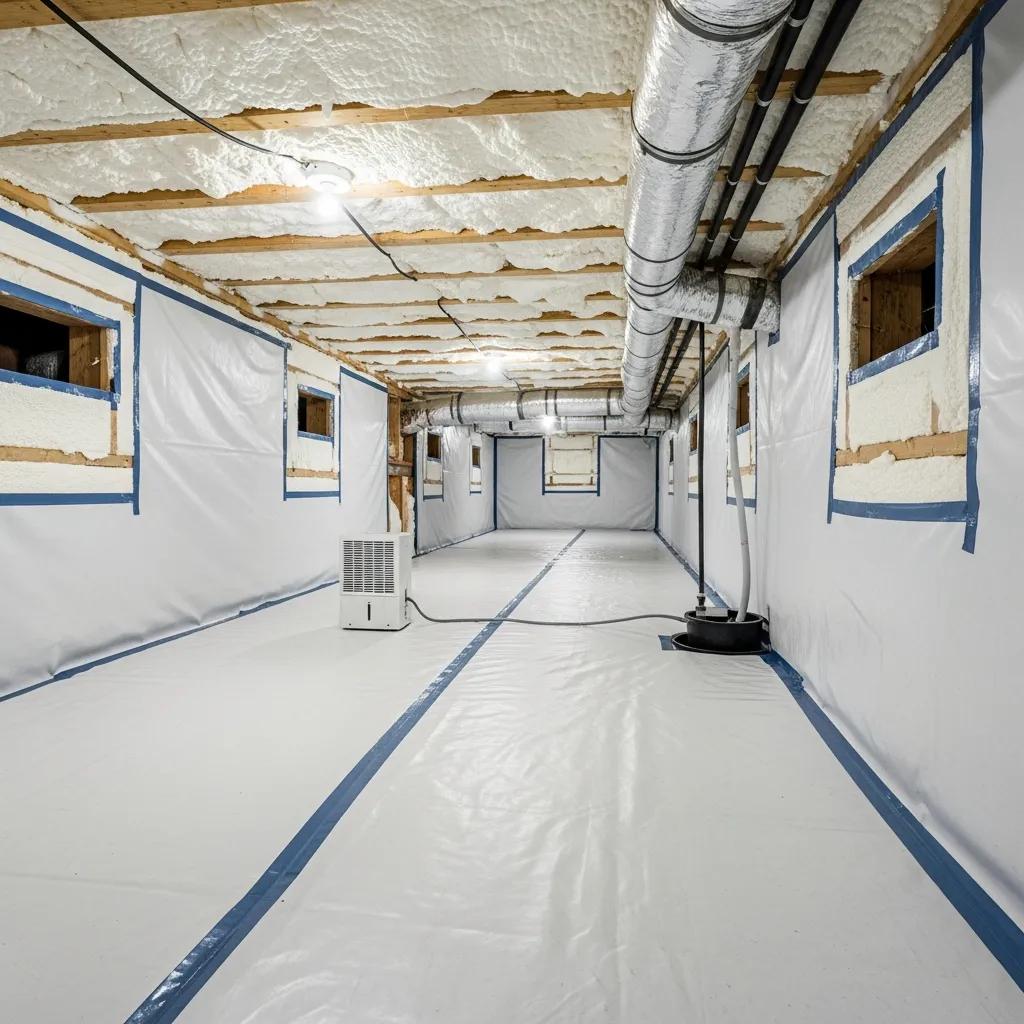
Crawl space encapsulation controls soil moisture, blocks vapor migration, and protects adjacent basements and indoor air by creating a dry buffer under the house. Encapsulation uses a durable vapor barrier, sealed vents, insulation, and sometimes sump/drain components to keep ground moisture out of living spaces. The result is lower mold risk, improved HVAC efficiency through a stable thermal plane, and less rot or corrosion in floor framing. When paired with a correctly sized dehumidifier, encapsulation maintains humidity targets that protect both the structure and occupant health.
Primary homeowner benefits from crawl space encapsulation and moisture control include:
- Better indoor air quality by reducing mold and damp-air migration into living spaces.
- Lower energy costs thanks to improved thermal separation and decreased HVAC load.
- Protection of structural elements (joists, subfloor) from rot and corrosion.
- Fewer pest and odor problems linked to damp substrates.
Encapsulation creates a dry, controlled environment that complements perimeter drainage and foundation waterproofing, and sets the stage for targeted dehumidification when needed.
How Does Crawl Space Encapsulation Improve Basement Health?
Encapsulation installs a continuous vapor barrier over the soil and walls, seals vents, and often adds insulation to reduce thermal bridging and moisture transfer into the basement. By interrupting the pathway for moist soil air and groundwater vapor, encapsulation lowers relative humidity beneath the house, cuts condensation on cold foundation surfaces, and reduces mold risk. Proper sealing also keeps out outdoor air and pests that can carry spores and allergens into living spaces, producing measurable indoor air quality improvements. Regular checks of seams and drainage tie-ins keep the system performing long term and integrate cleanly with basement waterproofing measures.
The humidity and air-quality benefits of encapsulation lead naturally to choosing and maintaining the right dehumidification system for Bergen County homes.
Crawl Space Moisture Control and Mold Prevention in Cold Climates
ABSTRACT: Crawl spaces are common in northern homes, and the relative humidity inside them is the primary driver for mold growth. Contaminants in the crawl space can move indoors if indoor pressure is lower. This study modeled ground cover properties and optimal air change rates to control moisture in an outdoor air‑ventilated crawl space in a cold climate and assessed current moisture conditions for material durability. It also examined factors that affect transport of potential pollutants from crawl spaces into indoor environments.
Moisture conditions were calculated with a validated dynamic simulation model while varying ground cover thermal and moisture properties and ventilation rates.
Moisture and fungal spore transport in outdoor air-ventilated crawl spaces in a cold climate, M Airaksinen, 2003
Why Are Dehumidification Systems Important for Bergen County Basements?
Dehumidifiers keep relative humidity in the recommended range (about 30–50%), preventing mold growth, musty odors, and moisture damage to finishes and stored items in basements and crawl spaces. Even after waterproofing and encapsulation, residual moisture sources—concrete outgassing or intermittent seepage—can keep humidity high without mechanical control. Picking a unit sized to the space, placing it for good air circulation, and providing reliable condensate drainage are key to continuous operation. Routine filter and coil care preserves performance and efficiency.
Combined with encapsulation and drainage, dehumidifiers complete a three-part approach: drainage removes bulk water, encapsulation blocks soil vapor, and dehumidification maintains a stable interior climate.
How Much Does Basement Waterproofing Cost in Bergen County NJ?
Costs in Bergen County vary by system choice, site access, basement size, and whether structural repairs are needed; typical ranges are helpful, but a site inspection gives the most accurate estimate. Sump pump installs with interior drainage are usually moderate in cost; interior French drains move into the mid-to-upper range depending on finish removal; full exterior membrane and excavation sit at the high end. Structural work and underpinning raise costs substantially. Treat estimates as scope documents tying specific interventions to measurable outcomes—lower humidity, stopped seepage, and restored structural integrity.
The table below highlights key cost drivers so homeowners know what influences quotes and why a free inspection is the next step for a precise number.
| Cost Driver | Description | Cost/Range Impact |
|---|---|---|
| Basement size and layout | Larger square footage and complex interiors increase labor and material needs | Low to high |
| Access and excavation needs | Tight access or required exterior excavation raises labor and equipment costs | Moderate to high |
| Structural repairs required | Bowing walls, underpinning, or major crack repair add significant expense | High |
| System type selected | Sump + interior drain vs interior French drain vs exterior membrane | Moderate to high |
| Permits and local regulations | Town-specific permitting or inspection fees can affect the final price | Low to moderate |
What Factors Influence Basement Waterproofing Prices in Bergen County?
Location-specific and technical factors affect pricing: soil type (clay versus sandy), water table depth, flood zone status, and municipal stormwater constraints. Interior finishes, stairs, and utilities complicate trenching and add removal/restore costs, while landscaping and hardscapes increase exterior excavation expense. Preparing a checklist for estimates—photos of the basement, a flood history, and access notes—helps contractors produce accurate bids. A clear, documented scope supports financing applications and makes proposals comparable.
Collecting these details before inspection speeds the estimate process and reduces surprises during the work.
Are Financing Options Available for Basement Waterproofing Services?
Yes—financing is commonly available for larger home projects like waterproofing and foundation repair. Lenders evaluate project cost, homeowner credit, and the contractor’s written scope when approving installment plans. You may see third‑party financing, contractor in-house plans, or traditional personal loans and HELOCs. A free inspection and written estimate are usually required to start the financing process. Ask about terms, interest rates, and any warranty conditions tied to financed work so you can compare offers. Financing makes comprehensive solutions—structural reinforcement plus waterproofing—affordable without delay.
Because final pricing depends on inspection findings, scheduling a free inspection gets you the official estimate needed for financing and confident decision‑making.
Why Choose Effective Basement Solutions for Basement Waterproofing in Bergen County?
Effective Basement Solutions provides full basement waterproofing and foundation services for New Jersey homeowners, backed by licensed, in-house crews, free inspections, and a single-source approach covering sump pump installs, French drains, structural reinforcement, crawl space encapsulation, dehumidifiers, and battery-backed pumps. An in-house, licensed team improves quality control and accountability from diagnosis through installation and follow-up—avoiding coordination problems that can occur with multiple subcontractors. Free inspections deliver a no‑obligation, evidence-based assessment and clear recommendations, while warranties and workmanship guarantees protect your investment over time.
Choosing a provider that combines structural repair with waterproofing and moisture control produces durable results and lowers the chance of repeat leaks—protecting both home value and occupant health.
What Makes Our Licensed In-House Crew the Best Choice?
Our licensed, in-house crew centralizes responsibility for workmanship, scheduling, and communication, reducing delays and ensuring consistent technical standards across waterproofing, drainage, and structural work. In-house teams develop local knowledge of Bergen County soils, municipal rules, and effective system layouts, allowing tailored solutions for regional challenges like heavy snowmelt and high groundwater. Homeowners get a single point of contact, consistent quality checks, and straightforward follow-up for maintenance and warranty claims—reducing variability and improving predictability.
How Do Our Free Inspections and Warranties Provide Peace of Mind?
A free inspection includes a visual foundation assessment, documentation of cracks and moisture indicators, diagnostic checks of drainage and sump systems, and a prioritized scope with an estimate. That report clarifies which interventions are essential versus optional and supports financing or insurance conversations. Warranties and workmanship guarantees define material and labor coverage for a set period after completion, reducing long‑term risk and ensuring corrective action if problems recur. Scheduling an inspection is the practical first step to a durable, documented repair plan.
Effective Basement Solutions focuses on transparent diagnostics and warranty-backed installations so homeowners can invest with confidence.
Frequently Asked Questions
What are the signs that my basement may need waterproofing?
Look for visible water stains on walls, persistent damp or musty odors, efflorescence (white mineral deposits), and mold growth. Cracks in the foundation—especially those that widen—can indicate water intrusion. Higher humidity or condensation are additional warning signs. If you notice any of these, schedule an inspection to diagnose the cause and stop damage early.
How long does the basement waterproofing process typically take?
Project length depends on basement size, the severity of water issues, and the chosen method. Many interior solutions—sump pump installs or interior French drains—can be completed in one to three days. Exterior excavation and membrane work take longer. A professional inspection will give you a precise timeline for your situation.
Can I waterproof my basement myself, or should I hire a professional?
Minor tasks—sealing small cracks or keeping gutters clear—can be DIY. But comprehensive waterproofing, structural repairs, and properly installed drainage systems are best handled by professionals who have the right tools, experience, and knowledge of local codes. Hiring a licensed contractor reduces the risk of incomplete fixes and future damage.
What maintenance is required after waterproofing my basement?
Keep sump pits clean and test pumps regularly, inspect drainage outlets for blockages, and monitor humidity levels. Check the foundation for new cracks or signs of water intrusion periodically. Maintain gutters and proper grading around the foundation. Annual professional inspections catch small issues before they become major problems.
Are there any health risks associated with a damp basement?
Yes. Excess moisture promotes mold growth, which can trigger allergies and respiratory issues. Damp spaces also attract pests that affect indoor air quality. Proper waterproofing and maintenance reduce these health risks and improve overall living conditions.
What financing options are available for basement waterproofing projects?
Financing options include personal loans, home equity lines of credit, third‑party contractor financing, or in-house payment plans some companies offer. Contractors typically require a written estimate from a free inspection to start the financing process. Compare terms, rates, and warranty conditions before deciding.
Conclusion
Investing in basement waterproofing in Bergen County protects your home from water intrusion, mold, and structural damage—and preserves both property value and occupant health. Understanding leak causes and the most effective systems helps you choose the right solution for your home. Schedule a free inspection with our licensed team to get a clear, prioritized plan for a dry, safe basement. Take the first step today to secure your investment and improve your living space.
