Foundation Waterproofing NJ: Complete Solutions to Protect Your New Jersey Home
Basement and foundation waterproofing in New Jersey addresses groundwater intrusion, structural deterioration, and indoor air quality risks that come from persistent moisture in below-grade spaces. This article explains how foundation waterproofing works, why hydrostatic pressure and local soil conditions make New Jersey homes vulnerable, and which corrective systems—from interior drainage and sump pumps to French drains and crawl space encapsulation—deliver long-term protection. If you need a practical next step, Effective Basement Solutions provides a Free Inspection and consultative diagnosis to help homeowners prioritize repairs without sales pressure. Throughout this guide you will find clear signs of foundation water damage, technical explanations of causes like hydrostatic pressure and foundation cracks, a comparison of common waterproofing approaches, transparent cost factors with example ranges, and practical maintenance steps tailored to New Jersey’s climate. Read on to learn how to diagnose, remediate, and maintain dry basements and foundations in NJ, and when to schedule a professional assessment.
What Are the Common Causes of Basement Water Problems in New Jersey?
Basement water problems in New Jersey typically result from a combination of hydrostatic pressure, foundation cracks, poor surface drainage, and a high local water table; these causes work together to allow groundwater or surface runoff to enter below-grade spaces and create persistent moisture. Hydrostatic pressure builds when soil around the foundation becomes saturated, pushing water through the smallest weaknesses in walls and floors and accelerating masonry deterioration. Poor grading, clogged gutters, and insufficient exterior drainage increase the volume of water near foundations during seasonal storms, which is especially relevant in New Jersey’s variable rainfall patterns. Recognizing these root causes helps homeowners select targeted solutions—interior drainage systems for managing seepage, exterior drainage and grading for redirecting runoff, and foundation repairs for structural breaches. Understanding the cause leads directly to choosing the right combination of mitigation methods, which the next sections explore in detail.
The most common contributors to basement and foundation water intrusion in New Jersey include:
- Hydrostatic pressure from saturated soils pushing water through joints and cracks.
- Foundation cracks and settlement that provide direct paths for moisture.
- Poor exterior grading and clogged or failing gutters/downspouts that concentrate runoff near the foundation.
- High seasonal groundwater levels and localized poor-draining soils.
Recognizing and addressing these causes early reduces mold risk and structural damage and sets the stage for targeted remediation and prevention measures.
How Does Hydrostatic Pressure Affect NJ Foundations?
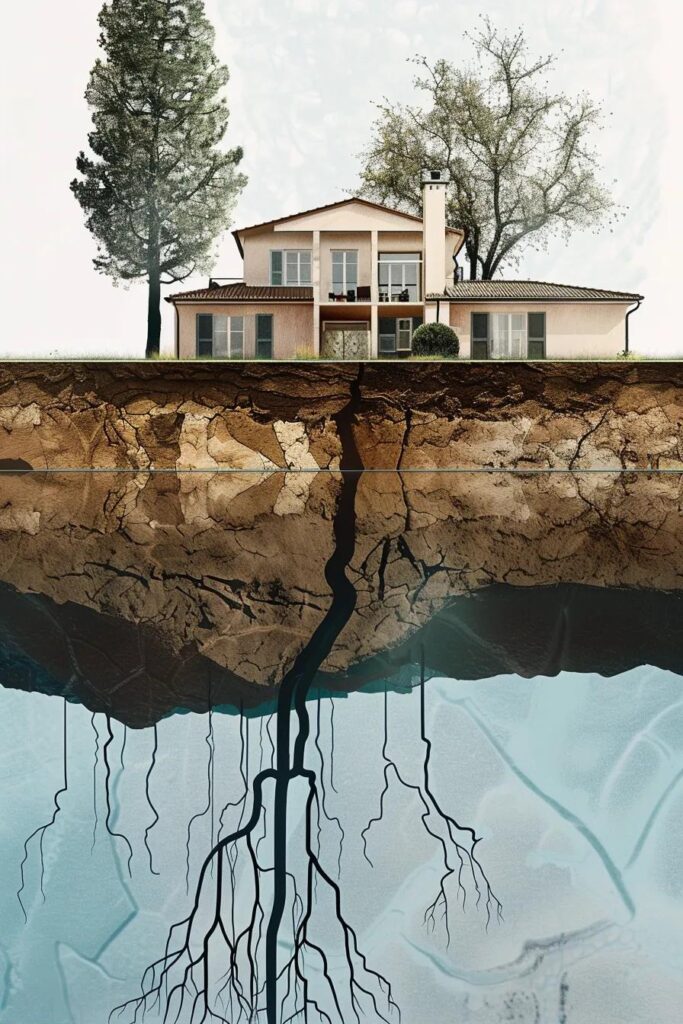
Hydrostatic pressure is the lateral force exerted by saturated soil and groundwater against a foundation; when soil pores fill with water, the pressure increases and seeks release through any weakness in the foundation assembly. This pressure can cause seepage through mortar joints, hairline cracks, and cold joints in poured concrete, and over time it can contribute to larger cracks, bowed walls, and floor heave depending on foundation type.
Mitigation relies on reducing the water load (improving exterior drainage and grading), providing a controlled drainage path (interior drainage systems or exterior French drains), or combining these tactics with structural reinforcement when walls are failing.
For New Jersey homeowners, understanding hydrostatic mechanics clarifies why interior systems paired with reliable sump pump backup are often necessary in areas with seasonally high groundwater and clay-rich soils that retain moisture.
The next subsection outlines the visible and sensory signs that indicate hydrostatic pressure or other causes are active in a home.
What Signs Indicate Foundation Water Damage or Leaks?
Visible staining, efflorescence, peeling paint, musty odors, and mold growth are common interior signs of water intrusion, while exterior indicators include settling, bulging masonry, and soil erosion near the foundation; each symptom should prompt documentation and prompt evaluation.
Hairline cracks in floor slabs or vertical/stair-step cracks in block walls often signal water migration or differential settlement, whereas bowed or leaning walls indicate more advanced hydrostatic load or wall weakening.
Health and structural risks increase when moisture persists, as mold growth can degrade indoor air quality and long-term dampness can corrode embedded steel and masonry ties.
Homeowners should photograph evidence, monitor patterns during/after storms, and schedule a diagnostic inspection if multiple signs appear; a professional assessment clarifies whether the issue is primarily drainage, repairable cracks, or structural reinforcement needs. Early identification and triage ensures that remediation addresses root causes rather than only treating surface symptoms.
Which Basement Waterproofing Services Are Available in New Jersey?
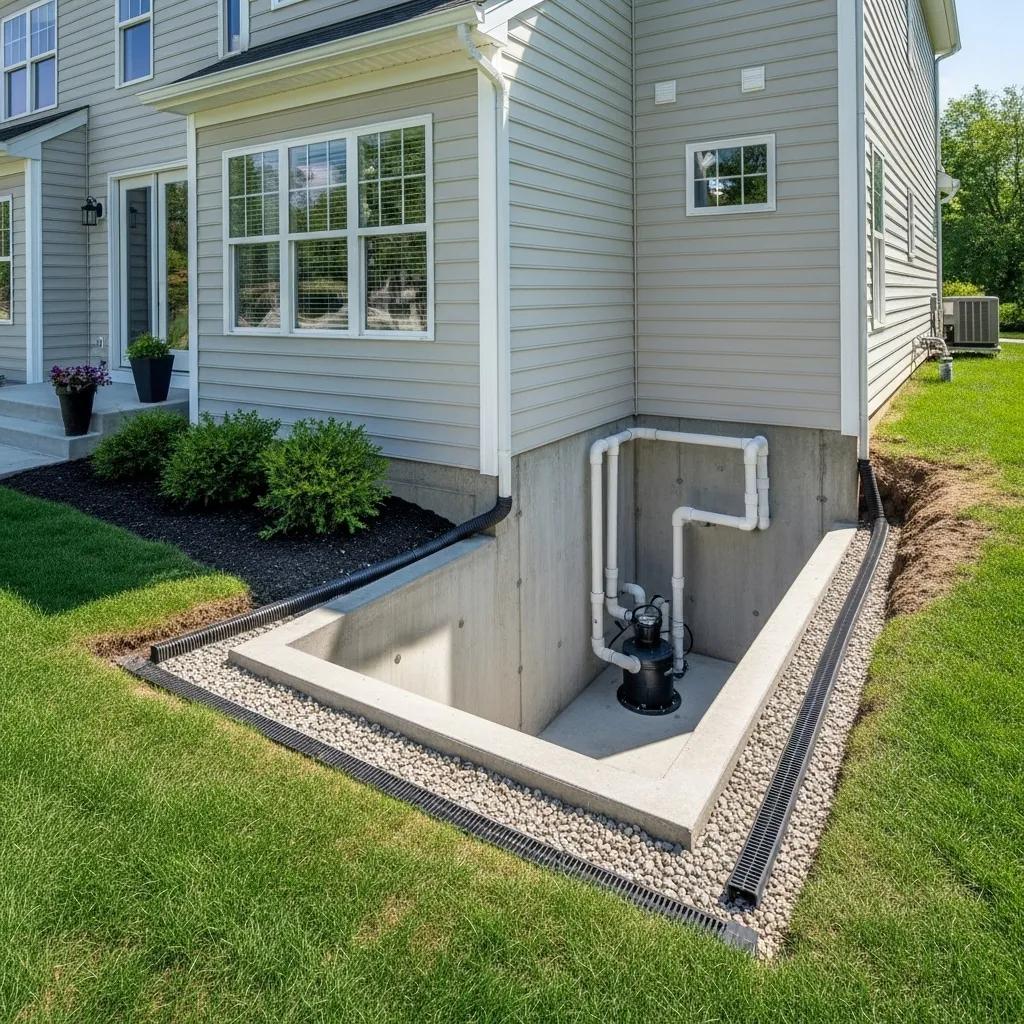
Basement waterproofing services fall into discrete categories—interior drainage and sump systems, exterior excavation and waterproofing, French drains and perimeter drainage, crawl space encapsulation, and targeted foundation crack repair—each addressing different mechanisms of water entry and offering specific benefits. Interior drainage systems and sump pumps manage groundwater that reaches the foundation interior by capturing water at the slab perimeter and directing it to a sump basin; these systems are cost-effective for many NJ homes and minimize exterior disruption. Exterior solutions (excavation, membrane application, and exterior French drains) stop water before it reaches the foundation but require more invasive work and higher budgets, appropriate where soil and grading issues dominate. Crawl space encapsulation isolates ground moisture and improves humidity control under floor systems, reducing mold risk and improving HVAC efficiency. Selecting the correct service depends on the dominant cause—hydrostatic pressure and high groundwater often need combined interior drainage and backup power, whereas surface runoff problems prioritize exterior grading and drainage upgrades.
Interior and exterior waterproofing, sump pumps, French drains, and encapsulation are commonly offered by specialized contractors; Effective Basement Solutions provides these services through an in-house licensed crew with a consultative approach and Free Inspection offer for New Jersey homeowners seeking tailored plans. After an initial diagnostic inspection, technicians can recommend a single-system solution or an integrated approach that pairs crack repair or reinforcement with drainage to ensure both structural integrity and dry conditions. Matching the method to the cause prevents wasted expense and delivers longer-lasting protection.
| Service Type | Primary Component | Best Use Case |
|---|---|---|
| Interior drainage & sump pump | Perimeter channel, sump basin, pump | Homes with interior seepage from hydrostatic pressure or where exterior excavation is impractical |
| Exterior waterproofing & membrane | Excavation, membrane, exterior drain | Properties with persistent exterior runoff, poor grading, or where preventing water at source is priority |
| French drain installation | Perforated pipe, gravel trench | Sites needing groundwater redirection around foundation footings or yard drainage correction |
| Crawl space encapsulation | Vapor barrier, drainage, dehumidifier | Homes with humid crawl spaces, musty odors, or where subfloor moisture affects HVAC efficiency |
How Do Interior Drainage Systems and Sump Pumps Prevent Flooding?
Interior drainage systems prevent basement flooding by capturing seepage where it emerges—typically at the interior slab perimeter or at wall-floor joints—and channeling that water into a central sump basin where a pump expels it away from the foundation.
The system’s mechanism involves a recessed channel or perforated piping bed installed below the slab, which intercepts groundwater under hydrostatic pressure and routes it to the sump, reducing infiltration and relieving pressure on the slab and walls.
Sump pumps vary by horsepower and discharge capacity and can be paired with battery backup systems or water-powered backups to ensure operation during power outages and storms—an important consideration for New Jersey properties facing storm-related outages.
Routine maintenance includes checking float switches, cleaning the basin and inlet, and testing backup batteries; proactive service extends pump life and prevents failure during high-water events.
Common maintenance and lifecycle expectations for interior drainage and sump systems include:
- Quarterly visual checks and semi-annual testing of pump operation.
- Battery backup testing every six months and replacement per manufacturer guidance.
- Professional inspection annually to verify pump capacity, discharge routing, and float switch condition.
These maintenance steps help maintain continuous protection and reduce the likelihood of catastrophic pump failure during severe weather.
What Are the Benefits of French Drain Installation for NJ Homes?
A French drain redirects groundwater away from a foundation by intercepting subsurface water and conveying it through a sloped gravel trench and perforated pipe to a safe discharge or dry well, making it a strong solution where groundwater migration or saturated soils drive seepage.
Installation typically involves trenching at or below the footing level and ensuring proper slope for gravity drainage or connecting to a sump and pump where gravity discharge is not possible; in New Jersey, clay-rich or poorly draining soils often make French drains an effective long-term control.
Benefits include reduced hydrostatic pressure on walls, diminished interior seepage, and fewer episodes of standing water near the foundation, contributing to lower mold risk and extended foundation life.
Maintenance is minimal—periodic inspection of discharge points and surface vegetation control—but initial design must account for local soil, frost depth, and existing utilities to ensure durability.
This approach is especially recommended when exterior grading improvements alone cannot prevent groundwater accumulation, or when perimeter drainage is required to manage distributed seepage across a foundation footprint.
How Does Foundation Repair Complement Waterproofing in NJ?
Foundation repair and waterproofing are complementary: waterproofing addresses water entry and moisture control, while foundation repair restores structural integrity where cracks, settlement, or wall movement compromise load-bearing performance.
When structural cracks or wall bowing exist, sealing and drainage alone will not stop progressive movement; corrective repair—such as crack injection, underpinning, or reinforcement—stabilizes the structure and should precede or be paired with waterproofing to ensure both dryness and stability.
Repair selection depends on crack type, wall condition, and load factors: non-structural shrinkage cracks may accept sealing, whereas active settlement or lateral wall deflection may require underpinning or reinforcement techniques.
Sequencing commonly follows diagnosis: address immediate structural threats first, then implement waterproofing systems to prevent water-driven degradation over time.
Combining these processes produces durable results and reduces the chance of repeat interventions.
What Methods Are Used for Foundation Crack Repair in New Jersey?
Foundation crack repair methods vary by crack cause and severity, with common techniques including epoxy injection for structural cracks, polyurethane injection for active leaks, and mechanical stitching or underpinning for larger or heaving failures.
Epoxy injections restore concrete tensile strength and are often used where cracks are stable and structural load transfer is needed, whereas polyurethane foams expand to seal active water pathways and are preferred when stopping ongoing leaks is the priority. For severe settlement or voiding beneath footings, underpinning with helical piles or push piers can re-establish support and lift settled sections; these methods transfer loads to competent soils and are chosen when repair must address soil bearing capacity. Decision guides for homeowners should consider whether the crack is hairline or stair-step, whether moisture is present, and whether wall movement is ongoing; a free diagnostic inspection helps determine the correct method and whether reinforcement should accompany waterproofing. Properly matched repair techniques prevent recurrence and protect the investment in waterproofing systems.
When Is Structural Reinforcement Necessary for NJ Foundations?
Structural reinforcement becomes necessary when walls show progressive movement—exhibited as worsening bowing, large horizontal cracks, or settlement signs that indicate the wall no longer carries loads safely—or when inspections reveal soil shifts that continue to exert dangerous lateral or uplift forces.
Reinforcement options include carbon fiber straps for moderate flexing walls, steel beam installation for high-load support, and full-wall reconstruction for extensively compromised sections; each option balances invasiveness, cost, and long-term durability.
Indicators such as increasing wall deflection measurements, recurring interior water entry despite drainage, or foundation tilt beyond tolerance thresholds point toward reinforcement needs rather than cosmetic fixes.
Reinforcement decisions should be based on structural engineering assessment combined with waterproofing diagnosis, because controlling moisture and lateral loads simultaneously ensures the reinforcement endures without accelerated corrosion or rot. Combining reinforcement with effective drainage and moisture control creates a stable, dry foundation system that minimizes future repair cycles.
Expert Foundation Waterproofing Solutions for NJ Homes
Costs for foundation waterproofing in New Jersey vary widely because they depend on the root cause, foundation type, level of excavation required, access constraints, and the chosen system; transparent consideration of these factors helps homeowners set realistic budgets and evaluate proposals.
Major cost drivers include the square footage of the basement, whether exterior excavation is required, the condition and type of foundation (poured concrete, block, or stone), soil conditions that may necessitate deeper drains, and required corrective repairs such as crack injection or underpinning.
Accessibility impacts labor rates—tight access, mature landscaping, or built structures near the foundation add complexity—while permitting or site-specific disposal requirements can also raise costs.
Example ranges for common solutions (typical but not guaranteed) include interior drainage and sump systems as a moderate-cost solution, exterior excavation with membrane application at a higher cost, and targeted crack injections or encapsulation at lower-to-moderate cost; however, an on-site diagnostic inspection is essential to deliver precise estimates.
| Solution Category | Typical Cost Range | Time to Complete |
|---|---|---|
| Interior drainage & sump pump | Moderate ($3,000–$8,000 typical) | 1–5 days |
| Exterior excavation & membrane | Higher ($8,000–$25,000+) | Several days to 2+ weeks |
| French drain installation | Moderate–High ($4,000–$12,000) | 2–7 days |
| Crawl space encapsulation | Low–Moderate ($2,000–$8,000) | 1–5 days |
This comparison shows that more invasive exterior work typically increases both cost and project duration, while interior approaches can be faster and less disruptive but may require robust sump and backup strategies to handle hydrostatic loads.
Near the end of any cost discussion it is important to highlight that Effective Basement Solutions offers a Free Inspection and provides precise estimates following an on-site assessment, ensuring that homeowners receive a customized proposal tied to actual conditions rather than generic pricing. Scheduling a diagnostic visit clarifies required scope, allows for material and method selection, and yields an accurate cost and timeline tailored to the specific New Jersey property.
How Do Home Size and Foundation Type Affect Waterproofing Costs?
Home size and foundation type directly affect waterproofing costs because larger basements require more materials and labor, and different foundation materials demand distinct treatments; poured concrete often responds well to injection and interior drainage, while block foundations may require more extensive sealing and crack repair.
A small crawl space typically needs less material and can be encapsulated quickly, while a full basement with multiple problem zones (cracked walls, uneven slab, multiple seepage points) increases labor time for trenching, membrane installation, and crack repairs.
Foundation geometry—long footings, attached garages, or unique architectural features—also influences time and complexity, and the need for heavy equipment access can add mobilization fees.
Homeowners should expect quotes to reflect square footage, number of affected walls, and complexity rather than a flat per-house price. Accurate cost planning therefore requires a site visit to quantify trouble areas and discover hidden factors such as buried utilities or under-slab voids.
Are Free Inspections Available for NJ Basement Waterproofing?
Yes—many reputable waterproofing providers offer Free Inspections to diagnose the root causes, document moisture patterns, and produce tailored recommendations; Effective Basement Solutions specifically provides a Free Inspection to New Jersey homeowners so they can understand options without pressure.
During a typical inspection, technicians perform a visual assessment of interior and exterior conditions, take moisture readings, evaluate grading and gutter systems, inspect foundation walls and drains, and identify active seepage or structural concerns; this information supports a detailed written proposal.
The inspection also clarifies whether remediation should prioritize structural repair, drainage upgrades, or encapsulation and whether permits or engineering reports will be required.
Homeowners should prepare by clearing access to basements and crawl spaces, noting when leaks occur, and gathering any past repair records to facilitate a focused assessment.
A Free Inspection converts uncertainty into a prioritized plan and accurate estimate, making it the recommended first step for responsible property owners.
How Can Crawl Space Encapsulation Improve Basement Waterproofing in New Jersey?
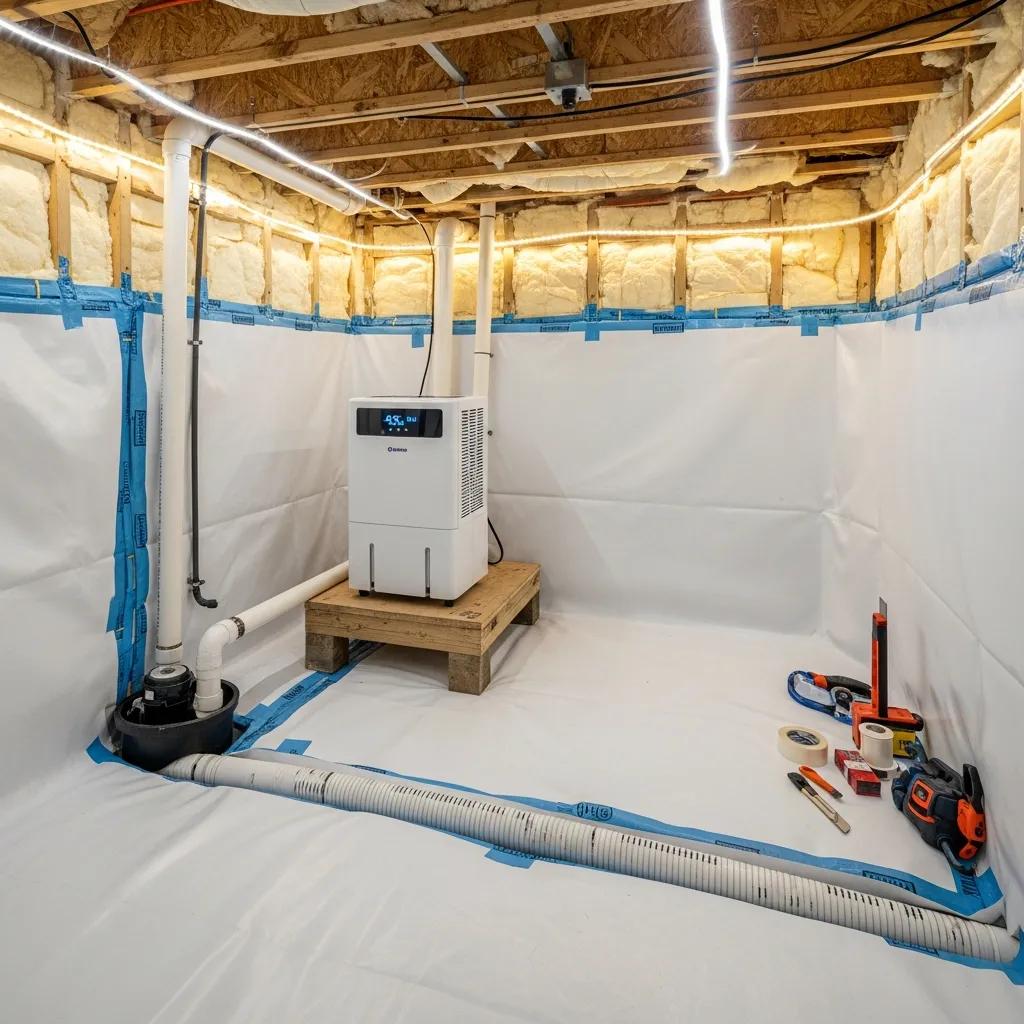
Crawl space encapsulation creates a controlled, moisture-resistant envelope beneath the floor by installing a durable vapor barrier, perimeter drainage or sump, insulation, and a dehumidification strategy; this intervention reduces ground moisture transfer, limits mold growth, and stabilizes subfloor humidity levels that affect indoor comfort and structural components.
The encapsulation mechanism blocks vapor diffusion from damp soil, channels any incidental water to drainage collection points, and pairs with dehumidification to maintain safe relative humidity for wood and mechanical systems.
For New Jersey homes with humid summers and seasonally wet springs, encapsulation reduces HVAC loads, improves air quality by limiting mold spore circulation, and reduces the potential for crawl space-borne odors entering living spaces. When implemented as part of a larger waterproofing plan, encapsulation complements perimeter drainage or interior sump systems by addressing moisture sources directly under the home rather than only at the foundation wall.
| Component | Characteristic | Benefit |
|---|---|---|
| Vapor barrier | Heavy-duty polyethylene or reinforced liner | Blocks ground moisture and reduces vapor transmission |
| Perimeter drainage | Floor-level channel to sump | Collects incidental water and directs to pump |
| Insulation | Foam or board insulation on walls | Improves energy efficiency and reduces cold floors |
| Dehumidifier | Sized for crawl volume, continuous drain | Controls humidity, inhibits mold growth |
What Are the Benefits of Crawl Space Vapor Barriers and Drainage?
Vapor barriers and drainage work together to limit soil-to-air moisture flow, protect wooden joists and floor systems from rot, and reduce conditions favorable to mold, thereby safeguarding structural health and indoor air quality.
A durable vapor barrier prevents ground moisture from evading into the crawl space air column, while a perimeter or point drainage system captures any water intrusion and routes it to a sump pump or discharge point; together they prevent standing water and long-term elevated humidity. In practice, properly installed encapsulation often shows significant reductions in crawl space relative humidity and clearer baseline moisture readings, translating into fewer mold remediation cycles and more stable subfloor conditions. Maintenance is minimal—periodic inspections and dehumidifier servicing—yet benefits last for many years when components are correctly sized and installed. Homeowners should pair vapor barriers with ventilation control and dehumidification to achieve consistent results across New Jersey’s seasonal extremes.
Crawl Space Humidity and Mold Proliferation: Condition Management
The relative humidity of the air within crawl spaces is the most critical determinant of mold growth in crawl space structures. Potential contamination within the crawl space may be transported indoors if the indoor air pressure is lower than that of the crawl space. The study’s objective was to identify the key properties of ground covers and the optimal air exchange rates for managing moisture conditions in an outdoor air-ventilated crawl space situated in a cold climate, and to assess the suitability of current moisture levels with regard to material longevity. Furthermore, factors influencing the indoor transport of potential pollutants originating from crawl spaces were investigated.
Moisture and fungal spore transport in outdoor air-ventilated crawl spaces in a cold climate, M Airaksinen, 2003
How Does Crawl Space Encapsulation Prevent Mold and Moisture Issues?
Encapsulation prevents mold and moisture issues by interrupting the three conditions mold needs—moisture, nutrients, and time—primarily eliminating moisture and thereby making the environment less hospitable for fungal growth. By installing a continuous vapor barrier, controlling condensed surfaces with insulation, and maintaining relative humidity through a properly sized dehumidifier, encapsulation lowers ambient moisture to levels where mold spores remain dormant rather than colonize surfaces. The system also simplifies inspection and remediation should a localized leak occur because water pathways are channeled predictably to collection points, reducing hidden pockets of moisture that foster mold. Monitoring with hygrometers and occasional professional inspections ensures dehumidification setpoints remain effective year-round in New Jersey’s humid summers and wet seasons. Combined with routine home drainage maintenance, encapsulation significantly reduces mold risk beneath the home and supports healthier indoor environments.
What Maintenance and Prevention Steps Help Keep NJ Basements Dry Long-Term?
Effective, long-term basement dryness depends on routine exterior and interior maintenance: keep gutters and downspouts clean and directed away from the foundation, maintain positive grading around the home to encourage runoff, and test sump pumps and backup systems on a regular schedule.
Preventive maintenance also includes inspecting interior wall and floor cracks for changes, servicing dehumidifiers with filter and coil cleaning, and scheduling annual professional inspections to verify the integrity of drainage channels and pump performance.
Seasonal tasks tied to New Jersey’s climate—clearing winter debris before spring rains, confirming roof drains are secure, and testing backup power options before storm season—reduce the likelihood of emergency water entry. Establishing a maintenance calendar with quarterly DIY checks and annual professional service visits preserves warranty coverage and extends system lifespan by catching wear before failure. These practical steps support the initial investment in waterproofing and help avoid costly repeat interventions.
- Quarterly: Visual inspection of basement walls, dehumidifier filter checks, and sump pump basic test.
- Biannually: Battery backup test for sump pump and cleaning of sump basin; clean gutters and downspouts.
- Annually: Professional inspection of drainage systems, dehumidifier service, and evaluation of exterior grading.
How Often Should Sump Pumps and Drainage Systems Be Inspected?
Sump pumps and drainage systems require a mix of homeowner checks and professional service: monthly visual checks and simple functional tests by owners, and a comprehensive professional inspection at least annually to verify pump capacity, float operation, discharge routing, and backup readiness.
A practical DIY test involves pouring water into the sump basin to trigger the pump and observe proper activation, while listening for unusual noises or irregular cycles; battery backup units should be tested by running them on battery power periodically and checking electrolyte levels where applicable. Professionals perform more detailed evaluations, including amperage draw testing, check valve inspection, discharge hose routing, and sump basin integrity checks; they can also identify early signs of wear that affect reliability during peak storm events. A proactive maintenance schedule minimizes unexpected failures and ensures systems function as intended when needed most.
What Are Effective Dehumidification Solutions for NJ Basements?
Effective dehumidification for New Jersey basements combines correct sizing, installation method, and drainage approach: choose a dehumidifier rated for the basement square footage and moisture load, prefer continuous-drain models when possible, and position the unit for optimal air circulation to prevent local hot spots of humidity. Sizing rules typically reference pints per day relative to space and expected humidity; whole-home integrated systems provide centralized control and efficiency for larger spaces, while portable units suit smaller basements and supplement encapsulation strategies. Continuous-drain setups avoid manual bucket emptying and maintain consistent operation, which is important in humid seasons; maintaining coils and filters annually preserves capacity and efficiency. Energy-efficient models with humidistats and auto-defrost features reduce operating costs and maintain consistent relative humidity levels below thresholds that favor mold growth. Selecting the right unit and integrating it with existing HVAC or encapsulation systems delivers reliable moisture control for New Jersey conditions.
Why Choose Effective Basement Solutions for Foundation Waterproofing in New Jersey?
Effective Basement Solutions offers a consultative, no-pressure approach to foundation waterproofing for New Jersey homeowners, emphasizing a Free Inspection, long-term protection against water damage and mold, and delivery by an in-house licensed crew rather than subcontractors.
Choosing a contractor that keeps crews in-house improves accountability, scheduling consistency, and quality control during installation—advantages that matter when coordinating drainage, pump installation, and any required crack repair or reinforcement. The company positions itself on transparent recommendations and durable solutions aimed at preventing recurring water intrusion and protecting home value, and the Free Inspection provides a risk-free starting point for homeowners to obtain a tailored plan. Effective Basement Solutions also focuses on long-term protection and warranty-backed work to ensure systems continue to perform under New Jersey’s seasonal stresses.
- Free Inspection: Homeowners receive an on-site diagnostic assessment to determine root causes and customized recommendations.
- In-house licensed crew: Work is completed by the company’s own licensed technicians to maintain quality and accountability.
- No sales pressure: Estimates are presented with options and education, not high-pressure sales tactics.
- Long-term protection focus: Solutions prioritize preventing water damage, mold, and structural issues over quick fixes.
How Does an In-House Licensed Crew Ensure Quality Waterproofing?
An in-house licensed crew ensures consistent workmanship because the firm trains and manages the same technicians who plan and execute projects, enabling direct oversight, consistent application of standards, and immediate follow-up when issues emerge.
Licensing signals that technicians meet regulatory training and competency thresholds, which is important for compliance with building codes and for installation practices that affect warranties and long-term performance.
Homeowners benefit from clearer lines of responsibility—warranty claims, follow-up service, and quality audits are handled directly by the company rather than deferred to subcontractors with variable practices. In practice, using in-house crews often reduces scheduling delays, improves communication, and yields more predictable outcomes because crews develop institutional knowledge about common local conditions and best practices for New Jersey soils and weather. This level of integration supports durable waterproofing that stands up to regional challenges.
What Makes Our No Sales Pressure Approach Unique for NJ Homeowners?
A no sales pressure approach centers on educating the homeowner—providing clear diagnostics, explaining multiple options with pros and cons, and offering written estimates—so homeowners can decide on a prioritized plan without feeling rushed. During a consultative Free Inspection, technicians outline immediate safety or moisture control needs, mid-term structural repairs if required, and longer-term preventive measures, clearly separating must-do items from recommended enhancements. Estimates are presented transparently, with explanations of how each component addresses root causes; homeowners are encouraged to ask questions and compare options rather than accept a single prescribed package. This consultative method builds trust, often resulting in better long-term outcomes because homeowners choose solutions based on risk tolerance, budget, and lifecycle expectations rather than impulse. For New Jersey properties facing variable weather and soil conditions, that clarity reduces the chance of incomplete or misdirected interventions.
Frequently Asked Questions
What is the best time of year to schedule foundation waterproofing in New Jersey?
The ideal time for foundation waterproofing in New Jersey is typically during the dry seasons, such as late spring or early fall. Scheduling during these periods minimizes the risk of rain and flooding, allowing for more effective installation of waterproofing systems. Additionally, contractors are often less busy during these times, which can lead to more flexible scheduling and potentially lower costs. However, if you notice signs of water intrusion, it’s crucial to address them promptly, regardless of the season, to prevent further damage.
How can I tell if my basement waterproofing system is working effectively?
To determine if your basement waterproofing system is functioning properly, regularly check for signs of moisture, such as damp spots, mold growth, or musty odors. Inspect sump pumps and drainage systems to ensure they are operational, and monitor humidity levels with a hygrometer. Additionally, look for any water pooling around the foundation or in the basement after heavy rain. If you notice any issues, it’s advisable to contact a professional for an inspection to ensure your waterproofing measures are effective and to address any potential problems.
What should I do if I notice new cracks in my foundation after waterproofing?
If you observe new cracks in your foundation after waterproofing, it’s essential to take them seriously. New cracks can indicate ongoing structural issues or water intrusion problems that need immediate attention. Document the cracks and monitor their size and progression over time. Contact a professional foundation repair specialist to assess the situation. They can determine whether the cracks are a result of settling, hydrostatic pressure, or other factors, and recommend appropriate repair solutions to prevent further damage.
Are there any DIY methods for maintaining my basement waterproofing system?
Yes, there are several DIY maintenance tasks you can perform to help keep your basement waterproofing system effective. Regularly inspect and clean gutters and downspouts to ensure proper drainage away from the foundation. Check sump pumps for functionality by testing them periodically and cleaning the sump basin. Additionally, monitor for any signs of moisture or leaks in the basement and address them promptly. Keeping a maintenance log can help you track these tasks and ensure your waterproofing system remains in good condition.
How can landscaping affect my home's foundation waterproofing?
Landscaping plays a crucial role in foundation waterproofing. Proper grading and drainage away from the foundation can prevent water accumulation around the base of your home, reducing hydrostatic pressure and the risk of water intrusion. Ensure that flower beds, shrubs, and trees are planted at least a few feet away from the foundation. Additionally, avoid using materials that retain moisture near the foundation, such as mulch. Regularly inspect your landscaping to ensure it directs water away from your home and does not obstruct drainage systems.
What are the long-term benefits of investing in professional waterproofing services?
Investing in professional waterproofing services offers numerous long-term benefits, including enhanced structural integrity, improved indoor air quality, and increased property value. Effective waterproofing prevents water damage, mold growth, and deterioration of building materials, which can lead to costly repairs down the line. Additionally, a dry basement can provide usable space for storage or recreation, enhancing your home’s functionality. Professional waterproofing also typically comes with warranties, providing peace of mind that your investment is protected against future water intrusion issues.
How Long Does Basement Waterproofing Take in New Jersey?
Project duration depends on the complexity and scope: a straightforward sump pump or small encapsulation can be completed in a day or two, interior perimeter drainage commonly requires several days to a week, and more invasive exterior waterproofing with excavation may extend to multiple weeks when accounting for landscaping restoration and weather delays. Variables that extend timelines include the need for structural repairs, difficult site access, utility relocations, and permitting—each of which must be resolved before continuous work can proceed. Contractors mitigate disruptions by staging work, protecting interior finishes, and communicating timelines clearly; homeowners should plan for noise, dust containment, and temporary limitations on basement access during active work. Understanding typical timeframes helps homeowners coordinate occupancy and scheduling, and a Free Inspection provides a realistic project schedule tailored to the property.
Can Basement Waterproofing Prevent Mold and Structural Damage?
Effective waterproofing reduces moisture—a primary driver of mold growth and material degradation—thereby significantly lowering the probability of mold colonization and slowing structural decay from repeated wet-dry cycles. By addressing water entry pathways, installing drainage and dehumidification, and repairing active leaks or cracks, homeowners eliminate the sustained moisture conditions that allow mold to proliferate and wood or metal elements to deteriorate. However, if mold is already present or structural elements are significantly compromised, specialized remediation or repair will be required alongside waterproofing to fully restore safe conditions. Continued monitoring and maintenance after installation ensure that systems remain effective and that any new moisture sources are addressed promptly to preserve indoor air quality and foundation integrity.
Conclusion
Investing in foundation waterproofing solutions in New Jersey safeguards your home against water damage, mold growth, and structural deterioration, ensuring long-term protection and peace of mind. By understanding the causes of water intrusion and selecting the right methods, homeowners can effectively maintain dry basements and enhance indoor air quality. Take the first step towards a secure foundation by scheduling your Free Inspection with Effective Basement Solutions today. Protect your investment and enjoy a healthier living environment for years to come.
