NJ Mold Remediation: Comprehensive Inspection, Removal & Prevention
If you’re looking for nj mold remediation services, we’ll walk you through how to safely remove mold, stop its return and improve your air quality.
When mold takes hold in a New Jersey basement, it can quickly threaten indoor air quality, structural integrity, and occupant health. This guide on mold remediation NJ explains exactly what professionals do to inspect, test, remove, and prevent mold growth while addressing the root causes like water intrusion. Along the way, you’ll learn how to recognize signs of infestation, compare common mold types, understand cost factors, and discover why Effective Basement Solutions’ integrated waterproofing and remediation approach delivers lasting protection.
We’ll cover:
- Defining mold remediation and its critical role in New Jersey’s climate
- Identifying when and where to schedule inspections
- Differentiating toxic black mold from other species
- Exploring our six-step basement mold removal workflow
- Tailoring crawl space and attic mold solutions
- Outlining prevention strategies—dehumidification, ventilation, waterproofing
- Breaking down cost drivers and estimate expectations
- Showcasing our certifications, local expertise, and customer success stories
What Is Mold Remediation and Why Is It Essential in New Jersey?
Mold remediation is the professional process of safely removing mold colonies, decontaminating affected areas, and addressing the underlying moisture source to restore a healthy, structurally sound environment. By combining EPA-aligned protocols, industry-grade equipment, and moisture-control expertise, remediation not only eliminates visible fungal growth but also prevents recurrence. Early intervention in New Jersey’s humid climate preserves property value and protects respiratory health, making remediation essential for every homeowner.
What Does the Mold Remediation Process Involve?

The mold remediation process in NJ involves inspection, testing, containment, removal, cleaning, and prevention to ensure comprehensive treatment from spores to structural repairs.
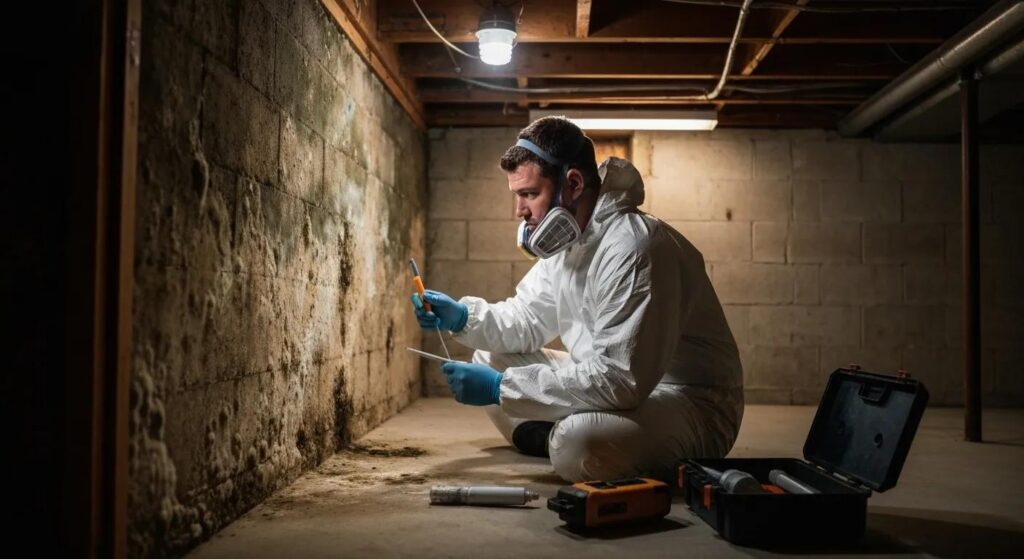
- Inspection & Assessment – Technicians visually inspect suspect areas, document moisture sources, and map infestation zones.
- Air and Surface Sampling – Certified testing identifies mold species and spore concentrations for targeted treatment.
- Containment Setup – Negative-pressure barriers and sealed work zones prevent cross-contamination.
- Mold Removal – Mechanical agitation, HEPA vacuuming, and antimicrobial treatments eradicate colonies from surfaces.
- Deep Cleaning – Air scrubbers and surface disinfectants capture airborne spores and cleanse structural materials.
- Prevention Measures – Moisture control solutions and repairs thwart future growth and maintain dry conditions.
Each step targets both visible mold and hidden spores, laying the groundwork for long-term protection.
How Does Mold Affect Health and Property in NJ Homes?
Mold growth releases spores and mycotoxins that aggravate allergies, compromise indoor air quality, and degrade structural materials.
| Impact | Effect | Reason |
|---|---|---|
| Respiratory Health | Allergy symptoms and asthma exacerbation | Airborne spores irritate airways |
| Structural Integrity | Wood rot, drywall decay, and paint blistering | Fungal enzymes break down materials |
| Indoor Environment | Persistent musty odors and poor ventilation | Spore circulation through HVAC |
By understanding these impacts, homeowners can see why remediation paired with moisture control is crucial for both well-being and property longevity.
Mold and Health Effects
Exposure to mold can lead to various health issues, including upper respiratory tract symptoms, coughing, wheezing, eye irritation, and skin rashes. For individuals with asthma or mold allergies, symptoms can be more severe. The Centers for Disease Control and Prevention (CDC) and the U.S. Environmental Protection Agency (EPA) provide guidelines for mold cleanup and prevention, emphasizing moisture control as key.
This research supports the article’s claims about the health impacts of mold exposure and the importance of professional remediation following established guidelines.
Why Is Professional Mold Removal Better Than DIY?
Professional mold removal outperforms DIY by combining specialized equipment, certified protocols, and moisture-control expertise to ensure thorough cleanup and prevent recurrence.
- Technicians use HEPA-filtered air scrubbers and commercial-grade biocides that aren’t available to consumers.
- Industry-standard containment methods eliminate cross-contamination, reducing health hazards.
- Integrated waterproofing solutions address root causes like foundation leaks and high humidity.
- Warranties and documented procedures give homeowners accountability and peace of mind.
Choosing certified professionals reduces liability and accelerates restoration, leading to safer indoor environments.
How Do You Identify the Need for Mold Remediation in NJ Homes?
Recognizing the right time for mold remediation requires spotting early indicators, understanding testing triggers, and gauging inspection costs. Homeowners who act promptly limit damage and safeguard health.
What Are the Common Signs of Mold Growth in Basements and Crawl Spaces?
Visible mold patches, musty odors, peeling paint, and damp walls are clear indicators of mold growth in basements and crawl spaces.
- Persistent dampness on floors or walls that doesn’t dry out
- Dark discoloration or fuzzy spots on concrete, wood, or insulation
- Peeling paint or wallpaper bubbles caused by trapped moisture
- Odors reminiscent of wet socks or decaying leaves
- Allergic reactions or respiratory irritation when in these areas
These warning signs warrant immediate inspection to prevent fungal spread into living spaces.
When Should You Schedule Mold Inspection and Testing in New Jersey?
Schedule mold inspection and testing as soon as you suspect water intrusion, experience persistent odors, or observe visible fungal growth to prevent health risks and costly repairs.
- After any flood, leak, or foundation crack that allows water entry
- When musty odors persist despite routine cleaning
- Prior to buying or selling a home, especially older properties
- If family members show allergy-like symptoms in specific rooms
- Following basement or crawl space waterproofing installations to verify results
Early testing informs proper remediation strategies and ensures hidden infestations are addressed.
How Much Does Mold Inspection Cost in NJ?
Mold inspection costs in New Jersey typically range from $300 to $800 depending on property size, sample count, and testing methods.
| Property Size | Average Cost | Details |
|---|---|---|
| Small homes (<1,000 sq ft) | $300–$400 | Includes basic air and surface sampling |
| Medium homes (1,000–2,000) | $400–$600 | Additional samples and detailed reporting |
| Large homes (>2,000 sq ft) | $600–$800 | Comprehensive testing with lab analysis |
Transparent estimates help homeowners budget for remediation and prevention services.
What Are the Types of Mold Commonly Found in New Jersey and How Are They Remediated?
What Is Black Mold and Why Is It Dangerous?
Black mold, or Stachybotrys chartarum, produces potent mycotoxins that can cause severe respiratory issues, neurological symptoms, and allergic reactions.
- Mycotoxins can trigger chronic coughing, headaches, and skin irritation
- Prolonged exposure may aggravate asthma and immune-compromised conditions
- Toxic spores adhere to surfaces and resist casual cleaning methods
Dangers of Stachybotrys chartarum (Black Mold) and Mycotoxins
Stachybotrys chartarum, commonly known as black mold, produces potent mycotoxins such as trichothecenes, which can cause severe health problems. These include respiratory issues, neurological symptoms like headaches and cognitive impairment, and aggravated allergic reactions. Professional handling with strict containment and disposal protocols is essential due to the toxic nature of its spores.
This citation verifies the article’s statements regarding the specific dangers of black mold and its mycotoxins, highlighting the need for specialized remediation.
How Is Black Mold Remediation Different from Other Mold Types?
Black mold remediation requires specialized containment, negative air pressure, and disposal protocols to safely handle its toxic spores and prevent cross-contamination.
- Triple-layered polyethylene barriers isolate the work area
- HEPA air filtration units maintain negative pressure and trap microscopic spores
- All removed materials are double-bagged and discarded per hazardous-waste guidelines
- Post-remediation clearance testing verifies safe reoccupation
This rigorous approach protects occupants and technicians from dangerous mycotoxin exposure.
What Other Mold Types Require Professional Removal in NJ Homes?
Beyond black mold, species like Aspergillus, Penicillium, and Cladosporium can cause health problems and structural damage, warranting professional removal.
- Aspergillus – Common in damp drywall, can cause lung infections
- Penicillium – Rapidly colonizes paper and wood, leading to rot
- Cladosporium – Thrives on fabrics, triggers allergy symptoms
Targeted biocides and precise remediation steps ensure these species are safely eliminated and prevented from returning.
How Does Effective Basement Solutions Perform Basement Mold Remediation in New Jersey?
Effective Basement Solutions blends decades of foundation repair expertise with advanced mold-control methods to deliver a seamless basement mold remediation service. By tackling both infestation and moisture intrusion, we restore healthy basements that stay dry.
What Are the Steps in Our Basement Mold Removal Process?
Effective Basement Solutions follows a six-step basement mold removal process—inspection, spore count testing, containment, removal, cleaning, and prevention—to restore a healthy environment.
- Comprehensive Inspection – Identify leaks, condensation sources, and mold hot spots.
- Spore Count Analysis – Lab-tested samples guide treatment intensity.
- Containment Installation – Negative air chambers seal off the mold-affected zone.
- Mechanical Removal – HEPA vacuums and wire brushes eliminate mold colonies.
- Antimicrobial Treatment – EPA-registered solutions disinfect structure and prevent regrowth.
- Preventative Solutions – Waterproofing, sump pump installation, and dehumidification maintain long-term dryness.
This workflow addresses both symptoms and root causes for durable mold control.
How Does Basement Waterproofing Prevent Mold Recurrence?
Basement waterproofing prevents mold recurrence by blocking water intrusion, diverting groundwater, and maintaining controlled humidity levels.
- Exterior membranes seal foundation walls against hydrostatic pressure
- Interior drainage systems capture seepage and direct it to sump pumps
- Wall-mounted dehumidifiers sustain optimal moisture levels below 50%
What Role Do Sump Pumps and French Drains Play in Mold Prevention?
Sump pumps and French drains work together to channel excess water away from foundations, reducing moisture exposure that fuels mold growth.
- French drains collect subsurface water along the footing and channel it to a sump pit
- High-capacity sump pumps eject collected water far from the home’s perimeter
- Backup battery systems keep pumps operational during power outages
How Can Crawl Space and Attic Mold Be Effectively Remediated in NJ Homes?
Crawl spaces and attics present unique remediation challenges that require customized containment, cleaning, and moisture-control strategies to protect the entire home envelope.
What Are the Signs of Crawl Space Mold and How Is It Treated?
Sagging insulation, wet floors, musty odors, and visible fungal growth indicate crawl space mold that is treated through encapsulation, mold removal, and moisture control.
- Encapsulation – Thick vapor barriers line walls and floors to block soil moisture
- Mold Removal – HEPA vacuuming and antimicrobial wipes sanitize framing and subfloors
- Ventilation Upgrades – Passive vents or dehumidifiers keep humidity in check
Encapsulating a crawl space also improves energy efficiency and indoor air quality upstairs.
How Is Attic Mold Remediation Conducted Safely?
Explore our NJ Mold Remediation Services for full treatment options. Attic mold remediation combines careful containment, direct removal, HEPA vacuuming, and thorough drying to safely eliminate fungal colonies in attic spaces.
- Drop cloths and negative-pressure fans protect living areas from dust
- Direct scraping and HEPA vacuuming remove mold from rafters and sheathing
- Borate treatments and antimicrobial sealants prevent future infestation
- Roof and vent inspections address entry points for moisture
Refer to the EPA’s guide on basic mold cleanup steps for recommended practices. :contentReference[oaicite:0]{index=0} This thorough approach restores a clean attic that can safely ventilate heat and humidity.
What Moisture Control Solutions Prevent Mold in Crawl Spaces and Attics?
Moisture control solutions—such as vapor barriers, dehumidifiers, and improved ventilation—prevent mold by reducing condensation and humidity in crawl spaces and attics.
| Solution | Mechanism | Benefit |
|---|---|---|
| Vapor Barrier | Blocks ground moisture | Keeps subfloor and insulation dry |
| Dehumidifier | Extracts airborne moisture | Maintains humidity below 50% |
| Ventilation Fans | Circulates air through vents | Prevents stagnant, humid pockets |
By combining these measures, homes enjoy cleaner air and reduced mold risk throughout.
What Are the Key Mold Prevention and Moisture Control Strategies for New Jersey Homes?
Proactive moisture control and ventilation measures are the foundation of lasting mold prevention in New Jersey’s varied climate zones.
How Does Dehumidifier Installation Help Prevent Mold Growth?
Dehumidifier installation helps prevent mold growth by maintaining indoor humidity levels below 50%, creating an environment that inhibits fungal proliferation.
- Continuous monitoring keeps relative humidity in the optimal range
- Built-in drainage options connect directly to floor drains for hands-free operation
- Energy-efficient models lower utility costs while protecting indoor air quality
Humidity Control and Waterproofing for Mold Prevention
Maintaining indoor humidity levels between 30% and 50% is crucial for preventing mold growth, as mold thrives in moist environments. Dehumidifiers effectively reduce airborne moisture, while basement waterproofing solutions, such as sealing foundation cracks and installing drainage systems, prevent water intrusion. Research indicates that controlling relative humidity is more critical than temperature for inhibiting indoor mold proliferation.
This research directly supports the article’s emphasis on dehumidification and basement waterproofing as essential strategies for long-term mold prevention by controlling moisture.
What Ventilation Solutions Improve Indoor Air Quality and Reduce Mold Risk?
Proper ventilation solutions—such as energy recovery ventilators, exhaust fans, and duct cleaning—improve indoor air quality and reduce mold risk by exchanging stale, humid air with fresh outdoor air.
- Energy recovery ventilators transfer heat while providing balanced airflow
- Bathroom and kitchen exhaust fans expel moisture at the source
- Routine duct cleaning removes dust, debris, and hidden mold spores
How Does Basement Waterproofing Complement Mold Prevention Efforts?
Basement waterproofing complements mold prevention efforts by sealing foundation cracks, installing drainage systems, and applying interior coatings to keep moisture out.
- Crack repairs and sealants block direct water entry points
- Interior drain channels route seepage to sump pumps
- Waterproof coatings add a second line of defense against dampness
What Factors Influence Mold Remediation Costs in New Jersey?
Several variables determine mold remediation pricing, and understanding them helps homeowners plan budgets and compare estimates effectively.
How Does the Size and Location of Mold Affect Pricing?
The size and location of mold significantly influence pricing, as larger areas and hard-to-access spots require more labor, materials, and specialized equipment.
- Square Footage – More contaminated area demands longer work and more biocide
- Accessibility – Crawl spaces, attics, and behind walls raise complexity and cost
- Containment Needs – Larger or multiple zones require additional barriers and filtration
How Do Mold Type and Extent of Damage Affect Remediation Costs?
Mold type and extent of damage impact remediation costs because toxic species require stricter protocols and heavily infested areas need extensive remediation work.
- Toxic Mold – Requires hazardous-waste disposal and negative-pressure isolation
- Surface vs. Structural – Deep material penetration may necessitate wall removals
- Moisture Repairs – Concurrent foundation or roof repairs add to overall investment
What Should Homeowners Expect in a Mold Remediation Estimate?
Homeowners should expect a detailed estimate that outlines inspection fees, remediation steps, equipment costs, and warranty coverage for mold remediation services.
- Line-item breakdown of each remediation phase and associated costs
- Clear inclusion of containment materials, labor hours, and disposal fees
- Moisture-control and waterproofing add-on options with pricing
- Warranty terms covering re-growth or service guarantees
Why Choose Effective Basement Solutions for Mold Remediation in New Jersey?
Effective Basement Solutions combines over 20 years of basement health expertise with industry-leading certifications and local insights to deliver reliable, lasting mold remediation across New Jersey.
What Certifications and Expertise Does Our Team Hold?
Our team holds IICRC (Institute of Inspection Cleaning and Restoration Certification) accreditation, PMII (Professional Mold Inspection Institute) credentials, and extensive training in basement waterproofing, foundation repair, and indoor air quality solutions.
- IICRC-certified technicians follow standardized remediation protocols
- PMII training ensures accurate sampling and spore analysis
- In-house structural repair expertise addresses root causes like cracks
How Do Our Customer Testimonials Reflect Our Service Quality?
Customer testimonials highlight timely responses, thorough mold removal, clear communication, and lasting results, demonstrating our commitment to quality and reliability.
- “They found hidden mold behind my walls and fully restored my basement.”
- “The team explained each step and provided a solid warranty on their work.”
- “My family’s allergy symptoms improved dramatically after remediation.”
Positive feedback underscores our focus on peace of mind and customer satisfaction.
What Local Experience Do We Bring to NJ Mold Remediation?
Effective Basement Solutions brings local experience in New Jersey’s diverse climates, building types, and regulations to deliver tailored mold remediation services.
- Proven success in coastal flood zones, inland basements, and older homes
- Familiarity with county permitting, code compliance, and insurance requirements
- Collaboration with local labs for rapid spore count results
What Are the Most Frequently Asked Questions About Mold Remediation in NJ?
Addressing common homeowner concerns upfront helps clarify expectations and build confidence before scheduling professional mold services.
Can Mold Come Back After Remediation?
Mold can return if the underlying moisture source is not fully resolved. Remediation that combines spore removal with waterproofing, dehumidification, and proper ventilation minimizes recurrence by maintaining a consistently dry environment.
How Long Does Mold Remediation Take?
Most mold remediation projects in New Jersey conclude within 1–3 days for moderate infestations, while extensive or toxic mold situations may require 4–7 days, including drying times and post-remediation clearance testing.
Are There Health Risks During Mold Removal?
Properly planned containment, negative-pressure equipment, and technician PPE ensure that health risks are minimized for occupants. Times when residents should vacate include heavy demolition phases or when mycotoxin levels are high until clearance testing confirms safe reentry.
Is Mold Remediation Expensive in New Jersey?
Mold remediation costs vary by scope, but investments typically range from $1,500 to $6,000 for common basement or crawl space treatments. Custom solutions and full waterproofing systems can raise budgets, but free estimates and clear scope definitions promote cost transparency.
Will Mold Remediation Solve Underlying Moisture Problems?
Comprehensive remediation always pairs mold removal with moisture-control solutions—such as foundation sealing, sump pump systems, and dehumidifiers—to address the root cause and prevent future infestations.
Effective mold remediation in New Jersey hinges on combining precise removal techniques with robust moisture management and structural expertise. By understanding the process, recognizing key signs, and partnering with certified professionals, homeowners protect their families, preserve property value, and enjoy a healthier living environment.
Ready to reclaim a dry, mold-free home? Contact Effective Basement Solutions at effectivewaterproofing.com for a free consultation and discover how our integrated remediation and waterproofing services create lasting peace of mind.