
At Effective Basement Solutions, we specialize in structural reinforcement NJ services designed to restore your foundation’s stability and protect against structural movement.
At Effective Basement Solutions, we specialize in structural reinforcement NJ services designed to restore your foundation’s stability and protect against structural movement.
Basement and foundation instability affects thousands of UK homes each year, with issues such as bowing walls, settlement cracks and water ingress threatening structural integrity and occupant safety. This guide delivers building reinforcement techniques that diagnose root causes, explain reliable repair materials and outline seismic retrofitting solutions to restore stability, protect against damp and boost long-term resilience. You will discover how to identify early warning signs, evaluate wall-repair methods—from carbon fibre straps to steel I-beams and wall anchors—understand underpinning options, explore structural waterproofing measures and know when to call in a structural engineer. Alongside practical insights, Effective Basement Solutions offers expert diagnosis, tailored plans and a free consultation to ensure your basement stands strong for decades.What Are the Common Signs and Causes of Basement Structural Problems?
Basement structural problems emerge when soil pressure, poor drainage or material fatigue compromise wall and floor stability. Identifying these warning signs promptly prevents progressive damage, reduces repair complexity and safeguards property value. For example, horizontal cracks driven by hydrostatic pressure often indicate external soil load exceeding wall capacity, while stair-step fissures reveal masonry movement.
Homeowners typically observe these symptoms first and seek building reinforcement techniques to stabilise their foundations.
| Sign Description | Underlying Cause | Structural Implication |
|---|---|---|
| Horizontal wall cracks | Hydrostatic soil pressure | Wall bulging and eventual collapse |
| Stair-step chamber cracks | Foundation settlement | Uneven load distribution |
| Bowing or bulging walls | Expansive clay soil | Reduced bearing capacity |
| Sticking doors/windows | Differential settlement | Frame misalignment |
| Damp patches or mould | Water ingress through cracks | Material deterioration, health risk |
Early detection of these indicators frames the need for targeted reinforcement, bridging to the specific methods that secure basement walls against progressive movement.
How to Identify Bowing Basement Walls and Their Causes
Bowing walls lean inward due to soil pressure exceeding the wall’s lateral strength, often in clay-rich soils after heavy rainfall. You might notice pronounced inward curvature, horizontal fractures or uneven floor levels adjacent to the bow. This condition demands immediate structural reinforcement to prevent collapse and restore load-bearing balance.
What Are the Typical Signs of Foundation Settlement and Cracks?
Foundation settlement manifests through diagonal or stair-step cracks at mortar joints, sloping floors and misaligned openings. These symptoms reflect differential sinking, often caused by soil compaction, tree-root extraction of moisture or poor initial footing depth. Recognising these early allows for underpinning or mudjacking before damage escalates.
How Does Water Ingress Affect Basement Structural Integrity?
Water ingress undermines concrete and masonry, eroding soil support and promoting freeze-thaw cycles that widen cracks. Persistent damp creates corrosion of embedded steel reinforcements and organic decay of insulation. Preventing moisture penetration through waterproofing and crack injection is critical to preserve structural health.
Polyurethane Resin Injection for the Repair of Concrete Cracks and Water Ingress in BasementsThe findings from this investigation can be applied as a method to arrest water ingress and seal cracks in concrete structures, such as basements…Evaluation of polyurethane resin injection for concrete leak repair, MA Safan, 2019
Which Structural Reinforcement Methods Are Best for Basement Wall Repair?
Effective basement wall repair relies on precise reinforcement methods that combine strength, durability and minimal excavation. Carbon fibre reinforcement, steel I-beam installation, wall anchor systems and epoxy or polyurethane injection deliver long-term stability by counteracting soil pressure, sealing cracks and restoring load paths. For instance, carbon fibre straps bond to concrete walls and resist inward bowing with high tensile strength.
| Method | Key Feature | Primary Benefit |
|---|---|---|
| Carbon fibre reinforcement | High-strength composite straps | Non-intrusive wall stabilisation |
| Steel I-beam installation | Structural steel support columns | Immediate lateral support |
| Wall anchor systems | Exterior tie-back anchors | Adjustable tension over time |
| Epoxy & polyurethane injection | Fluid polymers filling voids | Crack sealing and pressure relief |
Selecting the right technique depends on damage severity, wall composition and budget, guiding the deep dive into each approach below.
How Does Carbon Fibre Basement Reinforcement Work?
Carbon fibre reinforcement employs ultra-thin composite straps bonded to interior walls with epoxy resin. The mechanism transfers lateral loads into the straps, which exhibit high tensile strength and corrosion resistance. This non-invasive solution improves wall rigidity and prevents further bowing with minimal excavation and disruption.
When Is Steel I-Beam Installation Suitable for Bowing Walls?
Steel I-beam installation suits severe wall deflection where immediate, vertical load-bearing support is required. Technicians install vertical steel columns at regular intervals, welding base plates to floor slabs and bolting flanges to wall surfaces. The result is a robust internal skeleton that counters external soil pressures and restores wall alignment.
Steel Fibre-Reinforced Concrete (SFRC) for Innovative Basement ConstructionThe application of steel fibre-reinforced concrete (SFRC) in basement design, omitting conventional reinforcement, represents a significant advancement for such structures. This research investigates the potential of SFRC as a viable alternative for floor areas up to 20 × 20 m, with the aim of reducing construction costs and simplifying the building process. Within these investigations, the foundation slab and basement walls are considered as structural elements reinforced solely with steel fibres, thereby eliminating the requirement for traditional steel reinforcement and enhancing resource and construction efficiency.Innovative Basement Design with SFRC Excluding Conventional Reinforcement, Unknown Author, 2025
What Are the Benefits of Wall Anchor Systems for Basement Stabilisation?
Wall anchor systems secure bowed walls by installing exterior anchors tied to reinforced interior plates. Adjustable tension cables reconnect soil pressure to stable ground outside the foundation. This method is reversible, allows incremental tensioning and preserves interior space with minimal wall penetration.
How Do Epoxy and Polyurethane Injection Repair Basement Wall Cracks?
Epoxy injection stabilises structural cracks by filling and bonding fractured concrete, restoring original wall strength. Polyurethane injection expands to seal leaking cracks and block water ingress. Both polymers adhere to masonry interfaces and provide corrosion-resistant reinforcement that prevents further moisture-driven deterioration.
How Does Foundation Strengthening and Underpinning Improve Basement Stability?
Foundation strengthening through underpinning transfers structural loads to deeper, stable strata, eliminating settlement and restoring uniform support. Underpinning methods extend footing depth or width, counteract subsidence and create a solid foundation base. For example, mini-piled underpinning uses engineered piling to bypass weak soils and secure foundations in rock or firm ground.
Common underpinning variants differ in installation complexity and site disturbance, as summarised below.
- Mass concrete underpinning pours concrete beneath existing footings to widen load distribution and deepen foundation beds.
- Mini-piled underpinning installs steel piles driven or bored into load-bearing strata and connects them to foundation bases.
- Helical pile underpinning uses screw-in anchors that transfer loads to deep soil layers with minimal excavation.
- Jacketing and mudjacking supplement concrete slabs by encasing footings in reinforced jackets or pumping grout to lift and stabilise floors.
Each approach targets specific soil conditions and load requirements, creating a robust platform for basement integrity and preventing future movement.
What Is Underpinning and When Is It Needed?
Underpinning is the process of strengthening an existing foundation by extending its depth or breadth to reach stable soils. It is needed when settlement causes structural cracks, uneven floors or misaligned doors and windows. By increasing bearing capacity, underpinning halts subsidence and redistributes loads evenly.
What Are the Differences Between Mass Concrete and Mini-Piled Underpinning?
Mass concrete underpinning excavates sections beneath footings, pouring concrete to widen foundation bases. It is cost-effective but labour-intensive and suitable for moderate settlements. Mini-piled underpinning uses high-capacity steel piles to transfer loads deeper, ideal for limited access sites or poor surface soils.
What Are the Advantages of Helical Pile Foundation Underpinning?
Helical pile underpinning installs helical screw anchors that engage firm strata with torque-controlled drilling. This method offers rapid installation, minimal excavation, immediate load capacity and environmental benefits by reducing spoil removal and disturbance around the home.
How Do Foundation Jacketing and Mudjacking Support Structural Repair?
Foundation jacketing encases footings in reinforced concrete jackets bolted to existing bases, boosting load capacity. Mudjacking pumps a cement-based slurry under settled slabs to lift and level surfaces. Both techniques stabilise floors and prevent water ponding, complementing underpinning in comprehensive repair plans.
What Structural Waterproofing and Damp Proofing Solutions Protect Basement Foundations?
Structural waterproofing and damp proofing shield foundations from moisture that accelerates material decay and erosion of supporting soils. Interior and exterior systems create continuous barriers, while damp-proof membranes provide secondary protection behind finishes. Effective basement waterproofing prevents hydrostatic pressure buildup and reduces maintenance costs.
How Do Interior and Exterior Basement Waterproofing Systems Work?
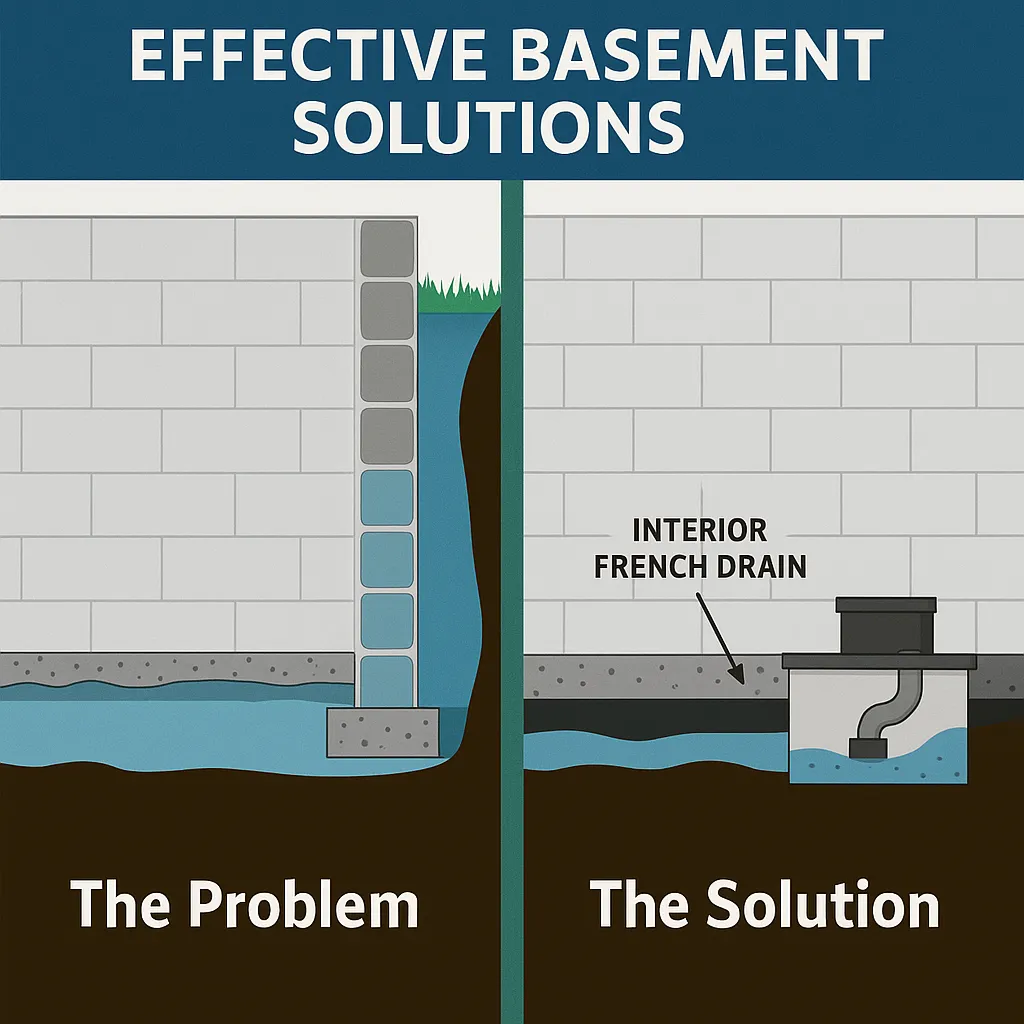
Interior waterproofing installs drainage channels at the base of walls, collecting seepage and directing water into sump pumps. Exterior membrane systems apply waterproof coatings or bituminous sheets to outer walls before backfilling, preventing soil water from reaching masonry.
What Damp Proofing Membranes Are Effective for Basement Walls?
High-density polyethylene or PVC damp-proof membranes bonded to wall surfaces block moisture migration and allow vapour diffusion. These membranes feature integrated drainage grooves and are sealed at joints to form a continuous barrier that prevents condensation and mould growth.
How Can Water Ingress Be Prevented in Foundation Structures?
Preventing water ingress requires graded landscaping, functional gutters, downpipe extensions and positive drainage around the foundation. Installing French drains and ensuring perimeter grading slopes away from the home reduce hydrostatic pressure and maintain soil stability.
When Should Homeowners Consult Structural Engineers for Basement Assessments?
Consulting a structural engineer ensures a professional diagnosis tailored to complex structural challenges, avoiding guesswork and inappropriate reinforcement. An engineer’s expertise identifies root causes, prescribes optimal underpinning or bracing solutions and certifies repair plans for building control compliance.
What Is Included in a Basement Structural Survey?
A basement structural survey examines wall alignment, crack patterns, floor levels and soil moisture. It assesses material condition, foundation depth and external loads, culminating in a detailed report that outlines recommended reinforcement methods and project specifications.
How Do Basement Impact Assessments Help Identify Structural Risks?
Basement impact assessments evaluate how adjacent construction, excavation or tree removal affects foundation stability. By modelling soil-structure interaction and load transfer, these assessments reveal risks of lateral pressure changes, settlement and vibration damage.
Why Is Expert Diagnosis Crucial for Tailored Structural Reinforcement Plans?
Learn more about our waterproofing and foundation repair work on the Basement Waterproofing Services page.
For safety guidelines on structural stability, visit the FEMA foundation safety resource.
Expert diagnosis aligns repair methods with site-specific conditions—soil type, load requirements and existing damage. This targeted approach minimises over-engineering, reduces costs and ensures long-term performance under local environmental stresses.What Are the Typical Costs and Investment Factors for Structural Reinforcement Repairs?
Understanding cost drivers—method complexity, material quality, access restrictions and project scale—enables homeowners to budget effectively and appreciate long-term value. Investments in foundation strengthening not only restore safety but often enhance property value and marketability.
| Repair Method | Approximate Cost Range | Value Proposition |
|---|---|---|
| Carbon fibre wall reinforcement | £1,000 – £3,000 | High strength, minimal disruption |
| Steel I-beam support | £2,500 – £6,000 | Immediate load-bearing restoration |
| Mass concrete underpinning | £1,000 – £1,500 per metre | Cost-effective for shallow soils |
| Mini-piled underpinning | £1,500 – £2,500 per metre | Deep soil anchoring, limited space |
| Helical pile underpinning | £1,200 – £2,000 per pile | Rapid installation, low spoil |
Investing in professional reinforcement ensures durable stability, reduces future repair costs and provides peace of mind through certified workmanship.
How Do Repair Costs Vary by Method and Severity?
Repair costs scale with wall deflection magnitude, foundation depth and structural load requirements. Simple crack injections cost under £1,000, while extensive underpinning may exceed £10,000 depending on soil conditions and access limitations.
What Is the Long-Term Value of Investing in Basement Structural Reinforcement?
Long-term value includes restored structural integrity, lower maintenance expenses and increased property worth. Reinforced basements reduce insurance premiums, prevent moisture-related decay and support future home improvements such as living spaces or storage.
How Can Homeowners Request a Free Consultation for Structural Repairs?
Effective Basement Solutions offers a free, no-obligation consultation that begins with a site inspection and structural survey. Homeowners can arrange an appointment by contacting our team to discuss symptoms, review initial recommendations and receive a detailed project proposal.
What Are the Most Frequently Asked Questions About Basement Structural Reinforcement?
Homeowners often share similar concerns about repairing bowed walls, selecting support materials, assessing repair longevity and knowing when DIY methods suffice versus professional solutions. Understanding these recurring questions highlights priorities in diagnosis, material performance and safety to ensure informed investment in basement stability.
How Do You Fix a Bowed Basement Wall Effectively?
Bowed walls are best fixed by installing carbon fibre straps or steel I-beams that counteract inward soil pressure. Carbon fibre reinforcement provides high tensile strength with minimal excavation, while steel beams offer immediate vertical support, both restoring wall alignment and preventing further movement.
What Are the Best Materials for Basement Structural Support?
High-performance materials include carbon fibre composites for tensile reinforcement, galvanized steel for load-bearing columns and corrosion-resistant polymers for crack injection. Each material delivers specific benefits—strength, durability and moisture resistance—ensuring tailored solutions for different wall types.
How Long Do Structural Reinforcement Repairs Last?
Quality reinforcement installations typically last 30–50 years when executed with certified materials and proper drainage. Corrosion-resistant composites and steel, combined with effective waterproofing, ensure longevity and reduce the need for repeat interventions.
Can DIY Methods Address Basement Wall Cracks Safely?
DIY crack-injection kits can seal minor, non-structural leaks, but structural cracks require expert assessment to determine load-bearing implications. Professional reinforcement ensures correct material application, wall cleaning, injection pressure control and monitoring to avoid hidden failures.
Basement structural reinforcement secures your home against soil movement, moisture and age-related deterioration, safeguarding comfort and investment. By identifying early warning signs, choosing appropriate repair techniques and engaging expert engineers, homeowners achieve durable solutions. Effective Basement Solutions combines technical expertise, premium materials and a free consultation to deliver customised reinforcement plans that restore stability and add lasting value. Request your free assessment today and protect your foundation for generations to come.
