
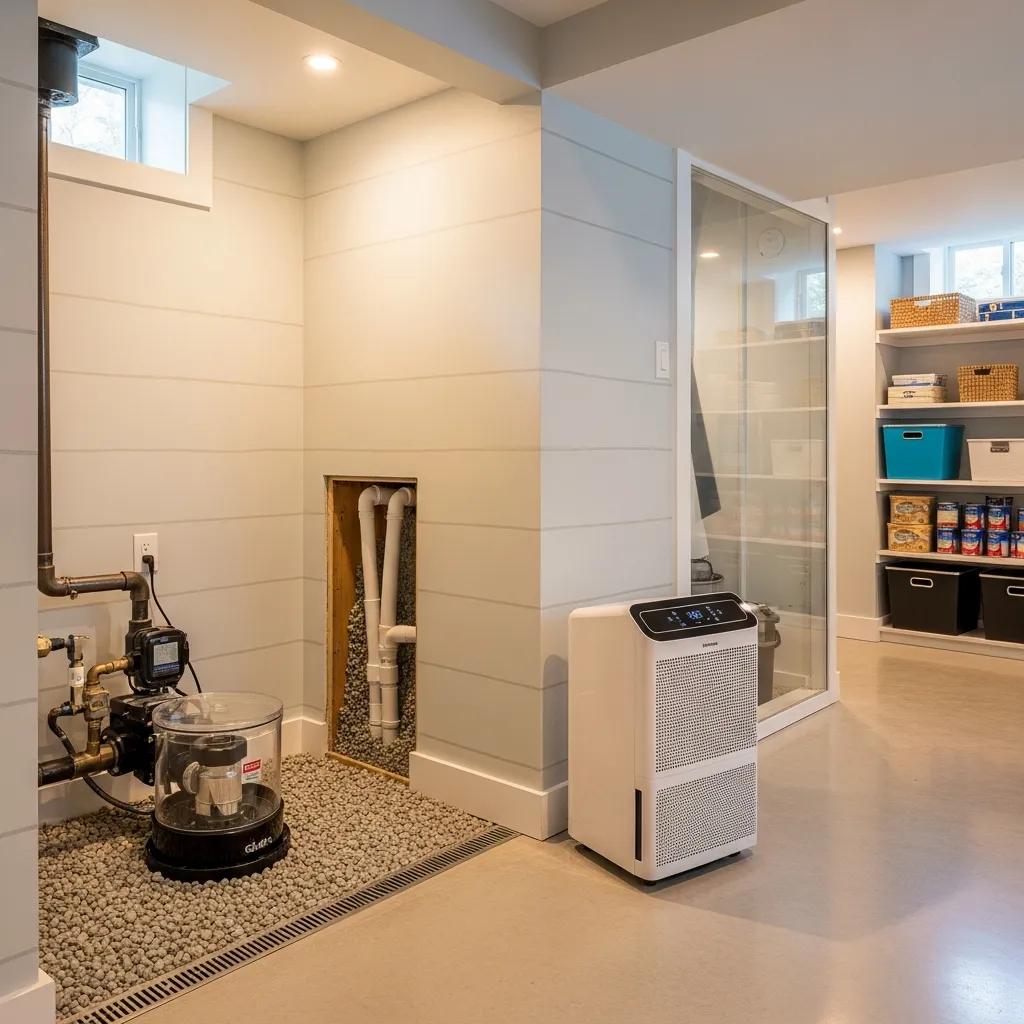
NJ Basement Waterproofing: Key Signs to Detect & Prevent Damage
A damp, musty, or visibly stained basement is often the first sign that a home needs basement waterproofing, which protects a house from water intrusion, mold, and structural damage. Basement waterproofing addresses how groundwater and surface water penetrate foundation walls and floors through seepage, hydrostatic pressure, and failed drainage, reducing risks to structural safety and indoor air quality. This article explains the most common early and visible signs New Jersey homeowners see, how to distinguish minor problems from urgent ones, and practical next steps to stop progression. You will find clear diagnostic checklists, short diagnostic tests you can perform at home, and guidance on when to pursue professional solutions like interior or exterior drainage, French drain installation, and sump pump systems. Throughout the guide we’ll also cover why New Jersey’s soils and climate increase basement risk, the health and pest implications of hidden moisture, and a step-by-step homeowner action plan that includes documentation, temporary containment, and when to schedule a professional inspection.
What Are the Most Common Early Signs of Basement Moisture in New Jersey?
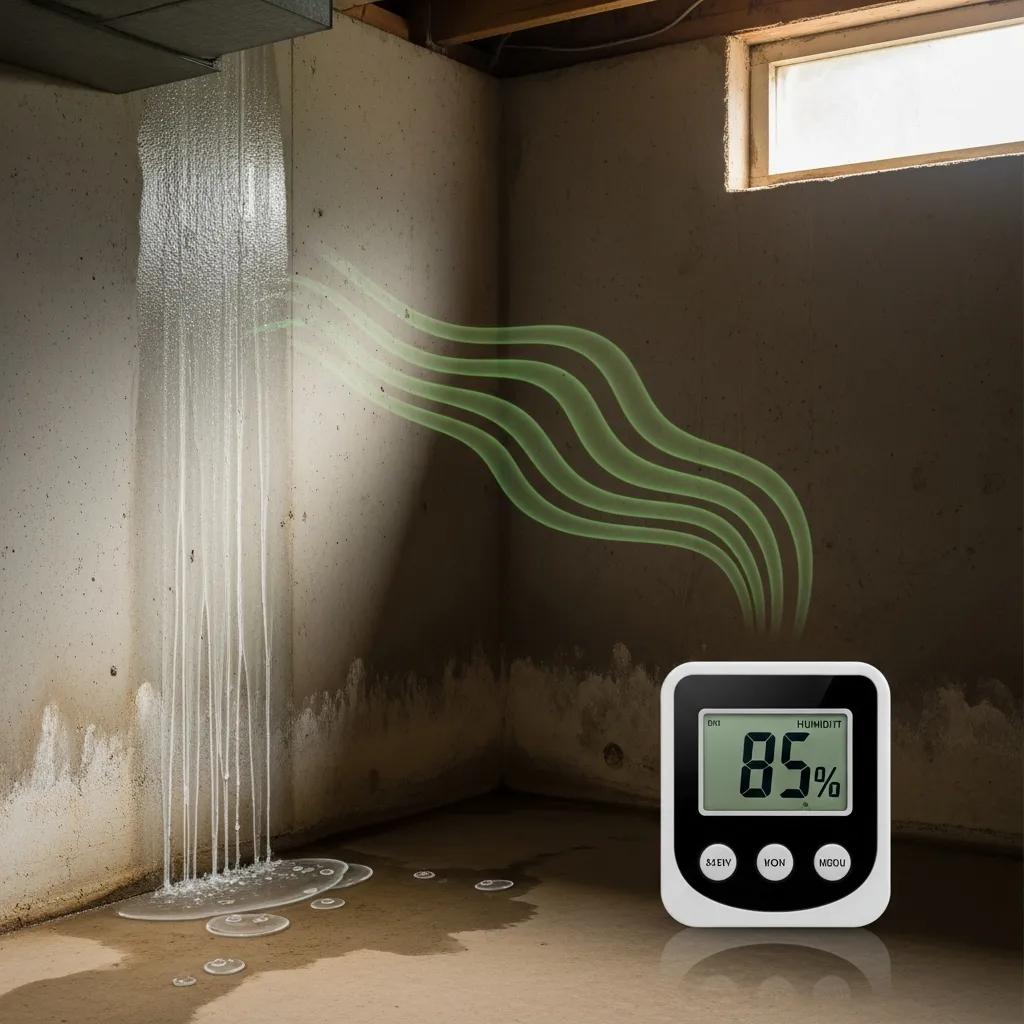
Early signs of basement moisture are subtle indicators that rising humidity or small seepage events are present; they signal moisture pathways before large-scale water entry occurs and allow homeowners to act early to protect health and structure. These warning signs operate through humidity buildup, condensation formation on cold surfaces, and microbial activity that produces distinctive odors and visible mildew. Detecting these early helps prioritize monitoring and low-cost interventions—like better ventilation or dehumidification—before investing in larger waterproofing measures. The paragraphs below list common early signs, explain underlying mechanisms, and offer quick home checks to decide whether to monitor or call for a professional inspection.
Early warning signs to watch for in a New Jersey basement:
- Musty odors that persist even after airing the space out.
- Consistent dampness on walls or floor joints without visible standing water.
- Condensation on pipes, windows, or cold foundation surfaces.
- A basement hygrometer reading consistently above recommended levels.
These indicators point to excess indoor moisture driven by outdoor humidity, ground seepage, or inadequate ventilation; monitoring them over days to weeks helps determine whether the problem is seasonal or persistent and requires further action.
How Does a Musty Basement Smell Indicate Mold Growth and Moisture?
A persistent musty smell is caused by microbial volatile organic compounds (mVOCs) produced by mold and mildew thriving on damp materials; detecting that odor indicates active biological growth that often accompanies hidden moisture. When organic dust, cardboard, wood, or drywall remains above roughly 60% relative humidity, mold can colonize and emit a characteristic scent that signals a health and property concern. Homeowners can run a simple check by ventilating the space, wiping suspect areas with a damp cloth to look for staining, and using a moisture meter near the smell source to confirm elevated readings that warrant remediation. If the odor returns within days despite drying attempts, that pattern suggests ongoing moisture intrusion and merits professional assessment to find the root cause.
Why Is High Humidity and Condensation a Warning Sign in NJ Basements?
High basement humidity—measurable with an inexpensive hygrometer—indicates a moisture balance problem where evaporation from soil, leaks, or poor ventilation overwhelms indoor drying capacity and fosters condensation and mold growth. In New Jersey’s humid months and transitional seasons, interior relative humidity above 50–60% commonly produces surface condensation on cold walls, windows, and pipes; those droplets are practical evidence of moisture transfer from the building envelope. Temporary fixes like improving airflow, using a dehumidifier, and insulating cold surfaces reduce condensation, but persistent high readings or condensation that returns after drying points to seepage or drainage issues that require professional diagnostics. Monitoring humidity trends across weeks helps distinguish seasonal spikes from chronic basement moisture problems.
How Can You Identify Visible Water Damage Signs in Your NJ Basement?
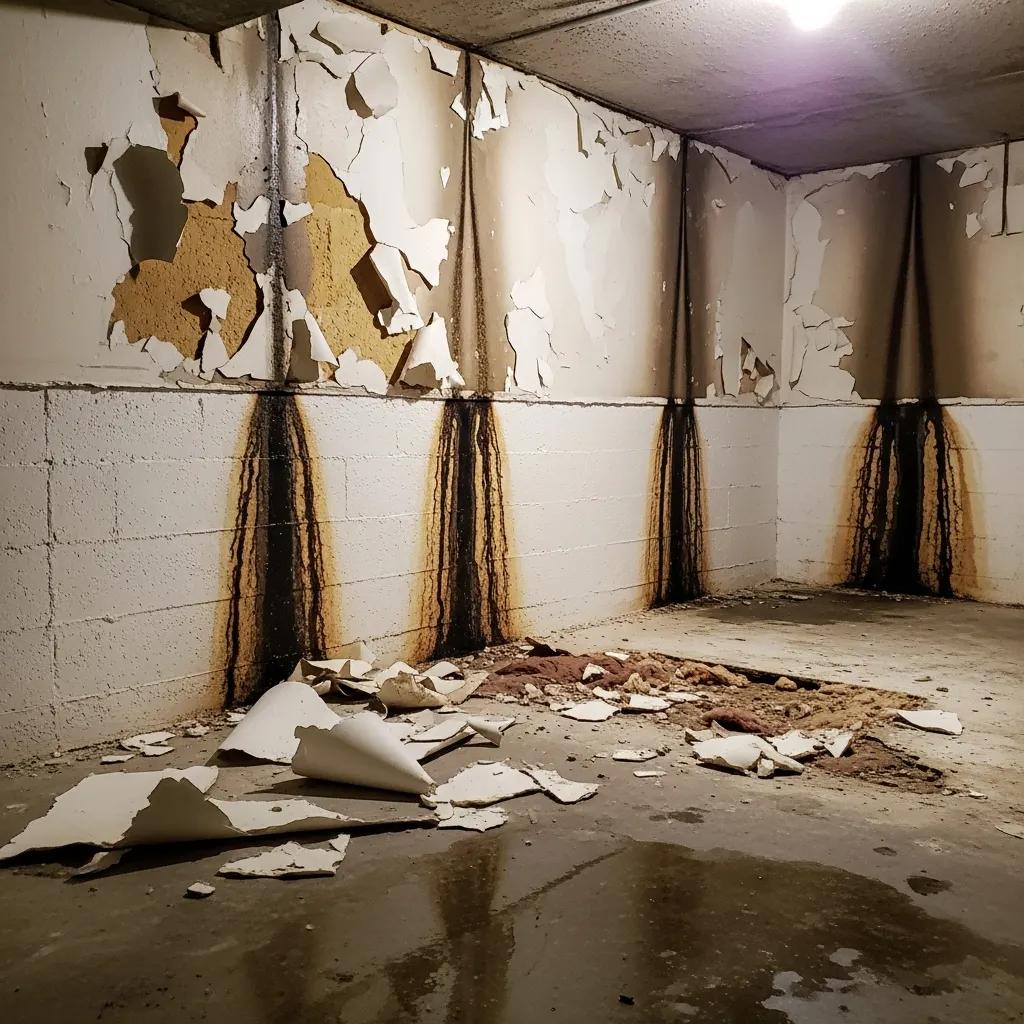
Visible water damage signs are clear indicators of water movement through or along foundation components; they reveal seepage patterns, hydrostatic pressure effects, or failed drainage systems and guide remediation choice. Homeowners should scan for efflorescence, water stains, peeling paint, and crack patterns—each sign has distinct causes and different urgency levels. Observing the sign during or after rain events, and photographing or measuring changes, helps determine whether the issue is episodic or ongoing.
The table below compares visible signs, probable causes, and homeowner actions to make diagnosis faster and more systematic. Observing the sign during or after rain events, and photographing or measuring changes, helps determine whether the issue is episodic or ongoing.
| Visible Sign | Probable Cause | Recommended Homeowner Action |
|---|---|---|
| White powdery deposits on walls (efflorescence) | Water moving through concrete carrying mineral salts | Photograph deposits, note recurrence after rain, and monitor for dampness; consider professional drainage evaluation |
| Dark water stains or tide lines | Repeated seepage or lateral water flow against the wall | Track timing relative to storms, dry and document; sealants may mask problem—call a pro if stains reappear |
| Peeling or blistering paint | Trapped moisture migrating from wall or behind finishes | Use a moisture meter on wall surface, allow drying, and consult about source control if paint fails again |
| Horizontal or stepped cracks with dampness | Lateral soil pressure or movement, potential structural concern | Measure crack width, photograph after storm, and seek a structural assessment if cracks widen or leak |
This comparison clarifies when visible signs reflect simple surface issues versus deeper drainage or structural problems; repeated or progressive signs after temporary fixes indicate the need for professional intervention.
What Does Efflorescence on Basement Walls Reveal About Water Seepage?
Efflorescence is a white, powdery mineral deposit that forms when water dissolves salts in masonry and then evaporates, leaving salt crystals on the surface; its presence indicates that moisture is moving through the wall. While efflorescence itself is not structural damage, it is a reliable marker of ongoing water migration through concrete, block, or mortar that will eventually transport enough moisture to promote mold and degrade finishes. Homeowners should note whether efflorescence appears after rain or seasonally, clean a small test area, and monitor recurrence; if deposits return within weeks, the underlying water path needs drainage correction, interior drainage, or exterior grading adjustments. Persistent efflorescence is best resolved by professional diagnosis to identify whether interior drainage, French drain systems, or other waterproofing measures are required.
When Do Basement Wall Cracks Signal Structural and Water Issues?
Not all cracks present the same risk—hairline vertical cracks often result from shrinkage and need monitoring, whereas wide horizontal or stepped cracks frequently indicate lateral pressure and possible foundation movement that both allow water entry and threaten structural safety. Homeowners should classify cracks by orientation and size: vertical hairline cracks under 1/16″ are commonly low-risk; horizontal cracks or those wider than 1/8″ that are leaking or widening after storms merit urgent professional review. A practical diagnostic routine is to photograph and measure cracks monthly and note any correlation with heavy rain or freeze-thaw cycles; if leaks or movement continue, structural reinforcement and targeted waterproofing are often necessary to stop water ingress and stabilize the wall. When cracks coincide with visible dampness or bulging wall segments, prioritize a professional inspection to determine foundation repair options.
What Are Advanced Signs of Basement Waterproofing Needs in New Jersey Homes?
Advanced signs indicate active, recurring intrusion or progressive damage and suggest that short-term fixes are insufficient; these signs usually require professional waterproofing systems or structural work to resolve root causes. Active water on floors, recurrent puddles, warped finishes, and persistent blistering paint show that water pathways are established and that hydrostatic pressure or mechanical system failures may be present. Accurately documenting timing, water volume, and whether events follow storms or are constant helps distinguish surface drainage failures from high groundwater or sump pump malfunction. The subsections below cover how to test sources for puddles and interpret peeling finishes as evidence of subsurface moisture.
How Do Wet Basement Floors and Puddles Indicate Active Water Intrusion?
Wet floors and standing puddles are direct evidence that water is entering the basement faster than it can drain or evaporate and may indicate failed exterior drainage, hydrostatic pressure forcing water through the slab, or a malfunctioning sump pump system. To diagnose, observe when puddles appear—only after storms suggests surface or grading issues, while constant moisture signals groundwater pressure or a slab leak. Homeowners can perform simple tests such as placing cardboard over the area to check rewetting patterns or tracing leak paths during rainfall, then document frequency and depth to prepare for professional evaluation. Recurring puddles, especially near foundation walls or low spots, typically require drainage repairs such as French drain installation, improved exterior grading, or sump pump upgrades.
What Do Peeling Paint and Warping Walls Tell You About Hidden Moisture?
Peeling paint, bubbling finishes, and warped drywall indicate moisture diffusion behind coatings that degrades finishes and eventually damages structural materials; these are visual clues that moisture is persistent and moving through or behind wall assemblies. When paint repeatedly fails despite repainting, it demonstrates that moisture control—rather than cosmetic repair—is needed to stop recurrence and protect wall framing and insulation from rot. Homeowners should use a moisture meter to map elevated zones and check for soft or spongy areas that suggest material degradation, then document findings for professional assessment. Addressing the moisture source often requires both mold remediation where present and targeted waterproofing—such as interior drainage, dehumidification, or wall repairs—to return the space to a safe, stable condition.
How Do Mold Growth and Pest Infestations Reflect Basement Water Problems in NJ?
Biological and pest indicators signal that moisture has persisted long enough to create favorable habitat for organisms that damage materials and threaten health; mold and pests are both symptoms and accelerants of long-term structural decline. Mold growth often appears in hidden locations and correlates with musty odors and respiratory symptoms in occupants, while wood rot and termites thrive where repeated moisture softens structural wood. Managing these consequences requires identifying and eliminating the moisture source first—removing mold or pests without fixing the underlying leak allows re-colonization and continued structural loss. The subsections below provide specific signs to watch for and guidance on integrating remediation with waterproofing.
What Are the Key Basement Mold Growth Signs NJ Homeowners Should Watch For?
Visible mold colonies, ranging from black to green or white patches, are often paired with a musty odor and can appear on porous materials such as drywall, carpet padding, insulation, and wood; these signs indicate active or recent moisture sufficient for fungal growth. Health-related symptoms—like persistent congestion, coughing, or worsening allergies—heighten the urgency to address both remediation and moisture control. Homeowners should photograph mold, avoid disturbing large areas without containment, and use a moisture meter to identify damp substrates; small areas can be cleaned carefully, but recurring mold or large growths should be handled with professional remediation combined with waterproofing to prevent recurrence. Combining mold remediation with long-term measures—dehumidification, drainage, and structural repairs—addresses both the symptom and the cause.
- Mold indicators include visible colonies, musty odors, and water-damaged materials.
- Health symptoms that increase urgency are chronic respiratory irritation and unexplained allergy-like reactions.
- When mold covers large areas or recurs quickly, pair remediation with waterproofing solutions.
This list helps homeowners triage visible mold and decide when remediation alone is insufficient without moisture control measures.
How Does Wood Rot and Pest Activity Relate to Basement Moisture Damage?
Wood rot develops when framing, sill plates, or wooden finishes remain damp, allowing fungi to decompose cellulose and weaken structural members, while pests like termites and carpenter ants are attracted to softened wood and elevated moisture. Signs include crumbly or discolored wood, sagging flooring, small boreholes, or visible insect activity; these indicate that moisture has been present for an extended period and that structural components may be compromised. Effective repair requires diagnosing the moisture source—whether a leak, poor drainage, or high humidity—then implementing waterproofing plus targeted structural reinforcement and pest control to restore safety. Addressing both the biological agents and the hydrological cause prevents repeated infestations and preserves the home’s long-term integrity.
Why Are New Jersey Basements Especially Vulnerable to Water Damage?
New Jersey basements face higher-than-average risk because local climate patterns, regional soil types, and seasonal freeze-thaw cycles combine to increase groundwater pressure and strain foundation systems; understanding these mechanisms clarifies common failure modes and proper solutions. Heavy precipitation events, coastal-influenced humidity, and frequent freeze-thaw transitions stress concrete and soil interfaces, while clay and expansive soils common in parts of New Jersey change volume with moisture and transfer lateral pressure to foundations. The table below links NJ-specific factors to mechanisms and their effects on basements, helping homeowners understand why targeted waterproofing designs are often necessary rather than one-size-fits-all fixes.
| NJ Factor | Mechanism | Effect on Basement |
|---|---|---|
| Clay / expansive soils | Soil swells when wet, shrinks when dry | Increased lateral pressure on foundation walls; cracks and movement |
| High water table | Elevated groundwater level near foundation | Greater hydrostatic pressure and risk of slab or wall seepage |
| Freeze-thaw cycles | Water in cracks freezes and expands | Progressive concrete and mortar damage; widening cracks |
| Frequent precipitation | Repeated surface runoff and saturation | Increased chance of surface infiltration and overwhelmed drainage |
How Do New Jersey’s Climate and Soil Conditions Affect Basement Waterproofing Needs?
New Jersey’s climate includes humid summers and winter freeze-thaw swings, and many regions contain clay-rich or poorly draining soils that hold water and increase pressure against foundations; together these conditions demand waterproofing systems that manage both surface and subsurface water. Clay soils expand when wet, amplifying lateral loads against basement walls, while high water tables can push water upward through slab joints; both mechanisms increase hydrostatic pressure and leak likelihood. For homeowners, this means preferred interventions emphasize reliable drainage (interior or exterior), pressure-relief systems like sump pumps, and materials and seals designed to tolerate cyclical movement. Recognizing these local drivers helps choose solutions—such as French drain installation paired with dehumidification and structural reinforcement—appropriate for New Jersey’s environmental context.
What Role Do Freeze-Thaw Cycles and High Water Tables Play in Basement Leaks?
Freeze-thaw cycles cause water trapped in concrete pores or small cracks to expand when frozen, which gradually fractures the material and enlarges pathways for water entry, while high water tables exert constant upward and lateral pressure that forces moisture through even small defects. Seasonal monitoring—inspecting after thaw events and during high groundwater periods—helps homeowners see when damage accelerates, and documenting cyclical changes guides professionals in selecting durable repair methods. Preventative measures that reduce moisture contact, like proper grading, effective gutters, and interior drainage systems, relieve hydrostatic pressure and mitigate freeze-thaw damage over time. Combining seasonal vigilance with engineered drainage and structural details reduces the compounding effects of these two powerful mechanisms.
What Should NJ Homeowners Do When They Spot Signs of Basement Water Damage?
When signs of basement water damage appear, homeowners should follow a prioritized, documented response: ensure safety and containment, document the problem over time, apply short-term measures to limit damage, and escalate to professional assessment when triggers are met. Immediate actions include removing valuables, drying wet areas, and using dehumidifiers to reduce mold risk; next, photograph and log occurrences, noting weather and frequency to help professionals diagnose causes. The table below links common solutions to what they address and the typical outcomes homeowners can expect, helping match problems to realistic interventions. If documentation shows recurring or progressive problems, schedule a professional inspection so remediation targets root causes rather than symptoms.
| Solution | What It Addresses | Typical Outcome / Benefit |
|---|---|---|
| Sump pump installation | Active groundwater entry and indoor flooding | Reduces flood risk by actively removing water; requires maintenance and backup power considerations |
| French drain installation | Water collecting at foundation perimeter | Redirects water away from foundation and lowers hydrostatic pressure |
| Crawl space encapsulation | Moisture and humidity from under-floor areas | Creates a dry, conditioned space and reduces mold/pest habitat |
| Dehumidification systems | Elevated indoor humidity | Lowers relative humidity to reduce condensation and mold growth |
When Is It Time to Call a Professional for Basement Waterproofing?
Call a professional when escalation triggers appear: recurring puddles after storms, active leaks through slabs or walls, horizontal or growing structural cracks, widespread or recurring mold, or sump pump failure during wet periods are clear signals that temporary DIY fixes will not suffice. Prepare for an inspection by documenting symptoms—photos, timestamps, storm correlations, and moisture readings—which helps providers diagnose the cause efficiently and design a customized plan. Short-term measures like tarps, fans, or dehumidifiers can protect property immediately, but they do not stop underlying water movement; for long-term protection consider systems that address drainage, pressure relief, and structural reinforcement. When you schedule an inspection with a professional, expect a combination of visual inspection, moisture measurement, and recommendations tailored to your home’s soil and water table conditions.
How Can Free Inspections and Customized Solutions Protect Your NJ Basement?
A free inspection provides a no-cost diagnostic starting point that typically includes a visual assessment of walls, floors, grading, and drainage, plus targeted moisture measurements to identify active paths of water entry and prioritize fixes. For New Jersey homes, customized solutions are essential because soil, water table, and seasonal drivers differ across neighborhoods; tailored plans combine interior drainage, sump pump options, French drains, crawl space encapsulation, dehumidification systems, and structural reinforcement as needed to address root causes. Effective Basement Solutions offers free inspections and designs individualized recommendations carried out by licensed in-house crews (no subcontractors), emphasizing clean workmanship and long-term protection for homeowners seeking reliable results. Using an inspection to prioritize repairs and match interventions to local soil and climate mechanics reduces the chance of recurring problems and protects home value over time.
