Expert Basement Waterproofing in Morris County, NJ: Trusted Solutions for Homeowners
Basement waterproofing Morris County NJ services by Effective Basement Solutions protect homes from hydrostatic pressure, water intrusion, and long-term foundation damage.Basement waterproofing protects homes from water intrusion, structural damage, and indoor air quality decline by controlling moisture pathways and diverting subsurface water away from foundations. This article explains practical, local solutions for Morris County, NJ homeowners—covering causes like hydrostatic pressure and efflorescence, proven fixes such as interior drainage and sump pump systems, and how proper waterproofing reduces mold risk while preserving home value. You will learn to recognize common basement water problems, compare service approaches, estimate costs, and follow a clear process from inspection to warranty registration. The guidance emphasizes actionable steps, maintenance checklists, and hyper-local considerations for towns across Morris County, with homeowner-friendly explanations of technical concepts like hydrostatic pressure and dehumidification. Throughout, relevant terms such as basement waterproofing, interior French drain system, sump pump systems with battery backups, and crawl space encapsulation are used to help homeowners identify the right interventions for their homes.
What Are the Common Basement Water Problems in Morris County?
Basement water problems in Morris County typically stem from failing drainage systems, saturated soils, foundation cracks, and condensation, all of which allow moisture to enter living spaces and degrade indoor air quality. These mechanisms work by moving groundwater or surface runoff through soil and foundation interfaces, driven by hydrostatic pressure or gravity, causing seepage, efflorescence, and mold growth when moisture accumulates. Understanding these root causes helps homeowners prioritize solutions that target the source—such as drainage, structural repair, or moisture control—rather than treating symptoms only. The next subsections explain hydrostatic pressure, visible and hidden signs of water damage, and the pathway from persistent moisture to mold and poor indoor air quality.
How Does Hydrostatic Pressure Affect Morris County Basements?

Hydrostatic pressure is the force exerted by groundwater in soil around foundations, and it pushes water into basements through cracks, joints, and porous concrete surfaces. In Morris County, soils with high clay content or poor exterior drainage increase saturation levels after rainfall, raising hydrostatic pressure against foundation walls and floors. The result is water intrusion at seams and cold joints, which can manifest as slow seepage or sudden leaks during heavy precipitation events. Mitigation typically involves reducing surrounding groundwater levels or providing controlled interior drainage with systems like an interior French drain system combined with a reliable sump pump system with battery backups to relieve pressure and collect infiltrating water before it damages finishes.
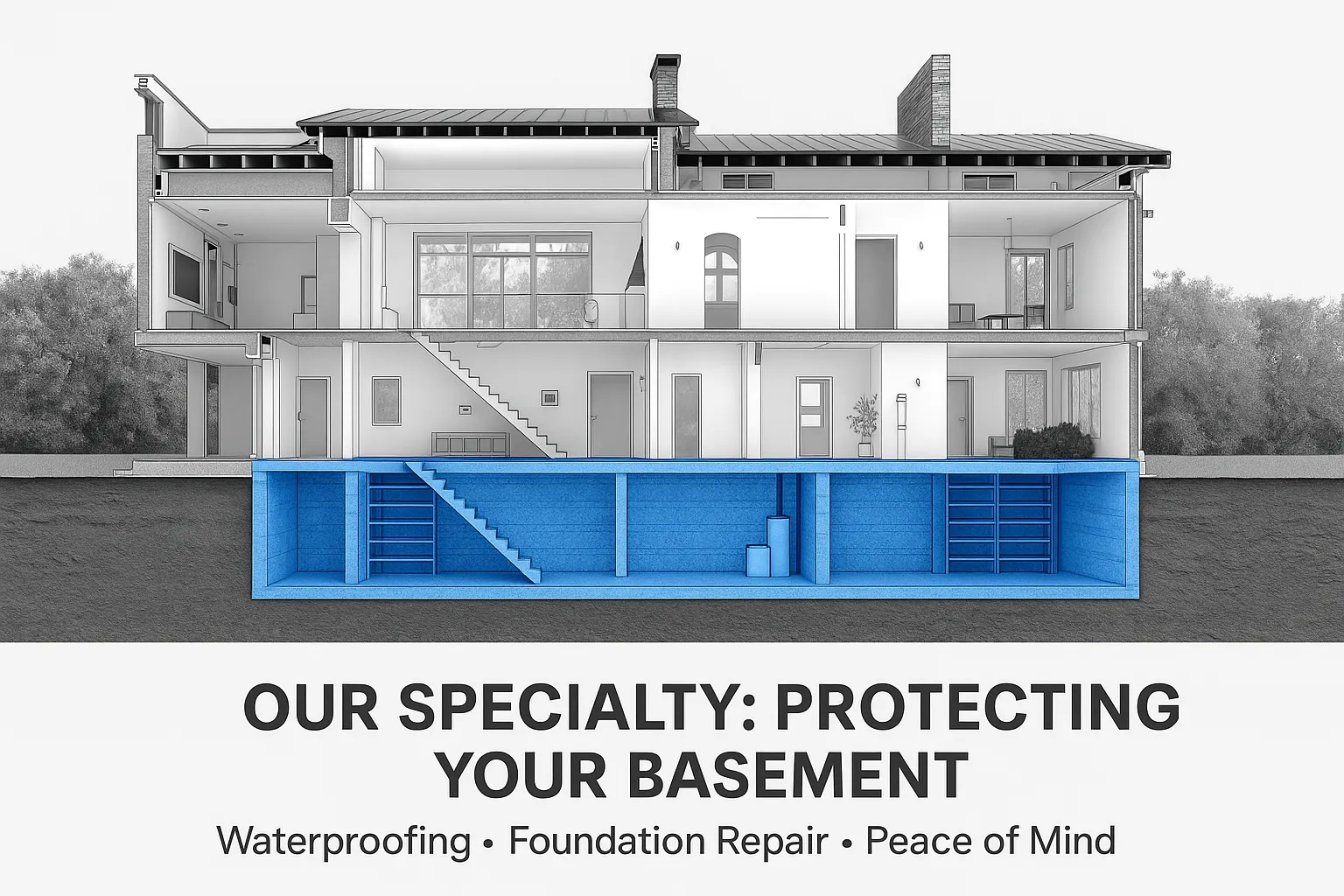
The basement wall experiences lateral loads not only from soil backfill but also from hydrostatic pressure caused by water, which acts in a similar lateral direction.
Hydrostatic Pressure and Basement Wall Loads
The basement wall experiences lateral loads from the pressure exerted by soil backfill, in addition to hydrostatic pressure caused by water, which also acts laterally.
What Signs Indicate Basement Water Damage in Morris County Homes?
Visible and hidden signs of basement water damage include water stains on walls or floors, salt deposits (efflorescence), peeling paint, warped flooring, and a persistent musty odor that signals chronic moisture. Hidden indicators can be elevated humidity readings, mold growth behind finishes, or efflorescence along foundation seams that reveal repeated wet-dry cycles; these symptoms often precede structural issues if left untreated. Homeowners should perform a basic inspection after storms and monitor for recurring signs, documenting locations and timing to help professionals diagnose source and severity. Recognizing these signs early allows targeted interventions—such as foundation crack repair or installation of interior drainage and a sump pump—to address both appearance and underlying moisture pathways.
How Does Basement Moisture Lead to Mold Growth and Indoor Air Quality Issues?
Moisture creates an environment where mold spores that are normally present in the air can colonize organic materials like drywall, wood, and insulation, producing allergens and compounds that degrade indoor air quality. The mechanism begins with persistent relative humidity above recommended levels and localized wetting events that nourish mold species common to basements; over time, this can aggravate respiratory symptoms in sensitive occupants and reduce overall indoor comfort. Preventive strategies include lowering humidity via dehumidification systems, stopping water entry with waterproofing solutions, and remediating existing mold using professional mold remediation methods to restore a safe environment. Addressing moisture at the source is critical because mold remediation without waterproofing or dehumidification risks recurrence and undermines long-term indoor air quality improvements.
Basement Waterproofing Experts in Morris County, NJ
Comprehensive basement waterproofing services address both water entry mechanisms and the consequences of moisture, combining drainage, mechanical removal, structural repair, and indoor air quality control to protect homes. Effective Basement Solutions delivers a layered approach: interior drainage to capture seepage, sump pump systems to evacuate collected water, foundation crack repair and structural reinforcement to stop active leaks, crawl space encapsulation and dehumidification to control vapor, and mold remediation to restore healthy interiors. Each service targets specific failure modes—drainage manages groundwater, pumps provide active removal, repairs fix breaches, and environmental systems control humidity—offering homeowners a durable defense when selected and installed correctly. The table below outlines the primary services, components, and homeowner benefits to help compare options quickly.
This table summarizes core services, their key components, and the primary homeowner benefit.
| Service | Key Components | Primary Benefit |
|---|---|---|
| Interior French drain installation | Perimeter drain pipe, aggregate, discharge to sump basin | Controls seepage and routes water to a collection point |
| Reliable sump pump systems (with battery backups) | Submersible pump, battery backup, check valve | Removes collected water even during power outages |
| Foundation crack repair | Epoxy/urethane injection, carbon fiber straps | Seals leaks and restores structural integrity |
| Crawl space encapsulation | Vapor barrier, taped seams, insulation | Reduces vapor transfer and improves HVAC efficiency |
| Dehumidification systems | Commercial-grade dehumidifier, drain line | Lowers humidity to prevent mold growth |
| Mold remediation | Containment, removal, clearance testing | Eliminates biological contamination and restores safety |
How Do Interior French Drain Systems Protect Morris County Basements?
An interior French drain system collects subsurface water entering along the foundation perimeter and routes it to a sump basin, preventing water from spreading across the floor or saturating wall materials. The system works by creating a low point that intercepts water moving through or beneath the slab, using a perforated drain pipe encased in aggregate to ensure consistent flow into the sump basin. For Morris County homes with high hydrostatic pressure or limited exterior access, interior drains are often less disruptive than full excavation while providing effective collection and long-term reliability when installed with proper grading and pump capacity. Routine maintenance is minimal—periodic inspection of the sump basin and pump operation—which preserves effectiveness and extends system lifespan.
Why Are Reliable Sump Pump Systems with Battery Backups Essential in Morris County?
Sump pump systems remove water collected by drainage systems and prevent water from accumulating to damaging levels; battery backups ensure operation during power outages common in severe storms. A properly sized submersible sump pump expels large volumes of water quickly, while the battery backup activates automatically during an electrical failure, maintaining protection when exterior conditions are most severe. For Morris County homeowners, pairing an interior French drain system with a reliable sump pump system (with battery backups) provides both continuous collection and fail-safe removal under emergency conditions. Regular testing and an annual maintenance cadence keep pumps responsive and extend equipment life, reducing the risk of basement flooding during critical weather events.
These backup power systems are crucial for residential sump pump setups, functioning to provide a power source for the pump during unexpected outages.
Sump Pump Backup Power Systems for Residential Applications
Functions as a power backup for a residential sump pump system during power outages.
How Does Foundation Crack Repair and Structural Reinforcement Prevent Further Damage?
Foundation crack repair addresses water pathways and structural concerns by sealing active leaks and restoring load-bearing capacity where movement has occurred, using methods like epoxy or polyurethane injections and carbon fiber straps for reinforcement. Repair selection depends on crack type—hairline shrinkage cracks may need sealing only, while horizontal or bowed walls often require reinforcement with carbon fiber straps or helical anchors to prevent progressive failure. Proper repair not only stops water entry but also stabilizes the foundation to reduce the likelihood of future leaks and costly structural deterioration. Timely intervention preserves the home’s integrity and complements waterproofing systems that control external water forces acting on repaired areas.
What Are the Benefits of Crawl Space Encapsulation and Dehumidification Systems?
Crawl space encapsulation creates a sealed, conditioned barrier using a crawl space vapor barrier and taped seams to stop soil moisture from transferring into living spaces, while dehumidification systems maintain low relative humidity for long-term control. Encapsulation improves indoor air quality by preventing dusty, damp air from entering HVAC ducts and living areas, and it enhances energy efficiency by stabilizing crawl space temperatures. Dehumidifiers sized to crawl space volume remove residual moisture and keep relative humidity below thresholds that encourage mold growth, protecting structural elements and stored items. Together, these measures reduce moisture-related maintenance, lower HVAC loads, and create a healthier home environment.
How Does Mold Remediation Improve Basement Health and Safety?

Mold remediation removes active colonies, remediates contaminated materials, and verifies clearance to reduce health risks and restore indoor air quality, using containment and controlled removal methods tailored to the scope of contamination. The remediation workflow typically includes initial assessment, containment to prevent cross-contamination, removal or cleaning of affected materials, and post-remediation verification through visual inspection and moisture management practices. Integrating mold remediation with waterproofing—such as repairing leaks and installing dehumidification systems—prevents recurrence by addressing both source and consequence. For homeowners seeking assurance, remediation followed by humidity control and warranty-backed waterproofing provides durable protection for health and property.
Why Choose Effective Basement Solutions for Expert Basement Waterproofing in Morris County?
Effective Basement Solutions focuses on delivering comprehensive waterproofing that combines technical solutions with homeowner assurances, emphasizing in-house crews for consistent quality and specific value propositions that protect investment. Core customer-facing benefits include a 30-year transferable warranty and a 12-month mold-free certificate, which offer long-term coverage and post-service assurance for mold remediation respectively. The company provides free inspections and estimates to help homeowners understand issues without obligation, and all installations are completed by in-house crews rather than subcontractors to maintain accountability, safety, and consistent workmanship. These trust signals help homeowners evaluate options and choose an approach that balances effectiveness, warranty protection, and post-installation confidence.
What Makes Our 30-Year Transferable Warranty Unique for Morris County Homeowners?
The 30-year transferable warranty covers the waterproofing system against specified failures for a long duration, and transferability increases resale value by giving future homeowners confidence in sustained protection. This warranty scope typically applies to system components and workmanship within agreed terms, and transfer processes enable new owners to inherit remaining coverage, which can be an important selling point in the local market. For Morris County properties, long-duration warranties reduce uncertainty about long-term maintenance costs and demonstrate the company’s commitment to durable solutions. Homeowners should review terms at the estimate stage to understand coverage specifics and registration requirements.
How Do Free Inspections and Estimates Benefit Morris County Residents?
Free inspections provide a no-cost diagnostic that documents visible issues, moisture readings, and photos while offering a written estimate and prioritized recommendations for repair or prevention. This approach helps homeowners compare options, understand cost drivers, and make informed decisions without pressure, and the deliverable typically includes a clear scope, timeline estimates, and recommended next steps. Free estimates also enable tailored solutions by assessing factors specific to each Morris County home—soil conditions, access, and existing damage—so proposals reflect realistic outcomes and warranty considerations. Scheduling a free inspection is a practical first step toward resolving chronic moisture problems efficiently.
What Do Customer Testimonials Reveal About Our Local Expertise?
Customer feedback commonly highlights punctuality, clear communication, and thorough workmanship—attributes that indicate local expertise and reliable project management in Morris County projects. Testimonials emphasize that in-house crews provide consistent oversight and quality control during installation, giving homeowners reassurance about workmanship and post-install support. Aggregated client experiences help prospective customers set expectations around timelines, disruption levels, and service deliverables, reinforcing the value of free inspections and warranty-backed solutions. Reading reviews and asking specific project questions during the estimate process helps align expectations and confirms that the chosen approach matches homeowner priorities.
How Does the Basement Waterproofing Process Work with Effective Basement Solutions in Morris County?
The waterproofing process follows a clear sequence—inspection, diagnosis, planning, installation, testing, and follow-up—to ensure solutions target root causes and deliver measurable outcomes for homeowners. Each stage focuses on definition (what will be done), reasoning (why the method is selected), and expected homeowner outcomes (reduced moisture, restored space usability), ensuring transparency and alignment with local conditions in Morris County. In-house crews perform installations, conduct quality checks, and document results before issuing warranty documentation and post-install maintenance guidance. The following table outlines stages, core actions, and homeowner outcomes to clarify what to expect throughout a typical project.
This table clarifies each process stage, the primary actions taken, and expected homeowner outcomes.
| Stage | Action | Homeowner Outcome |
|---|---|---|
| Inspection | Visual survey, moisture readings, photos | Clear diagnosis and documented condition |
| Planning | Method selection, scope, estimate | Tailored proposal and timeline |
| Installation | Drainage, pumps, repairs, encapsulation | System installed to specification |
| Testing | Pump run tests, moisture checks | Verified system performance |
| Follow-up | Warranty registration, maintenance plan | Ongoing protection and care guidance |
What Are the Step-by-Step Stages of Our Waterproofing Installation?
Installation begins with site preparation and protective measures, followed by selective excavation for interior drains or targeted repairs, placement of drainage components, connection to a sump basin, and testing of pumps and discharge mechanisms. Crews then restore finishes as agreed and perform a final walkthrough with the homeowner to explain maintenance tasks and checklists. Time estimates vary by scope, but homeowners are advised to prepare by clearing perimeter areas and following crew instructions to minimize disruption. A documented testing and handover phase ensures the system operates effectively and homeowners receive guidance for routine checks.
How Do We Ensure Quality and Safety Using In-House Crews?
Using in-house crews enables consistent training, oversight, and quality-control procedures across every project, reducing variability that can arise when subcontractors are used. In-house teams follow standardized installation protocols, perform internal inspections, and maintain documentation that supports warranty claims and post-install follow-up. Safety practices include site containment, proper equipment handling, and clean-up procedures to protect the home and occupants during work. This integrated approach ensures accountability and provides homeowners with a single point of contact for questions and long-term service needs.
What Maintenance Tips Extend the Life of Your Waterproofing System?
Regular maintenance preserves system performance: test sump pumps monthly, inspect discharge paths for clogs, and check battery backups seasonally to ensure reliable operation during storms. Clean drain inlets and remove debris from perimeter areas, monitor humidity levels with a dehumidifier where installed, and schedule annual inspections to catch minor issues before they escalate. Keep records of maintenance activities and any repairs to support warranty claims and resale documentation. Following these practices extends equipment life, reduces unexpected failures, and sustains indoor air quality benefits.
How Much Does Basement Waterproofing Cost in Morris County, NJ?
Basement waterproofing costs vary widely based on the chosen method, basement size, accessibility, extent of damage, and local soil conditions; typical ranges reflect these factors and help homeowners set realistic expectations. Interior solutions such as interior French drain installation paired with a sump pump system generally cost less and cause less exterior disruption than full exterior excavation, while exterior membranes and full excavation may be recommended for severe drainage problems. Other influencing variables include material quality, labor intensity, and whether foundation crack repair or structural reinforcement is required. The following EAV table compares common approaches across cost range, disruption level, effectiveness against hydrostatic pressure, and maintenance needs to aid decision-making.
This comparison shows typical method attributes across key decision factors for Morris County homeowners.
| Approach | Typical Cost Range | Disruption Level | Effectiveness for Hydrostatic Pressure | Maintenance Needs |
|---|---|---|---|---|
| Interior French drain installation | Moderate | Low to Moderate | High | Sump pump checks, occasional cleanouts |
| Exterior membrane & excavation | High | High | Very High | Landscape restoration, surface grading |
| Sump pump system (with battery backups) | Low to Moderate | Low | High (when paired with drains) | Battery tests, pump service |
| Full excavation & foundation repair | Very High | Very High | Very High | Periodic inspections; depends on repairs |
What Factors Influence Basement Waterproofing Pricing in Morris County?
Key cost drivers include the basement square footage, the severity and type of water intrusion, soil and site access conditions, and whether structural repairs are required in addition to waterproofing. Projects that require excavation, significant structural reinforcement, or extensive mold remediation will increase labor and material costs compared with simpler interior drainage and pump installations. Equipment quality—such as commercial-grade dehumidifiers or battery backup systems for sump pumps—also affects pricing but can reduce lifecycle costs through improved reliability. Understanding these variables helps homeowners evaluate estimates and prioritize investments that address root causes rather than cosmetic fixes.
How Do Different Waterproofing Methods Compare in Cost and Effectiveness?
Interior systems offer cost-effective solutions for many homes by intercepting and removing water before it damages finishes, while exterior methods can provide strong long-term protection by stopping water before it reaches the foundation wall. Combining methods—such as interior drains with exterior grading improvements—often yields the best balance of cost and durability, especially where hydrostatic pressure is severe. Homeowners should weigh initial cost, expected lifespan, disruption, and warranty coverage when choosing a method; long-term value is frequently maximized by solutions that address both structural and environmental contributors to moisture. The comparison table above helps illustrate these trade-offs.
How Can Homeowners Get a Free Cost Estimate from Effective Basement Solutions?
Homeowners can request a free inspection and estimate to receive a documented diagnosis, recommended options, and an itemized proposal that reflects local conditions such as soil type and access constraints. The inspection deliverable typically includes photos, moisture readings, prioritized recommendations, and a clear estimate with scope and warranty terms for each option under consideration. Response and scheduling expectations are set during the inquiry process, and the free estimate enables side-by-side comparison of approaches and costs without obligation. After reviewing the proposal, homeowners can select the preferred solution and schedule installation with clarity on timeline and follow-up support.
What Are the Frequently Asked Questions About Basement Waterproofing in Morris County?
This FAQ section answers common homeowner concerns with concise, practical responses that help with quick decision-making about methods, lifespans, costs, and mold prevention. Each answer focuses on realistic expectations and actionable steps tailored to Morris County contexts, using PAA-style brevity for snippet optimization while linking readers mentally to deeper discussion in the article. The subsequent H3s provide short, direct answers about system lifespan, method selection, contractor evaluation, and post-install mold prevention.
How Long Does Basement Waterproofing Last in Morris County Homes?
Typical waterproofing system lifespans depend on method and maintenance: mechanical systems like sump pumps often last 7–15 years with service, interior drainage and proper repairs can function for decades, and encapsulation materials generally last 10–25 years depending on materials and installation quality. Longevity is influenced by maintenance practices—regular pump testing, battery replacement, and moisture monitoring extend service life—and by the severity of environmental stressors such as hydrostatic pressure and freeze-thaw cycles. Warranties, such as a 30-year transferable warranty offered by some providers, provide additional homeowner assurance and often reflect confidence in product and installation quality. Routine inspections and prompt repairs maximize lifespan and performance.
What Is the Best Basement Waterproofing Method for Morris County Conditions?
The optimal method depends on the primary cause: hydrostatic pressure and subsurface seepage are best addressed with interior French drain installation plus a sump pump system, while chronic exterior runoff or poor grading may require exterior excavation and membrane systems. For mixed issues, a combined approach—drainage plus targeted structural repair and dehumidification—often delivers the most durable outcome. Cost, disruption, and access constraints should inform method selection, and consulting a qualified inspector ensures the chosen solution targets the root cause rather than surface symptoms. Localized assessment yields the best long-term result.
Who Are the Top Basement Waterproofing Companies Serving Morris County?
When evaluating providers, prioritize firms that offer clear warranties, in-house crews, documented workmanship standards, and transparent estimates rather than relying solely on price or promotional claims. Important evaluation criteria include whether crews are in-house (favoring consistency), the presence of transferable warranties, documented free inspection processes, and clear remediation timelines. Red flags include vague scope descriptions, lack of written warranties, or high-pressure sales tactics; requesting references and reviewing documented past projects helps verify capability. These criteria help homeowners select a trustworthy local partner for basement waterproofing.
How Can Homeowners Identify and Prevent Mold Growth After Waterproofing?
Post-installation mold prevention relies on controlling humidity, ensuring complete dryness of remediated areas, and monitoring for recurring moisture intrusion with periodic checks and moisture readings. Preventive steps include maintaining dehumidification systems, testing sump pump backups, inspecting seals and vapor barriers, and addressing any new leaks immediately. Homeowners should schedule follow-up inspections if odors or visible staining reappear, and document maintenance to support warranty considerations. Early detection and proactive humidity control are the most effective ways to prevent mold recurrence after waterproofing work.
How Can Morris County Homeowners Schedule a Free Basement Inspection and Estimate?
Scheduling a free basement inspection starts with requesting an evaluation, preparing basic property information, and understanding what deliverables will be provided so homeowners can compare solutions and make informed decisions. The inspection typically includes a visual assessment, moisture diagnostics, photos, and a written estimate with prioritized recommendations; these deliverables enable homeowners to review options with clarity. The following three-step list explains the homeowner journey from request to decision and highlights what to expect after the inspection.
Follow these three steps to obtain a free inspection and estimate:
- Request an inspection and provide basic property details and known problem locations.
- Receive an on-site diagnostic with photos, moisture readings, and an itemized estimate outlining recommended solutions.
- Review the proposal, ask clarifying questions, and schedule work if desired; warranty and maintenance guidance are provided at handover.
What Is Included in Our Free Basement Inspection Service?
A free inspection includes a visual survey of the basement and foundation, moisture readings with diagnostic tools, photographic documentation, and a written list of recommended actions and cost options. Inspectors note signs of active leaks, efflorescence, structural concerns, and indoor air quality indicators while assessing site-specific factors like soil conditions and drainage patterns. The deliverable typically presents prioritized solutions with estimated timelines and warranty information so homeowners can compare paths forward. Clear documentation supports confident decision-making and expedites any follow-up work.
How to Contact Effective Basement Solutions for Expert Waterproofing in Morris County?
To initiate a free inspection, homeowners can reference Effective Basement Solutions and provide relevant property details and a description of observed issues to request scheduling; the company offers free inspections and estimates as part of its homeowner services. Prepare items such as photos of the problem area, recent weather events linked to the issue, and any prior repair history to help the inspector assess scope efficiently. After the request, expect an onsite diagnostic and a written estimate summarizing recommended solutions and warranty terms. This contact-first approach ensures assessments are tailored to Morris County conditions and homeowner priorities.
What Are the Next Steps After Your Free Inspection?
After the inspection, homeowners receive a written estimate and recommended actions; next steps typically include reviewing the proposal, selecting a preferred solution, scheduling installation, and completing warranty registration following work completion. Financing options or phased approaches may be discussed where applicable to match budget and urgency, and the installation schedule is coordinated to minimize disruption. Post-installation includes testing, homeowner walkthroughs, and documentation for warranty coverage. Following these steps helps ensure long-term performance and peace of mind.
Miami’s party bus scene offers a range of rental options for your next celebration. Whether you need luxurious transportation or a fun-filled ride for a group, we’ve got the perfect bus for you. Let us make your event unforgettable.