
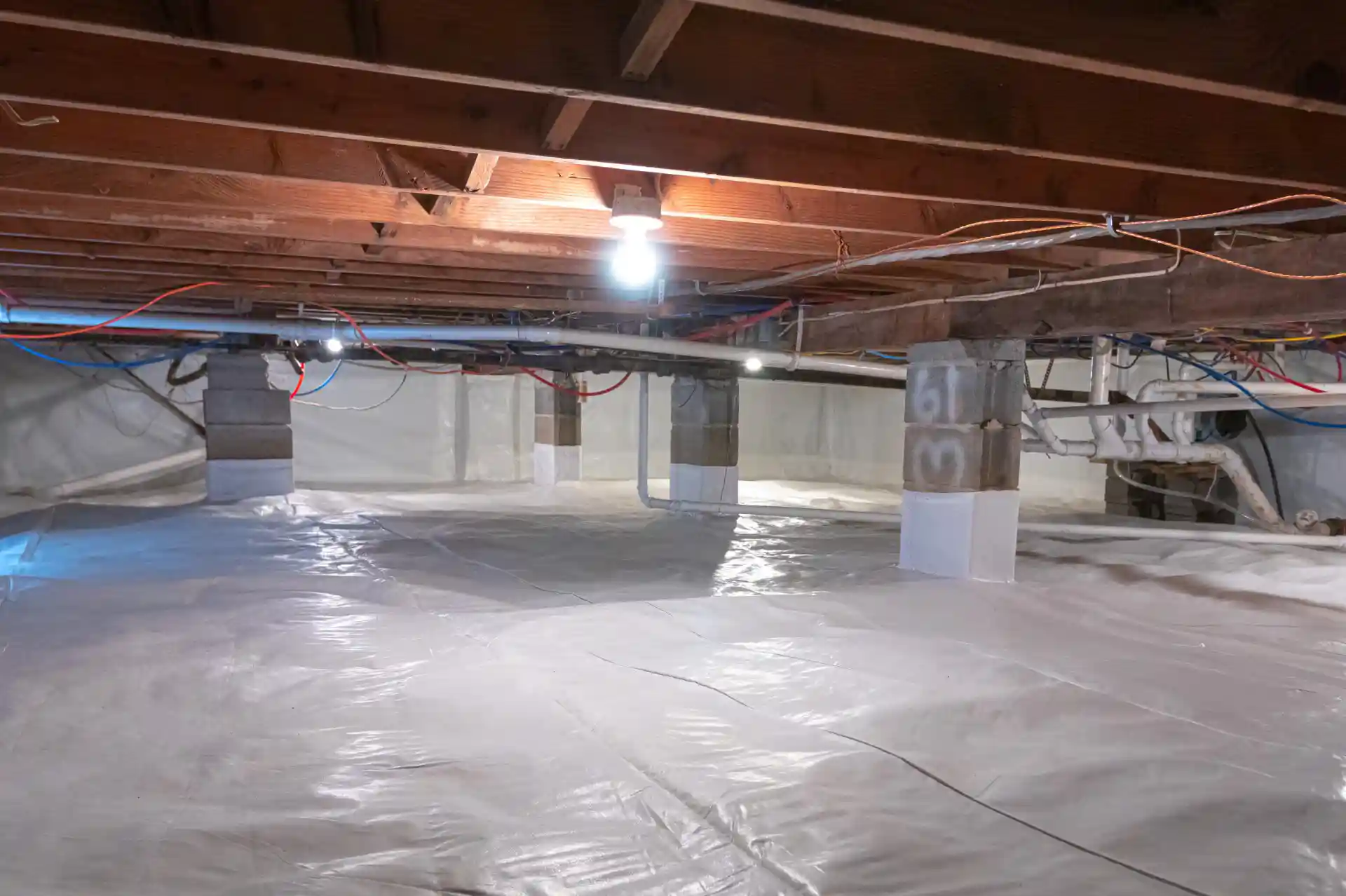
Why Crawl Space Air Quality NJ Homes Matters
Crawl space air quality NJ is often overlooked, yet it plays a vital role in your home’s overall health and comfort. Poor ventilation and high humidity levels can spread mold spores and odors throughout your living space. By improving crawl space air quality NJ, homeowners can prevent moisture damage, reduce allergens, and create a healthier indoor environment.
Many New Jersey homeowners don’t realize that nearly 40% of the air inside their living spaces originates from the crawl space below. When this area is damp or unsealed, moisture, mold spores, and soil gases rise into the home, reducing indoor air quality and triggering allergies or respiratory issues. Maintaining healthy crawl space air quality NJ is essential for preventing mold, protecting structural components from rot, and ensuring a cleaner, healthier environment for your family.
Crawl space air quality in NJ is one of the most overlooked factors affecting a home’s comfort and safety. When moisture builds up beneath your house, it can lead to mold, wood decay, and musty odors that travel through the HVAC system into your living spaces. By improving and sealing the crawl space, homeowners can prevent these issues, protect structural integrity, and maintain a healthier indoor environment year-round.
Maintaining proper crawl space air quality in NJ is essential for a healthy home. Excess moisture and poor ventilation can lead to mold, wood rot, and foul odors that affect your entire living space. Our crawl space encapsulation and ventilation solutions help protect both your home and your family’s well-being. Indoor air can be two to five times more polluted than outdoor air, and nearly half of that contamination often originates in an untreated crawl space. By improving crawl space air quality through professional encapsulation and moisture control, you protect your family’s respiratory health, prevent mold growth, and boost energy efficiency. In this guide to crawl space health, we explore why a clean underfloor environment matters, the advantages of crawl space encapsulation, strategies for moisture management, mold risks and remediation, insulation options, radon mitigation, and how these improvements can increase your home’s value—all tailored for New Jersey homeowners seeking a dry, safe living space.Why Does Crawl Space Air Quality Matter for Your Home?
Crawl space air quality refers to the purity of air beneath the floor structure, and poor conditions there can seep upward into living areas, affecting indoor air and structural components. This hidden environment influences home comfort and energy bills by allowing damp air, allergens, and pollutants to circulate throughout your house. Understanding this impact lays the foundation for addressing health risks and energy losses from below your feet.
How Does Poor Crawl Space Air Quality Affect Indoor Air and Health?
- Respiratory Irritation from inhaled mold fragments and dust
- Allergy Flare-Ups as spore counts rise in living spaces
- HVAC Strain because humid air forces heating and cooling systems to work harder
These effects demonstrate why targeting the stack effect is vital to protect your family’s well-being.
Crawl spaces as reservoirs for transmission of mold to the livable part of the home environment
A study involving 238 homes in North Carolina assessed mold contamination in crawl spaces and found that the HVAC system can act as a conduit, transmitting viable mold spores from the crawl space into the indoor living environment. This transmission is noted to potentially affect children’s respiratory health.
This research directly supports the article’s claims regarding how poor crawl space air quality, specifically mold spores, can degrade indoor air and impact health by entering living spaces.
What Is the Stack Effect and How Does It Influence Air Quality?
- Draws cold, moist air from beneath the floor
- Carries mold spores and dust into living spaces
- Increases heating and cooling costs due to uncontrolled airflow
Interrupting this airflow by sealing and conditioning the crawl space prevents unhealthy air from rising and reduces energy waste.
Which Common Contaminants Threaten Crawl Space Air Quality?
- Mold spores from elevated humidity
- Radon gas seeping through foundation cracks
- Moisture leading to wood rot and corrosion
- Pests such as rodents and insects seeking shelter
What Are the Key Benefits of Crawl Space Encapsulation?
Mold remediation in Morristown, NJ involves sealing affected areas, removing contaminated materials, and restoring air quality through professional containment and HEPA filtration. This process directly enhances home health, blocks mold recurrence, and stops pollutants at their source.
How Does Encapsulation Control Moisture and Prevent Mold Growth?
Encapsulation controls moisture by installing a continuous polyethylene liner across floors and walls, sealing vents, and connecting to a dedicated dehumidifier. This combination maintains relative humidity below 50 percent, preventing fungal colonies and keeping surfaces dry for long-term mold inhibition.
In What Ways Does Encapsulation Improve Energy Efficiency?
| Feature | Mechanism | Benefit |
|---|---|---|
| Rigid Foam Insulation | Thermal barrier on walls | Up to 15 percent lower heat loss |
| Sealed Vents | Air-tight seals around openings | Prevents drafts and energy waste |
| Dedicated Dehumidifier | Controls humidity level | Less strain on HVAC systems |
By lowering heating and cooling demands, homeowners typically save 10–18 percent on utility bills annually.
A Field Study Comparison of the Energy and Moisture Performance Characteristics of Ventilated Versus Sealed Crawl Spaces in the South
Research funded by the U.S. Department of Energy demonstrated that closed crawl spaces maintain significantly drier conditions compared to traditional wall-vented crawl spaces in humid climates. Homes with closed crawl space foundations also showed an average annual energy saving of 15% or more for space heating and cooling.
This study provides verifiable data supporting the article’s assertions about crawl space encapsulation’s effectiveness in controlling moisture, preventing mold growth, and improving energy efficiency through measurable utility bill savings.
How Does Encapsulation Protect Structural Integrity and Deter Pests?
- Sealed membranes keep wood joists dry and free from rot
- Insulated walls discourage rodent and insect entry
- Continuous barrier reduces risk of foundation cracks and wood warping
How Can You Effectively Control Moisture in Your Crawl Space?
Effective moisture control combines root-cause elimination with physical solutions to keep the underfloor environment consistently dry. Tackling each source of dampness ensures lasting protection against mold and structural damage.
What Causes High Humidity and Dampness in Crawl Spaces?
- Groundwater seepage through porous soil
- Poor exterior drainage or clogged gutters
- Open vents allowing humid outdoor air
- Limited air circulation beneath the flooring
How Do Vapor Barriers Work and What Types Are Best?
A vapor barrier is a sheet-form membrane that prevents moisture transmission from soil into the crawl space. Common options include:
- Polyethylene Liners: Durable, puncture-resistant sheets
- Foil-Backed Reinforced Barriers: Reflective surfaces that block moisture and radon
- Spray-On Sealants: Seamless coatings applied directly to walls and floors
What Are the Benefits of Crawl Space Dehumidifiers?
- Lower relative humidity below mold-growth thresholds
- Improve air quality by reducing airborne allergens
- Protect insulation and framing from moisture damage
How Do Drainage Systems and Sump Pumps Help Manage Water?
Introducing a drainage network and sump pump in your crawl space redirects water away from the foundation.
| Drainage System | Function | Benefit |
|---|---|---|
| Trench Drain | Collects water along perimeter | Prevents pooling under the floor |
| French Drain | Sub-floor gravel channel | Lowers hydrostatic pressure around walls |
| Sump Pump | Ejects collected water outside | Maintains a dry underfloor environment |
Combining proper grading, interior drains, and a reliable sump pump ensures moisture is swiftly removed.
Top Crawl Space Air Quality Solutions for NJ Homes
Mold in crawl spaces produces spores and mycotoxins that pose serious health hazards by entering the home’s breathing zones. Understanding mold types, risks, and professional removal steps protects your family’s well-being.
How Can You Identify Common Crawl Space Mold Types?
- Penicillium: Blue-green dust-like patches
- Aspergillus: Powdery yellow or white clusters
- Alternaria: Dark, olive-brown spots on surfaces
- Cladosporium: Olive green, suede-like growth
What Are the Respiratory and Allergy Risks Linked to Crawl Space Mold?
- Chronic coughing and wheezing
- Nasal congestion and sinus infections
- Skin irritation and rashes
- Aggravation of asthma and allergy symptoms
These health effects underscore the importance of thorough remediation.
What Does Professional Mold Remediation Involve?
- Inspection and air sampling to determine colony extent
- Containment using negative-pressure barriers
- Safe Removal of contaminated materials and cleaning surfaces
- Air Scrubbing with HEPA-filtered equipment
- Post-Remediation Testing to confirm clearance
This structured approach ensures complete eradication and safeguards occupants.
How Can You Prevent Mold from Returning Long-Term?
- Keep relative humidity under 50 percent with dehumidifiers
- Seal leaks, cracks, and entry points promptly
- Ensure proper ventilation or mechanical air exchange
- Perform regular crawl space inspections
How Does Crawl Space Insulation Improve Air Quality and Energy Savings?
Insulating crawl space walls or floors stabilizes temperatures, reduces condensation, and minimizes heat transfer—yielding cleaner air and lower utility costs. This thermal barrier complements encapsulation and moisture controls for comprehensive air quality management.
What Types of Insulation Are Suitable for Crawl Spaces?
- Rigid Foam Board for continuous wall coverage
- Closed-Cell Spray Foam that seals gaps and adds structural stiffness
- Insulated Panels pre-fabricated for easy installation
How Does Insulation Affect Air Quality and Reduce Energy Bills?
By filling thermal gaps and preventing cold surfaces, insulation:
- Reduces condensation that fosters mold and mildew
- Lowers demand on heating and cooling equipment
- Maintains consistent indoor temperatures for greater comfort
These benefits translate into annual energy bill savings of 10–15 percent for many homeowners.
Should You Insulate Vented or Unvented Crawl Spaces Differently?
For vented crawl spaces, insulation of the floor above the crawl space can control heat loss, while unvented (conditioned) spaces benefit from insulating walls directly. Matching insulation strategy to ventilation type ensures optimal performance and moisture control.
How Do Radon Mitigation and Ventilation Improve Crawl Space Air Quality?
Radon is a radioactive gas that seeps through foundation joints and accumulates in low spaces. Effective mitigation and proper ventilation dilute radon concentrations and introduce fresh air to expel harmful gases.
Why Is Radon Gas a Concern in New Jersey Crawl Spaces?
New Jersey’s geology, with its shale and fractured bedrock, often produces elevated radon levels. Without intervention, radon can accumulate beneath your home and migrate upward, increasing long-term health risks such as lung cancer.
A Citizen's Guide To Radon
The New Jersey Department of Environmental Protection (NJDEP) identifies radon as a radioactive gas that can accumulate in homes, including those with crawl spaces, and is the second leading cause of lung cancer. The NJDEP recommends that all homeowners test for radon and mitigate if levels are 4 pCi/L or more, confirming that mitigation systems are highly effective in reducing indoor concentrations.
This official guide from the NJDEP directly supports the article’s section on radon as a significant concern in New Jersey crawl spaces and outlines effective testing and mitigation methods.
What Are Effective Radon Testing and Mitigation Methods?
- Long-Term Monitors for accurate baseline measurements
- Sub-Slab Depressurization Systems that vent radon outdoors
- Sealed Vapor Barriers to limit soil-gas entry
How Can Ventilation Improvements Enhance Air Quality?
- Installing crawl space exhaust fans to draw out stale air
- Sealing old vents and replacing them with controlled intake ports
- Integrating energy-recovery ventilators to exchange fresh air efficiently
How Can Improving Crawl Space Air Quality Increase Your Home’s Value?
A dry, encapsulated crawl space signals quality maintenance, boosts energy performance, and enhances structural longevity—all attributes that appeal to buyers and justify higher resale prices.
What Is the Relationship Between Crawl Space Health and Home Value?
- Lower ongoing maintenance and repair costs
- Stronger buyer confidence during inspections
- Improved energy performance ratings on appraisal reports
How Does Encapsulation and Remediation Boost Structural Longevity?
- Maintaining dry conditions that protect joists and beams
- Blocking pest entry, eliminating termite and rodent threats
- Reducing hydrostatic pressure on foundation walls
What Are the Signs You Need Crawl Space Air Quality Improvements?
- Musty odors emanating from floor vents or baseboards
- Increased allergy or asthma flare-ups indoors
- Sagging floorboards or uneven flooring
- Visible mold, damp insulation, or standing water
How Can You Schedule a Free Consultation with Effective Basement Solutions?
Homeowners can arrange a complimentary crawl space inspection and detailed quote by contacting our New Jersey office via phone or online request form. A certified technician will assess moisture levels, air quality, and structural needs before recommending tailored encapsulation and remediation services.
Effective Basement Solutions specializes in improving crawl space air quality NJ families rely on, using proven encapsulation and dehumidification systems.
Improving crawl space air quality transforms a hidden risk into a source of comfort, efficiency, and long-term value for your New Jersey home. By combining professional encapsulation, moisture control, mold remediation, insulation, radon mitigation, and ventilation, you create a dry, healthy foundation for indoor living spaces. Taking action today not only safeguards your family’s health but also enhances energy savings and structural resilience for years to come. Contact Effective Basement Solutions to breathe new life into the air beneath your home.

3m8iu9