
Not every crack is serious, but any crack that lets water in needs attention. Call us if you see:

The direction of a crack tells you a lot about what's causing it.
The most common kind in poured concrete walls, usually from curing shrinkage or minor settlement. Often not structural, but they can leak.
These can point to one part of the foundation moving differently from another, so we check for movement before repairing.
They follow the mortar joints in block walls and can signal settlement. They need a look before anything is sealed.
A sign of soil pressure pushing on the wall. Take these seriously and have the wall assessed before sealing the crack.
Small holes in a poured wall are often tie rod holes left from construction. They're a common leak, and we seal those too.
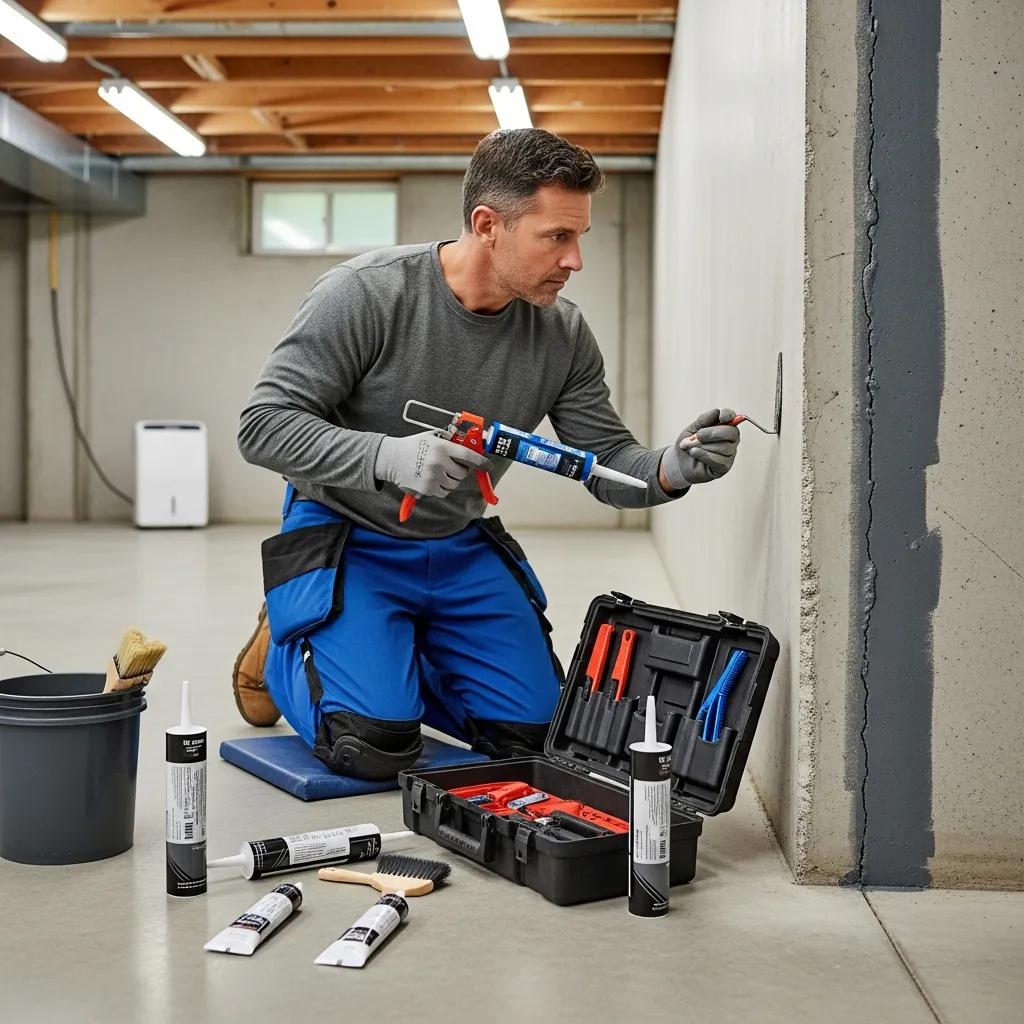
The right repair depends on the wall, the crack and whether water or movement is behind it.
A crack caused by pressure on the wall can't be fixed with sealant alone. When a block or concrete wall needs reinforcing, carbon fiber strips can be bonded to the wall to help hold it in place.
We assess the wall first, so the repair matches what's really happening. The strips sit flat against the wall, so the space can still be finished afterward.
Get My Free Estimate
Caulk and patch products sit on the surface of the wall. They may look fine for a while, but water pressure behind the wall can push through or around them.
Injection fills the crack through the wall instead of covering the face of it. And before any repair, we check whether the wall is moving, because that changes the fix.
Freezing and thawing work on small cracks year after year. Clay soil swells when it's wet and pushes against the walls. High water tables keep steady pressure on the foundation in many towns, and older block and stone foundations have mortar joints that wear out over time.
If water is also coming in where the wall meets the floor, sealing a crack won't stop it. That's a job for an interior French drain and sump pump. Moisture left behind can lead to mold, so see the EPA's guide to moisture in the home.
We look at the crack, the wall around it and where the water is coming from.
We tell you if the crack is serious, what it needs and what it doesn't.
Our own crew seals the crack using the method that fits your wall.
We clean up the work area when we're done.
Every crack is different, so the price depends on what we find. What affects the cost:
We look at it in person and give you a free estimate with no pressure.
We'll inspect the crack and tell you honestly what it needs.
Get My Free Estimateor call 1-800-957-0075
“How often do you hear of a contractor who actually talks you down from doing more work than necessary…”
“They did a fantastic job installing carbon fiber strips, an interior French drain, and a sump pump system…”
“He was completely honest with me and explained the reason I had water in my basement…”
Our crews repair foundation cracks for homeowners across North and Central New Jersey.
Some are minor and some aren't. Vertical cracks are often not structural but can leak. Horizontal cracks, wide cracks and cracks that keep growing should be looked at soon.
Call if it's leaking, getting wider, running horizontally, or if the wall looks bowed. If you're not sure, a free inspection will tell you.
It depends on the crack. Polyurethane injection is common for leaking poured concrete walls, and epoxy is used for dry, stable cracks. A wall that's moving needs more than sealing.
A surface patch may look fine for a while, but water pressure can push through it. It also won't tell you whether the wall is moving, so it's worth having a leaking crack looked at.
Yes. Injection is done from inside, so there's no digging around your house.
Yes. Block walls crack and leak differently from poured concrete, so we choose the repair based on what we find.
The water may be coming in somewhere else, often where the wall meets the floor. In that case, an interior French drain and sump pump may be what's needed.
They're usually tie rod holes left over from when the wall was formed. They're a common source of leaks, and we can seal them.
It depends on the number of cracks and what's in the way. You'll get a clear timeline with your estimate.
It depends on the crack, the wall and whether it's leaking or moving. We give you a free estimate after we see it. Call 1-800-957-0075.
We work in Union, Essex, Morris, Somerset, Middlesex and Bergen counties in New Jersey. Call us if you don't see your town listed.
Get a free inspection and a straight answer from a local NJ contractor.