
Basement Waterproofing & Foundation Protection in Middlesex County, NJ
Keeping your basement dry protects your foundation and improves indoor air quality for homeowners across Middlesex County, NJ. This guide shows how to spot early water damage, why local soils and the water table matter, and which proven solutions—sump pumps, French drains, interior drainage, crawl space encapsulation, and foundation repair—work best for New Jersey houses. You’ll find clear diagnostic steps, a practical maintenance checklist, and the real cost drivers so you can prioritize repairs and avoid bigger structural or health problems. Ready to move forward? Effective Basement Solutions offers free inspections and tailored consultations to evaluate your property and recommend a plan that fits your home. Read on for signs to watch for, an objective system comparison, crawl space strategies that boost air quality, when to consider foundation work, transparent cost guidance, and why a licensed, in‑house crew matters in Middlesex County.
Common Signs of Basement Water Damage in Middlesex County
Basement water damage usually shows up as visible water, damp staining, and material breakdown from infiltration or hydrostatic pressure forcing groundwater into the foundation. Catching these signs early prevents mold, wood rot, and undermined footings; addressing visible issues now reduces the scope and cost of later repairs. In Middlesex County, seasonal storms and local soil types often cause recurring dampness that starts small and worsens if ignored. Below are the most common, actionable indicators to monitor and document before you schedule a professional inspection.
The most common signs of basement water damage include:
- Standing water after storms or puddles in low spots next to walls.
- White, chalky efflorescence on masonry or concrete.
- Peeling, blistering paint or flaking concrete on walls and floors.
- Persistent musty smells or noticeably higher indoor humidity.
- New or widening cracks in walls or slab that show moisture tracking.
Spotting these early lets you use temporary measures while you arrange a full assessment; the next section explains how to tell active leaks from past issues and when to call a pro.
How to Spot Leaks, Cracks, and Damp Areas in Your Basement
Start with a quick visual and tactile check along wall‑to‑floor joints, window wells, and around plumbing and utility penetrations—active leaks often leave wet trails or fresh staining. Thin, hairline cracks generally indicate shrinkage and are lower priority; horizontal cracks, stair‑step patterns, or cracks that grow over weeks suggest movement and need prompt attention. A simple moisture check: tape aluminum foil to a suspect area and inspect the underside after 24–48 hours—condensation there means moisture is crossing the material. Take photos and notes to speed up a professional diagnosis and to help prioritize repairs.
Knowing how to triage visible damage leads directly into the health impacts of persistent moisture, which we cover next to show why moisture control matters beyond structure.
What Health Risks Do Mold and Musty Odors Pose to Homeowners?
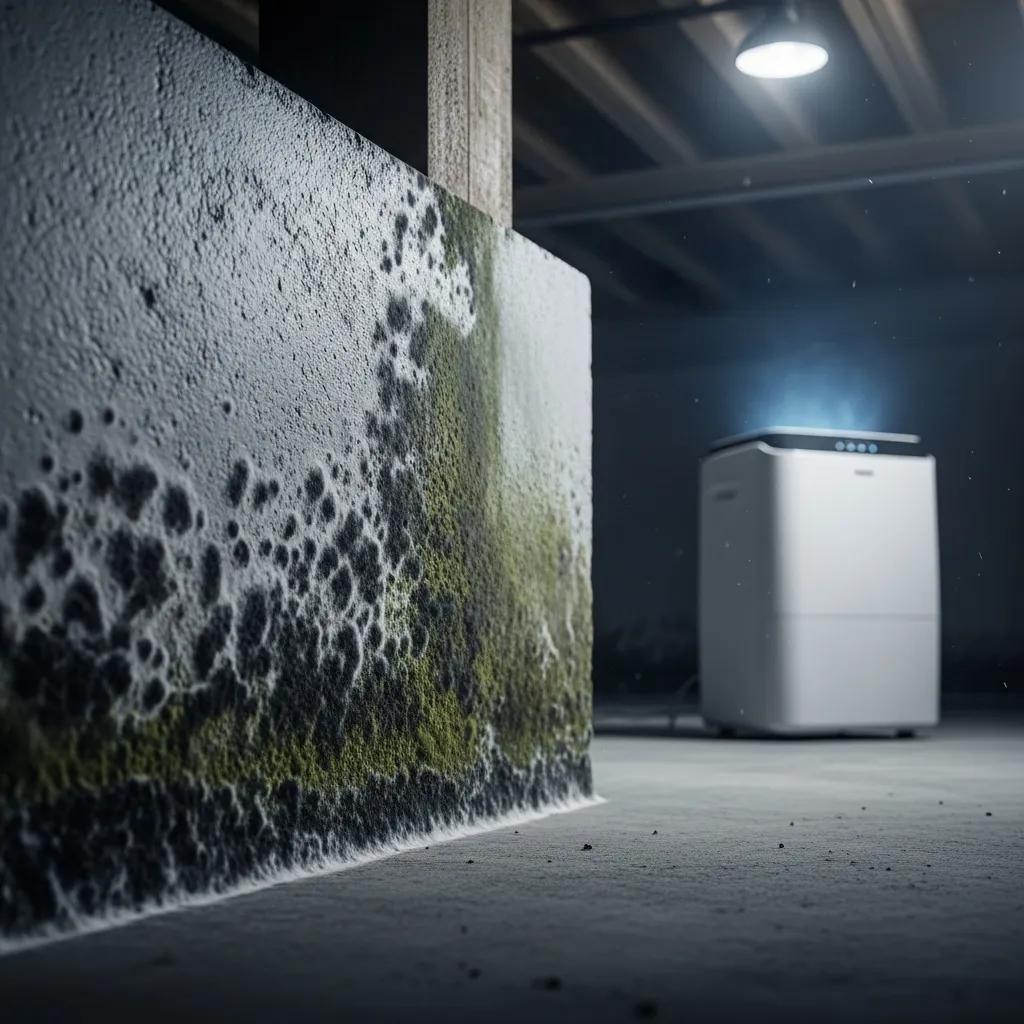
Mold thrives where moisture persists. Damp basements can release mold spores and microbial volatile organic compounds that lower indoor air quality and trigger allergy or respiratory symptoms in sensitive people. Common reactions include nasal congestion, throat irritation, coughing, and worsened asthma; long‑term exposure increases risk for vulnerable occupants. Treating the moisture source—not just covering odors with cleaners—stops mold from coming back and improves long‑term health. Effective moisture control also reduces dust mites and eases HVAC loads, which is why many homeowners pair dehumidification with waterproofing.
Crawl Space Moisture Management and Air Quality in Cold Climates
This study examines how relative humidity in outdoor‑air ventilated crawl spaces affects mold growth and material durability in colder regions. It evaluates ground‑cover properties and ventilation rates, models moisture dynamics with a validated simulation, and assesses how contaminants can move from crawl spaces into living areas when indoor pressures differ from outdoors. The findings highlight key design factors for managing moisture and protecting indoor air quality.
Moisture and fungal spore transport in outdoor air-ventilated crawl spaces in a cold climate, M Airaksinen, 2003
Reducing health risks through moisture control naturally leads to choosing the right waterproofing approach for Middlesex County homes, which we compare next.
Which Basement Waterproofing Solutions Work Best for Middlesex County Homes?
Waterproofing strategies either block water before it reaches the foundation or capture and route seepage away—choices depend on soil type, water table, access, and structural needs. Interior drainage systems collect seepage and send it to a sump pit, exterior systems stop water outside the foundation, and crawl space encapsulation isolates ground moisture to protect air quality. Pick a solution by weighing cost drivers, maintenance, and expected lifespan so the system matches your home’s conditions. For a custom plan, request a free consultation to determine the right combination for your Middlesex County property.
Below is a practical comparison of common waterproofing approaches to help you choose.
This table compares major waterproofing solutions for typical New Jersey homes.
| System | Best Use Case | Cost Drivers | Typical Lifespan |
|---|---|---|---|
| Sump pump + interior drain | Basements with active seepage or high water tables | Pit installation, pump quality, and backup power options | 10–15 years (pump can be serviced and replaced) |
| Interior French drain | Seepage through slab edges or wall joints | Excavation behind walls, drainage channel, pump tie‑in | 15–25 years (with routine maintenance) |
| Exterior waterproofing | Chronic wall leakage and sustained hydrostatic pressure | Full excavation, membrane selection, site grading | 20+ years (varies with soil and upkeep) |
| Crawl space encapsulation | Moist crawl spaces that raise indoor humidity and lower air quality | Vapor barrier quality, insulation, dehumidifier sizing | 15–30 years (depends on system maintenance) |
Interior systems usually cost less up front; exterior solutions address the source. The next section explains how sump pumps work and the backup options that protect basements during storms.
How Do Sump Pump Installations Protect Against Basement Flooding?
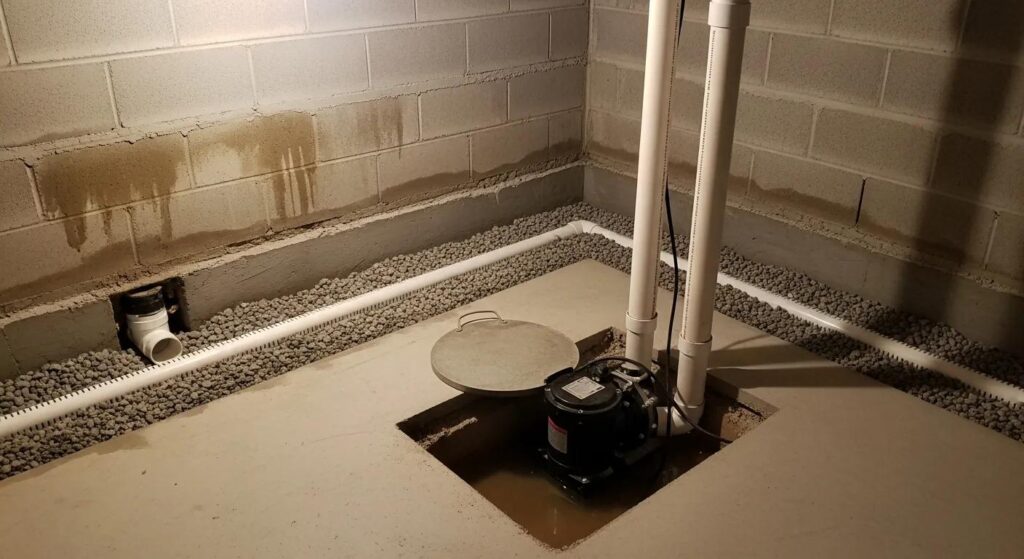
A sump pump collects subsurface and interior drainage in a basin and pumps it away from the foundation, preventing water buildup and lowering hydrostatic pressure on walls and slabs. Right‑sized pumps, properly routed discharge lines, and battery or generator backup keep your home protected during heavy rains and power outages. Regular maintenance—testing the float, clearing the basin, and confirming discharge line clearance—keeps the pump reliable; alarms give early warning of malfunctions. For higher‑risk properties, consider dual pumps or a redundant backup as part of a layered defense.
Knowing how French drains work alongside sump systems helps explain why combined systems are often the best choice for clay soils and high water tables.
What Are the Benefits of French Drain Systems for Relieving Hydrostatic Pressure?
French drains intercept subsurface water and move it away from foundation walls, reducing the pressure that drives seepage through cracks and joints. Interior French drains are installed behind the perimeter slab and tie into a sump pump—less invasive than full exterior excavation but still effective at pressure relief. Exterior drains operate at the footing level to prevent water accumulation altogether but require excavation and landscaping repair. Both reduce the force pushing water into the basement; maintenance is usually limited to occasional flushing or checking for silt. Choice depends on access, budget, and long‑term performance goals.
Groundwater Assessment for Basement Waterproofing Design
A focused overview on assessing groundwater conditions to inform basement waterproofing design, highlighting how subsurface flow, seasonal water tables, and soil permeability influence system selection and expected performance.
Ground water assessment and the design of basement waterproofing, 2023
Next we cover how crawl space treatments complement these systems and improve moisture control and indoor air quality throughout the home.
How Does Crawl Space Encapsulation Improve Moisture Control and Air Quality?
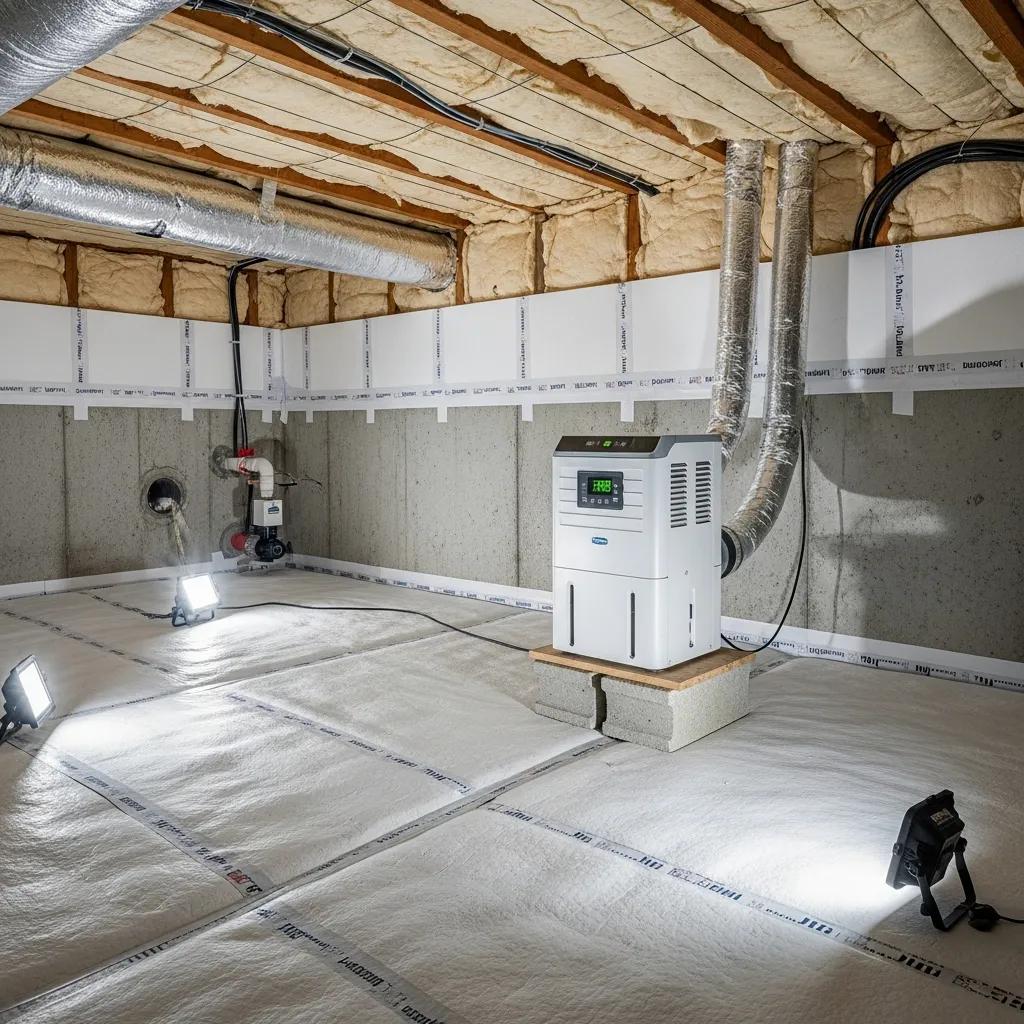
Encapsulation creates a sealed envelope with a durable vapor barrier, sealed vents, insulation, and typically a dedicated dehumidifier to stop ground moisture and interrupt paths for damp air into the living space. By removing evaporative moisture sources and conditioning the crawl space, encapsulation lowers basement relative humidity, limits mold growth, and can improve HVAC efficiency. Homes with ductwork or return air in the crawl space see less contaminant migration and healthier air distribution after encapsulation. The short table below breaks down key components and what each delivers.
This table shows encapsulation components and their main contributions.
| Component | Attribute | Benefit |
|---|---|---|
| Vapor barrier | 6–20 mil polyethylene or reinforced liner | Shields ground moisture and reduces vapor migration |
| Sealed insulation | Foam or closed‑cell insulation on walls | Raises thermal performance and prevents condensation |
| Dehumidifier | Properly sized for the space | Lowers humidity to block mold and corrosion |
| Vent sealing | Closed or conditioned crawl approaches | Stops humid outdoor air from entering the space |
Encapsulation delivers the best results when paired with correct grading and drainage outside the house—next we explain vapor barriers and dehumidification in more detail.
What Are Vapor Barriers and Dehumidification Systems?
Vapor barriers are continuous sheets placed over crawl space soil and along walls to prevent ground moisture from entering the home; they should overlap, be sealed at seams, and resist puncture. Dehumidifiers are sized by cubic footage and expected latent load; correctly selected units hold relative humidity under levels that support mold (ideally 50% or lower, certainly below 60%). Routine upkeep—cleaning filters, checking drains, and seasonal performance checks—keeps them efficient and lowers energy use. Coordinate barrier installation with insulation and HVAC to avoid trapping moisture and to ensure the system improves comfort and durability.
Reducing moisture with these measures prevents biological growth and structural decay, which we cover next.
How Does Crawl Space Encapsulation Prevent Mold and Wood Rot?
Encapsulation cuts off the moisture molds and fungi need by addressing ground vapor and humid infiltration at the source instead of just treating symptoms. Lower humidity slows wood‑decay processes in joists and sill plates, reducing the risk of rot and preserving structure over time. Many homeowners notice fresher indoor air and fewer allergy symptoms within weeks as humidity stabilizes; the structural benefits build over years. Regularly inspect the membrane and dehumidifier performance to make sure the system continues protecting materials and indoor air quality.
Next: when foundation issues require repair rather than waterproofing alone.
When Is Foundation Repair Necessary for Middlesex County Basements?
Foundation repair is required when visible movement or deformation shows a structural problem rather than just surface water intrusion—structural issues can worsen quickly if left alone. Red flags include bowing or bulging walls, wide horizontal cracks, floors sloping from differential settlement, and doors or windows that suddenly stick. These typically need engineered fixes to stabilize and restore load paths. A timely structural assessment prevents progressive failure that might otherwise require extensive underpinning or replacement. Integrating waterproofing with structural repair makes sure both moisture and load problems are resolved together. The following section helps you recognize crack patterns and urgency so you can prioritize an inspection.
What Are the Signs of Foundation Cracks and Structural Damage?
Crack shape points to cause: vertical cracks often mean shrinkage or minor settlement and are lower urgency; stair‑step cracks in masonry usually signal soil movement; horizontal cracks or wall bowing indicate lateral pressure and structural distress. Watch for related symptoms—doors jamming, uneven floors, or new gaps along trim—to confirm a structural issue rather than a simple leak. Mark cracks and monitor them over several weeks to document active growth; rapidly widening or newly displaced cracks need immediate professional review. Early classification guides whether anchors, carbon‑fiber straps, or underpinning will be the right remedy.
How Do Wall Strengthening and Underpinning Solutions Work?
Wall strengthening shifts soil pressure away from failing sections using anchors, steel channels, or carbon‑fiber systems to restore lateral stability while minimizing interior disruption. Underpinning—such as helical or push pier systems—transfers load to deeper, stable soils to stop settlement and, if needed, lift foundations back to level. Installations are phased, include load‑transfer verification, and should be coordinated with waterproofing so moisture and structure are handled together. Expect limited site disruption when work follows an engineered plan with clear outcomes and follow‑up monitoring.
Cost ultimately determines which combination of waterproofing and structural repairs is practical; the next section outlines price drivers and typical ranges in Middlesex County and how to get an accurate estimate.
How Much Does Basement Waterproofing Cost in Middlesex County NJ?
Waterproofing costs depend on the solution, accessibility, basement size, and whether structural repairs are needed—estimates cover materials, labor, and any site restoration. Major drivers include excavation extent, interior drain complexity, sump pump selection and backup, and underpinning or wall stabilization. Use the table below for ballpark ranges, then schedule a free on‑site inspection for an accurate, written estimate tailored to your property. A no‑cost inspection confirms local factors—soil, existing drainage, and foundation type—before you commit.
This table provides typical cost ranges and explanatory notes relevant to New Jersey conditions.
| Solution | Typical Range (NJ) | Notes |
|---|---|---|
| Interior drain + sump pump | $3,000–$8,000 | Varies with perimeter length and pump specs |
| Interior French drain | $3,500–$10,000 | Includes channel work and pump connection |
| Exterior waterproofing | $10,000–$30,000 | Excavation, membrane installation, and landscaping repair |
| Crawl space encapsulation | $3,000–$12,000 | Depends on square footage and dehumidifier sizing |
These are starting ranges; the next section explains the main factors that drive final price and how to compare estimates fairly.
What Factors Influence the Price of Waterproofing Services?
Key factors include basement footprint and layout, site accessibility, existing drainage or sump systems, the need for structural repair, and landscape restoration after exterior work. Soil type—especially heavy clay—raises hydrostatic pressure and can increase excavation needs; high water tables or frequent runoff also expand scope. Warranties, material quality, and backup power for sump pumps affect cost but add long‑term value by lowering failure risk. Understanding these variables helps you compare estimates fairly and prioritize work by risk and budget.
After you compare bids, confirm which inspections and warranties are included; the next section explains typical industry practices and what to expect in a written proposal.
Are Free Inspections and Warranties Included in Service Estimates?
Free inspections usually include a visual interior and exterior survey, documentation of visible leaks or damage, and a high‑level plan of recommended next steps; detailed pricing requires measurements and scope confirmation. Warranties differ: workmanship warranties cover installation labor while product warranties cover items like pumps and membranes—combined coverage is especially valuable. Ask for a written estimate that lists exclusions, warranty length, and required maintenance to keep coverage valid. For a precise local price and to compare warranty terms, schedule a free inspection with a licensed provider who will deliver a written proposal.
Scheduling an inspection is the next logical step; the section that follows explains why choosing a licensed, in‑house team like Effective Basement Solutions matters for Middlesex County homeowners.
Why Choose Effective Basement Solutions for Basement Waterproofing in Middlesex County?
Effective Basement Solutions pairs clear information and lead generation with an in‑house, licensed crew that installs waterproofing, French drains, and sump systems without subcontracting. Keeping work in‑house improves consistency, quality control, and accountability because the same trained technicians handle a job from estimate through completion. We offer free inspections, custom waterproofing plans for New Jersey homes, quality materials, emergency response when needed, and warranty coverage to protect your investment. For homeowners who want reliable local service, a licensed, employee‑based team delivers assessments and installations that reflect local conditions and consistent workmanship standards.
The next section summarizes how our in‑house crew differs from firms that rely heavily on subcontractors and why that matters for outcomes.
What Makes Our Licensed, In-House Crew Different from Competitors?
Our licensed, in‑house crews centralize training, safety practices, and workmanship standards so projects follow consistent procedures and documented quality checks from start to finish. That reduces the variability common when multiple subcontractors with different standards are used, improves schedule reliability, and simplifies warranty support and follow‑up service. In‑house teams also provide direct accountability for communication and workmanship, which helps homeowners during coordination and on‑site decisions. Choosing a licensed, employee‑based provider aligns expectations and documentation when waterproofing and foundation work are combined.
How Do Customer Testimonials and Local Case Studies Prove Our Expertise?
Strong case studies outline the initial problem, diagnostic findings, chosen solution components, measurable results (for example, reduced humidity or eliminated leaks), and warranty coverage to show accountability and outcomes. Before/after photos and clear metrics—such as humidity drops over a set period or confirmed elimination of seepage—help prospective clients set realistic expectations. Testimonials that mention responsiveness, transparent estimates, and post‑installation support address common homeowner concerns about cost and disruption. Paired with a free inspection and written proposal, local case evidence builds confidence in both technical ability and long‑term support.
Getting the right solution starts with a clear inspection; request a free, no‑obligation evaluation to confirm priorities and next steps.
- Request an inspection: Book a free on‑site evaluation to document symptoms and receive a written recommendation.
- Review options: Compare interior versus exterior approaches, paying attention to warranties and maintenance requirements.
- Schedule prioritized work: Begin with measures that remove moisture sources and protect structural elements first.
Frequently Asked Questions
What is the best time of year to perform basement waterproofing in Middlesex County?
The easiest time to schedule waterproofing is during the drier months—typically late spring through early fall. Drier ground makes excavation and assessments simpler and reduces the chance of rain or snow delaying work. It’s also smart to complete waterproofing before the heavy‑rain season to avoid potential water damage while you wait.
How long does the basement waterproofing process typically take?
Timing depends on the method and complexity. Interior solutions like sump pump installs or interior French drains often take one to three days. Exterior waterproofing with excavation and membrane installation commonly runs three to five days. Weather, site access, and project complexity can extend those windows—your contractor will give a more accurate timeline after inspection.
Can I waterproof my basement myself, or should I hire a professional?
Minor tasks—sealing small cracks or applying waterproof paint—can be DIY, but comprehensive waterproofing is best handled by professionals. Licensed contractors bring tools, experience, and knowledge to assess site‑specific conditions and install long‑lasting solutions that meet local codes. Pros also provide warranties and follow‑up support, which adds value and reduces future risk.
What maintenance is required after waterproofing my basement?
Regular maintenance keeps systems working: test sump pumps, clean basins and drainage channels, inspect discharge lines, and watch for new damp spots or odors. Monitor humidity and use a dehumidifier if needed. Schedule periodic professional inspections to verify system performance and address issues before they escalate. Keeping a simple maintenance log helps track tasks and dates.
Are there any financing options available for basement waterproofing services?
Many companies offer financing to spread the cost—options can include payment plans, low‑interest loans, or promotional financing. Ask about financing during your initial consultation so you understand terms and monthly payments. Some firms work with third‑party lenders to provide flexible plans that fit different budgets.
How can I tell if my basement waterproofing system is working effectively?
Monitor for moisture signs—damp spots, mold, or musty odors—and check that the sump pump runs during heavy rain and that its discharge line is clear. Inspect drainage channels for blockages and ensure gutters and downspouts move water away from the foundation. If humidity rises or water issues persist, call a professional for an assessment.
Conclusion
Basement waterproofing protects your home from water damage, improves air quality, and preserves structural integrity. By recognizing the signs of water intrusion and understanding available solutions, you can make informed choices that safeguard your house and family. For personalized guidance, schedule a free inspection with our licensed team—let us evaluate your needs and recommend a practical plan. Take the first step toward a dry, healthy basement today.

bwly9n