
Protect Your Paramus, NJ Home with Complete Basement Waterproofing
Basement waterproofing in Paramus, NJ tackles the common risks homeowners face here: water intrusion, mold, and foundation damage driven by local soils and seasonal weather. This guide breaks down why basements leak in Paramus, the practical waterproofing methods that perform well locally, and how to budget for long-lasting protection. You’ll learn to spot signs of moisture, weigh interior versus exterior solutions like French drains and sump systems, and recognize when foundation repair or crawl-space encapsulation is needed. If you want professional help, Effective Basement Solutions offers a free inspection and uses a licensed in-house crew to diagnose issues and recommend plans tailored to Paramus properties.
Our free inspection and consultation are designed to help homeowners prioritize repairs and build realistic budgets, using licensed technicians—no subcontractors. The short inspection pinpoints hydrostatic pressure, drainage failures, and foundation concerns and delivers a clear, written recommendation. Read on for local causes, warning signs, cost benchmarks, method comparisons, crawl-space strategies, and structural triggers so you can choose the right next step to reduce mold, prevent wood rot, and protect your home’s value.
What Causes Basement Water Problems in Paramus NJ?
Basement water problems in Paramus usually come from a mix of local geology, poor surface drainage, and seasonal weather that increases hydrostatic pressure on foundations. Soils with low permeability or a high clay content hold water and push lateral pressure against walls and floors, forcing moisture through cracks, joints, and porous masonry. Poor grading, blocked gutters, and downspouts that dump near the foundation make things worse by concentrating runoff at the house edge. Understanding these factors helps you choose targeted fixes—from perimeter drainage to better roofwater management.
Think of surface runoff, soil saturation, and freeze–thaw cycles as linked drivers of leaks. Runoff flows toward weak points when grading or gutters fail, saturated soils keep pressure on foundations during extended rains, and freeze–thaw cycles widen tiny cracks that were previously watertight. The next section explains how Paramus’s specific soil and weather patterns influence leak behavior and what to inspect first.
How Do Soil and Weather Affect Basement Leaks in Paramus?
Paramus sees variable precipitation and seasonal freezes that change ground saturation and the pressure against foundations. Clay-rich or poorly drained soils found in parts of Bergen County trap water close to homes, increasing hydrostatic pressure that forces moisture through concrete and masonry. Intense summer storms and quick snowmelt can cause short-term spikes in groundwater that overwhelm undersized interior drainage or sump systems. Homeowners should check exterior grading, confirm downspouts discharge away from the foundation, and watch for ponding near walls as early warning signs.
A good site assessment usually reveals whether the issue is surface-driven or groundwater-driven—information that determines whether grading changes, exterior drains, or an interior channel system is the right fix. Timing matters: leaks that show up after a thaw often point to groundwater, while leaks during storms usually indicate surface runoff. The next section lists the observable signs to watch for so you can prioritize repairs.
What Are the Common Signs of Basement Water Damage?
Catch basement water damage early by looking for visual and sensory clues as well as repeat indoor air issues. Common signs include tide lines or water stains on walls, efflorescence (white mineral deposits) on masonry, peeling paint or flaking concrete, and persistent musty odors that suggest mold. Structural signs—floor heaving, warped baseboards, or drywall discoloration at the floor line—also point to active moisture and need a prompt check.
If you see any of these symptoms, note where and when they occur to help an inspector diagnose the source and scope. Early detection lets you use targeted repairs—such as crack injections or an interior drainage channel—before you need full exterior excavation or major structural work. The next section covers typical cost ranges and the factors that influence pricing in Paramus.
How Much Does Basement Waterproofing Cost in Paramus NJ?
Costs for basement waterproofing in Paramus depend on the method you choose, site access, damage extent, and any structural repairs required. Interior drainage with a sump pump is usually lower to mid-range because it avoids exterior excavation, while full exterior membrane systems and excavation-based solutions sit at the higher end due to labor and landscape restoration. Add-ons like dehumidifiers, battery backups, and crawl-space encapsulation raise the upfront cost but can reduce long-term risk and maintenance needs.
| Service Type | Typical Price Range | What Affects Price |
|---|---|---|
| Interior drainage with sump pump | $3,000 – $8,000 | Basement size, floor removal, subfloor restoration |
| Exterior excavation and membrane | $8,000 – $20,000+ | Soil conditions, landscaping restoration, drainage complexity |
| Crawl space encapsulation | $2,500 – $8,000 | Crawl size, insulation added, vapor barrier quality |
| Sump pump installation (standalone) | $800 – $2,500 | Pump capacity, pit size, battery backup inclusion |
The ranges above show how approach and site conditions affect your budget; exact pricing requires an on-site inspection. The following subsection explains the main cost drivers you’ll see in estimates.
What Factors Influence Basement Waterproofing Prices?
Price depends on the amount of water intrusion, how accessible the work area is, soil conditions, whether structural repairs are needed, and the quality of materials and systems selected. Underpinning or carbon-fiber stabilization raises structural labor costs, while finished or tight-access basements cost more because of careful demolition and restoration. Material choices—high-grade membranes, stainless sump components, and commercial dehumidifiers—also affect both upfront price and long-term value.
Permits, local code requirements, and landscaping or slab repairs after exterior work add to final invoices. Because these variables vary by home, Effective Basement Solutions recommends a free inspection to create a customized quote that highlights the highest-value interventions. The next subsection looks at budget-friendly options and phased approaches for homeowners who need to spread costs.
Are There Affordable Waterproofing Options for Wet Basements?
Yes—particularly for urgent risks or as interim measures while planning a full solution—but it’s important to understand the trade-offs between cost and durability. Temporary fixes include crack injections, interior sealants, and portable sump units that reduce immediate leakage and mold risk but may not resolve hydrostatic pressure or long-term groundwater problems. A phased plan—starting with interior drainage and a reliable sump pump, then adding exterior work later—lets you spread costs while improving protection step by step.
Selecting a cost-effective strategy depends on whether the issue is localized or systemic. Small, isolated leaks can often be handled affordably; widespread seepage usually needs permanent systems. When budgeting, factor in lifecycle costs—a higher-quality sump pump with battery backup and a matched drainage system can be cheaper over time than repeated temporary fixes.
The next section compares common methods to help you choose the best approach for Paramus homes.
Which Basement Waterproofing Methods Work Best for Paramus Homes?
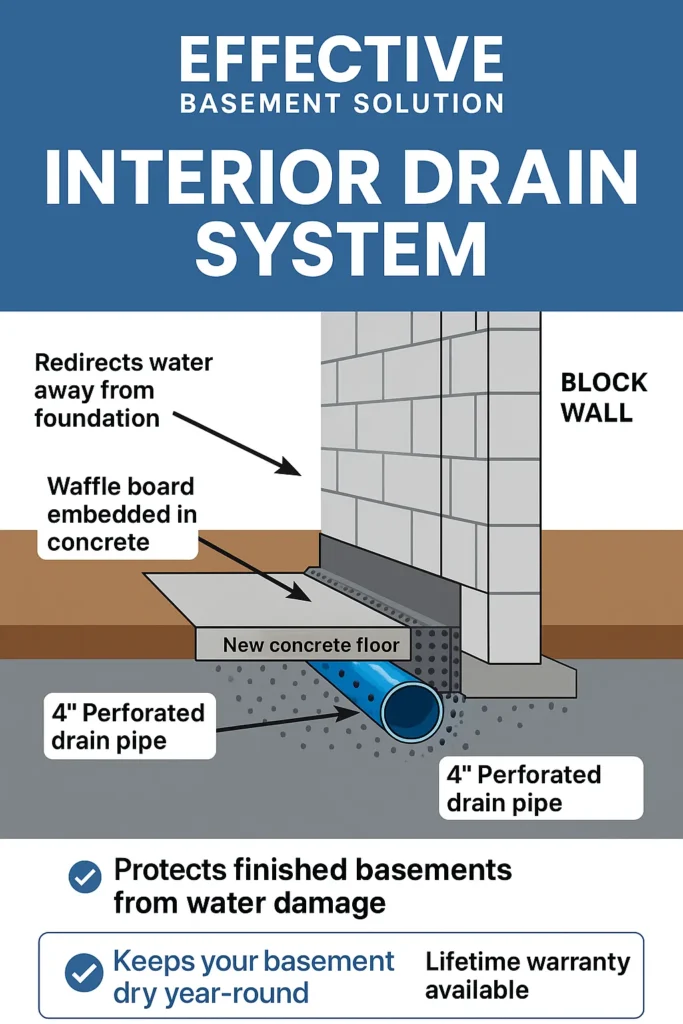
Picking the right method for Paramus homes comes down to the water source, soil conditions, and your goals—whether stopping occasional seepage or fully protecting finished living areas from flooding. Interior drainage systems collect water where it enters and direct it to a sump pump, offering effective protection in many groundwater situations without exterior excavation. Exterior membranes and perimeter drainage stop water before it reaches the wall and are preferable when you can access and restore the landscape. Structural reinforcement and wall stabilization are needed when hydrostatic pressure or soil movement has caused bowing or severe cracking.
| Method | Best For | Pros / Cons | Typical Downtime |
|---|---|---|---|
| Interior drainage channel | Groundwater ingress, finished basements | Pros: Less disruptive; lower cost. Cons: Does not stop exterior leaks. | 2–7 days |
| French drain (exterior) | Surface runoff, high perimeter saturation | Pros: Addresses source of water; long-term. Cons: Higher cost, landscaping impact. | 3–10 days |
| Exterior waterproof membrane | Persistent wall seepage | Pros: Stops water at wall; durable. Cons: Excavation required. | 5–14 days |
| Sump pump with battery backup | Flood-prone basements | Pros: Active water removal; protects during storms. Cons: Requires maintenance and power plan. | 1–2 days |
Effective Basement Solutions installs systems with attention to local soil conditions and code requirements and recommends a free inspection to identify the right mix of french drain installation nj. The next sections describe how interior drainage works and when a sump pump is essential.
How Do Interior Drainage Systems and French Drains Prevent Flooding?
Both interior drainage systems and exterior French drains move water away from the foundation, but they collect it in different places. Interior channels are installed at the wall–floor joint or under a thin strip of removed concrete to capture water entering the basement; that water flows to a sump pit and is pumped away. Exterior French drains intercept groundwater before it reaches the foundation using perforated pipe set in gravel and wrapped in fabric, which lowers pressure against the wall and reduces long-term intrusion.
Your choice depends on access, landscaping, and whether you need to stop water before it reaches the wall for long-term protection. Interior systems are quicker and less costly; exterior systems are more permanent against hydrostatic pressure. The following subsection explains when a sump pump is necessary and how to size one correctly.
When Is Sump Pump Installation Necessary for Basement Protection?
Install a sump pump when a basement sees recurring water, the local water table is high, or interior drainage alone can’t reliably remove collected water. Sump pumps lift groundwater from a pit and discharge it to a safe location; options include pedestal and submersible pumps sized by expected inflow and pit capacity. In Paramus, battery backup and smart monitoring are recommended because storms can cause power outages—backups keep your system running when you need it most.
Regular maintenance—testing float switches, checking discharge lines, and replacing worn parts—keeps a pump reliable. Paired with interior or exterior drainage, a correctly specified sump pump lowers flood risk and reduces structural and mold damage. Next we’ll explain how crawl-space encapsulation supports overall moisture control.
How Can Crawl Space Encapsulation Improve Basement Health in Paramus?
Crawl-space encapsulation seals the ground and perimeter of a crawl area with a robust vapor barrier, plus sealing and insulation, to limit moisture entry and improve humidity under the house. That reduces upward moisture transfer into floors, lowers the humidity that feeds mold and wood rot, and improves indoor air quality and HVAC efficiency. In Paramus—where seasonal humidity swings and soil moisture can be pronounced—encapsulation paired with dehumidification and proper drainage noticeably improves comfort and structural longevity.
Typical encapsulation includes a continuous vapor barrier, sealed rim joists, conditioned air paths when appropriate, and a dehumidifier sized to the space. The table below explains common components, their roles, and maintenance expectations.
| Component | Function | Maintenance / Lifespan |
|---|---|---|
| Vapor barrier (polyethylene) | Blocks ground moisture | Inspect annually; lasts 10+ years with proper installation |
| Rim-joist sealing | Reduces air and moisture transfer | Recheck seals every few years; repair as needed |
| Dehumidifier | Controls residual humidity | Regular filter and condensate checks; service every 1–2 years |
| Drainage and crawl vents | Directs water away; provides ventilation | Clear debris seasonally; monitor for blockages |
Encapsulation works best when combined with exterior grading and drainage improvements that keep water away from the foundation. The next sections lay out direct benefits and how dehumidification supports encapsulation.
What Are the Benefits of Crawl Space Moisture Control?
Controlling crawl-space moisture lowers mold risk, improves indoor air quality, and stabilizes subfloor moisture—protecting floor materials and reducing allergens that enter living areas. Lower humidity also reduces wood rot and pest risk and helps heating and cooling systems run more efficiently by keeping insulation dry. Many homeowners notice measurable drops in basement and ground-floor humidity within weeks of installation, improving comfort and lowering long-term maintenance costs.
For finished basements and adjacent living areas, target relative humidity is typically below 50% to inhibit mold. Achieving that usually requires sealing, drainage, and active dehumidification. With those systems in place, the home breathes cleaner air and structural components stay drier and more durable. The following subsection covers dehumidifier selection and integration tips.
How Does a Dehumidification System Complement Basement Waterproofing?
A dehumidifier handles the residual moisture waterproofing doesn’t eliminate, stabilizing indoor humidity to prevent mold, musty odors, and condensation damage. Proper sizing is essential: the unit must match basement volume and moisture load, and it should drain automatically into the sump or another appropriate outlet. Continuous drainage, routine maintenance, and energy-efficient models provide steady performance and lower operating costs.
When combined with encapsulation and effective drainage, a dehumidifier completes a layered moisture-control strategy: drainage removes bulk water, encapsulation blocks ground moisture, and dehumidification controls air humidity. This integrated approach extends the life of finishes and systems and creates a healthier indoor environment. Next, we’ll cover when foundation repair is necessary and how to spot structural issues early.
When Is Foundation Repair Needed for Basements in Paramus NJ?
Foundation repair is needed when structural symptoms show that load-bearing elements are compromised or wall movement threatens long-term stability—cosmetic fixes alone won’t solve these problems.
Key triggers for structural repair include horizontal or stair-step cracks under tension, inward-bowing foundation walls, noticeably uneven or sloping floors, and doors or windows that no longer latch—signs of settlement or lateral pressure beyond design limits. Addressing these issues promptly prevents worsening damage and typically lowers lifecycle costs compared with delaying repairs.
What Are the Signs of Foundation Damage in Basements?
Spot foundation damage early to avoid escalation: look for horizontal cracks, pronounced stair-step cracks in masonry, inward-bowing walls, and doors or windows that stick or won’t close. Sloping floors, new gaps between walls and floors, and cracks that get wider over time also signal active movement. These signs help you distinguish structural distress from hairline or shrinkage cracks that are usually cosmetic.
If you see more than one sign—such as bowing plus stair-step cracks—schedule an inspection right away to assess load-bearing integrity and plan stabilization.
How Do Structural Reinforcement Solutions Stabilize Bowing Walls?
Structural reinforcement stabilizes bowing walls by counteracting lateral pressure and restoring load paths with tension or compression systems tailored to the failure mode. Carbon-fiber straps offer a minimally invasive, high-strength retrofit that adheres to the interior wall face and resists further movement while preserving finishes. For more severe movement, steel I-beams, wall anchors, or underpinning transfer loads to more stable soil and can correct alignment over time—especially when combined with soil remediation.
Choosing the right method depends on bowing severity, installation access, and long-term expectations; each option balances invasiveness, lifespan, and cost. After stabilization, pairing reinforcement with improved drainage and waterproofing helps prevent recurrence by reducing hydrostatic forces.
Why Choose Effective Basement Solutions for Waterproofing in Paramus NJ?
Effective Basement Solutions focuses on practical, long-term waterproofing and structural services for Paramus homes, using licensed, in-house crews and an inspection-first approach. By using trained employees rather than subcontractors, we deliver consistent workmanship, clear accountability, and simpler scheduling for multi-phase projects. Free inspections give homeowners a diagnostic report and prioritized recommendations so you can compare short-term fixes with comprehensive systems that address root causes.
What Makes Our Licensed In-House Crew Unique?
Our licensed in-house crew provides consistent workmanship, direct supervision, and continuity from site assessment through installation and follow-up—reducing coordination errors and keeping projects on schedule. In-house teams make quality control easier because supervisors directly manage crews and equipment rather than relying on outside contractors. That translates to more predictable timelines, a single point of responsibility for warranties, and reliable post-installation support for homeowners tackling complex waterproofing or structural projects.
Because the crew follows standardized protocols for diagnostics, material selection, and site restoration, we deliver reproducible results that protect home value and indoor health. The next section explains what to expect from our free inspection and how we build customized solutions from that assessment.
How Do Our Free Inspections and Customized Solutions Protect Your Home?
A free Paramus inspection begins with a visual and moisture check of the basement perimeter, floor, and crawl spaces, documenting signs with photos and a written summary of recommended interventions. Inspectors determine whether water comes from surface runoff, groundwater, or plumbing, and they assess structural indicators to prioritize repairs and offer phased options when appropriate. The customized plan outlines recommended methods, materials, and estimated costs so homeowners can weigh short-term fixes against comprehensive waterproofing investments.
This inspection-driven process focuses on root causes—grading correction, interior drainage, or structural stabilization—rather than treating symptoms, which preserves long-term structural safety and indoor air quality. To schedule an inspection and get a tailored quote, homeowners can call Effective Basement Solutions to arrange a site visit and review options.
- Contact: Effective Basement Solutions, 18009570075
- Recognize immediate risks: Note leak locations and odors so you can document them for the inspection.
- Prioritize permanent solutions: Favor drainage and structural fixes over repeated temporary patches.
- Plan in phases if necessary: Tackle urgent hazards first, then schedule long-term improvements.
Following these three steps helps homeowners control costs and disruption while moving toward a durable, healthy basement environment.
Conclusion
Basement waterproofing in Paramus, NJ is a key step in protecting your home from water damage, mold, and structural problems. Understanding the causes and choosing the right combination of solutions helps extend your property’s life and improve indoor air quality. Start with a free inspection from Effective Basement Solutions to get a clear plan tailored to your home—protect your investment and gain peace of mind knowing your basement is secure against water intrusion.
