Basement Waterproofing Bergen County NJ: Complete Solutions to Protect Your Home from Water Damage
Basement waterproofing in Bergen County, NJ, focuses on preventing water intrusion, controlling moisture, and protecting structural elements in homes exposed to the region’s variable climate and soil conditions. This article explains how professional waterproofing systems work, identifies the common causes of basement leaks in Bergen County, and shows which solutions—like sump pumps, French drains, vapor barriers, and dehumidification—address specific problems while improving indoor air quality. Homeowners will learn how to read signs of water damage, compare service options, and understand cost drivers so they can plan a targeted repair or prevention strategy. The guide also maps foundation repair and crawl space encapsulation options to typical Bergen County scenarios and explains when to call a pro for a free inspection or consultation. Read on for practical checklists, concise cost guidance, comparison tables, and a clear description of how professional teams deliver reliable, long-term protection.
Why Do Bergen County Homes Need Professional Basement Waterproofing?
Basement waterproofing in Bergen County addresses a set of local drivers: seasonal heavy rainfall, storm runoff, and soil types that trap groundwater near foundations, which together increase hydrostatic pressure against basement walls and floors. Professional waterproofing relieves that pressure through drainage systems and moisture control components that stop water intrusion and reduce dampness, thereby protecting finishes, stored belongings, and indoor air quality. The result of effective waterproofing is a drier, healthier basement space and a reduced risk of costly structural repairs. Understanding these regional mechanisms clarifies why an assessment by a qualified professional is often the fastest route to a durable solution.
What Are the Common Causes of Basement Leaks and Water Damage in Bergen County?
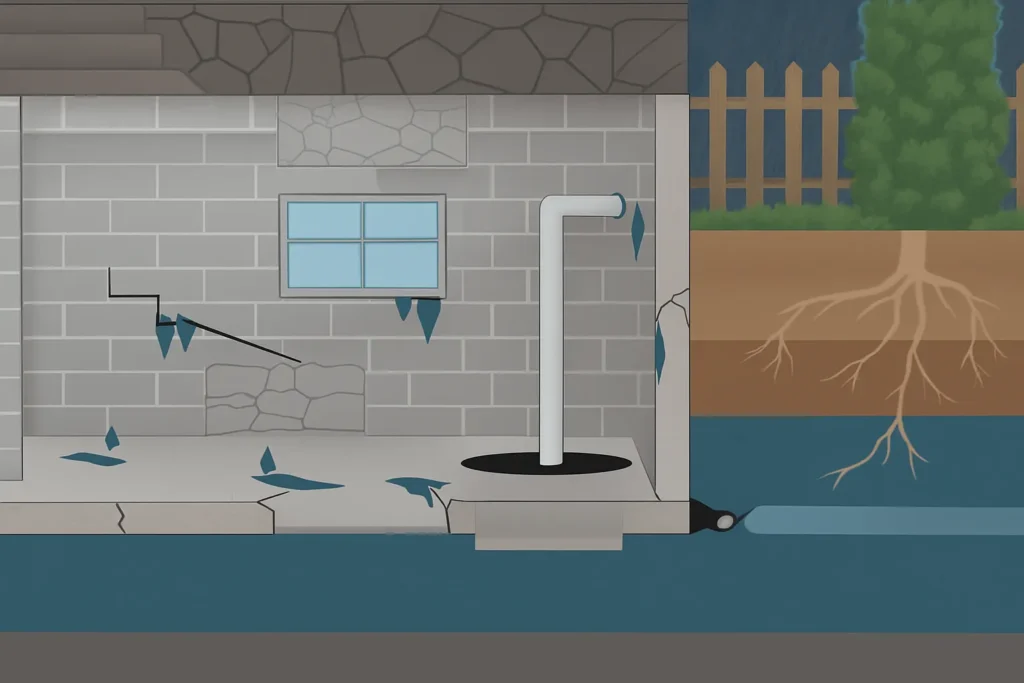
Surface runoff, poor grading, and clogged gutters frequently direct rainwater toward foundations, increasing the chance of basement seepage when storms hit Bergen County. Hydrostatic pressure builds when clay-rich soils hold moisture against foundation walls, forcing water through cracks or porous block joints and accelerating deterioration. Aging foundations, hairline cracks, and failed window wells also create entry points for water, while sump pump failures or undersized drainage systems allow groundwater to accumulate. Homeowners can spot early warning signs through simple checks such as water stains, wet baseboards, and localized pooling, and should call a professional when DIY measures fail to stop persistent moisture.
A significant factor contributing to basement leaks is the deterioration and subsequent loss of functionality of downspout drainage systems, often exacerbated by walls incapable of withstanding hydrostatic pressure. basement waterproofing services
The Leaking Basement Phenomenon: Etiology, Remediation, and Ramifications in the United States
The prevalence of the leaking basement phenomenon in the United States is readily apparent by consulting local Yellow Pages listings for ‘Waterproofing Contractors.’ This study examines the causes, financial implications, and mitigation strategies through a detailed case history. It posits that failures are predominantly systemic, stemming from multiple contributing factors. However, a particularly significant factor is the deterioration and subsequent loss of functionality of downspout drainage systems. This issue is exacerbated by suboptimal design choices that result in walls incapable of withstanding the lateral loads generated by hydrostatic pressure. Remedial measures encompass proactive maintenance and structural reinforcement of walls. Nevertheless, enhanced public awareness regarding the underlying causes and associated liabilities is a prerequisite. This awareness can be most effectively fostered through increased scrutiny during property transfer processes.
The Leaking Basement Epidemic–Causes, Cures and Consequences
How Does Basement Waterproofing Prevent Mold Growth and Foundation Issues?
Moisture control strategies remove the environmental conditions that allow mold to colonize and cause health and material damage, with drainage systems and vapor barriers lowering relative humidity and preventing condensation on cold surfaces. Interior drainage coupled with a properly sized sump pump reduces hydrostatic pressure, which in turn protects masonry and concrete from spalling and salt migration that weaken foundation integrity. Dehumidification and encapsulation control airborne moisture and reduce spores, promoting healthier indoor air and preserving finished basement spaces for living or storage. Together these measures slow structural deterioration, maintain property value, and limit the need for reactive repairs in the future.
Effective Basement Solutions brings local knowledge and a licensed in-house crew to assessments and installations, which helps ensure consistent workmanship and straightforward warranty handling. Their approach centers on reliable results without sales pressure and includes an invitation for homeowners to request a free inspection or consultation to establish a site-specific plan. This trust-building option helps homeowners move from diagnosis to durable solutions while keeping focus on long-term structural safety and mold prevention.
Comprehensive Basement Waterproofing Services in Bergen County, NJ
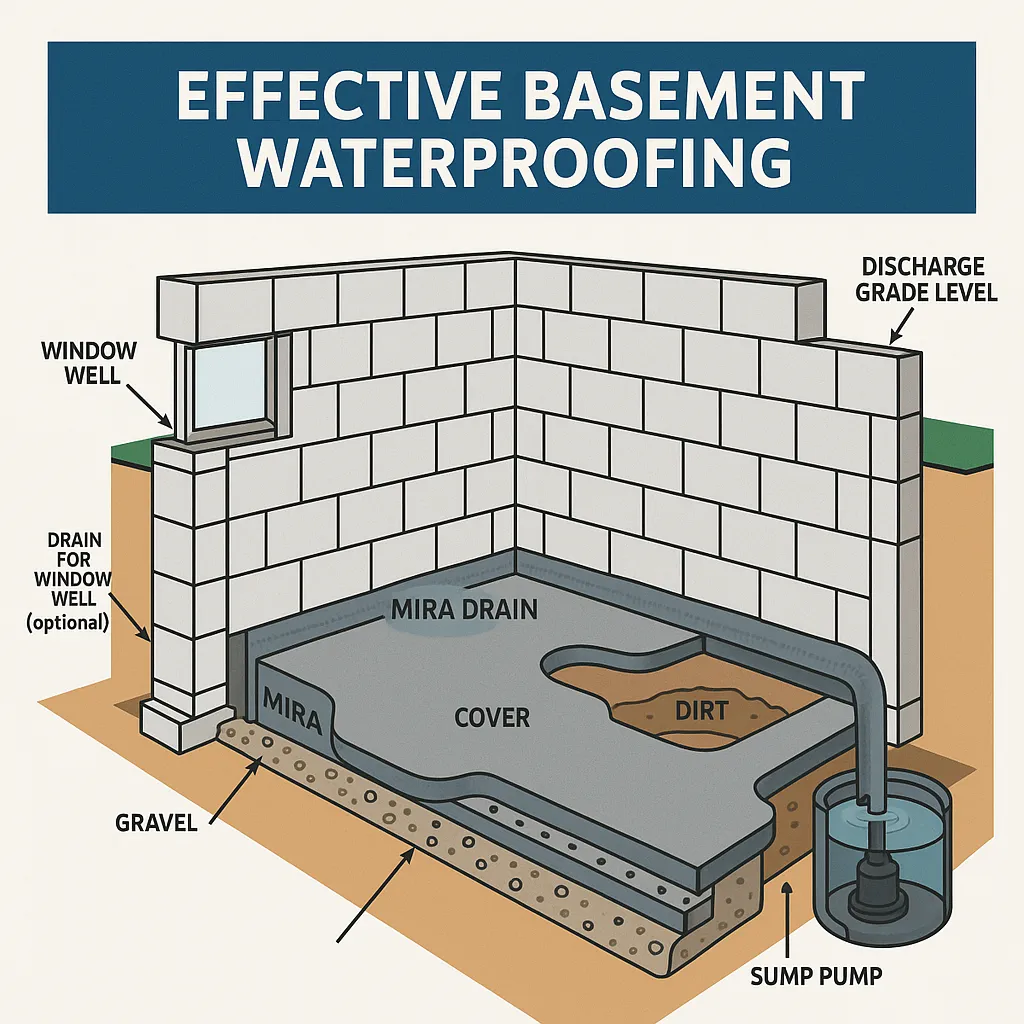
Basement waterproofing services available to Bergen County homeowners include interior drainage systems, sump pump installation (with battery backup options), interior and exterior French drains, crawl space encapsulation, vapor barrier installation, dehumidification systems, and targeted structural reinforcement where needed. Each service targets specific mechanisms of water entry: drainage systems remove water at floor level, vapor barriers block soil moisture vapor, and dehumidifiers control airborne humidity. Choosing the right combination depends on whether water is entering from hydrostatic pressure, surface runoff, or localized leaks, and a professional inspection clarifies the best system mix for a particular home.
The primary waterproofing and moisture-control services include:
- Sump Pump Installation: Removes collected groundwater and discharges it safely away from the foundation.
- French Drain Installation: Redirects subsurface water to a safe discharge or collection point, relieving hydrostatic pressure.
- Interior Drainage (Interior French Drain): Captures water at the footing or slab level and directs it to a sump pump for removal.
- Vapor Barrier and Crawl Space Encapsulation: Creates an airtight moisture barrier to control vapor migration and indoor humidity.
- Dehumidification System: Maintains target relative humidity levels to prevent mold and protect finishes.
These services vary in complexity and lifecycle expectations, and the right mix often combines drainage, mechanical removal, and moisture control to achieve reliable dryness.
Introductory comparison: the table below compares common services by purpose, ideal scenarios, average lifespan, and maintenance needs to help homeowners match solutions to problems.
| Service | Purpose | Typical Lifespan / Maintenance |
|---|---|---|
| Sump Pump (with battery backup option) | Remove groundwater collected by drains | 7–15 years for pump; annual testing and periodic replacement |
| Interior French Drain / Drain Tile | Capture and channel subsurface water to sump | 20+ years for piping; check for blockages if sediment enters system |
| Exterior French Drain | Divert groundwater before it contacts foundation | 20+ years; depends on soil settling and surface drainage upkeep |
| Vapor Barrier / Encapsulation | Block moisture vapor from crawl spaces/basement surfaces | 10–25 years depending on material; visual inspections recommended |
This table helps highlight how different components work together: drainage relieves pressure, pumps remove water, and barriers plus dehumidification manage residual moisture to sustain a dry environment.
After homeowners review options, a site-specific inspection is the reliable next step; Effective Basement Solutions offers a free inspection or consultation to recommend the most appropriate combination of these services for each Bergen County property. Requesting that inspection provides a tailored scope and clarifies which systems best fit home layout and local soil conditions.
How Does Sump Pump Installation Protect Your Basement from Flooding?
A sump pump protects a basement by actively removing water collected by perimeter drains or interior drain systems before it can accumulate and cause flooding. Submersible and pedestal pumps offer different trade-offs—submersible models operate underwater and are quieter, while pedestal pumps have motors above the pit and are easier to service—but both rely on reliable discharge routing and check valves. Battery backup systems are essential in Bergen County where storms can cause power outages during heavy rain; backups ensure continuous operation when grid power fails. Regular testing, annual maintenance, and prompt replacement of worn components keep pumps ready for peak runoff events.
What Are the Benefits of French Drain Installation for Bergen County Homes?
French drains relieve hydrostatic pressure by collecting groundwater near the foundation and routing it to a safe outlet or sump pit, preventing water from forcing its way through cracks or porous materials. Interior French drains are often favored for finished basements or where exterior excavation is restricted, while exterior drains address the source of groundwater before it reaches the foundation envelope. Materials include perforated piping surrounded by aggregate and filter fabric to limit sediment intrusion, and proper grading and surface drainage must complement the drain for full effectiveness. Maintenance typically involves checking discharge points and ensuring surface conditions direct water away from the foundation to preserve drain performance.
Specialized technologies exist to actively mitigate hydrostatic pressure, ensuring the long-term water management and structural integrity of subterranean environments.
Hydrostatic Pressure Relief Technology for Subterranean Environments
Hydrostatic Pressure Relief (HPR) provides an innovative approach to long-term water management in underground structures by mitigating hydrostatic pressure. This technology is highly effective in preventing water ingress and safeguarding the structural integrity of basements and other subterranean spaces. The system comprises the installation of specialized components designed to facilitate water egress, thereby reducing the pressure exerted on foundation walls and slabs.
Relief of hydrostatic pressure to maximise the occupancy of underground spaces, 2016
How Can Foundation Repair and Structural Reinforcement Improve Basement Safety?
Repairing and reinforcing foundations complements waterproofing by addressing the structural consequences of long-term moisture and hydrostatic stress, stabilizing bowed walls, and arresting movement that can worsen water entry points. Effective foundation repair options range from non-invasive carbon fiber wall straps for moderate bending to steel I-beam bracing for heavier loads and underpinning techniques where footings require relocation or stabilization. Addressing structural issues as part of a comprehensive waterproofing plan prevents recurring leaks caused by movement, and restores safe load paths to protect the home’s envelope. Coordinating waterproofing with structural repairs ensures that drainage fixes are not undermined by unresolved foundation movement.
What Are Effective Methods for Repairing Foundation Cracks in Bergen County?
Foundation crack repair depends on the crack type: hairline, static cracks are typically sealed with epoxy or cementitious materials to stop water ingress, while active or shifting cracks may require polyurethane injections that accommodate slight movement and retain watertightness. For structural cracks associated with soil movement, underpinning or added reinforcement such as carbon fiber straps or steel beams can be necessary to restore stability. The choice of method requires diagnosis of whether cracks are cosmetic or indicate active settlement; a professional evaluation reveals whether monitoring, localized repair, or full structural intervention is required. Early action on developing cracks reduces the scope and cost of later structural work.
Polyurethane resin injection offers a viable solution for repairing concrete cracks and effectively mitigating water infiltration in basement structures.
Polyurethane Resin Injection for the Remediation of Concrete Basement Leaks
Polyurethane resin injection has emerged as a viable and effective method for repairing concrete cracks and mitigating water infiltration in basement structures. This technique entails injecting a specialized resin into fissures, which subsequently expands to fill the void and establish a watertight barrier. The findings from this investigation can be applied as a solution to arrest water ingress and seal cracks in concrete elements, such as basement foundations, thereby enhancing protection against water damage.
Evaluation of polyurethane resin injection for concrete leak repair, MA Safan, 2019
When Is Crawl Space Encapsulation Necessary for Basement Waterproofing?
Crawl space encapsulation becomes necessary when a crawl area contributes moisture or radon to the living space, or when high humidity in the crawl undermines basement dryness and indoor air quality. Encapsulation involves installing a continuous vapor barrier, sealing vents, insulating key surfaces, and often adding a dedicated dehumidifier to maintain stable relative humidity. A sealed crawl space reduces upward vapor pressure and limits biological growth on joists and subflooring, which in turn protects basement conditions and improves energy efficiency. Implementing encapsulation as part of a systemic moisture-control plan ensures the crawl does not become a recurring source of basement humidity.
How Much Does Basement Waterproofing Cost in Bergen County NJ?
Typical cost ranges for basement waterproofing in Bergen County vary significantly based on the scope of work, the systems chosen, and site-specific conditions such as access and required structural repairs. Homeowners should expect a range rather than a single price: simpler measures like targeted crack sealing or a standalone dehumidifier are lower-cost, while full interior drainage with sump pump, encapsulation, or underpinning increases the investment. Key cost drivers include labor, materials, excavation needs, the complexity of integrating drainage with existing finishes, and any necessary foundation repairs that must precede waterproofing installation. For precise pricing, request a professional site inspection and a written estimate that outlines scope, timeline, and recommended warranty coverage.
Costs vary for typical services and are influenced by specific property conditions; the table below outlines common cost factors and illustrative typical ranges to help homeowners form realistic expectations before an inspection.
| Cost Factor | What It Covers | Typical Influence on Price |
|---|---|---|
| Labor & Access Complexity | Time, crew size, confined-space work, removal of finished materials | High: tight basements increase labor and time |
| Materials & System Type | Drain tile, sump pump, piping, vapor barrier, dehumidifier | Medium-High: higher-grade components raise cost |
| Structural Repairs | Crack injections, underpinning, wall bracing | High: structural work substantially increases scope |
| Exterior Excavation | Soil removal and disposal, waterproof coatings | High: exterior work adds excavation and landscaping costs |
| Permits & Site Prep | Local permits, erosion controls, staging | Low-Medium: depends on municipality and scale |
This breakdown clarifies that two homes with similar visible issues may see very different estimates once access, soil, and structural needs are considered.
Short, featured answer for quick reference: Typical basement waterproofing costs in Bergen County range widely by scope; expect lower-cost fixes for minor sealing and dehumidification and substantially higher investments for full interior drainage, sump systems, and structural repairs. For an accurate price tailored to your home, schedule a free inspection or consultation to receive a no-surprise written estimate.
What Factors Influence the Price of Basement Waterproofing and Repairs?
Material selection, whether choosing basic pumps and piping or upgraded, long-life components, affects both upfront cost and lifecycle value; higher-quality pumps and sealed systems often lower lifetime maintenance. Labor and site access determine crew time and equipment needs—finished basements, finished floors, and tight access increase labor costs due to careful removal and restoration. Structural repairs like underpinning or significant crack stabilization elevate cost and must be planned before installing drainage to avoid redundant work. Additionally, interior versus exterior approaches have different cost profiles: exterior excavation can be more expensive upfront but may address root causes, while interior systems are often less disruptive and more cost-effective in finished spaces.
How Can Homeowners Get Accurate Estimates and Free Inspections?
A professional inspection typically includes a visual assessment, moisture diagnostics, identification of water entry mechanisms, and recommendations for a tailored system that matches the home’s layout and soil conditions. Homeowners can prepare by documenting known leak history, taking photos, and noting when problems occur (seasonal storms vs. steady seepage), which helps the inspector isolate causes efficiently. After the inspection, expect a written estimate with itemized scope, timeline, recommended systems, and warranty information; comparing multiple written bids clarifies value differences. Requesting a free inspection or consultation reduces uncertainty and produces the site-specific data needed for accurate budgeting and planning.
What Are the Signs You Need Basement Waterproofing or Leak Repair in Bergen County?
Recognizing early signs of water intrusion or structural distress helps homeowners act before small issues become costly repairs, protecting health and property value. The most actionable indicators include visible water entry, persistent dampness or musty odors, efflorescence and peeling paint, and structural clues like stair-step foundation cracks or bowing walls. Regularly inspecting at-risk areas—window wells, sump pits, exterior grading, and downspouts—allows early intervention. When multiple signs appear or when any structural indicators are present, prioritizing a professional evaluation will identify targeted waterproofing and repair needs.
Homeowners can use this quick checklist to spot common warning signs:
- Visible Water or Active Leaks: Any standing water, drips, or visible seepage requires immediate attention.
- Musty Odors and Mold Growth: Persistent odors or visible mold indicate ongoing moisture that supports biological growth.
- Efflorescence and Paint Failure: White mineral deposits, flaking paint, or peeling plaster signal moisture migration through masonry.
- Structural Indicators: Stair-step cracks, bowing walls, or doors/windows that stick suggest foundational movement needing evaluation.
- High Humidity Readings: Consistently elevated relative humidity in basements or crawl spaces indicates inadequate moisture control.
How to Identify Basement Dampness, Mold, and Water Intrusion Early?
Visual inspection combined with simple monitoring tools provides early detection: look for water stains, peeling paint, and white powdery efflorescence along walls and near floor joints, and use a hygrometer to track relative humidity—aim for 30–50% in finished basements. Smell checks for musty odors and targeted tests such as taping suspect paint areas to check for trapped moisture are helpful interim diagnostics. Photographing occurrences and noting timing relative to rain events or seasonal shifts helps professionals correlate symptoms to underlying causes. Early identification enables targeted interventions—like improved grading or a sump system—before mold colonization and structural damage escalate.
What Are the Indicators of Foundation Problems Requiring Repair?
Foundation problems often present as stair-step cracks in brick or block, significant horizontal bowing of walls, widening gaps at doors/windows, or a rapid increase in previously stable cracks; these indicators point to active movement or soil pressure issues beyond simple cosmetic repair. Immediate evaluation is critical if structural signs accompany water intrusion, since moisture-driven soil changes can accelerate settlement or lateral pressure. Professionals assess crack propagation, monitor movement, and recommend stabilization methods such as bracing, carbon fiber reinforcement, or underpinning when necessary. Prompt action reduces long-term costs and prevents water-control measures from failing due to unresolved structural stress.
How Does Effective Basement Solutions Deliver Reliable Waterproofing in Bergen County?
Effective Basement Solutions positions its offerings around key homeowner benefits: licensed in-house crews for consistent workmanship and accountability, tailored systems that combine interior drainage, sump pump solutions, encapsulation, and dehumidification as appropriate, and a mission focused on protecting homes from water damage, mold, and foundation issues. Their model emphasizes no subcontractors, streamlined communication during projects, and a free inspection or consultation to define scope before work begins. Warranty and service follow-up ensure the homeowner has a clear path to long-term protection and maintenance guidance.
The table below maps company attributes to homeowner benefits to clarify what a homeowner gains by choosing an in-house licensed team for a waterproofing project.
| Company Attribute | Attribute Description | Homeowner Benefit |
|---|---|---|
| Licensed In-House Crew | Work handled by company-employed technicians | Consistent workmanship, streamlined communication, easier warranty resolution |
| Free Inspection / Consultation | No-cost initial assessment and written recommendation | Accurate scope, no-surprise estimates, clearer planning |
| Focus on Long-Term Protection | Systems designed for durability and maintenance | Reduced recurrence, preserved indoor air quality, long-term value |
| No Sales Pressure Approach | Consultative recommendations instead of aggressive selling | Homeowner confidence in recommended solutions |
Why Choose an Experienced Licensed In-House Crew Over Subcontractors?
An experienced licensed in-house crew centralizes accountability and reduces the risk of inconsistent workmanship that can arise when multiple subcontractors execute different parts of a project. With in-house teams, communication channels remain direct, material selection and installation standards are consistent, and warranty handling is simplified because one party stands behind the full system. For homeowners, this means fewer coordination headaches and clearer responsibility if follow-up service is required. Choosing a single licensed provider reduces coordination errors and supports long-term reliability of integrated waterproofing and foundation repairs.
What Warranty and Long-Term Protection Does Effective Basement Solutions Offer?
Effective Basement Solutions emphasizes warranty coverage and long-term protection concepts to give homeowners confidence in the durability of installed systems, including workmanship and materials protections that accompany system installations. Homeowners should ask for written warranty terms that describe coverage length, what is included (materials vs. labor), and transferability, as well as recommended maintenance intervals. To get the exact warranty terms for a specific scope, request the free inspection or consultation so the company can provide a written proposal including warranty details tailored to the chosen systems. Clear warranty documentation and maintenance guidance complete the protective plan and help ensure sustained dryness and structural safety.
- Schedule a free inspection or consultation to get a written scope and warranty details specific to your home.
- Compare recommended systems and warranty terms to understand long-term value and maintenance needs.
- Prioritize integrated solutions that address drainage, mechanical removal, and moisture control together.
These steps guide homeowners from diagnosis to durable protection, ensuring that waterproofing investments deliver reliable performance over time.
