
Basement Waterproofing Union County NJ: Expert Solutions for Leak Repair and Foundation Protection
Basement waterproofing is the set of measures homeowners use to keep water out of below-grade spaces and protect foundations from moisture-driven damage in Union County, NJ. This guide explains why leaks happen locally, how common systems such as interior drainage, French drains, sump pumps, exterior membranes, and crawl space encapsulation work, and which options fit specific Union County conditions. Many homeowners face recurring dampness, mold, or structural cracks after heavy rain or seasonal runoff, and this article promises actionable diagnosis steps, comparisons of repair choices, and practical maintenance guidance. Effective Basement Solutions offers local assessment resources and a straightforward path to a professional review; the company emphasizes Licensed, in-house crew, No sales pressure, and a Free inspection/estimate to help homeowners decide with confidence. Read on for clear signs to watch for, solution comparisons, sump pump guidance, crawl space strategies, French drain mechanics, and when to request a free inspection from a licensed team.
What Causes Basement Leaks and Water Damage in Union County NJ?
Basement leaks in Union County result from a combination of geological, hydrological, and human factors that increase hydrostatic pressure and permit water entry through walls or floors. Heavy seasonal rainfall, high local water tables, poor lot grading, clogged exterior drains, and runoff from the Watchung Mountains and Rahway River basin all raise the risk of seepage and standing water. Understanding these causes helps homeowners prioritize solutions that address the source—whether that is surface drainage improvements or subsurface interior systems. The following list identifies the most frequent drivers of basement water intrusion in this county and sets up the local geology discussion that follows.
- High groundwater levels that exert hydrostatic pressure against foundation walls.
- Poor exterior grading and clogged gutters that route stormwater toward foundations.
- Surface runoff from nearby slopes such as the Watchung Mountains during intense storms.
- Overwhelmed municipal or neighborhood drainage in Rahway River basin flooding events.
- Aging or compromised foundation materials and poor original waterproofing.
Analysis of Basement Leakage: Etiology and Remediation Strategies
A cursory review of local Yellow Pages listings under ‘Waterproofing Contractors’ reveals the widespread prevalence of basement leakage issues across the United States. This study examines the underlying causes, financial implications, and proposed mitigation strategies, drawing upon a comprehensive case history. The findings indicate that failures are predominantly systemic, resulting from the interplay of multiple factors. However, a particularly significant contributing element identified is the downspout drain system, specifically its common degradation over time and subsequent impairment of functionality.
French Drain Construction for Woods Humane Society, 2023
How Do Local Geological Factors Affect Basement Waterproofing?
Union County’s soils and topography influence how water moves and where hydrostatic pressure builds against foundations, and those conditions determine whether interior or exterior waterproofing is most appropriate. Clay-rich or poorly drained soils increase lateral water pressure and favor robust drainage solutions such as French drains and interior channels, while sandy, highly permeable soils may allow faster infiltration that requires grading and exterior diversion. Areas near slopes or river basins show concentrated runoff patterns that can overload perimeter drains during storms, so combining surface grading with subsurface collection often yields the best protection. Recognizing the soil type on a property helps select systems—interior drainage plus a sump pump for limited access sites, or exterior excavation and membrane for severe, ongoing seepage. This geological context points directly to what signs homeowners should watch for, which we cover next.
What Are the Common Signs of Basement Water Issues in Union County Homes?
Detecting early indicators of moisture lets homeowners act before mold or structural damage escalates, and a simple checklist clarifies when to monitor versus when to call a professional. Look for visible efflorescence on foundation walls, peeling paint or wallpaper, musty odors, persistent dampness after rain, small surface cracks with water beads, and any standing water after storms. Each sign maps to urgency: musty odors plus visible mold require prompt remediation, while small efflorescence patches suggest root-cause investigation and monitoring. If you notice multiple signs or rapid worsening after storms, schedule a professional inspection to identify appropriate waterproofing and foundation stabilization measures that address the underlying hydrology.
Union County Basement Waterproofing: Stop Leaks & Shield Foundations
Choosing the right waterproofing approach requires matching the solution’s mechanism to the home’s access, finish status, soil conditions, and the severity of water intrusion. Interior systems such as channel drains and sump pumps collect and redirect groundwater that breaches the slab or walls, offering lower-cost options for finished basements; exterior systems—excavation, membranes, and exterior drains—stop water at the source and reduce long-term hydrostatic pressure. Crawl space encapsulation and dehumidification improve air quality and reduce sub-slab moisture, complementing drainage systems where vapor drive is a problem. Below is a comparative table summarizing costs, invasiveness, ideal conditions, and expected lifespans to help homeowners evaluate choices.
| Solution Type | Typical Cost Range | Invasiveness | Ideal Conditions | Expected Lifespan |
|---|---|---|---|---|
| Interior French drain + sump | Moderate | Interior excavation under slab | Finished basements, limited exterior access | 15–30 years |
| Exterior excavation + membrane | Higher | Full exterior excavation | Severe, chronic seepage or new construction | 20–40 years |
| Sump pump with battery backup | Low–Moderate | Minimal interior work | Areas prone to storm flooding or high water table | 5–15 years (pump) |
| Crawl space encapsulation + dehumidifier | Moderate | Low to moderate | Crawl spaces with moisture, air-quality concerns | 10–20 years |
How Does Interior Basement Waterproofing Prevent Leaks?
Interior waterproofing prevents leaks by controlling groundwater after it enters the footing area and channeling it to a sump basin where a pump expels it away from the home, and it is particularly useful when exterior access is restricted. Systems typically include an interior perimeter channel cut at the slab edge, perforated drainage pipe, gravel bedding, and a sump with an automatic pump, creating a low-pressure path for water to follow so that it can be removed efficiently. Because the work is done from inside, finished basements avoid disruptive exterior excavation, but homeowners should expect careful reinstalling of flooring and trims where channels are placed. Regular sump maintenance is essential for reliability, which leads into an explanation of sump pumps and backup options in a later section.
What Are the Benefits of Exterior Waterproofing and Drainage Systems?
Exterior waterproofing addresses water before it reaches the foundation by improving grading, installing perimeter drains, and applying waterproof membranes to the foundation wall, and it reduces hydrostatic pressure directly at the source. Exterior excavation allows crews to correct downspout routing, reset positive grade away from the home, and place continuous exterior drainage that ties into storm drains or daylight outlets where available. Although more invasive and typically costlier than interior-only fixes, exterior systems often provide longer-lasting prevention and reduce the volume of water that would otherwise exert pressure on the wall. For severe seepage issues or homes with repeat failures, exterior remediation combined with structural reinforcement yields the most durable result, and the next section explains sump pump roles within these systems.
How Does Sump Pump Installation Protect Union County Basements from Flooding?
A sump pump is a mechanical device that removes collected groundwater from a sump basin and discharges it away from the foundation, and it protects basements by preventing water accumulation that leads to flooding, mold growth, and structural stress. The pump forms the active element of interior drainage systems and is essential where hydrostatic pressure forces water into a collection channel or where stormwater infiltration overwhelms passive drainage. Selecting the right pump capacity and ensuring battery backup compatibility are critical for Union County homeowners who face power outages during severe weather. Below is a table comparing common sump pump types and attributes to guide equipment choices.
| Pump Type | Capacity & Use | Power Source | Battery Backup Compatibility | Typical Maintenance Needs |
|---|---|---|---|---|
| Submersible | High capacity for submerged operation | Electric (submerged motor) | Compatible with external battery systems | Annual checks, impeller cleaning |
| Pedestal | Lower cost, motor above basin | Electric (motor above basin) | Some models support backup units | Regular testing, motor inspection |
| High-capacity / commercial | For large inflows or frequent flooding | Higher-power electric | Designed for heavy-duty battery backups | Professional servicing recommended |
What Types of Sump Pumps Are Recommended for Union County Homes?
For most Union County residential basements, a submersible pump with a capacity matched to anticipated inflow and a battery backup system is recommended because storms can produce both heavy runoff and power outages simultaneously. Pedestal pumps suit smaller basins or infrequent use but have exposed motors and generally lower lifespans, while high-capacity commercial pumps are appropriate for large homes or properties with chronic flooding concerns. Assess pump sizing by calculating basement square footage, expected groundwater velocity during storms, and peak rainfall events in the area, and choose battery backup solutions that provide at least several hours of run time during outages. Proper selection reduces failure risk during critical events and transitions naturally into maintenance practices homeowners should follow.
How Should Homeowners Maintain Their Sump Pump Systems?
Routine maintenance keeps pumps operational when needed and includes monthly visual checks, semi-annual power and float tests, and annual professional servicing to inspect impellers and check discharge lines for blockages. Homeowners should confirm that the float switches move freely, that the discharge path is clear and pitched away from the foundation, and that a battery backup remains fully charged and tested under load. Keep a simple checklist and log dates of tests and any repairs to spot degradation trends before failures occur. If homeowners prefer professional upkeep, schedule periodic inspections to ensure pumps, check valves, and backup systems are functioning reliably.
Why Is Crawl Space Encapsulation Important for NJ Basements and Foundations?
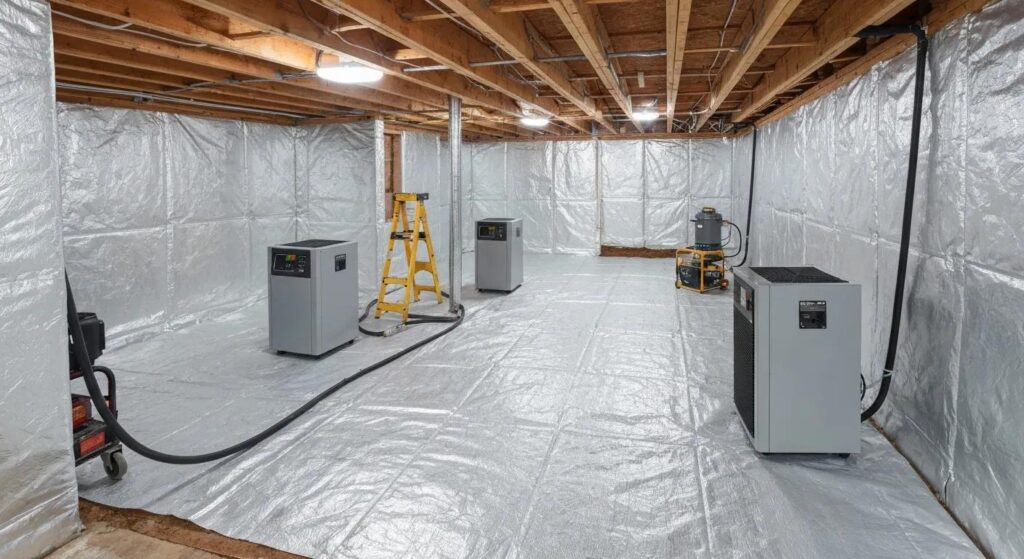
Crawl space encapsulation isolates the subfloor cavity from ground moisture by installing a continuous vapor barrier, sealing vents, and controlling humidity with dehumidifiers, and this approach reduces moisture-driven rot, pest intrusion, and indoor air-quality issues. Encapsulation is particularly important in New Jersey where seasonal groundwater and vapor drive can elevate crawl space humidity and force damp air into living spaces via floor systems. The process protects structural wood, reduces the risk of mold and allergens entering the home, and complements foundation waterproofing by addressing vapor pathways that drainage systems do not. The next subsection explains how vapor barriers and dehumidifiers achieve these air-quality improvements.
Crawl space encapsulation offers these primary benefits:
- Moisture Control: A continuous vapor barrier prevents ground moisture from entering the subfloor cavity.
- Improved Air Quality: Sealing and dehumidification reduce mold spores and allergens migrating into the home.
- Structural Protection: Lower humidity prevents wood rot and prolongs floor system life.
How Do Vapor Barriers and Dehumidifiers Improve Crawl Space Air Quality?
Vapor barriers block convective and diffusive moisture transfer from the ground, while dehumidifiers actively remove excess humidity to maintain relative humidity targets that minimize mold growth and wood decay. Together they change the crawl space from a humid, uncontrolled environment to a dry, conditioned cavity, decreasing airborne spore loads and improving whole-house air quality because conditioned air is less likely to pull contaminants into living spaces. Industry practice targets crawl space relative humidity below 60%—often 45–55%—and recommends sealed HVAC returns or dedicated ventilation strategies only when compatible with the encapsulation design. Proper component selection and installation create a durable moisture control system that extends foundation health and reduces mold remediation needs.
What Are the Signs You Need Crawl Space Waterproofing in Union County?
Homeowners should watch for musty odors in the home, visible mold or mildew on joists or insulation, insect or rodent activity, and stagnant air or elevated interior humidity levels, which all indicate a compromised crawl space environment. Standing water observed during inspections, sagging or rot in floor joists, and persistent condensation on ductwork are also strong indicators that encapsulation or targeted waterproofing is necessary. When these signs appear, prioritize a professional inspection that evaluates grading, drainage, and vapor intrusion to define a remediation plan. Prompt action prevents accelerated damage to flooring and structural elements, and the next major section explains how French drains operate to relieve hydrostatic pressure.
How Do French Drain Systems Work to Relieve Hydrostatic Pressure in Union County Basements?
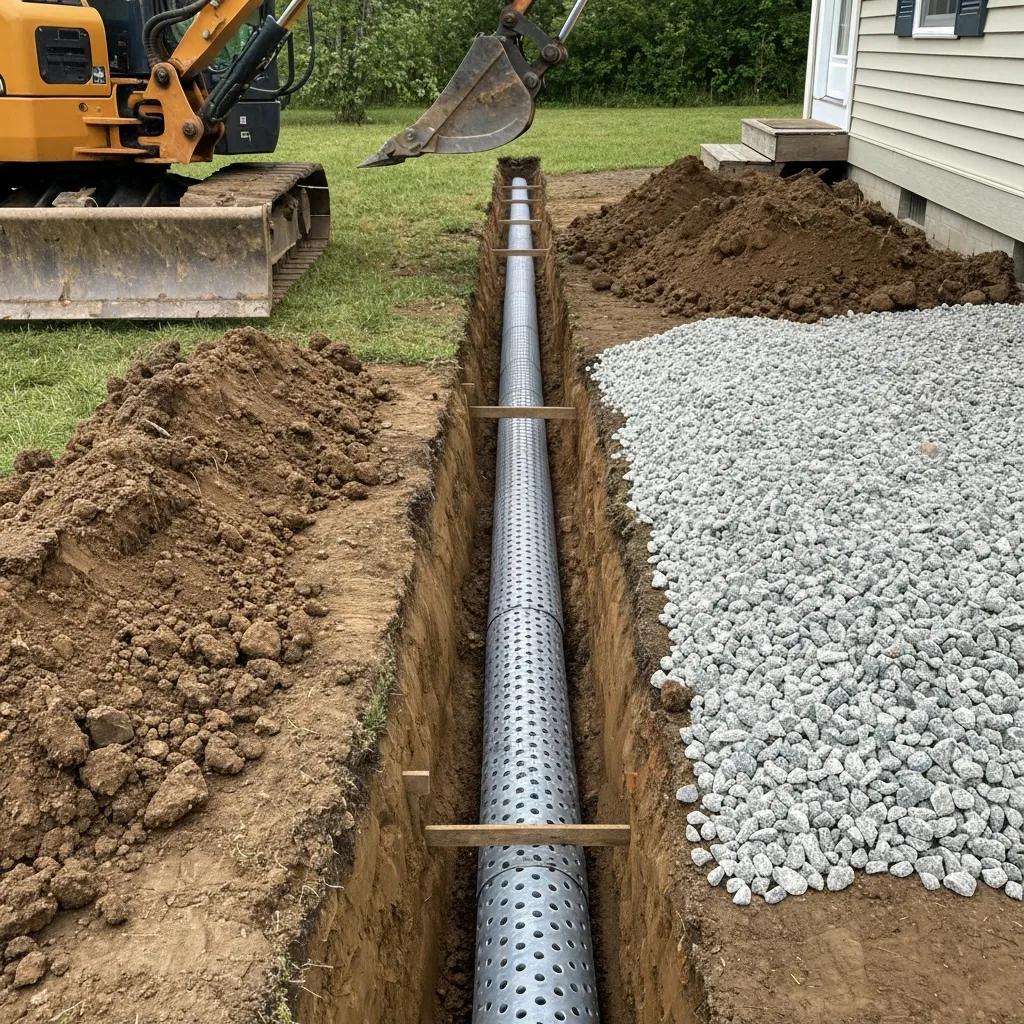
A French drain is a perforated pipe installed in a gravel-filled trench that intercepts and redirects subsurface water, relieving hydrostatic pressure that otherwise presses against foundation walls and forces water through cracks and joints. The system functions by giving groundwater a controlled path to flow along gravity or to a sump basin, thereby lowering the pressure gradient and preventing water from being driven into the basement. In Union County situations with high water tables or slope-driven groundwater, French drains reduce both seepage and the moisture load that fuels mold growth and foundation movement. The installation steps outlined below show how the system is placed and connected, which helps homeowners understand the expected disruption and benefits.
A French drain reduces moisture-related problems by:
- Providing a continuous low-resistance path for subsurface water to follow.
- Lowering hydrostatic pressure that drives seepage through foundation elements.
- Directing water to a sump or daylight outlet to prevent accumulation near the foundation.
Installation of French Drains for Water Runoff Management
To mitigate this issue, the installation of a French drain was proposed. The 173 ft drain, measuring 6 inches deep by 18 inches wide and divided into three sections, would delineate all dog playpen areas, thereby preventing further water runoff and inhibiting weed proliferation. The French drain…
French Drain Construction for Woods Humane Society, 2023
What Is the Installation Process for French Drains in NJ Homes?
Installing an interior French drain generally starts with mapping the foundation and locating utilities, then cutting a narrow trench along the footing, placing perforated pipe on a gravel bed, backfilling with clean stone, and connecting the system to a sump pump for discharge. The work usually requires interior access, temporary removal of baseboards or floor coverings, and careful dust control; many interior installs can be completed within a few days depending on basement size and complexity. Exterior French drains involve excavation to the footing, membrane repair or installation, and regrading, which is more time- and labor-intensive but can be the most permanent solution. Homeowners should prepare by moving furniture and planning for short-term disruption, and the next subsection explains how these drains prevent mold and foundation damage over time.
How Do French Drains Prevent Mold and Foundation Damage?
By intercepting groundwater before it reaches the basement wall or slab, French drains reduce the continuous moisture source that fuels mold growth and wood rot and lower the hydrostatic loads that cause wall bowing or foundation settlement. When combined with proper dehumidification and drainage discharge, the reduced moisture levels limit conditions favorable to fungal growth and slow the chemical and physical processes that degrade masonry and concrete. Before-and-after outcomes often show dryer finishes, fewer condensation issues, and stabilization of minor wall movements, which translates into lower long-term repair costs. Proper design and maintenance keep French drains functioning for decades, and the next major section focuses on structural signs that require more than waterproofing alone.
What Are the Signs You Need Foundation Repair and Waterproofing in Union County NJ?
Some warning signs indicate that waterproofing alone is insufficient and structural stabilization or foundation repair is necessary; recognizing these signs early reduces the scope and cost of future interventions. Watch for bowing or bulging walls, large horizontal cracks or stair-step cracks, doors and windows that suddenly stick, and floors that slope or sink noticeably; these are red flags of movement or load-bearing capacity loss. Repair options include carbon fiber straps for moderate bowing, steel I-beams for heavy structural reinforcement, and underpinning for settlement—each method addresses different failure mechanisms. The table below maps common signs to urgency and recommended immediate actions to help homeowners triage problems and arrange a professional assessment.
| Sign Observed | Urgency Level | Recommended Immediate Action |
|---|---|---|
| Small vertical hairline cracks | Low–Moderate | Monitor and schedule inspection to assess progression |
| Horizontal or stair-step cracks | High | Arrange professional evaluation for potential underpinning |
| Bowing or bulging walls | Very High | Limit loads near wall and schedule immediate structural assessment |
| Doors/windows sticking or new gaps | Moderate–High | Inspect for foundation movement and plan stabilization |
This mapping shows which signs require urgent structural attention versus monitoring, and the next subsection explains how carbon fiber and steel I-beams work to stabilize walls.
How Do Carbon Fiber Straps and Steel I-Beams Stabilize Bowing Walls?
Carbon fiber straps stabilize bowing masonry by bonding high-strength, low-profile composite strips to the interior wall face to resist further outward movement, and they are minimally invasive and quick to install. Steel I-beams provide rigid structural support by transferring lateral loads into the foundation footing or floor slab and are used when bowing is pronounced or when added load-bearing capacity is required. Both approaches restore load paths and reduce progression of movement; carbon fiber is often chosen for cosmetic preservation and limited correction, while steel I-beams are selected for substantial structural reinforcement. Engineers evaluate wall geometry and load conditions to recommend the appropriate intervention, and knowing when to seek a free inspection is the final, critical homeowner step.
When Should Homeowners Schedule a Free Basement Inspection?
Homeowners should schedule a free inspection/estimate after any visible water intrusion, new or widening cracks, persistent musty odors, or following major storms that caused standing water or unusual foundation movement. A professional inspection evaluates current damage, identifies the root causes—such as poor grading, failed drainage, or hydrostatic pressure—and provides prioritized repair and waterproofing recommendations, often accompanied by cost estimates. Effective Basement Solutions provides assessments performed by a Licensed, in-house crew; No sales pressure; Free inspection/estimate; 20+ years of experience; Customized solutions for New Jersey homes; Long-term protection and structural safety. To arrange an inspection or request more information, contact the company by phone or email to schedule a no-obligation review and tailored plan.
