
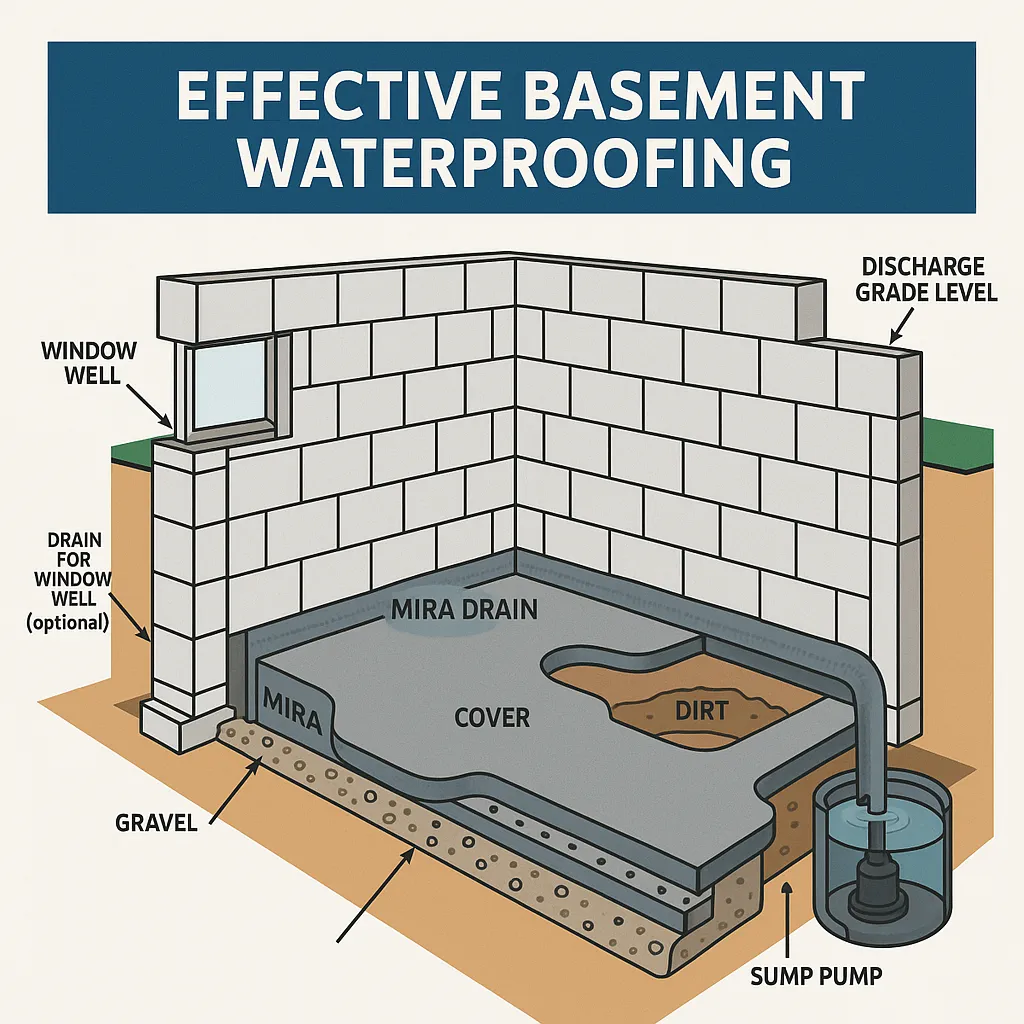
Basement Waterproofing in Berkeley Heights, NJ: Proven Ways to Stop Water Intrusion — For Good
Water entering basements in Berkeley Heights usually comes from groundwater, surface runoff, or building defects. Left unchecked, that moisture can harm your home and health. This guide breaks down why local basements are vulnerable—covering hydrostatic pressure from a high water table, porous or aging concrete, freeze–thaw movement, and common grading or gutter failures—and lays out proven interior and exterior fixes that stop water where it starts. You’ll get clear explanations of sump pump systems, interior French drains, exterior membranes, grading corrections, and foundation repairs, plus realistic cost ranges and long-term benefits. We also cover crawl-space encapsulation, mold remediation, routine maintenance, and immediate next steps homeowners can take. Read on for diagnostic cues, comparison guides, EAV-style tables that summarize each option, and practical action items for Berkeley Heights properties with recurring moisture problems.
What Causes Wet Basements in Berkeley Heights, NJ?
Wet basements here usually result from three overlapping issues: a high or seasonal water table, poor surface-water management (bad grading or clogged gutters), and structural permeability such as porous concrete or foundation cracks. Hydrostatic pressure forces water through tiny pores and joints, while surface runoff pools at the foundation when slopes or downspouts are wrong. Identifying which mechanism dominates at your property determines whether an interior system, exterior excavation, or structural repair is the right fix. Below are the main causes to check and the symptoms that point to each one.
- Elevated groundwater or a rising water table that causes seepage at slab edges or cove joints.
- Poor grading, clogged gutters, or downspouts that let surface runoff collect at the foundation.
- Foundation cracks, porous concrete, or frost-line movement that create localized leaks and efflorescence.
Those diagnostic clues lead directly to targeted solutions—drainage, sealing, or structural repair—which we explain in the sections that follow.
How Does the High Water Table Affect Basement Moisture?
A high local water table increases hydrostatic pressure on foundation walls and slabs, pushing groundwater through pores, joints, and cracks. In Berkeley Heights, seasonal events—spring thaw and heavy late-winter rains—often raise groundwater and reveal seepage points that weren’t apparent before. Homeowners typically see damp spots a day after heavy rain or slow, persistent weeping during the wet season, which suggests the water table is reaching footing depth. Distinguishing groundwater-driven issues from surface runoff is important because interior fixes like sump pumps manage the symptom, while exterior drainage or grading correction treat the source. Knowing which is dominant helps you choose between excavation and interior collection for the best long-term control.
Why Do Porous Concrete and Frost Line Issues Lead to Water Seepage?
Older or low-strength concrete is more permeable, allowing capillary action to draw moisture through slabs and walls over time. Freeze–thaw cycles and movement at or below the frost line can open joints and create micro-gaps that let water infiltrate during thaw events. Common signs include hairline cracks, spalling, white mineral deposits (efflorescence), and seasonally fluctuating dampness. When permeability—not a single structural crack—is the main problem, solutions often combine topical sealants, interior drainage to control ingress, and exterior membranes to block migration long-term. A correct diagnosis separates capillary seepage from structural failure and guides the most effective repair path.
Basement Waterproofing to Stop Water Intrusion in Berkeley Heights, NJ
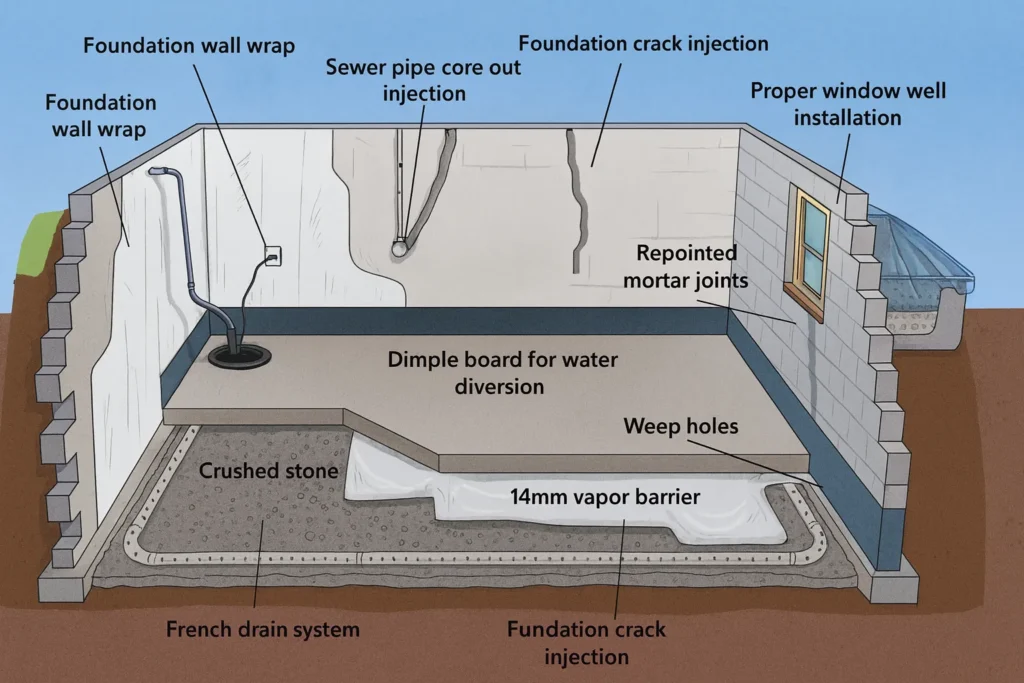
Interior waterproofing collects and removes water that has already reached the footing or floor perimeter using engineered systems that manage hydrostatic pressure and protect finished spaces. Typical interior approaches include interior French drains (drain tile) leading to a sump basin, sump pump systems with battery backup, and humidity control with dehumidifiers plus wall sealants. These methods work well when excavation isn’t feasible, when groundwater collects at the footing, or when you want to convert a damp basement into dry, usable space. The table below summarizes the main interior options by function, expected life, and maintenance needs.
| Solution | Primary Function | Typical Lifespan / Maintenance |
|---|---|---|
| Interior French drain (drain tile) | Collects footing water and routes it to a sump basin | 15–30 years; inspect outlets annually |
| Sump pump system (primary + backup) | Pumps collected water out of the basement | 7–15 years for pump; test battery backup seasonally |
| Dehumidifier (basement-rated) | Reduces relative humidity to prevent condensation and mold | 5–10 years; clean filters and condensate drain monthly |
Interior systems actively manage water and are often the most practical first step for Berkeley Heights homes where excavation is limited or surface drainage improvements are underway. Knowing these trade-offs helps you decide if an interior-first approach with later exterior work makes sense for your property.
How Do Sump Pumps and French Drains Prevent Basement Flooding?
An interior French drain sits at the footing inside the perimeter and captures groundwater as it moves to the lowest point; the drain channels that water into a sump basin. A sump pump then discharges collected water above grade, relieving hydrostatic pressure and preventing floor flooding. Battery or water-powered backups are critical so the system works during power outages—the most likely time for heavy storms. Routine maintenance includes testing the pump, cleaning the basin, exercising the float switch, and checking discharge piping for obstructions. With regular inspection and a tested backup plan, an interior drainage system becomes a dependable flood-prevention solution that addresses groundwater entry directly.
When Should You Use Dehumidifiers and Wall Sealants for Moisture Control?
Dehumidifiers and wall sealants are best for controlling humidity and managing minor seepage—not for stopping active structural leaks or high hydrostatic pressure. Use a basement-rated dehumidifier to hold relative humidity around 40–50% to prevent mold and surface condensation; size it to your basement’s volume and moisture load. Wall-applied sealants and crystalline products can stop hairline seepage and capillary moisture in porous concrete, but they’re usually insufficient alone when groundwater pressure is high or active leaks occur at joints and cracks. Treat dehumidification and sealants as part of a layered approach: humidity control for air quality and minor wetness, paired with drainage or repairs for bulk water entry.
After reviewing interior options, many Berkeley Heights homeowners find a free, no-obligation on-site inspection helpful to match system capacity to specific hydrostatic conditions and basement layout. A professional evaluation clarifies whether a sump pump with battery backup, an interior French drain, or combined humidity control will give you a durable, low-maintenance result; schedule a free consultation to review sizing and upkeep plans.
How Can Exterior Waterproofing Protect Your Berkeley Heights Basement?
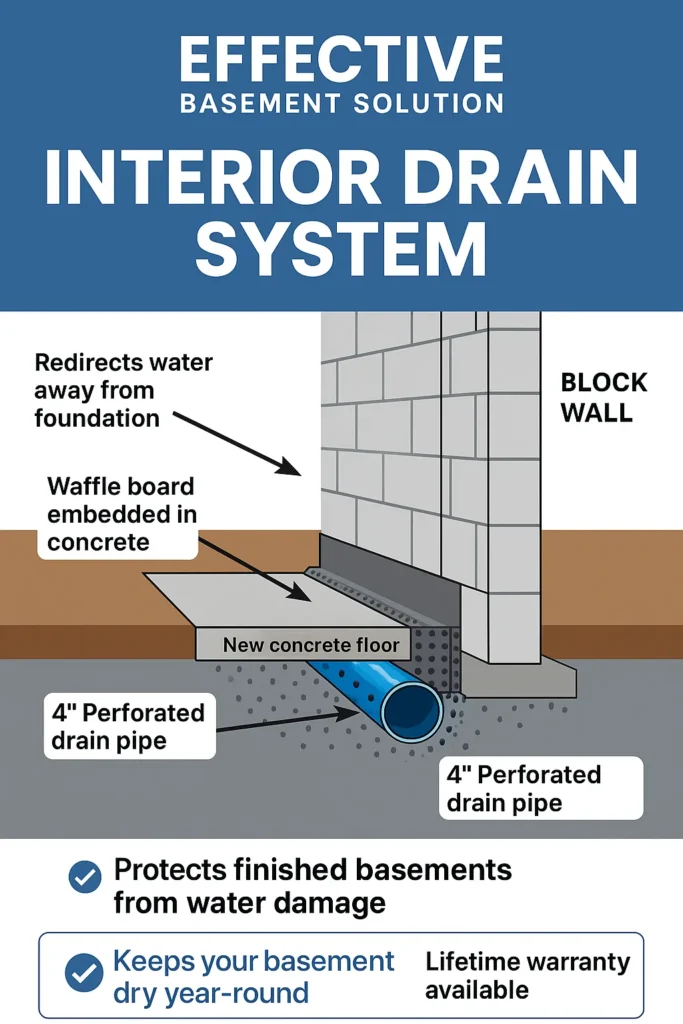
Exterior waterproofing prevents water from reaching the foundation by applying continuous membranes to exterior walls, installing exterior drain tile to intercept groundwater, and correcting surface grading so runoff flows away from the house. These measures lower hydrostatic pressure and address moisture that originates in the surrounding soil—offering a more permanent barrier than interior-only approaches. Exterior work usually requires excavation, careful detailing at the footing-to-wall junction, and landscape restoration, but it reduces interior maintenance over the long term. The table below compares exterior approaches by protection level, expected life, and landscape impact to help you choose for local soils and site constraints.
| Approach | Characteristic | Typical Impact / Longevity |
|---|---|---|
| Waterproof membrane (exterior) | Continuous barrier applied to foundation walls | 20–40 years; high protection, requires excavation |
| Exterior drainage (drain tile) | Intercepts groundwater before it reaches the footing | Long-term pressure reduction; moderate landscape disruption |
| Grading correction | Redirects surface runoff away from the foundation | Immediate surface control; low-cost and lasting if maintained |
Exterior methods work at the source. Although more invasive, they often deliver the most permanent defense against groundwater-driven seepage—especially where soil permeability and a high water table are factors.
What Are the Benefits of Exterior Drainage Systems and Waterproof Membranes?
Exterior drainage and membranes keep water from contacting foundation walls, reducing hydrostatic pressure and lowering the tendency for water to penetrate joints or porous concrete. These systems reduce mold risk, protect interior finishes, and typically decrease the frequency of interior maintenance such as sump pump service or dehumidifier use. The main trade-offs are cost and landscape disruption during installation, plus coordination around features like driveways and mature plantings. On clay or poorly draining soils common in parts of Berkeley Heights, exterior solutions paired with correctly sized drain tile often provide the most reliable long-term protection. Choosing exterior protection is a strategic balance of upfront disruption versus steady, lasting performance.
How Does Proper Grading Prevent Water Intrusion Around Foundations?
Correct grading directs surface water away from the foundation by maintaining at least a 6-inch drop over the first 10 feet from the house, preventing pooling at the foundation line that worsens seepage. Gutters and downspouts should be kept clear and extended far enough so discharge does not soak the soil near footings. Signs that grading needs attention include soil piled against foundation walls, standing water near the house after storms, and planting beds built up to wall height. Grading correction is often the most cost-effective first step because it reduces the burden on interior and exterior drainage systems and complements membranes and drain tile by limiting surface contributions to hydrostatic pressure.
After reviewing exterior measures, schedule a site visit for grading and exterior assessment. A short, no-cost consultation will determine whether targeted grading fixes, gutter extensions, or full membrane and drain-tile work best address the specific water-intrusion pattern on your property.
When Is Foundation Repair Necessary for Berkeley Heights Basements?
Foundation repair is necessary when structural signs—horizontal wall cracks, significant bowing, stair-step cracks in masonry, or ongoing movement—appear alongside water intrusion. If the foundation is actively shifting, waterproofing alone won’t stop progressive damage; the structural issue must be fixed first to prevent further failure and recurring leaks. Distinguishing structural from non-structural cracks depends on orientation, changes in width over time, and visible wall displacement. Below is a checklist to help homeowners spot structural indicators and a summary of repair strategies to consider when movement is present.
Key indicators that indicate need for structural repair:
- Horizontal cracks or bowed walls that signal lateral soil pressure.
- Stair-step cracks in block foundations or cracks that are widening.
- Significant or progressive settlement or misalignment of interior finishes.
Addressing these signs quickly reduces the risk of escalating damage and narrows the scope of repairs required.
How Do Foundation Cracks Cause Water Intrusion and How Are They Repaired?
Cracks create direct paths for water by breaching the concrete or masonry that separates your basement from saturated soil. Crack types—vertical, diagonal, horizontal—have different structural meanings: vertical cracks often indicate settling, diagonal cracks suggest differential movement, and horizontal cracks point to lateral pressure. Repairs range from epoxy or polyurethane injections for non-structural water-sealing to stitch-and-reinforce techniques for moderate cracks, and underpinning or piering where settlement or bearing failure is the root cause. Injection methods can seal pathways quickly, but when cracks stem from ongoing movement, engineered structural interventions are the durable fix. Choosing the right repair requires assessing both water entry and the forces that created the crack.
What Are Permanent Foundation Repair Methods Available Locally?
Permanent repair options include piers (helical or driven) to stabilize and lift settled foundations, wall anchors or carbon-fiber reinforcement to resist lateral movement, and slab-stabilization techniques like polyurethane slab jacking. Each method suits different failure modes: piers correct settlement and bearing problems, wall anchors provide a reversible way to counter lateral loads, and injections can seal cracks while restoring load transfer in some cases. Lifespan and warranty terms vary by method and installer, but engineered repairs done to current standards aim to provide long-term stability. After structural corrections, waterproofing measures help address residual moisture and reduce the chance of recurrence.
If you have structural cracks, arrange a professional structural inspection and request written estimates for permanent repair options; a free estimate lets you compare engineered methods and warranty coverage so you can pick the best long-term strategy.
How Does Crawl Space Waterproofing and Mold Remediation Improve Basement Health?
Crawl-space conditions strongly influence basement moisture and indoor air quality because vapor and spores can migrate upward through gaps and HVAC return paths. Crawl-space encapsulation—installing a vapor barrier on the floor and walls, sealing vents and penetrations, and conditioning the space with a crawl-space-rated dehumidifier—reduces ground moisture transfer and stabilizes humidity year-round. Mold remediation removes active colonies, followed by moisture-control fixes so the issue doesn’t return. Together, these measures protect structural components, improve HVAC efficiency, and reduce allergen loads that affect occupant health. The sections below outline encapsulation components and practical remediation workflows.
A practical encapsulation checklist includes a durable vapor barrier with taped seams, sealed rim joists, conditioned or sealed venting, and a properly sized dehumidifier to keep RH under 50%. These elements create a controlled space beneath the home that discourages mold and wood rot, improves comfort, and can lower HVAC energy use.
What Is Crawl Space Encapsulation and Why Is It Important in Berkeley Heights?
Crawl-space encapsulation seals the crawl area from ground moisture and outdoor air by installing a continuous vapor barrier, sealing vents and penetrations, and often conditioning the space with a dehumidifier. In Berkeley Heights, where summers can be humid and groundwater levels fluctuate seasonally, encapsulation reduces moisture migration into living areas, prevents floor-joist rot, and improves HVAC performance by cutting uncontrolled air infiltration. The core components—a reinforced vapor barrier, taped seams, sealed rim joist, and drainage provision—work together to create a dry zone under the house. When combined with correct exterior grading and working gutters, encapsulation significantly lowers the chance of basement mold and moisture damage.
How Can Mold Remediation and Humidity Control Protect Your Home?
Mold remediation starts with containing the affected area, removing contaminated materials, cleaning surfaces with appropriate agents, and drying the space to safe humidity levels; remediation also includes fixing the moisture source so mold can’t return. To prevent recurrence, maintain indoor RH around 40–50%, ensure continuous drainage away from the foundation, keep crawl-space vapor barriers sealed, and use properly operating dehumidifiers. Long-term monitoring with humidity sensors and periodic inspections helps catch reemergence early, protecting occupants from allergy or respiratory impacts and preserving home value. When remediation is needed, pair it with moisture-control repairs to secure a lasting improvement in basement and crawl-space health.
What Are the Typical Costs and Benefits of Basement Waterproofing in Berkeley Heights?
Costs vary by solution, site access, soil type, and whether structural repair is needed. Interior systems usually cost less up front, while exterior excavation and foundation repair require larger initial investments but can lower lifetime costs. The table below summarizes typical cost ranges and primary benefits to help homeowners set realistic budgets and compare return on investment for immediate repairs versus long-term preservation.
| Service | Typical Cost Range | Key Benefits |
|---|---|---|
| Interior drainage & sump pump | $3,000 – $8,000 | Fast flood control; minimal landscape disruption |
| Exterior membrane & drain tile | $8,000 – $25,000+ | Permanent barrier; reduces hydrostatic pressure |
| Foundation repair (piers/anchors) | $5,000 – $30,000+ | Structural stabilization; prevents repeat movement |
How Much Does Basement Waterproofing and Foundation Repair Cost Locally?
Local pricing depends on foundation access, soil type (clay or rocky soils increase labor), the extent of interior finishes that must be removed, and whether underpinning or engineered piers are required. Interior-only fixes like a sump pump and drain tile are generally less costly and faster to install, while exterior excavation and membrane work add materials and labor. Always get multiple written estimates that specify scope, materials, warranty terms, and maintenance expectations—financing is often available for larger projects and some warranties transfer with the property. A site inspection is essential for accurate pricing because photos or descriptions alone can’t capture subsurface conditions or access constraints.
What Are the Long-Term Benefits of a Dry Basement for Health and Property Value?
A dry basement lowers mold and allergen risk, improving indoor air quality and occupant health, and it protects structural elements—sills, framing, and finishes—reducing future repair costs. A finished, dry basement adds usable living space and can increase resale value by expanding functional square footage and showing buyers that the home has been well maintained. Keeping mechanical systems dry also reduces the chance of catastrophic failures and related damage. These health, safety, and financial benefits often justify investing in durable waterproofing and structural repairs, especially in markets where buyers expect a dry lower level.
If you’re ready to move from diagnosis to action, request a free cost estimate and site inspection to compare interior versus exterior options, warranty details, and financing pathways tailored to Berkeley Heights conditions. A professional on-site evaluation clarifies the most cost-effective long-term strategy.
- Immediate steps if you discover active water intrusion:Move valuables off the floor and photograph visible damage for documentation. Remove standing water safely using pumps or wet vacuums, and run dehumidifiers to begin drying. Schedule a diagnostic inspection to determine the source—groundwater, grading, or cracks.
- Maintenance checklist to reduce recurrence:Keep gutters and downspouts clear and extend discharge away from the foundation.Maintain proper grading and avoid piling soil up against foundation walls.Test sump pumps before storm season and inspect battery backups regularly.
- Decision checklist for choosing interior vs exterior solutions:Choose interior systems when excavation is impractical or you need immediate flood control.Opt for exterior membranes when source-level, long-term protection is the priority and access allows excavation.Prioritize structural repairs when movement or major cracks accompany leakage.
- Industry guidance and local soil patterns suggest that combining surface-water corrections with interior drainage and selective exterior work typically produces the most durable results for Berkeley Heights homes—especially where clay soils and seasonal groundwater peaks occur.
Frequently Asked Questions
What are the signs that my basement needs waterproofing?
Look for persistent dampness, visible mold, musty odors, water stains on walls or floors, and efflorescence (white mineral deposits) on concrete. Water pooling after heavy rain or cracks in the foundation—especially if they’re widening—are also red flags. Early action prevents more extensive damage and higher repair costs.
How often should I perform maintenance on my waterproofing systems?
Inspect sump pumps and dehumidifiers at least twice a year—ideally before the rainy season. Check drainage for blockages, clean gutters and downspouts, and ensure discharge piping directs water away from the foundation. Inspect wall sealants and membranes annually. Keeping a maintenance log helps track inspections and repairs.
Can I waterproof my basement myself, or should I hire a professional?
Minor tasks—applying sealants or keeping gutters clear—can be DIY. But more complex work like installing sump pumps, French drains, or exterior membranes typically requires professional expertise. A pro can accurately diagnose your moisture issue, recommend the right solution, and ensure proper installation to avoid future problems.
What is the difference between interior and exterior waterproofing methods?
Interior waterproofing manages water that has already entered the basement—using sump pumps and interior French drains to remove it. Exterior waterproofing prevents water from reaching the foundation by using membranes, exterior drain tile, and grading. Interior solutions are less invasive and faster; exterior methods provide a more permanent barrier. The best choice depends on your property’s conditions and goals.
How long do waterproofing solutions typically last?
Lifespans vary by method and conditions. Interior systems like sump pumps and French drains generally last 7–30 years depending on use and maintenance. Exterior membranes and drain tiles typically last 20–40 years with proper installation and care. Regular inspections and upkeep extend system life.
What should I do if I notice water intrusion after waterproofing?
If water returns after work is completed, document the issue with photos and notes about timing, then contact the contractor—many offer warranties or guarantees. A professional reassessment can identify issues that weren’t addressed initially. Prompt action prevents further damage and helps resolve the problem under warranty where applicable.
Conclusion
Effective basement waterproofing in Berkeley Heights protects your home from moisture damage, improves indoor air quality, and preserves property value. By understanding local causes and choosing the right combination of fixes—grading, drainage, membranes, or structural repair—you can achieve a lasting, low-maintenance result. Don’t wait for damage to get worse; take proactive steps now. Contact us for a free consultation and a tailored plan that fits your home’s needs.
