
Basement Waterproofing New Jersey: Soil Risks, Solutions & Costs
Basement waterproofing uses coordinated techniques and systems to keep groundwater and surface water out of a home’s below-grade spaces—protecting structure, indoor air, and the value of New Jersey properties. This guide explains why basements in New Jersey face unique soil and climate risks, how to spot early signs of moisture damage, and which solutions—interior perimeter drains, exterior French drains, sump pumps, foundation repair, and crawl-space encapsulation—work best. You’ll find typical cost ranges, how professional solutions compare to DIY fixes, and practical steps to prevent mold, radon, and wood rot. The guide matches common symptoms to the services that solve them, compares approaches and price drivers, and outlines how to schedule a free inspection or consultation. Whether you’re weighing interior drainage against an exterior French drain or choosing between a portable and whole‑house dehumidifier, this resource helps you pick durable, cost‑effective solutions that lower long‑term repair risk.
Why Do New Jersey Basements Need Professional Waterproofing?
New Jersey basements face a mix of climate and soil conditions that create recurring leak and structural risks. Heavy seasonal rains, localized coastal storm surge, and expansive clay soils raise hydrostatic pressure against foundations, forcing water through cracks and seams. Professional waterproofing does more than apply a surface coating: it diagnoses how water is getting in—surface runoff, subsurface flow, or high groundwater—and installs targeted drainage and structural measures to stop it and manage pressure. A correct diagnosis helps homeowners choose interior perimeter systems, exterior French drains, or foundation reinforcement based on the actual failure mode, reducing the chance that short‑term fixes will fail and lead to mold, efflorescence, or progressive foundation damage.
Causes, Remediation, and Ramifications of Basement Water Infiltration
A quick look through local contractor listings shows how common basement water infiltration is across the U.S. This analysis reviews a detailed case history to identify root causes, financial impacts, and mitigation strategies. The study finds that basement failures are usually systemic—driven by several factors working together. One frequent contributor is failing downspout drainage, which often deteriorates over time and stops moving water away from the foundation. Poor design choices and weakened wall integrity make foundations more vulnerable to lateral hydrostatic loads. Effective remedies combine proactive maintenance and structural reinforcement, but wider public awareness—especially during property transfers—is essential to reduce liability and repeat failures.
What Are the Common Signs of Basement Water Damage in New Jersey?
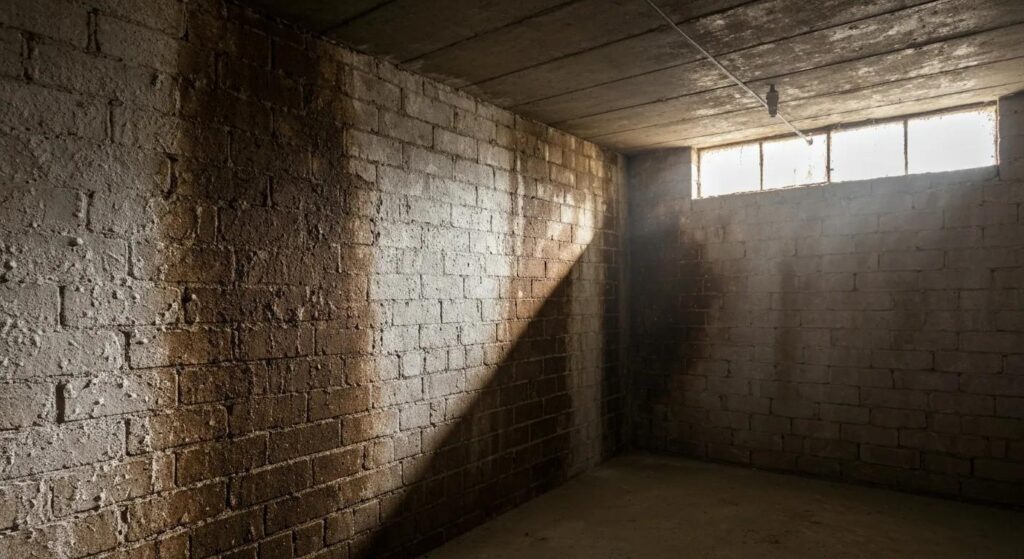
The earliest clues that a basement is taking on moisture are visual and olfactory. Watch for persistent damp patches and musty odors (evidence of moisture exchange with the soil), white crystalline efflorescence on masonry (salt left behind by moving water), and water stains along baseboards or floor‑wall joints that trace intrusion paths. More serious signs include vertical or stair‑step cracks in block walls, hairline to wider fissures that can widen with freeze‑thaw cycles, and bowed or bulging walls—symptoms that lateral soil pressure has exceeded the wall’s capacity. If you spot any of these, schedule an inspection to measure moisture and evaluate hydrostatic pressure so you can determine whether drainage, wall reinforcement, or underpinning is needed.
- Early visual signs that warrant inspection: Damp patches on walls or floors that don’t dry after a dry spell. White, powdery efflorescence on masonry surfaces. Musty odors, visible mold, or staining near the floor‑to‑wall joint.
Left untreated, these issues can progress from simple seepage to structural problems. Documenting patterns helps professionals diagnose the cause and recommend the right repair sequence.
How Do New Jersey’s Climate and Soil Affect Basement Waterproofing Needs?
New Jersey’s landscape—from coastal plains to inland clay terrains—shapes how frequently and by what mechanism basements leak, and that determines the most effective waterproofing approach. Clay soils retain water and increase hydrostatic pressure during extended wet periods, while coastal and floodplain areas face higher groundwater and overtopping risk. Freeze‑thaw cycles can open existing cracks and allow episodic infiltration. In some locations, correcting exterior grading and installing a French drain will be the priority; in others, an interior perimeter drain with a robust sump pump is the better fit. Matching soil and climate diagnostics to the correct system prevents recurrence and treats water volume, pressure, and duration—not just surface symptoms.
What Basement Waterproofing Services Does Effective Basement Solutions Offer in New Jersey?
Our professional services span drainage, mechanical, and structural options designed to stop water entry and control long‑term moisture. Core offerings include interior perimeter drainage that channels water to a sump, exterior French drain installation to divert groundwater away from foundations, sump pump installation (with battery backup options) to remove collected water, foundation repair and structural reinforcement for compromised walls or footings, crawl‑space encapsulation to control vapor and air quality, and dehumidification systems to maintain safe relative humidity. Each service addresses a specific failure mode: interior systems capture seepage at the footing level, exterior systems keep soils from saturating next to the wall, and encapsulation plus dehumidification controls mold and wood‑rot risks. Comparing these options helps homeowners select systems that fit their basement symptoms, access limits, and long‑term value goals.
| Service | Main Problem Solved | Key Components/Materials | When Recommended |
|---|---|---|---|
| Interior Basement Drainage System | Active seepage at floor/wall joints | Perforated pipe, gravel, filter fabric, sump pit | When water enters at footing level or hydrostatic pressure exists |
| Exterior French Drain Installation | Groundwater accumulating beside the foundation | Trench, gravel, perforated pipe, geotextile fabric | When perimeter grading and saturated soils drive infiltration |
| Sump Pump Installation | Removal of collected groundwater | Electric pump, sump basin, discharge piping, optional battery backup | For basements with recurring water collection or failed gravity drainage |
| Foundation Repair / Structural Reinforcement | Bowing walls, severe cracks | Carbon fiber straps, steel I‑beams, underpinning materials | When structural movement or wall instability is present |
| Crawl Space Encapsulation | Vapor transmission, radon entry, wood rot | Vapor barrier, sealed vents, insulation, sealants | For crawl spaces showing moisture, odors, or decay risk |
| Dehumidification Systems | High relative humidity, mold risk | Whole‑house or portable dehumidifiers, condensate drainage | After waterproofing to maintain safe humidity levels |
This comparison shows which solutions stop symptoms and which add complementary protection. The next section explains how interior systems work and how they compare to exterior approaches.
- Core services provided by Effective Basement Solutions: Interior perimeter drainage systems and professional sump pump installation. Exterior French drain installation and grading correction. Foundation repair, crawl‑space encapsulation, and dehumidification solutions.
How Do Interior Basement Drainage Systems Protect Your Home?
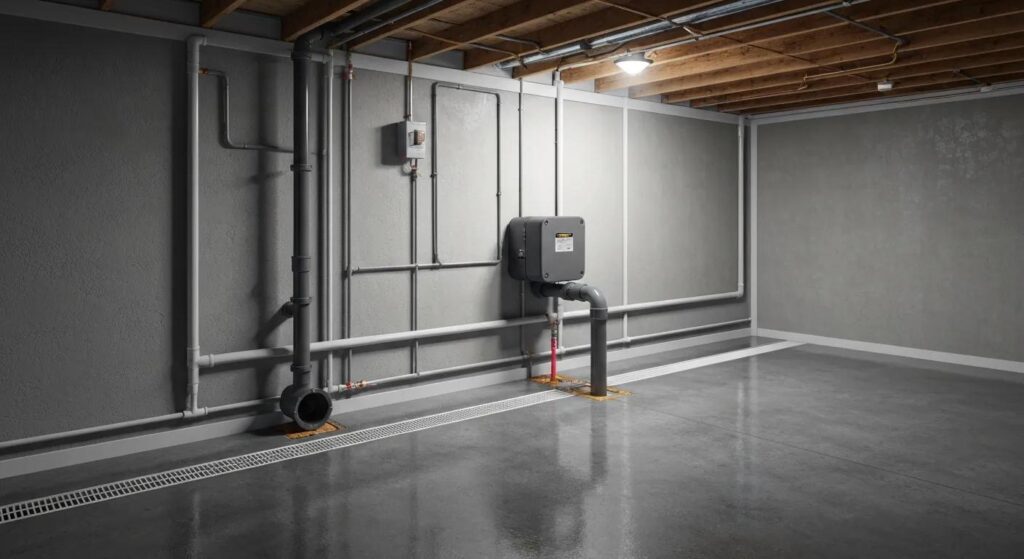
Interior perimeter drainage systems intercept groundwater at the point it enters the building envelope—usually at the base of foundation walls or the floor‑wall joint—and route it to a sump basin. From there a pump discharges the water safely away from the house. Typical installations include a shallow perimeter trench, drainage gravel, a perforated pipe wrapped in filter fabric to reduce clogging, and a sump pit with an automatic pump. By creating a controlled path for water, interior drains lower hydrostatic pressure at the wall base, reducing seepage, efflorescence, and mold. Maintenance is straightforward but important: test the sump pump periodically, check the pit for debris, and keep discharge lines clear. Professionally installed systems can provide reliable service for decades when properly maintained.
Interior systems often work best alongside exterior measures; knowing when to combine approaches helps homeowners build a full‑system defense that captures and removes water effectively.
What Are the Benefits of French Drain Installation for Exterior Water Management?
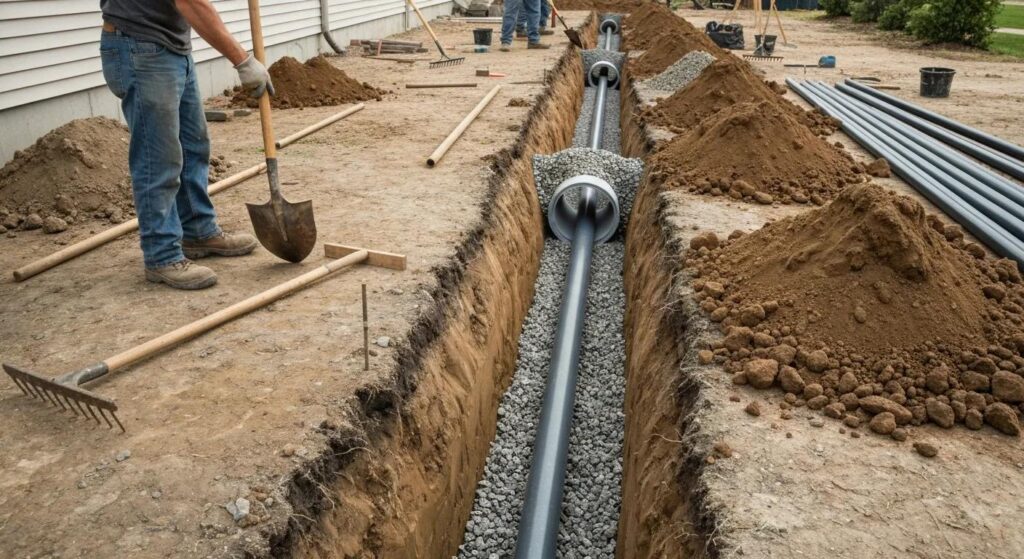
Exterior French drains move groundwater before it soaks the soil next to a foundation, lowering the hydrostatic pressure that forces water through walls. A French drain relies on a sloped trench, clean drainage gravel, a perforated pipe to carry water away, and geotextile fabric to keep fines out; surface grading and downspout routing are coordinated to keep runoff from the foundation. French drains are recommended where lateral groundwater or poor surface drainage continually soaks the exterior, or where grading can’t be easily corrected. Exterior work is more invasive and often costlier than interior fixes, but it’s the most preventive option because it manages groundwater before it reaches the wall, and it can be paired with landscape restoration to preserve curb appeal.
Exterior and interior systems complement one another; the right choice depends on access, soil saturation, and long‑term maintenance preferences.
Mitigation of Basement Flooding Risks Using Foundation Drainage Systems
Increasing frequency and intensity of urban flooding have raised basement flood risk and insured losses across many North American regions. Factors at lot, watershed, and municipal scales—such as urbanization, watershed hydrology, and stormwater infrastructure—shape regional flood exposure. Mitigation measures at the building and property level can reduce basement flooding risk for individual homes. Effective actions include installing backwater valves to prevent sewer surcharge, adopting low‑impact development to cut runoff entering municipal systems, and installing foundation drainage systems to lower infiltration‑induced flooding risk.
How Does Foundation Repair Strengthen Your Basement’s Structural Integrity?
Foundation repair tackles structural problems—bowing walls, wide cracks, and settlement—that waterproofing alone can’t fix. Repairs restore load paths and stop progressive movement using techniques chosen after a structural assessment: carbon fiber straps for modest stabilization, steel I‑beams or wall anchors for moderate to severe lateral pressure, and underpinning to stabilize or lift settled footings. The repair process starts with diagnosis and remediation of nearby water sources to prevent recurrence, then moves to reinforcement and any needed interior finishing. When foundation repair is combined with proper drainage, the result is a durable fix rather than a temporary patch.
Sequencing matters: addressing water sources first—or simultaneously—helps repairs hold over time and lowers the chance of further structural stress.
Why Is Crawl Space Encapsulation Important for Moisture and Mold Control?
Crawl‑space encapsulation installs a sealed vapor barrier to keep soil moisture and outside air from entering the house through the crawl space, lowering indoor humidity, cutting mold risk, and protecting floor framing from wood rot. A typical encapsulation package includes a durable polyethylene or composite vapor barrier on the floor and walls, sealing vents and penetrations, insulating rim joists, and providing conditioned ventilation or a dehumidifier as needed. Encapsulation reduces convective airflow that brings soil gases like radon into living areas and can improve energy performance by stabilizing the subfloor environment. Follow‑up includes humidity monitoring and ensuring drainage systems remain functional. Encapsulation works best when combined with surface and subsurface drainage that prevents water from pooling near footings.
A well‑installed vapor barrier supports healthier indoor air and lowers the risk of structural decay, making encapsulation a key part of a comprehensive moisture‑control plan.
How Much Does Basement Waterproofing Cost in New Jersey?
Costs for basement waterproofing in New Jersey vary widely with scope, access, and whether structural repairs are needed, but transparent ranges help homeowners plan. Typical investment bands include minor crack repairs and localized sealing for small leaks, mid‑range interior perimeter drainage and sump pump installs for recurring seepage, and higher‑cost exterior systems or combined drainage plus foundation repair where hydrostatic pressure or structural movement is significant. Main price drivers are basement square footage, site access for excavation or interior work, severity of existing damage, soil conditions, landscape restoration, and whether underpinning or wall reinforcement is required. Because every property’s subsurface conditions are unique, a free inspection is essential to produce a precise written estimate that reflects long‑term value—including warranty coverage—rather than a vague range.
| Approach | Typical Price Range (NJ) | Notes / When Chosen |
|---|---|---|
| Localized crack sealing & interior sealant | $500 – $2,500 | Small, non‑structural leaks and hairline cracks |
| Interior perimeter drain + sump pump | $3,000 – $8,000 | Common for recurring seepage and moderate hydrostatic stress |
| Exterior French drain & grading | $8,000 – $20,000+ | Best for saturated soils and preventive exterior control |
| Foundation repair / wall reinforcement | $5,000 – $25,000+ | Costs vary with method (carbon fiber vs underpinning) |
| Crawl space encapsulation + dehumidifier | $3,000 – $10,000 | Improves air quality and prevents wood rot; paired with drainage |
What Factors Influence Basement Waterproofing Prices in NJ?
Several factors shape waterproofing estimates—knowing them helps you compare bids intelligently. Key drivers include basement size and layout (larger or irregular spaces increase labor and materials), site access for excavation or interior work, the presence of structural issues requiring repair, grading and landscape restoration needs, soil type and groundwater level, and local permit or code requirements. Unexpected discoveries—hidden voids, buried utilities, or deeper footings—can increase time and cost. Requesting a detailed scope, line‑item estimates, and written warranties clarifies these variables and keeps the focus on long‑term performance over the lowest headline price.
- Primary cost influencers: Size and configuration of the basement. Severity of water intrusion and structural damage. Site access and landscape restoration needs.
Transparent bids that explain each cost driver help homeowners compare options and prioritize lasting performance.
How Does Professional Waterproofing Compare to DIY Solutions?
DIY waterproofing can provide short‑term relief for minor problems, but it often lacks the diagnostic depth and structural integration of professional work. Typical DIY fixes include surface sealants, masonry patching, and portable dehumidifiers; while these can reduce visible dampness, they don’t address hydrostatic pressure, subsurface flow, or structural movement. Professionals bring moisture mapping, drainage engineering, and structural repairs when needed, and their work generally includes warranties that shift long‑term risk away from the homeowner. Over time, professional solutions tend to reduce recurrence, limit secondary damage (mold, rot), and avoid repeated repair costs. If you’re weighing options, an itemized professional inspection helps quantify the long‑term value of hiring a licensed crew versus short‑term DIY savings.
- DIY vs professional summary: DIY can lower upfront cost but may miss underlying causes. Professional work addresses root causes and typically includes warranty protection. Long‑term recurrence and repair costs often exceed initial DIY savings.
How Can You Prevent Mold, Radon, and Other Basement Hazards?
Preventing health and structural hazards depends on controlling moisture with a layered approach: effective drainage, airtight crawl‑space encapsulation, and active humidity control. Stopping moisture reduces the conditions that allow mold and wood rot to develop and limits soil‑gas entry, including radon, when combined with sealing and, if needed, active radon mitigation. Dehumidifiers keep relative humidity below levels that support mold growth, while encapsulation and sealing reduce convective airflow that carries soil gases into living spaces. Routine maintenance—clearing gutters, making sure downspouts route water away from the foundation, and testing sump systems—sustains these defenses. A coordinated strategy that pairs waterproofing with ventilation and dehumidification addresses both immediate wetness and longer‑term environmental risks.
| Hazard | Contributing Factors | Preventative Measures |
|---|---|---|
| Mold | Persistent high humidity, active leaks, organic surfaces | Waterproofing, dehumidification, encapsulation, prompt drying |
| Radon | Soil gas entry through cracks and vents | Sealing entry points, encapsulation, professional testing/mitigation |
| Wood rot | Elevated moisture in framing and joists | Drainage, encapsulation, maintain RH below 50% |
| Efflorescence | Water migration through masonry | Improve drainage, interior/exterior waterproofing, reduce wall moisture |
What Role Do Dehumidification Systems Play in Basement Health?
Dehumidifiers control indoor relative humidity, which reduces mold risk and improves perceived air quality in basements and encapsulated crawl spaces. Whole‑house or dedicated basement dehumidifiers extract moisture and typically drain into a sump or condensate line, helping keep RH targets (usually below 50%) that limit biological growth and corrosion. Correct sizing and placement depend on basement volume, moisture load, and whether the space is fully encapsulated—undersized units run continuously and struggle to hit targets, while properly sized systems cycle efficiently and save energy. Routine upkeep—cleaning filters, checking coils, and clearing condensate drains—keeps performance reliable. When paired with waterproofing, dehumidification helps a structurally dry space stay healthy for occupants and building materials over the long term.
Dehumidification is most effective after water entry has been controlled; it complements drainage and encapsulation to sustain healthy conditions.
How Does Crawl Space Encapsulation Help Reduce Radon and Wood Rot?
Encapsulation creates a continuous barrier between the soil and the home interior, sealing common pathways for soil gases and keeping framing members dry to prevent rot. Covering the crawl‑space floor and sealing vents and penetrations reduces pressure‑driven airflow that can draw radon into living spaces; paired with passive or active mitigation, it lowers indoor radon levels. Encapsulation also stabilizes humidity and temperature under the house, reducing condensation on joists and subfloors that leads to decay. Best practice is to combine encapsulation with dehumidification and external drainage so the vapor barrier stays dry and effective. Regular humidity monitoring and periodic inspections of the barrier ensure long‑term performance.
Proper encapsulation reduces multiple risks—structural decay, radon ingress, and indoor air contamination—making it a foundational preventative step.
Why Choose Effective Basement Solutions for Your Basement Waterproofing Needs?
Effective Basement Solutions turns thorough diagnostics into durable systems for New Jersey homes, pairing technical work with homeowner protections. We use licensed in‑house crews to ensure consistent workmanship and simple communication, reducing the coordination issues that come with subcontracting. A 30‑year warranty offers a long‑term performance pledge that shifts future repair uncertainty away from the homeowner, and we provide a free inspection and consultation so every estimate is based on an on‑site assessment rather than a guess. Licensed crews, warranty coverage, and a no‑cost initial inspection help homeowners compare options confidently and select solutions that prioritize longevity and resale value.
- Why these trust elements matter: Licensed in‑house crews ensure consistent standards and accountability. A 30‑year warranty reduces future repair anxiety and supports resale value. A free inspection gives a low‑friction path to a precise, written plan.
What Makes Our Licensed In‑House Crew Different from Competitors?
Our licensed in‑house crews let us own training, quality control, and scheduling rather than relying on subcontractors. That reduces variability in workmanship and simplifies communication for homeowners. With an in‑house model, company standards—from diagnostic protocols to installation sequencing—are applied consistently so systems are integrated, not piecemeal. This approach shortens timelines, provides a single point of accountability for warranty work, and makes it easier to coordinate projects. For homeowners, the benefits are predictable workmanship, clearer scope communication, and a streamlined path to service if issues arise.
These operational differences produce more reliable outcomes—one reason to weigh crew structure when comparing bids.
How Does Our 30‑Year Warranty Provide Long‑Term Peace of Mind?
Our 30‑year warranty shifts long‑term performance risk from the homeowner to the installer by backing installed systems over a multi‑decade window. This protection guards against premature failures and provides a documented remedy path. While warranty terms vary, having written coverage reduces future expense and signals that the installer expects systems to last. Long warranties can also lift resale value and influence insurance considerations. Homeowners should request warranty terms in writing and confirm scope and conditions so expectations are clear.
Warranty‑backed work supports a value‑first decision—prioritizing durable systems that minimize future disruption and expense.
What Can You Expect from Our Free Basement Inspection and Consultation?
Our free inspection begins with a visual and moisture assessment of the basement and exterior drainage: wall cracks, floor‑to‑wall joints, sump performance, grading, and crawl‑space conditions. Inspectors measure moisture levels, identify likely water‑entry routes, and flag structural signs that may require reinforcement. They then recommend prioritized corrective actions and deliver a written estimate that covers scope, timeline, and warranty options. The consultation lets homeowners ask about alternatives—interior versus exterior drainage, dehumidifier sizing, and crawl‑space options—and schedule follow‑up diagnostics or projects. This low‑obligation inspection produces actionable information and a clear next step.
Providing basic property details (basement area, recent symptoms) ahead of time speeds the inspection and yields a faster written proposal.
What Are the Next Steps to Get a Dry, Safe Basement in New Jersey?
Turning diagnosis into durable results follows a clear four‑step sequence that minimizes the chance of recurring problems. First, schedule a complimentary inspection so professionals can assess symptoms, moisture pathways, and structural indicators. Second, review a written estimate that explains recommended systems, the rationale, and the timeline. Third, approve the scope and schedule any permitting or prep work while coordinating access and landscaping as needed. Fourth, proceed with installation followed by post‑completion testing, cleanup, and receipt of warranty documentation. Each step reduces uncertainty and ensures the chosen solution fits immediate needs and long‑term protection goals.
- Schedule a free inspection to document symptoms and receive a tailored plan.
- Review and approve a written estimate detailing scope and warranty.
- Coordinate site prep and scheduling for installation.
- Complete installation, testing, and receive warranty paperwork.
This straightforward process keeps the project manageable and transparent for homeowners who want lasting results.
How Do You Schedule a Free Basement Waterproofing Consultation?
To schedule a free consultation, contact us through the listed channels and share basic details about the property and symptoms to speed the evaluation. Helpful information includes basement dimensions, visible signs (leaks, odors, cracks), recent storm impacts, and any prior repairs; photos accelerate the initial review. Response times vary, but we typically offer a prompt inspection window after you submit basic information; the visit confirms scope and produces a written estimate. Requesting a free inspection is the quickest way to replace uncertainty with a clear diagnostic plan and cost estimate.
Having your basement size and symptom timeline ready helps us provide a faster, more accurate initial estimate during the consultation.
What Should You Expect During the Basement Waterproofing Process?
A typical project progresses through inspection, proposal, permitting (if required), site prep, installation, and follow‑up testing and cleanup. Duration ranges from a single day for small localized repairs to several weeks for exterior excavation and foundation work. During installation expect some noise and dust during excavation or interior trenching, scheduled crew arrival windows, and clear communication about access and landscape protection. After completion, crews perform functional tests (sump pump operation, drain flow), provide warranty registration documentation, and offer recommendations for ongoing maintenance like periodic sump testing and humidity monitoring. Planning for temporary disruptions helps the job run smoothly and keeps expectations aligned with the selected solution.
Preparing pets, securing stored items near work areas, and keeping exterior access clear all speed the install and reduce delays.
Frequently Asked Questions
1. What are the long-term benefits of professional basement waterproofing?
Professional basement waterproofing delivers lasting benefits: improved structural integrity, better indoor air quality, and higher property value. By controlling moisture you prevent mold, wood rot, and other moisture‑related damage that leads to costly repairs. Professional work often includes warranties, giving financial protection and peace of mind. A well‑waterproofed basement creates a healthier living environment and can be a strong selling point when you put the home on the market.
2. How often should I have my basement waterproofing system inspected?
We recommend an annual inspection, and immediately after heavy storms or notable weather events. Regular checks catch emerging issues—cracks, blockages, or pump problems—before they escalate. If you notice water intrusion, unusual odors, or persistent humidity, schedule an inspection promptly. Proactive maintenance extends system life and keeps performance reliable.
3. Can I install a basement waterproofing system myself?
While some homeowners tackle small projects, full waterproofing is complex and often not suited to DIY. Effective waterproofing requires understanding water flow, soil conditions, and structural concerns. DIY methods may offer temporary relief but can miss underlying causes, leading to repeated problems. Hiring professionals ensures correct materials and techniques are used and typically provides warranty coverage that protects your investment.
4. What should I do if I notice water damage in my basement?
If you find water damage, act quickly: remove standing water, dry affected areas to limit mold growth, and document visible signs. Identify likely sources—leaks, condensation, or groundwater—and contact a professional waterproofing contractor for an assessment and recommended next steps. Timely intervention reduces further damage and preserves structural integrity.
5. How does climate affect basement waterproofing needs in New Jersey?
New Jersey’s climate—heavy rain events and freeze‑thaw cycles—combined with local soils (notably clay) affects waterproofing strategy. Clay retains water and raises hydrostatic pressure against walls, and freeze‑thaw can worsen cracks. These conditions often require tailored solutions like exterior French drains or robust sump pump systems. Knowing local climate and soil behavior helps select the right measures to keep your basement dry.
6. What are the signs that my basement waterproofing system needs maintenance?
Signs you need service include new or worsening water stains, persistent damp spots, musty odors, rising humidity, or a sump pump that runs constantly or makes unusual noises. Widening cracks in walls or floors are also warning signs. Regular monitoring and quick repairs help maintain effectiveness and prevent costly damage.
7. Are there any health risks associated with a damp basement?
Yes. A damp basement can encourage mold growth and reduce indoor air quality, which may cause respiratory irritation, allergies, and other health problems. Damp areas can also attract pests and accelerate structural decay. Proper waterproofing and ventilation are key to mitigating these health and safety risks.
Conclusion
Effective basement waterproofing in New Jersey protects your home from moisture damage, improves indoor air quality, and preserves structural value. By understanding local climate and soil challenges and choosing the right combination of drainage, structural repair, and humidity control, homeowners can avoid costly repairs and create a healthier living space. Schedule a free inspection to review tailored solutions that safeguard your investment and provide peace of mind.
