
Key Basement Waterproofing NJ Methods for Homeowners
If you’re looking into basement waterproofing NJ, this comprehensive guide explains how to stop water, prevent mold and protect your home’s value.
Is your New Jersey basement suffering from persistent dampness, mold growth, and structural cracks? Basement waterproofing prevents water ingress by sealing walls and improving drainage systems, protecting both property value and indoor air quality. In this comprehensive guide, we examine common causes and signs of water problems, review interior and exterior waterproofing methods, outline foundation crack repair, explore mold-prevention techniques, break down cost factors, and explain why professional services deliver lasting protection.
What Are the Common Causes and Signs of Basement Water Problems in New Jersey?
Basement water problems occur when groundwater or surface water penetrates below-ground walls and floors, driven by hydrostatic pressure and poor site grading. For example, annual freeze-thaw cycles in clay soils can widen foundation gaps and allow moisture to seep in. Understanding root causes and identifying early warning signs empowers homeowners to intervene before damage escalates.
What Causes Basement Water Ingress and Dampness in NJ Homes?
Basement water ingress happens when hydrostatic pressure forces groundwater through porous concrete or cracks, leading to damp conditions.
Understanding Hydrostatic Pressure: The Silent Threat to Your Foundation
Hydrostatic pressure, the force exerted by standing water against a structure, occurs when groundwater saturates the soil around a foundation. This pressure can lead to foundation wall cracks, bowing or buckling walls, and basement leaks, compromising the structural integrity of a home.
This research explains how hydrostatic pressure causes basement water ingress and structural damage, aligning with the article’s detailed description of this common problem.
- Hydrostatic Pressure: Groundwater accumulation exerts lateral force on foundation walls.
- Soil Composition: Expansive clay soils retain water and swell, opening microfissures.
- Poor Grading: Insufficient slope directs rainwater toward the foundation.
- Freeze-Thaw Cycling: Repeated freezing and thawing widen cracks in masonry.
Winter Freeze: Thaw Cycles and Their Impact on Foundations
Fluctuating temperatures leading to freeze-thaw cycles significantly impact ground stability and foundation health. As water in the soil freezes, it expands, exerting pressure on foundations, and upon thawing, the soil contracts, potentially creating or worsening cracks and leading to structural instability.
This information directly supports the article’s explanation of how annual freeze-thaw cycles contribute to foundation damage and water ingress in New Jersey homes.
These underlying mechanisms increase moisture transmission and set the stage for visible signs of dampness.
How to Identify Signs of a Wet or Damp Basement?
Basement dampness manifests through visual and sensory cues that signal active water intrusion.
- Musty Odors: Persistent mildew smells indicate elevated humidity and mold spores.
- Wall Stains and Efflorescence: White mineral deposits appear where water evaporates.
- Cracks and Peeling Paint: Surface blemishes reveal structural stress and moisture penetration.
- Visible Mold Growth: Dark or colored spots on walls and floors show microbial colonization.
Recognizing these indicators early directs homeowners toward targeted waterproofing solutions.
What Are the Impacts of Basement Water Problems on Health and Property Value?
Basement water intrusion not only undermines structural integrity but also poses health hazards and reduces resale potential.
- Structural Damage: Prolonged dampness degrades mortar joints, floor slabs, and support beams.
- Mold-Related Health Risks: Elevated mold spore counts can trigger respiratory issues and allergies.
- Decreased Property Value: Wet basements deter buyers and lower appraisal assessments.
- Higher Energy Costs: Damp insulation loses thermal efficiency, increasing heating expenses.
Mitigating these impacts through prompt waterproofing preserves both well-being and investment returns.
Which Basement Waterproofing Methods Are Most Effective for New Jersey Homes?
Basement waterproofing methods combine wall seals, membranes, and drainage systems to manage water at its source and redirect it safely away. Implementing the right combination improves longevity and reduces maintenance costs.
How Does Interior Basement Waterproofing Work?
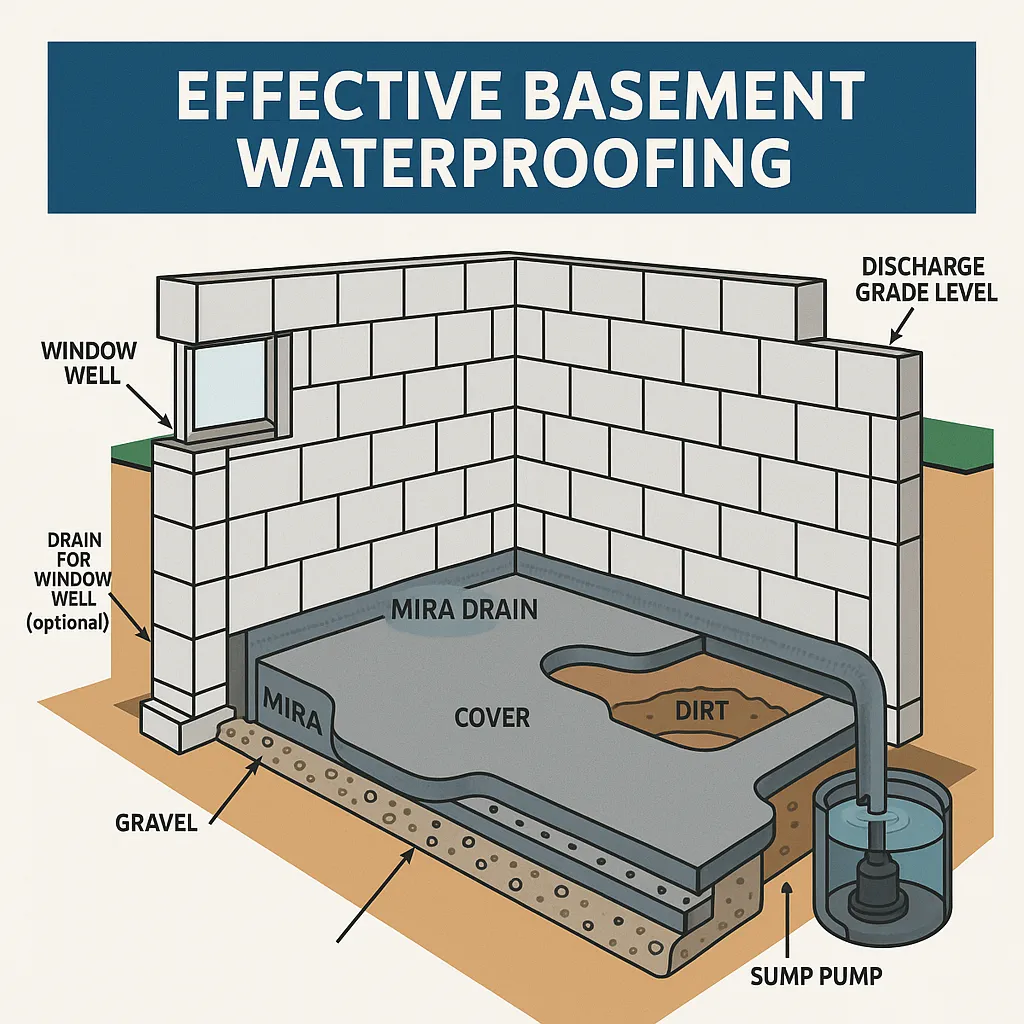
Interior waterproofing creates a barrier on walls and channels water into a collection system behind the finish layer.
- Tanking Coatings: Cementitious or polymer-modified coatings bond to concrete and block moisture.
- Cavity Drain Membranes: Modular plastic sheets create a void and capture seepage in drainage channels.
- Internal Drains and Sump Pumps: Perimeter drains collect water and pump it harmlessly outside the foundation.
This method enhances indoor comfort and allows controlled water management without heavy exterior excavation.
| Method | Component | Primary Benefit |
|---|---|---|
| Interior Waterproofing | Tanking Coating | Seals micropores in concrete walls |
| Cavity Drain Membrane | Creates drainage path for seepage | |
| Sump Pump System | Removes collected water efficiently |
These three components work together to protect the basement interior while preparing for positive-pressure scenarios.
What Are the Benefits of Exterior Basement Waterproofing?
Exterior waterproofing stops water at the foundation’s outer face by installing protective layers and redirecting runoff.
- Waterproof Membranes: Rubberized asphalt or polyethylene sheets shield walls from ground moisture.
- French Drains and Weeping Tiles: Gravel-filled trenches collect water and channel it away via gravity.
- Proper Site Grading: Redirects surface water flow away from the foundation.
By addressing water at its point of impact, exterior systems significantly reduce hydrostatic pressure on basement walls.
How Do Basement Drainage Systems Prevent Water Damage?
Basement drainage systems intercept, collect, and expel water that accumulates around foundation walls, maintaining dryness.
- Perimeter Trench Drains: Installed at footing level to capture seepage before it enters the slab.
- Sump Pump Installation: Automatic pumps activate when water reaches preset levels.
- French Drain Runs: Underground pipes surrounded by gravel guide water away from the structure.
Effective drainage systems complement wall seals by handling excess water volume.
| Option | Ideal Condition | Key Consideration |
|---|---|---|
| Internal Waterproofing | Limited excavation access | Minimally invasive installation |
| Exterior Waterproofing | Severe hydrostatic pressure | Requires soil excavation |
| Drainage System Only | Minor seepage issues | Relies on functional pumping |
Comparing these methods clarifies which strategy suits local site conditions and homeowner priorities.
How Can Foundation Crack Repair Protect Your Basement from Water Damage?
Foundation crack repair restores structural continuity and prevents water from exploiting weakened wall segments. Professional crack injection and reinforcement techniques bolster foundation resilience.
What Types of Foundation Cracks Affect Basements?
Different crack classifications dictate repair approaches and urgency levels.
- Hairline Cracks: Fine surface fractures often sealed with epoxy or polyurethane.
- Structural Cracks: Wider, deeper fissures requiring injection of specialized grouts.
- Bowing Walls: Inward-leaning walls stabilized by carbon fiber strips or steel I-beams.
Identifying crack type ensures the correct remediation method is selected for long-term performance.
Which Repair Methods Are Used for Foundation Cracks?
Crack repair techniques restore wall integrity by filling voids and reinforcing weak areas.
- Epoxy Injection: Rigid bonding of narrow cracks to re-establish structural load paths.
- Polyurethane Injection: Flexible sealant that expands to fill irregular cavities.
- Carbon Fiber Strips: High-strength reinforcement applied to interior wall faces.
- Steel I-Beam Installation: Provides external or internal support to bowed or failing walls.
These approaches halt water entry and support foundation stability under hydrostatic load.
How Does Hydrostatic Pressure Cause Foundation Damage?
For detailed French drain installation in New Jersey, visit our French Drain Installation NJ page. Hydrostatic pressure exerts constant lateral force on buried walls, leading to cracks and water ingress.
- Groundwater Saturation: Heavy rains elevate the surrounding water table against the foundation.
- Lateral Stress Build-Up: Fluid pressure pushes against concrete, exceeding tensile strength.
- Crack Propagation: Initial micro-fissures widen under repeated wet-dry cycles.
- Progressive Water Ingress: Continuous moisture exposure accelerates structural weakening.
Addressing hydrostatic forces through both waterproofing membranes and drainage solutions prevents these damaging cycles.
What Are the Best Basement Damp Proofing and Mold Prevention Techniques?
Damp proofing and mold control combine moisture removal, airflow enhancement, and antimicrobial barriers to maintain healthy indoor environments.
How Does Basement Dehumidification Help Control Moisture?
For more on mold cleanup protocols, see the EPA guide on mold cleanup. Dehumidification reduces relative humidity below levels that support condensation and mold growth.
- Refrigerant Dehumidifiers: Cool incoming air to condense moisture for collection.
- Desiccant Dehumidifiers: Use hygroscopic materials to absorb water vapor in colder conditions.
- Optimal Humidity Range: Maintaining 40–50 percent relative humidity prevents microbial proliferation.
Microbial and Metabolic Succession on Common Building Materials Under High Humidity Conditions
Research published in Nature Communications demonstrates that elevated humidity levels on building materials significantly increase the rate of mold growth. The study highlights that specific fungal species thrive in these conditions and can release microbial toxins, underscoring the health risks associated with damp indoor environments.
This research directly supports the article’s claims regarding the causes of mold growth in basements due to high humidity and the potential health hazards.
Active moisture control complements waterproofing by addressing residual dampness.
What Are Effective Mold Remediation and Prevention Strategies?
Mold remediation and prevention halt spore propagation and eliminate existing colonies.
- Antimicrobial Coatings: Surface treatments that inhibit fungal growth on walls and floors.
- Air Filtration Upgrades: HEPA filters remove airborne spores and improve indoor air.
- Adequate Ventilation: Controlled airflow prevents humidity pockets behind stored items.
- Regular Inspection: Periodic checks identify and rectify moisture sources early.
Combining these strategies with waterproof barriers establishes a comprehensive mold-free environment.
How Do Waterproofing Systems Reduce Mold Growth Risks?
Waterproofing systems limit the conditions that foster mold by blocking moisture entry and improving drainage.
- Sealed Wall Finishes: Prevent liquid water from reaching organic materials.
- Subfloor Membranes: Stop capillary rise of groundwater.
- Active Drainage: Removes incidental water before it contacts interior surfaces.
- Reduced Humidity Load: Combined with dehumidification, creates an environment hostile to mold.
These protective measures address root causes of microbial infestation and safeguard occupant health.
How Much Does Basement Waterproofing Cost in New Jersey?
Basement waterproofing costs vary according to basement size, method selection, and problem severity, with average projects ranging from $4,000 to $12,000. Transparent budgeting empowers homeowners to plan investments that enhance long-term value and peace of mind.
What Factors Influence Basement Waterproofing Prices?
Several variables determine total project cost and scope of work.
- Basement Area and Layout: Larger square footage requires more materials and labor.
- Waterproofing Method: Interior membranes and sump pump systems cost less than full exterior excavation.
- Severity of Damage: Extensive crack repair or structural reinforcement increases expenses.
- Accessibility: Difficult access elevates labor time and equipment requirements.
- Permit and Inspection Fees: Local code compliance adds administrative costs.
Understanding these factors ensures accurate budgeting and avoids unexpected overruns.
How to Get Accurate Cost Estimates and Free Consultations?
A professional assessment combines visual inspection, moisture testing, and structural evaluation.
- On-Site Survey: Detailed examination of wall conditions, grading, and drainage.
- Moisture Mapping: Use of sensors to detect hidden damp spots behind finishes.
- Structural Analysis: Identification of crack patterns and load-bearing issues.
- Proposal and Quotation: Written estimate with scope of work, timelines, and warranty details.
Effective Basement Solutions offers complimentary consultations to deliver precise recommendations based on real-time data.
What Is the Cost Difference Between DIY and Professional Waterproofing?
DIY waterproofing kits often appear economical but carry hidden risks and limited warranties.
- DIY Interior Sealants: Lower material cost ($200–$500) but may fail under hydrostatic pressure.
- Professional Installation: Higher upfront investment ($4,000–$12,000) with engineered solutions and warranties.
- Long-Term Value: Professionally installed systems typically last 15–25 years versus 2–5 years for DIY attempts.
- Liability and Safety: Professional insurers cover accidental damage and ensure code compliance.
Choosing professional services optimizes performance and protects your investment.
Why Choose Professional Basement Waterproofing Services in New Jersey?
Professional basement waterproofing integrates technical expertise, quality materials, and tested methodologies to deliver durable moisture protection and structural assurance.
What Qualifications and Certifications Should Waterproofing Contractors Have?
Certified contractors demonstrate adherence to industry standards and local regulations.
- State Contractor License: Legally authorized to perform waterproofing and foundation repair.
- Insurance Coverage: General liability and workers’ compensation for project protection.
- Industry Certifications: Membership in trade associations and training in structural waterproofing techniques.
- Manufacturer Credentials: Approved applicators for leading membrane and sealant brands.
These credentials ensure that installations comply with performance requirements and building codes.
How Do Professional Services Ensure Long-Lasting Waterproofing?
Quality installations rely on precise procedures and materials engineered for below-ground applications.
- Detailed Site Preparation: Controlled excavation and substrate cleaning for membrane adhesion.
- High-Performance Materials: Industrial-grade membranes, pumps, and sealants with proven lifespans.
- Warranty Programs: Multi-year guarantees on workmanship and products.
- Post-Installation Monitoring: Follow-up visits to verify drain function and wall dryness.
A systematic approach minimizes risk of future leaks and reinforces homeowner confidence.
What Are the Benefits of Hiring Local Experts for NJ Basement Waterproofing?
Local contractors understand regional soil conditions, climate influences, and code requirements.
- Soil Type Expertise: Tailored solutions for clay-rich or sandy soils common in New Jersey.
- Weather-Driven Scheduling: Seasonal planning to avoid freeze-thaw complications during installation.
- Municipal Code Familiarity: Smooth permitting and inspection processes in New Jersey municipalities.
- Rapid Response: Local presence enables timely maintenance and emergency support.
These advantages translate into efficient project delivery and reliable long-term performance.
What Are the Latest Basement Waterproofing Technologies and Industry Standards?
Emerging waterproofing technologies and updated standards elevate protection levels and align with best practice guidelines for below-ground structures.
How Do Cavity Drain Membrane Systems Work to Manage Water Ingress?
Cavity drain membranes channel incoming water into drainage conduits behind the membrane layer.
- Type C Membrane Panels: Modular sheets with integrated studs that create drainage voids.
- Water Collection Channels: Grooved back surfaces guide seepage toward a sump.
- Pump-Out Mechanism: Sump pump expels water to designated discharge points.
This system transforms uncontrolled seepage into manageable volumes of groundwater, preserving interior finishes.
What Are the Relevant Industry Certifications and Building Codes in NJ?
New Jersey waterproofing projects must comply with local building codes and recognized technical standards.
- International Residential Code (IRC): Foundation waterproofing requirements for residential structures.
- Local Municipal Regulations: Varied permitting and inspection criteria across New Jersey towns.
- Trade Association Guidelines: Best practices from structural repair and waterproofing organizations.
- Manufacturer Installation Standards: Specific procedures mandated by membrane and pump manufacturers.
Adhering to these standards ensures safe, durable, and code-compliant installations.
How Do Freeze-Thaw Cycles and Soil Types Affect Waterproofing Solutions?
Regional environmental factors influence material selection and installation timing for optimal performance.
- Clay Soil Expansion: Requires flexible sealants and membranes to accommodate volumetric changes.
- Freeze-Thaw Damage: Seasonal temperature swings exacerbate wall movement, calling for robust crack-injection methods.
- Permeable Sandy Soils: Demand enhanced exterior drainage to prevent rapid water migration.
- Seasonal Scheduling: Installation during stable temperature windows reduces material stress.
Customizing waterproofing strategies to local conditions guarantees reliable protection throughout climatic cycles.
Basement waterproofing in New Jersey demands a comprehensive approach that addresses water ingress, drainage, structural repair, and humidity control. Implementing the right combination of interior membranes, exterior barriers, and professional crack repair protects health, preserves property value, and minimizes maintenance costs. By partnering with certified experts offering warranties and free consultations, homeowners gain confidence that their investment delivers lasting dryness and peace of mind. Request your free consultation today to secure a dry, durable basement for years to come.
