
Basement Waterproofing and Foundation Repair in New Jersey: Your Complete Guide by Effective Basement Solutions
Every year, nearly one in three New Jersey homes experiences basement moisture that leads to structural damage and health risks. Understanding how hydrostatic pressure, foundation cracks, and poor drainage combine to flood basements provides homeowners with the insight needed to secure a dry, resilient foundation. In this guide, we explore the common causes of water intrusion, proven waterproofing methods and structural repair techniques, transparent cost factors, proactive maintenance practices, reasons to trust an in-house expert team, and local New Jersey considerations. By following these recommendations from Effective Basement Solutions, you’ll gain the confidence to protect your home and request a free consultation for a customized plan.
What Are the Common Causes of Basement Water Problems in New Jersey?
Basement water problems result from a combination of environmental and structural factors that allow moisture to penetrate below grade, leading to dampness, mold growth, and foundation deterioration. Identifying these root causes enables targeted solutions that address both symptoms and underlying drivers of water intrusion.
How Does Hydrostatic Pressure Affect Basement Water Intrusion?
Hydrostatic pressure occurs when saturated soil around a foundation exerts force on basement walls and floors, driving water through tiny pores and cracks. As heavy rainfall or high groundwater levels increase soil moisture, this pressure builds and pushes water into any available path, causing seepage and seepage staining. Mitigating hydrostatic pressure with comprehensive drainage systems prevents consistent water entry and preserves wall integrity.
Evaluation of the Effectiveness about Hydrostatic Pressure Relief Technology for Structures at Mountainous Terrains
Research indicates that hydrostatic pressure, caused by groundwater, can significantly impact the structural stability and functional viability of basement spaces. Implementing hydrostatic pressure relief technology, such as drainage systems, is effective in controlling groundwater problems and preventing basement leakage and dampness.
This research supports the article’s explanation of how hydrostatic pressure drives water through basement walls and the importance of drainage systems to mitigate this pressure.
What Role Do Foundation Cracks Play in Basement Leaks?
Foundation cracks serve as direct channels for water to enter a basement, compromising structural stability and interior dryness. Vertical cracks often arise from settlement, while horizontal or stair-step cracks indicate excessive lateral soil pressure. Timely repair of these fissures blocks water pathways and restores wall strength, reducing moisture accumulation and potential mold hazards.
How Does Poor Drainage Contribute to Basement Moisture?
Poor drainage around a home’s perimeter allows runoff to pool near foundations, raising the risk of water infiltration. Clogged gutters, downspouts discharging too close to the house, and compacted soil grading all contribute to water collecting against walls. Improving surface drainage with proper gutter maintenance and landscape regrading directs water away and lowers moisture levels against the foundation.
Can Plumbing Leaks and Condensation Cause Basement Dampness?
Yes, internal sources such as leaky pipes, sump pump failures, and condensation on cold surfaces can create persistent damp spots. Hidden leaks in supply lines or a compromised water heater can saturate walls and flooring, while high indoor humidity leads to visible condensation. Regular inspection and immediate leak repair combined with humidity control devices eliminate these secondary moisture sources and protect indoor air quality.
Top Basement Waterproofing Solutions for New Jersey Homes
Effective basement waterproofing combines interior and exterior methods designed to intercept and redirect water before it enters living spaces, providing long-term protection and peace of mind. Selecting the right system depends on site conditions, budget, and desired performance.
How Do Interior French Drains Work to Prevent Basement Flooding?
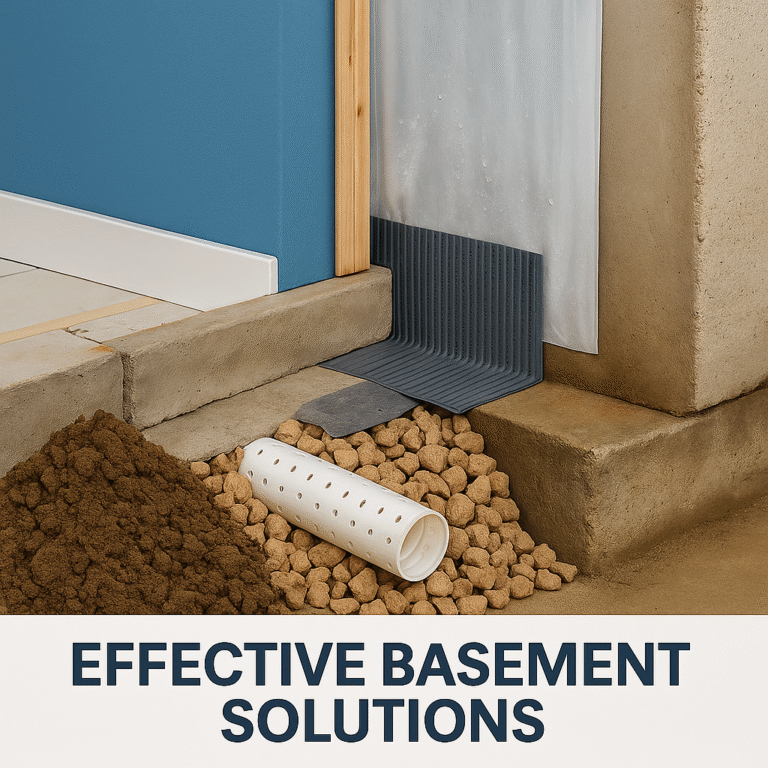
Interior French drains prevent basement flooding by intercepting groundwater along the footing and channeling it into a sump pit, where a pump ejects water outside.
- A trench is excavated just inside the basement perimeter.
- A perforated PVC pipe is laid in gravel to collect seepage.
- Water flows by gravity into the sump basin.
- A sump pump automatically discharges collected water beyond the foundation.
French Drains: The Unsung Heroes of New Jersey Home Protection
In New Jersey, clay soils are known for their impermeability, leading to water pooling around foundations and exerting pressure on basement walls, causing cracks and shifting. French drains are presented as a preventative measure, collecting ground and rainwater to channel it away from the foundation, thereby protecting structural integrity.
This information directly relates to the article’s discussion of New Jersey’s specific environmental factors, such as clay soil types, and the effectiveness of interior French drains in managing water intrusion.
By redirecting hydrostatic pressure before it reaches walls, this system improves dryness and offers a concealed, cost-effective solution for below-grade waterproofing.
Comparative Waterproofing Methods
| System Type | Application Area | Key Benefit | Typical Use Case |
|---|---|---|---|
| Interior French Drain | Inside perimeter | Controls hydrostatic pressure | Historic homes with existing slabs |
| Exterior Membrane | Outside foundation | Blocks water before it reaches walls | New construction or exterior excavations |
| Sump Pump Installation | Sump pit | Actively removes water buildup | Regions with high groundwater tables |
| Vapor Barrier & Dehumidifier | Wall and floor surfaces | Reduces condensation and humidity | Finished basements with living spaces |
When Should You Choose Sump Pump Installation for Basement Protection?
Sump pump installation becomes essential when groundwater levels frequently rise above the basement floor or when heavy storms overwhelm passive drainage. A sump pump actively removes collected water, preventing flooding during peak runoff events. Homes in flood-prone zones or with existing interior drains benefit most from a battery-backup sump pump to ensure continuous operation during power outages.
What Are the Benefits of Exterior Basement Waterproofing Methods?
Exterior basement waterproofing prevents water entry by applying waterproof membranes, rigid insulation, and perimeter drainage outside the foundation. This approach stops hydrostatic pressure at the source, prolongs wall life, and reduces interior moisture. Paired with proper grading and downspout extensions, exterior systems offer a highly effective barrier against persistent groundwater intrusion.
How Do Vapor Barriers and Dehumidifiers Improve Basement Moisture Control?
Vapor barriers and dehumidifiers improve basement moisture control by blocking moisture migration through walls and floors while maintaining optimal humidity levels in the air.
- A polyethylene liner applied to walls and floors stops evaporative entry.
- A dehumidifier extracts excess moisture, lowering relative humidity below 50%.
Together, these measures protect finished basement materials, inhibit mold growth, and support healthier indoor air quality in damp environments.
How Can Foundation Repair Experts Fix Basement Structural Issues in New Jersey?
When cracks, bowing walls, and settlement threaten a home’s stability, foundation repair experts apply specialized techniques that restore structural integrity and prevent future movement. Each method targets specific damage patterns to deliver permanent reinforcement.
What Are the Common Types of Foundation Cracks and Their Causes?
Foundation cracks vary by orientation and cause:
- Vertical cracks from differential settlement.
- Horizontal cracks due to lateral soil pressure.
- Stair-step cracks in block foundations caused by frost or shifting.
Identifying crack patterns guides repair selection and ensures complete restoration of load-bearing capacity.
How Do Carbon Fiber Straps and Steel I-Beam Bracing Reinforce Basement Walls?
- Carbon fiber straps adhere directly to bowed walls, providing high-tensile strength reinforcement.
- Steel I-beam braces anchor to floor and ceiling joists, creating rigid support against lateral movement.
These non-invasive solutions correct wall deflection and safeguard against future bowing without major excavation.
When Is Epoxy or Polyurethane Injection Used for Foundation Repair?
Managing hydrostatic pressure is essential to preventing basement water intrusion, as saturated soil can force moisture through walls and floor cracks. Research from the U.S. Environmental Protection Agency explains how proper drainage and moisture control dramatically reduce seepage, mold, and structural risk for homeowners. Epoxy or polyurethane injection seals foundation cracks by filling voids and restoring wall continuity. Epoxy provides structural strength for load-bearing repairs, while polyurethane foam expands on contact to block active water leaks. Injection techniques offer minimally disruptive crack sealing that complements larger structural reinforcement methods.
What Are the Signs That Indicate Foundation Damage Needs Professional Repair?
Recognizing urgent foundation damage involves spotting multiple indicators:
- Bowing or bulging walls visible from inside.
- Persistent water seepage despite drainage.
- Uneven or sloping floors.
- Doors and windows that stick due to shifting frames.
Addressing these signs quickly prevents escalating damage and costly reconstruction.
How Much Does Basement Waterproofing and Foundation Repair Cost in New Jersey?
Transparent cost estimates for waterproofing and repair depend on project scope, chosen methods, and site conditions. Understanding cost drivers helps homeowners plan budgets effectively.
What Factors Influence the Cost of Basement Waterproofing?
Project costs vary according to several factors:
- Waterproofing method selected (interior vs exterior).
- Severity and source of water intrusion.
- Basement size and accessibility.
- Additional installations such as sump pumps or dehumidifiers.
Evaluating these attributes ensures an accurate estimate tailored to each home’s requirements.
How Do Foundation Repair Costs Vary by Damage Type and Repair Method?
| Repair Type | Average Cost Range (USD) | Scope of Work | Warranty Offered |
|---|---|---|---|
| Crack Injection (Epoxy/PU) | $2,000–$4,000 | Sealing non-structural to structural cracks | Up to 30 years |
| Carbon Fiber Strapping | $2,500–$5,000 | Wall reinforcement for bowing issues | Lifetime structural guarantee |
| Steel I-Beam Bracing | $3,500–$6,000 | Heavy lateral pressure correction | Up to 30 years |
| Exterior Membrane | $5,000–$8,000 | Full outside excavation and membrane | 30-year waterproofing warranty |
Are Free Estimates and Warranties Available for Basement Services?
Effective Basement Solutions provides free, no-obligation estimates for all basement waterproofing and foundation repair projects. With an in-house expert team, we back our work with a 30-year warranty on structural repairs and waterproofing systems to ensure lasting performance and homeowner confidence.
How Can Homeowners Maintain Their Basement Systems to Prevent Water Damage?
Regular maintenance extends the life of waterproofing and repair systems, reduces emergency repairs, and supports a healthy indoor environment. Proactive tasks address mechanical, structural, and environmental aspects of basement protection.
What Are the Best Practices for Sump Pump Maintenance and Troubleshooting?
- Testing the pump monthly by pouring water into the pit.
- Inspecting and cleaning the intake screen and float switch.
- Verifying the discharge line is clear and directed away from the foundation.
- Checking battery-backup units for charge level and functionality.
Consistent maintenance ensures rapid water removal during storms and power outages.
How Can Homeowners Prevent Mold Growth and Improve Indoor Air Quality?
- Ensure vapor barriers remain intact on walls and floors.
- Run a dehumidifier to maintain relative humidity below 50%.
- Improve ventilation with exhaust fans and window vents.
- Promptly repair leaks in plumbing and fixtures.
These measures eliminate the damp conditions that mold spores require, safeguarding respiratory health.
What Seasonal Basement Problems Are Common in New Jersey and How to Prepare?
| Season | Common Issue | Preparation Tip |
|---|---|---|
| Spring | High groundwater and rain runoff | Clean gutters and extend downspouts |
| Summer | Elevated indoor humidity | Service dehumidifiers and HVAC systems |
| Fall | Leaves clogging exterior drains | Trim trees and clear perimeter debris |
| Winter | Freeze-thaw cycles damaging mortar | Seal cracks and insulate exterior walls |
Adapting maintenance to seasonal risks prevents damage and maintains basement integrity year-round.
Why Choose Effective Basement Solutions for Basement Waterproofing and Foundation Repair in New Jersey?
Selecting a trusted partner ensures effective results, transparent communication, and long-lasting protection tailored to each home’s needs.
What Makes Our In-House Expert Team Unique?
Our in-house expert team combines over 20 years of specialized experience in basement waterproofing, foundation repair, and structural reinforcement. By employing certified technicians rather than subcontractors, we ensure consistent workmanship, direct accountability, and rapid response to homeowner concerns.
How Do We Provide Tailored, Long-Lasting Basement Solutions?
Effective Basement Solutions emphasizes root-cause analysis to design customized repair plans. We integrate interior French drains, sump pumps, exterior membranes, and reinforcement techniques based on site inspection data, guaranteeing comprehensive coverage and durable performance under New Jersey’s climatic conditions.
What Are Our Service Areas and Warranty Details?
We serve homeowners across North Jersey, South Jersey, and parts of New York, offering free estimates and a 30-year warranty on waterproofing membranes and structural repair systems. Our commitment to long-term satisfaction ensures ongoing support and protection for your investment.
What Local New Jersey Factors Affect Basement Waterproofing and Foundation Repair?
Managing hydrostatic pressure is essential to preventing basement water intrusion, as saturated soil can force moisture through walls and floor cracks. For homeowners who need deeper guidance on drainage systems, our detailed service page on French drain installation explains how interior and exterior drains protect New Jersey basements from constant seepage. New Jersey’s diverse soils, building regulations, and freeze-thaw cycles uniquely influence basement performance and repair strategies.
How Do New Jersey Soil Types Impact Basement Water Problems?
- Clay soils expand when wet, increasing hydrostatic pressure.
- Silt retains moisture and clogs drainage systems.
- Sandy soils drain quickly but can erode, undermining footing support.
Recognizing soil characteristics guides the selection of appropriate drainage and reinforcement solutions.
What Local Building Codes and Regulations Should Homeowners Know?
- Permits are required for exterior excavation and structural underpinning.
- Drainage installations must meet township setback and discharge standards.
- Electrical connections for sump pumps and dehumidifiers must follow National Electrical Code guidelines.
Adhering to these regulations prevents costly rework and inspection delays.
How Do Seasonal Freeze-Thaw Cycles Affect Basement Integrity?
Freeze-thaw cycles in New Jersey cause water in cracks and pores to expand as ice, exacerbating wall fractures and mortar deterioration. Protecting basement walls with sealants, proper grading, and insulation minimizes water entry and reduces freeze-thaw damage over multiple seasons.
Maintaining robust protective measures through effective waterproofing and timely repairs ensures that your basement remains dry, structurally sound, and healthy. Contact Effective Basement Solutions today for a complimentary assessment and secure your home with expert guidance tailored to New Jersey’s unique conditions.
