
Comprehensive Guide to Sump Pumps: Types, Problems, Costs, and Solutions for Homeowners
Basement flooding affects many New Jersey homes annually, leading to mould, structural damage, and soaring repair bills. Installing an effective sump pump system transforms vulnerable basements into dry, protected spaces by automatically removing excess groundwater before it causes harm. In this guide, you will learn how each sump pump type operates, identify and troubleshoot common malfunctions, compare installation and replacement costs across New Jersey, select the ideal model for your basement or crawl space, maintain peak performance season after season, evaluate alternative waterproofing methods, and address region-specific factors such as local soil conditions and discharge regulations. Whether you need DIY tips, emergency solutions, or a free professional consultation backed by a comprehensive warranty, this article equips you with the knowledge to safeguard your home’s value and your family’s peace of mind.
What Are the Different Types of Sump Pumps and How Do They Work?
A sump pump is a specialised pump installed in a pit beneath the basement floor that automatically activates when water reaches a set level, routing moisture away from foundations to prevent flooding and mould growth. These pumps use float switches or pressure sensors to detect rising water, engage the motor, and discharge water through a pipe above ground level, protecting structural integrity and indoor air quality. Understanding each pump type ensures you install the most reliable solution for your home’s specific challenges.
Submersible pumps are fully enclosed units placed underwater in the sump pit, using a sealed motor and vertical impeller to quietly eject large volumes of water. These units excel in deep pits and heavy-rain regions because the surrounding water cools the motor, extending pump lifespan and reducing noise levels compared with external motors. Their sealed design minimises debris intake, making them ideal for basements with silt or sand intrusion.
Pedestal pumps feature a motor mounted above the sump pit with only the impeller submerged, offering simpler maintenance and lower upfront cost due to easy motor access. Because the motor remains dry, pedestal pumps stay cooler but generate more noise and occupy more vertical space. This design suits shallow pits and homeowners prioritising straightforward repairs over noise suppression.
Battery backup systems incorporate a secondary pump and rechargeable battery so that primary pump failure or power outages do not leave basements unprotected. When grid power fails, a float-activated secondary unit draws from the battery to maintain continuous discharge, preventing flood risk during storms. Investing in a backup pump enhances reliability and protects against the most common cause of sump pump failure – power loss.
Water-powered pumps operate by diverting municipal water flow through a Venturi jet to create suction that draws basement water into the discharge line, requiring no electricity or battery. Although they rely on sufficient mains pressure and increase household water usage, these pumps guarantee continuous operation during electrical outages and can serve as a fail-safe complement to electric systems.
To understand any sump pump system, it helps to identify its core components—each playing a critical role in dependable flood prevention.
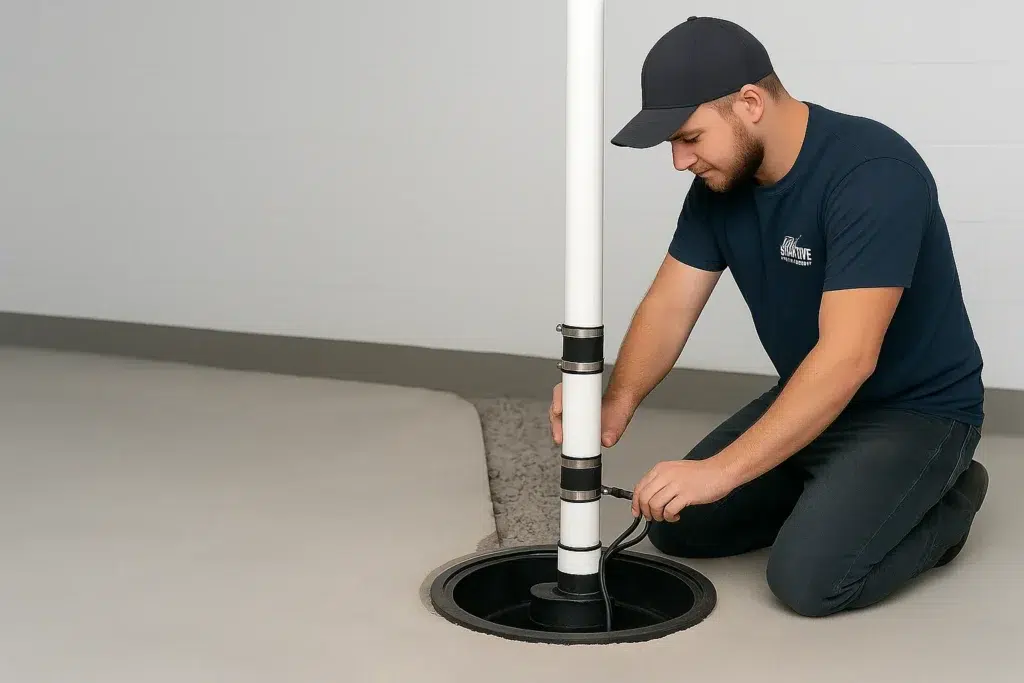
Understanding Sump Pumps: Function and Installation in Basements
The second category of pump is the sump pump, employed to remove accumulated water from a basement or crawl space. Sump pumps are typically installed in a sump pit, a cavity excavated at the lowest point of the basement or crawl space. The sump pit collects water from the surrounding soil, and when the water level within the pit reaches a predetermined threshold, the sump pump is activated to discharge the water from the basement.
A review on electrical submersible pump head losses and methods to analyze two-phase performance curve, S Shahid, 2021
What Are the Key Components of a Sump Pump System?
Before exploring detailed troubleshooting, recognise the core parts of every sump pump installation:
| Component | Role | Why It Matters |
|---|---|---|
| Float switch | Detects water level and activates the pump motor | Ensures automatic operation without manual input |
| Sump pit | Collection basin for groundwater | Prevents water from spreading across the floor |
| Discharge line | Carries water from pit to safe discharge point | Directs moisture away from foundation |
| Check valve | Prevents backflow into pit | Maintains pump readiness and avoids cycling loss |
| Motor and impeller | Powers water removal | Determines flow rate and pump durability |
Each component must work in harmony to protect against basement flooding and mould growth, so understanding their function sets the stage for effective troubleshooting and maintenance.
What Are the Most Common Sump Pump Problems and How Can You Fix Them?
Identifying and resolving sump pump malfunctions quickly prevents costly water damage and structural issues. Most failures stem from clogged discharge lines, float switch faults, power outages, or seasonal freeze-ups. By diagnosing symptoms promptly and applying the right remedy, homeowners preserve pump performance and avoid emergency repairs.
How Do You Identify and Resolve Clogged Sump Pump Discharge Lines?
- Inspect the pipe for visible obstructions or kinks.
- Use a plumbing snake or high-pressure jet to clear accumulated debris.
- Flush the line with warm water to remove residual sediment.
Cleared discharge lines restore efficient water removal, preventing motor overheating and premature pump failure.
What Causes Float Switch Malfunctions and How Can They Be Prevented?
- Clean the pit regularly to avoid silt accumulation around the float.
- Inspect and replace corroded switch contacts every two years.
- Secure loose wiring and test switch operation monthly.
Proactive maintenance of the float assembly ensures reliable activation and longer pump lifespan.
How Do Power Outages Affect Sump Pumps and What Are the Solutions?
- Install a battery backup system that engages automatically when power is lost.
- Consider a water-powered backup pump if municipal supply pressure supports Venturi operation.
Backup solutions maintain continuous flood defence, preserving peace of mind during storms and blackouts.
How Can You Prevent Sump Pump Discharge Line Freezing in Winter?
- Insulate exposed piping segments with foam sleeves or heat-tape wrap.
- Install a freeze guard valve near the pump that drains residual water when the pump stops.
- Bury discharge lines below the frost line when feasible.
Winterising your discharge system maintains uninterrupted drainage even in sub-zero conditions.
When Should You Call a Professional for Sump Pump Repairs?
DIY troubleshooting suits minor clogs and routine cleaning, but certain issues demand expert intervention:
- Repeated float switch failures despite cleaning.
- Burnt-out motors or electrical shorts.
- Unusual noises indicating bearing or impeller damage.
- Structural cracks or foundation settlement around the pit.
Certified technicians provide thorough diagnostics, warranty-backed replacements, and free consultations to restore reliable protection.
New Jersey Sump Pump Replacement and Installation Costs
New Jersey sump pump projects vary widely in cost depending on equipment quality, labour rates, and local permitting requirements. Replacement and installation expenses typically range from moderate DIY budgets to professional services covered by warranties that ensure long-term performance and homeowner confidence.
What Factors Influence the Cost of Sump Pump Installation?
| Cost Factor | Impact on Total Price | Consideration |
|---|---|---|
| Pump type | High-end submersible and backup systems cost more | Evaluate flood risk and noise preferences |
| Labour and permits | Union labour rates and permit fees vary by county | Factor in inspection and compliance requirements |
| Discharge line length | Longer runs require more piping and insulation | Plan route to avoid grading or landscaping work |
| Pit excavation | New pits involve concrete cutting and disposal | Reusing existing pits reduces labour |
Accurate estimates depend on a site-specific assessment of basement layout, soil conditions, and homeowner priorities.
How Much Should You Expect to Pay for Sump Pump Replacement?
On average, homeowners invest between $1,200 and $2,500 for a professional replacement of a quality submersible pump, with prices toward the higher end including battery backup or heavy-duty cast-iron units. Combining replacement with routine maintenance often reduces emergency call-out fees and extends overall service life.
What Are the Long-Term Maintenance Costs for Sump Pumps?
Annual maintenance—including cleaning the pit, testing float switches, inspecting the check valve, and verifying battery health—typically costs $100 to $200 when performed by a qualified technician. Investing in preventative care reduces the likelihood of major failures and costly emergency repairs.
How Does Investing in a Quality Sump Pump Protect Your Home Value?
A reliable, warrantied sump pump installation enhances property appeal and resale value by assuring potential buyers that basement flooding and mould issues have been professionally addressed. Energy-efficient motors, integrated alarms, and backup systems position your home as low-risk and well-maintained, commanding higher offers in competitive markets.
How Do You Choose the Right Sump Pump for Your Basement or Crawl Space?
Selecting the optimal pump requires matching machine capacity to water inflow rates, environmental conditions, and space constraints. Assessing horsepower, material, and switch type ensures peak performance under local flood patterns and foundation designs.
What Sump Pump Size and Capacity Do You Need for Your Home?
- Basements under 1,000 sq ft typically need a 1/3 HP pump with 3,000 GPH capacity.
- Larger or stone-lined basements may require 1/2 HP or greater units rated above 4,000 GPH.
Matching capacity to site conditions prevents prolonged run cycles and motor strain.
Which Features Should You Consider When Selecting a Sump Pump?
Key attributes influence reliability, noise, and maintenance frequency:
- Horsepower rating for adequate flow.
- Material construction—cast iron increases durability.
- Switch type—vertical floats suit shallow pits, tethered floats for debris mitigation.
- Integrated alarms to signal malfunctions.
Choosing features aligned to your basement’s water volume and maintenance preferences optimises performance and lifespan.
How Do Battery Backup and Combination Systems Enhance Protection?
Combination systems pair an electric primary pump with a secondary battery-powered unit that engages automatically during power failures, while some integrate water-powered jets for triple-layer reliability. This multi-pump approach prevents basement floods even under heavy storms and grid outages, delivering uninterrupted protection.
What Are the Best Sump Pump Brands for Reliability and Performance?
| Brand | Key Feature | Benefit |
|---|---|---|
| Zoeller | Cast-iron construction | Exceptional durability |
| Wayne | Dual float switch design | Precise activation and redundancy |
| Liberty Pumps | Integrated alarm system | Immediate malfunction alerts |
Selecting a proven brand backed by professional installation services ensures long-term reliability and comprehensive warranties.
What Are the Essential Maintenance Tips to Extend Your Sump Pump’s Lifespan?
Regular care keeps every component—from float switch to check valve—functioning optimally, reducing emergency failures and extending equipment longevity. A structured maintenance schedule tailored to seasonal shifts and regional demands ensures your system stands ready year-round.
How Often Should You Test and Clean Your Sump Pump?
Perform a full system test and pit cleaning every three months by filling the pit with water to activate the pump, inspecting the float switch for free movement, and removing sludge or debris with a wet-vacuum. Consistent quarterly checks prevent sediment build-up and ensure automatic operation.
What Seasonal Maintenance Is Needed to Prepare for Winter?
Before freezing temperatures arrive, inspect discharge lines for insulation integrity, wrap exposed piping with heat-tape, verify the freeze guard valve drains properly, and test battery backups. Winter-ready pumps maintain flow and prevent ice blockages during critical cold snaps.
How Can You Troubleshoot Common Maintenance Issues?
When the pump runs but fails to remove water, check for a stuck impeller or blocked intake screen. If the pump cycles on and off rapidly, adjust float switch sensitivity or realign the switch arm. Address abnormal noises by lubricating bearings or replacing worn impellers.
When Is It Time to Replace Your Sump Pump?
Signs that signal end-of-life include metal corrosion, frequent cycling, excessive motor noise, or loss of flow capacity below 70% of rated GPH. When maintenance no longer restores reliable operation, professional replacement with upgraded components ensures continued protection.
How Does a Sump Pump Compare to Other Basement Waterproofing Solutions?
While sump pumps actively remove water, other methods—such as French drains or dehumidifiers—address moisture differently. Understanding each system’s mechanism and use case helps homeowners design a layered defence that suits their basement’s unique vulnerabilities.
What Are the Differences Between Sump Pumps and French Drains?
| Solution | Mechanism | Best Use Case |
|---|---|---|
| Sump Pump | Pumps water out of a pit when levels rise | Basements prone to significant flooding |
| French Drain | Channels water through gravel-lined trench | Walls and perimeter seepage control |
Pairing both systems can intercept wall leakage and evacuate collected water efficiently.
Can a Dehumidifier Replace a Sump Pump for Basement Moisture Control?
No, dehumidifiers remove airborne humidity but cannot handle standing water or rising groundwater. While dehumidification improves air quality, a sump pump remains essential for flood prevention and structural protection.
How Do Combined Waterproofing Systems Work for Maximum Protection?
Integrated strategies use interior French drains to collect seepage, sump pumps to eject water, and dehumidifiers to control humidity. This multi-layered approach ensures that both liquid water and moisture vapor are managed, creating a dry, healthy basement environment.
What Local Factors Affect Sump Pump Performance and Installation in New Jersey?
Regional soil, weather patterns, and municipal regulations uniquely influence sump pump design and placement in New Jersey homes. Tailoring installations to these local conditions maximises system effectiveness and ensures code compliance.
How Do New Jersey Soil Types and Weather Impact Basement Water Issues?
Clay-rich soils common in northern New Jersey expand when wet, exerting hydrostatic pressure against foundation walls that drives water into basements. Coastal areas with sandy substrate allow rapid groundwater movement, requiring higher-capacity pumps to handle influx rates during heavy downpours.
What Are the Local Regulations for Sump Pump Discharge Lines in New Jersey?
Most municipalities mandate that discharge outlets be at least 10 ft from foundations and flow onto permeable surfaces rather than sewers, preventing backflow risks and stormwater surcharge. Permits often require inspection of discharge routing and pipe sizing to comply with local building codes.
How Can Crawl Space Sump Pumps Benefit New Jersey Homeowners?
Installing a low-profile sump pump in crawl spaces prevents moisture accumulation, wood rot, and mould growth by removing infiltrating water before it contacts joists and insulation. Crawl space pumps combined with vapor barriers create a healthier under-floor environment and protect structural elements from decay.
Efficient sump pump selection, professional installation, and diligent maintenance form the cornerstone of comprehensive basement waterproofing. By understanding pump types, troubleshooting issues, evaluating costs, adhering to local requirements, and integrating multi-layered moisture control, New Jersey homeowners secure lasting protection and enhanced property value. For tailored recommendations, free consultations, and warrantied installation services, consult with local waterproofing experts who specialise in sump pump solutions designed to withstand regional challenges.