
Designing Your French Drain: Complete Guide to Effective French Drain System Design and Planning
If you’re researching french drain design NJ, this step-by-step guide will walk you through every key phase to ensure effective installation.Water intrusion into basements and soggy yards can lead to costly repairs, mold growth, and structural damage without proper subsurface drainage design. Effective French drain design creates a controlled pathway for groundwater to flow away from foundations, preventing hydrostatic pressure and dampness. In this guide, homeowners in New Jersey will learn how to select the right components, calculate depth and slope, compare interior versus exterior systems, avoid common mistakes, schedule installation, maintain longevity, and tailor layouts to local soil and rainfall patterns. Whether you’re planning a perimeter drain around your home or tackling a waterlogged yard, expert tips on trench structure, pipe selection, aggregate materials, and filter fabric specifications will ensure your drainage design stands up to heavy rains and clay soils. Read on to discover how to achieve a durable, efficient French drain system and when to request a free consultation with drainage specialists.
What Are the Essential Components of a French Drain System?
A French drain system consists of key elements that work together to divert water away from vulnerable areas. Combining a perforated pipe with porous aggregate, wrapped in filter fabric and housed in a correctly sized trench, this subsurface drainage solution redirects groundwater and surface runoff, keeping foundations dry and preventing soil erosion. For example, placing a 4-inch perforated PVC pipe surrounded by ¾-inch crushed stone and encased in geotextile fabric beneath a yard slope provides a low-maintenance channel for steady water flow.
For professional help, check out our French Drain Installation NJ services. Selecting the proper components enhances system longevity and performance. The trench width and shape determine aggregate volume and hydraulic capacity, while filter fabric prevents sediment intrusion. Each component must be compatible to maintain consistent permeability and resist clogging over decades of seasonal freeze-thaw cycles in New Jersey’s climate.
What Types of Perforated Pipes Are Best for French Drains?
Perforated PVC and corrugated polyethylene pipes are the most common choices for French drains. PVC offers rigid walls that resist soil weight and backfill compaction, while corrugated pipe provides flexibility for curved trenches and uneven terrain. Both include slotted perforations to collect water evenly along the pipe length.
Which Gravel and Aggregate Materials Optimize Drainage?
Learn more from this comprehensive How to Install a French Drain guide. Crushed stone or gravel ranging from ⅜- to ¾-inch effectively surrounds drain pipe, providing high porosity and preventing fine soil infiltration. Rounded pea gravel is less permeable under pressure, so angular crushed stone is preferred for stable void spaces and sustained flow under heavy loads.
Why Is Geotextile Filter Fabric Crucial in French Drain Design?
A non-woven geotextile filter fabric wrapped around the aggregate acts as a barrier that allows water to pass while blocking silt and clay particles. This fabric extends the life of the gravel envelope by preventing clogging and maintaining long-term permeability.
How Does the Trench Structure Affect Drainage Efficiency?
Trench width, depth, and side-wall angle control aggregate volume and hydraulic gradient. A 12- to 18-inch wide trench with sloped walls provides enough stone to surround the pipe and maintain consistent water capture. A well-shaped trench minimizes soil collapse and aggregates settling over time.
| Pipe Material | Diameter Range | Drainage Advantage |
|---|---|---|
| Rigid PVC | 3–6 inches | Structural strength under compaction |
| Corrugated Polyethylene | 4 inches typical | Flexible installation in uneven ground |
| HDPE | 4–8 inches | High chemical resistance and durability |
Rigid PVC provides stability in perimeter drains, while corrugated pipe adapts to landscape curves for yard drainage.
How Do You Calculate the Proper Depth and Slope for a French Drain?
Determining depth and slope ensures that water travels by gravity from the source to the discharge point without stagnation. A French drain depth of 18–24 inches for yard applications and 24–36 inches around foundations allows effective interception of shallow groundwater and surface runoff. Incorporating a minimum slope of 1 percent (1 ft drop per 100 ft run) creates sufficient hydraulic head to move water through the pipe and out to a suitable outlet, such as a dry well or daylight point.
Calculations begin by measuring the elevation difference between the highest water entry point and the discharge location. Soil type in New Jersey—often dense clay—affects infiltration and may require additional depth or steeper slopes to compensate for slower percolation. Sandy loam soils permit shallower drains, while clay-rich soils demand deeper trenches and consistent gradient to maintain flow.
What Is the Recommended French Drain Depth for Different Applications?
For surface yard drainage, install the pipe 18–24 inches below grade. Perimeter drains around basements typically require 24–36 inches to intercept subsurface water and relieve hydrostatic pressure on foundation walls.
How Do You Determine the Minimum Slope for Effective Water Flow?
A 1 percent slope delivers reliable gravity-driven flow without risking pipe washout or sediment buildup. Use a laser level or string line over measured intervals to verify a consistent drop of 1 inch per 8.3 feet.
How Does Soil Type in New Jersey Impact Depth and Slope Requirements?
Clay-heavy soils common in New Jersey exhibit low permeability, so deeper drains and maintained slopes are essential to ensure water enters the pipe quickly. In well-draining sandy soils, slopes can be slightly reduced while preserving hydraulic efficiency.
What Are the Key Differences Between Interior and Exterior French Drain Solutions?
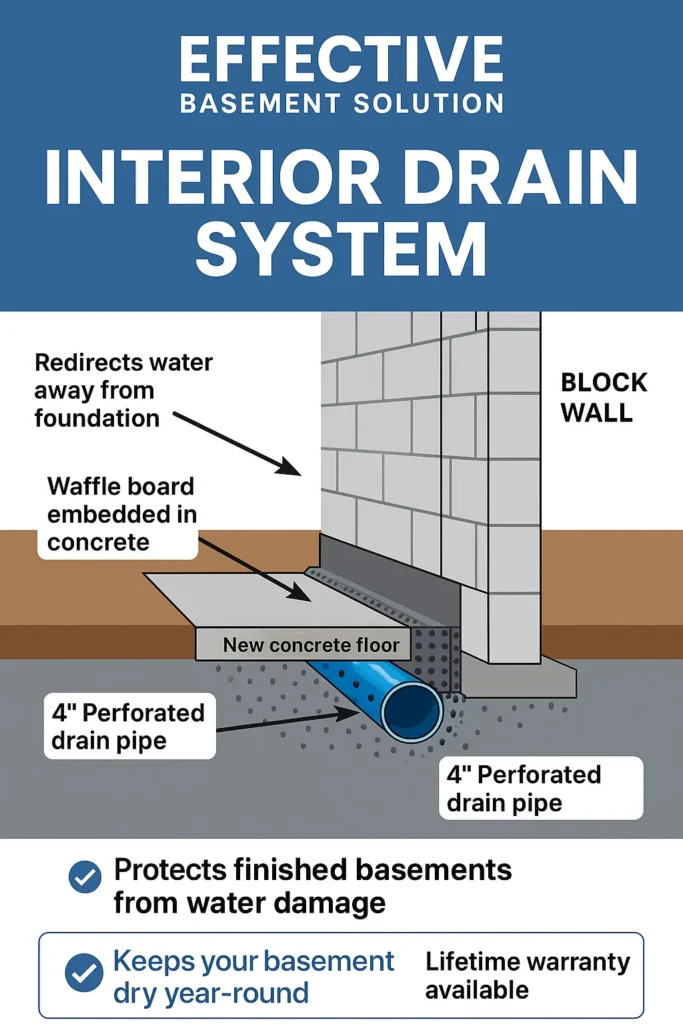
Interior and exterior French drain systems each protect structures from water intrusion but serve different contexts. Exterior drains are installed outside to intercept water before it reaches the foundation, reducing hydrostatic pressure and preventing seepage. Interior perimeter drains are built inside basements, capturing water that enters through wall cracks or beneath floor slabs and channeling it to a sump pump for removal. Choosing the correct solution depends on site conditions, accessibility, and budget.
Interior systems often integrate with waterproofing membranes and connect to a sump basin, offering a hidden, year-round barrier against water damage and mold growth. Exterior systems require excavation around the building footprint, making them more visible but providing the first line of defense that lowers moisture against foundation walls.
When Should You Choose an Exterior French Drain for Yard Drainage?
Exterior drains excel at managing surface water accumulation in gardens, patios, and sloping landscapes. They are ideal when preventing runoff from reaching foundations and when exterior excavation is feasible without disrupting interior finishes.
How Do Interior French Drains Protect Basements from Water Damage?
Interior perimeter drains capture water that has already infiltrated and direct it to a sump pump, effectively lowering basement water levels and preventing leaks under concrete slabs or through wall joints.
What Are the Installation Challenges for Interior vs. Exterior Systems?
Exterior installations require trenching around foundations, landscape restoration, and careful discharge planning. Interiors must navigate finished basements, structural beams, and under-slab conditions, often involving cutting and reinforcing existing floors.
Interior vs Exterior French Drains: Key Differences & Benefits
Mistakes in design and installation frequently lead to system failure, clogging, and inadequate water diversion. Placing the pipe too shallow or without consistent slope causes water pooling and sediment deposition. Omitting geotextile fabric allows fine soil particles to invade aggregate, reducing porosity and leading to clogging within months. Selecting improper aggregate size—such as pea gravel—fails to maintain void spaces under compression, causing hydraulic resistance.
Prevent these errors by following precise trench depth and slope guidelines, wrapping aggregate fully in filter fabric, using angular crushed stone, and locating a robust discharge outlet away from the foundation. Proper planning and materials selection deliver a durable drainage path that minimizes maintenance and prevents costly retrofits.
How Does Incorrect Pipe Placement Lead to Drainage Failure?
Shallow pipe placement intercepts only surface water, leaving subsurface flows unaddressed. Zero or variable slope causes water to stagnate, eroding stone and causing blockages.
Why Is Proper Discharge Outlet Design Vital for Drain Effectiveness?
A well-designed outlet, such as a daylight opening or dry well, ensures collected water exits the system rapidly. Backups at the discharge lead to oversaturation and return flow into the trench.
What Are the Risks of Using the Wrong Gravel or Filter Fabric?
Using pea gravel or coarse landscape rock can collapse under soil weight, while permeable landscape fabric fails to filter fine particles, accelerating sediment buildup and reducing drain capacity.
How Does the French Drain Installation Process Work and When Should You Hire a Professional?
Installing a French drain involves a series of planned stages to ensure optimal performance. First, site assessment identifies water sources and elevation changes. Second, trench excavation follows calculated depth and slope. Third, a geotextile fabric liner is placed, followed by a pipe bed of crushed stone. Fourth, the perforated pipe is laid and covered with additional aggregate. Finally, the system is capped with filter fabric and backfilled with soil, restoring the surface. This process benefits from professional equipment and expertise, especially when dealing with complex foundations or tight spaces.
What Are the Step-by-Step French Drain Installation Stages?
- Conduct site survey and elevation mapping.
- Excavate trench to required depth and width.
- Line trench with geotextile filter fabric.
- Place a base layer of angular crushed stone.
- Install perforated drainage pipe along the trench.
- Cover pipe with additional aggregate and wrap fabric.
- Backfill with soil and compact to grade.
Completing these stages in sequence preserves slope accuracy and ensures all components function together.
When Is Professional French Drain Installation Recommended?
Professional installation is advised for perimeter drains around foundations, deep trenches near utilities, and interior systems beneath concrete slabs. Experts handle permit requirements, ensure structural safety, and verify compliance with local building codes.
How Do French Drain Costs Vary in New Jersey?
Material and labor rates in New Jersey typically range from $25 to $50 per linear foot for professional exterior drains. Factors include trench depth, pipe diameter, soil conditions, and landscape restoration needs. Interior installations may cost more due to concrete cutting and sump pump integration.
How Can You Request a Free French Drain Consultation from Experts?
To explore tailored drainage solutions and secure a no-obligation site review, contact our New Jersey drainage specialists. A professional will assess your property, recommend the optimal design, and provide transparent cost estimates for installation services.
How Do You Maintain Your French Drain for Longevity in New Jersey’s Climate?
Regular maintenance keeps a French drain functioning through freeze-thaw cycles, heavy rainfall, and seasonal debris. Annual inspections should include verifying outlet flow, removing surface soil buildup over the trench, and flushing accessible sections with water to clear sediment. Performing these tasks prevents clogs and extends the lifespan of both the aggregate and pipe.
French drains installed with high-quality crushed stone, durable pipes, and non-woven filter fabric can last 25 to 50 years in New Jersey’s environment, depending on soil acidity, root intrusion, and load factors. Following best practices for seasonal care—such as clearing roof gutters, trimming invasive roots near the drain line, and verifying sump pump operation—ensures reliable performance.
What Regular Inspections Are Needed to Prevent Drain Clogging?
Inspect discharge points for clear water flow, check for pooling along the trench, and probe test holes to confirm aggregate permeability. Remove debris and replace filter fabric as needed.
How Long Do French Drains Typically Last in New Jersey?
With proper design and materials, a French drain can operate effectively for 25–50 years. Corrosion-resistant pipe and non-woven fabric protect against soil intrusion and mechanical wear.
What Are Best Practices for Seasonal French Drain Care?
Before winter, remove surface debris and ensure the outlet is free of ice. After heavy rains, examine the trench for washouts and reinforce any exposed aggregate. Trim nearby vegetation to prevent root infiltration.
How Can You Design a French Drain System Tailored to New Jersey Homes?
Local conditions in New Jersey—from clay soils in central counties to sandy loams near the shore—directly influence drainage requirements. High annual rainfall and storm surges demand subsurface systems that can handle fluctuating water tables. Building codes often require permits for exterior excavation and compliance with stormwater management regulations. Crafting a layout that negotiates property boundaries, utility lines, and landscape features ensures both performance and legal conformity.
Design strategies include mapping contour lines to align trench routes with natural water flow, integrating connection points for roof downspouts, and planning discharge into storm drains or dry wells approved by local authorities. Adapting pipe diameters and trench depths to soil percolation rates achieves consistent performance across varied New Jersey terrains.
How Do New Jersey Soil and Rainfall Patterns Affect Drainage Design?
Dense clay soils slow infiltration and necessitate deeper trenches and maintained slopes. Coastal areas with sandy soils allow for shallower installations but require erosion control measures for high-intensity storms.
What Local Building Codes and Permits Should You Consider?
Most municipalities mandate excavation permits for exterior drains and may require stormwater management plans. Interior systems often need plumbing permits when integrating a sump pump.
How Do You Plan French Drain Layouts for Different New Jersey Property Types?
For urban lots, perimeter drains are routed to existing storm sewers or property edges. Rural properties may employ dispersed dry wells or vegetated swales. Sloping sites benefit from gravity-fed daylight outlets where terrain permits.
French drain design that accounts for soil, rainfall, code requirements, and property layout ensures lasting protection against basement water intrusion and yard flooding.
French drain systems serve as a vital defense against moisture intrusion, foundation damage, and landscape erosion in New Jersey homes. By selecting the right components, calculating accurate trench dimensions, comparing interior and exterior approaches, avoiding design pitfalls, and scheduling professional installation, homeowners can secure a dry, stable foundation for decades. Regular inspections, seasonal maintenance, and adherence to local regulations further extend system longevity. For personalized guidance and free site evaluation, reach out to our certified drainage experts and take the first step toward a worry-free, water-resistant home environment.

r5585s