
Basement Waterproofing in Short Hills, New Jersey: Comprehensive Solutions and Cost Guide
Basement waterproofing is the set of strategies used to prevent water intrusion into below-grade spaces, and in Short Hills, New Jersey, local soil, lot slope, and seasonal storms make targeted waterproofing essential to protect home value and indoor health. This guide explains what causes wet basements in Short Hills, how hydrostatic pressure and foundation cracks drive leaks, and which systems—interior drainage, exterior membranes, sump pumps, and crawl space encapsulation—deliver durable results. Homeowners will learn how to evaluate signs of water damage, estimate realistic costs for common repairs, and compare solution trade-offs so they can prioritize safety and longevity. The article maps inspection and budgeting steps, compares interior versus exterior approaches, and outlines the professional process from assessment to warranty-backed follow-up. Throughout, we integrate local considerations for Short Hills and practical next steps, including how to request a no-obligation on-site estimate from local specialists when an accurate quote is required.
What Are the Common Basement Problems in Short Hills, NJ?
Basement problems in Short Hills are typically driven by a combination of regional rainfall patterns, hillside lot grades, and soil types that increase hydrostatic pressure against foundation walls. Common issues include visible water intrusion through walls and floors, periodic basement flooding after heavy storms, persistent condensation and high humidity, mold growth from chronic moisture, and visible signs such as efflorescence or foundation cracks. These problems degrade indoor air quality and can accelerate structural deterioration when left unaddressed, so early detection is essential to limit long-term repair needs. Understanding local failure modes helps homeowners prioritize diagnostics and choose solutions that match both the symptom and the underlying cause, which we explore in the following technical subsections.
Basement water problems in Short Hills commonly present in predictable patterns that point to different root causes. Identifying whether water enters via wall seams, through floor joints, or via clear pipe leaks changes the remediation strategy, so the next sections explain hydrostatic pressure mechanics and visual signs of foundation damage to guide assessment and action.
How Does Hydrostatic Pressure Cause Basement Water Intrusion?
Hydrostatic pressure is the force exerted by groundwater that accumulates against foundation walls and under slab floors, and in Short Hills this pressure often rises after prolonged rain or snowmelt. Water moves from high-pressure zones in saturated soil toward lower-pressure spaces like basements, driving moisture through porous concrete, mortar joints, and cracks; this mechanism explains why water can appear even when surface grading looks acceptable. Preventive measures include controlling exterior drainage, installing exterior membranes to block seepage, and using interior drainage systems and sump pumps to intercept water before it enters living spaces. Recognizing hydrostatic pressure as the driver of many leaks helps homeowners choose permanent drainage-first solutions rather than short-term surface fixes.
Understanding hydrostatic pressure also clarifies why interior-only patching often fails: without relieving the force of groundwater, patched spots will likely recur; the following subsection outlines visible signs that differentiate minor cracks from structural concerns.
What Are the Signs of Foundation Cracks and Leaks?
Foundation cracks and leaks show several visual and functional signs that homeowners can monitor, and distinguishing crack types helps prioritize repairs effectively. Hairline cracks and surface efflorescence usually indicate non-structural shrinkage or moisture migration, while step and diagonal cracks near load-bearing points may signal settlement or lateral pressure that requires structural attention. Associated leak indicators include damp baseboards, water stains, peeling paint, warped flooring, and visible mold patches; tracking when and where moisture appears—during rain, year-round, or only with rapid melt—narrows the possible causes. When cracks are wide, run horizontally, or are accompanied by lateral wall bowing, a professional structural assessment should follow to determine if foundation repair must precede waterproofing.
Clear diagnosis of crack severity guides effective budgeting and repair sequencing, which leads directly into realistic cost expectations for Short Hills homeowners.
How Much Does Basement Waterproofing Cost in Short Hills, NJ?
Basement waterproofing costs in Short Hills vary by project scope, access, soil conditions, and whether interior or exterior work is required, and typical local ranges help homeowners set realistic budgets. Common projects include installing interior drainage systems with sump pumps, exterior excavation and membrane application, repair of foundation cracks, and crawl space encapsulation; each has distinct price drivers such as excavation complexity, permit requirements, and material specifications. Below is an EAV-style cost comparison that clarifies project types, typical price bands, and the main factors that drive those prices for Short Hills properties.
The following table helps estimate budgets before requesting a site-specific quote.
| Project Type | Typical Price Range | Key Cost Drivers |
|---|---|---|
| Interior drainage with sump pump | $4,000 – $12,000 | Basement finish level, floor removal, discharge routing |
| Exterior excavation & membrane | $8,000 – $25,000 | Depth of excavation, landscaping restoration, soil type |
| Foundation crack repair (injection/patch) | $700 – $5,000 | Crack location, structural vs. non-structural assessment |
| Crawl space encapsulation | $3,000 – $10,000 | Square footage, insulation, dehumidifier addition |
This table demonstrates how invasive excavation and landscape restoration escalate cost, whereas targeted interior drainage often delivers cost-effective mitigation for active leaks. After reviewing this overview, homeowners should request a no-obligation in-person estimate to obtain a precise quote tailored to Short Hills soil and grading.
What follows is a breakdown of the specific factors that most influence pricing and how to budget for a wet-basement repair project.
What Factors Influence Basement Waterproofing Prices?
Several variables determine waterproofing costs, and understanding them helps homeowners compare proposals and avoid scope creep. The primary factors are project scope (localized crack repair vs. full perimeter drainage), access (tight mechanical rooms or finished basements increase labor), soil conditions (clay-heavy soils raise hydrostatic pressure and excavation difficulty), and required materials (high-performance membranes or stainless steel drains cost more). Labor availability, local permitting, landscape restoration needs, and emergency repairs after active flooding also drive price. Local Short Hills lot grades and home styles—such as older houses with partial basements—can increase time and complexity, so transparent estimates should itemize each cost driver.
Being informed about these variables reduces surprises in contractor bids and prepares homeowners to make value-based comparisons, which is why the next subsection offers a stepwise budgeting checklist.
How to Budget for Wet Basement Repair and Foundation Crack Repair?
Budgeting effectively begins with a structured approach that separates assessment, repair, and contingency to protect against unexpected findings. Start with a professional inspection and moisture mapping, then prioritize repairs by safety and structural risk, obtain multiple itemized quotes, and set aside a contingency typically between 10–20% of the estimate for unforeseen excavation or structural remediation. A simple budgeting template splits costs into inspection, primary waterproofing work, landscape restoration, and post-installation maintenance to clarify short- and long-term expenses. Planning for routine maintenance—sump pump checks, dehumidifier servicing, and grading adjustments—reduces lifecycle costs and prevents emergency repairs that inflate total spend.
Following a staged budget plan helps homeowners align repairs with both safety needs and financial planning, and the next section compares the practical solutions available for these problems.
What Are the Effective Basement Waterproofing Solutions Available?
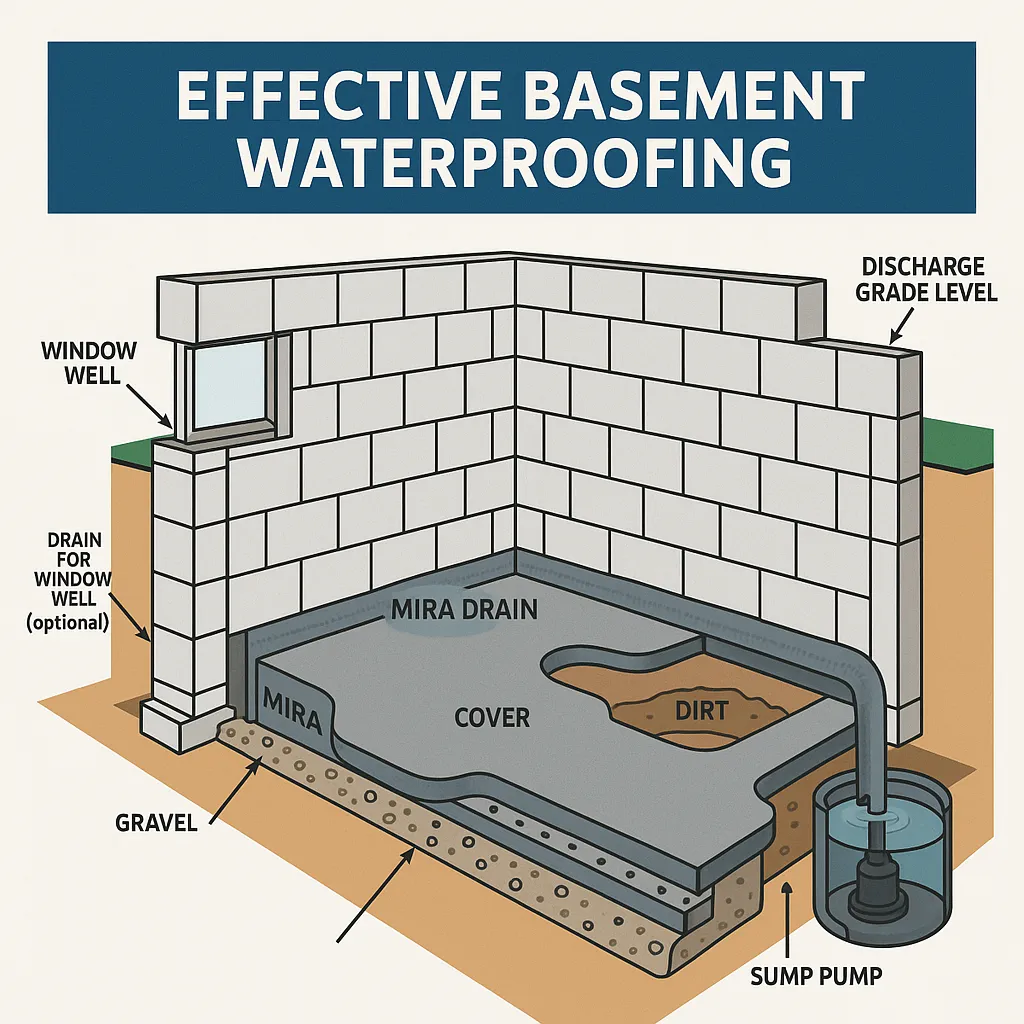
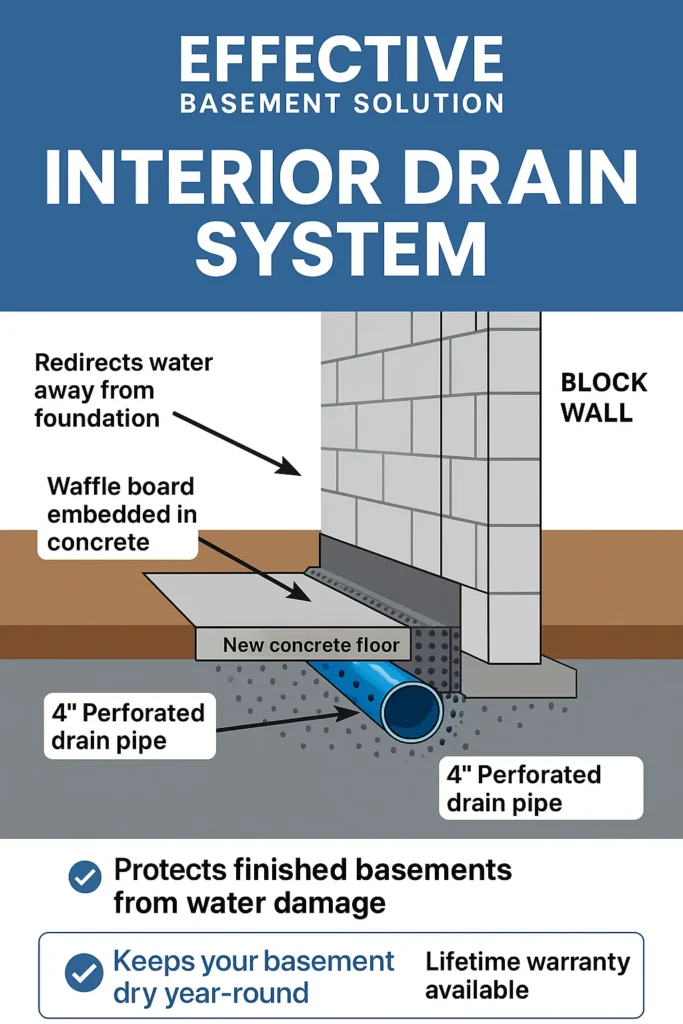
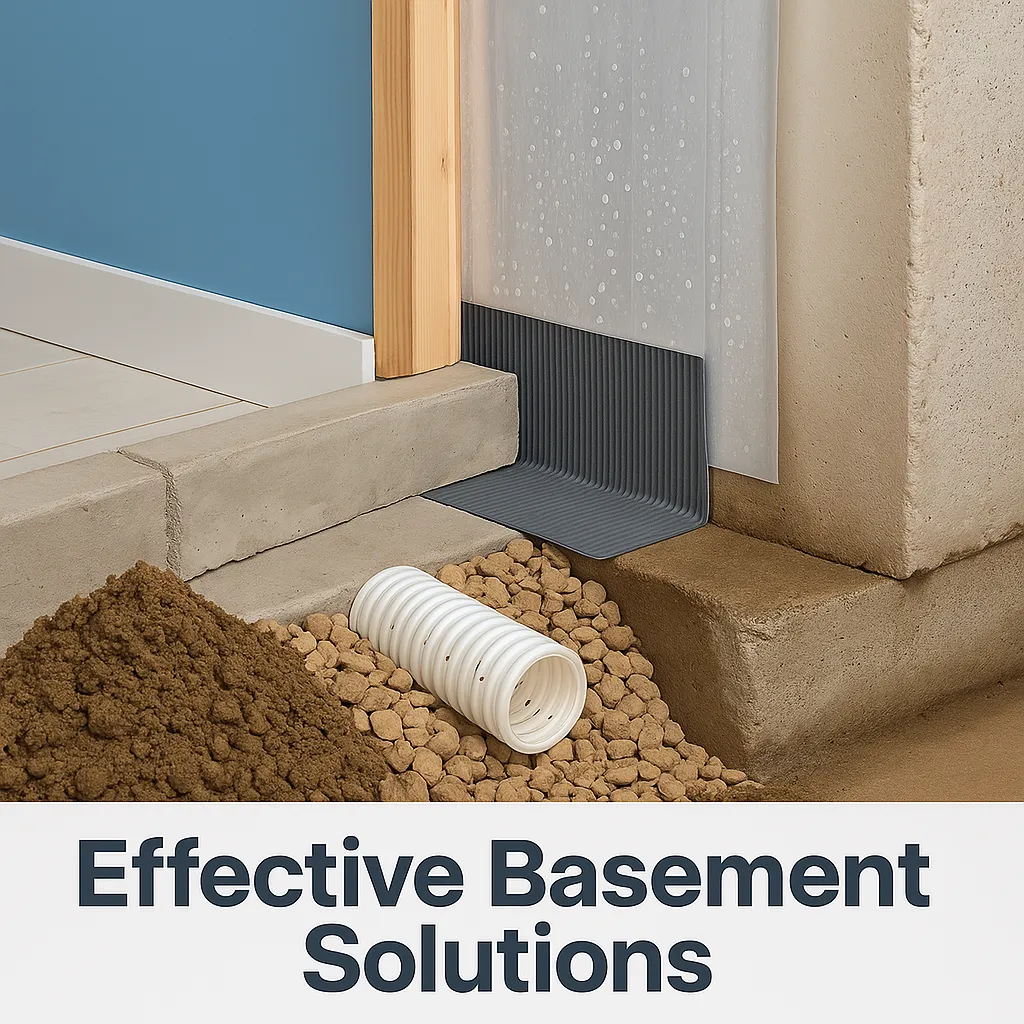
Effective basement waterproofing solutions fall into two broad categories—interior systems that manage water after it reaches the foundation and exterior systems that stop water before it contacts the wall—each suited to different site conditions and budgets. Interior options include perimeter French drains, interior drainage membranes, and sump pump systems that collect and evacuate water efficiently, while exterior solutions involve excavation, application of waterproof membranes, and exterior drainage to divert groundwater. Choosing between them depends on factors like hydrostatic pressure, finished basement areas, and landscape constraints; sometimes a hybrid approach is the most durable long-term solution. Below is an EAV-style comparison to help homeowners choose the right approach for their Short Hills home.
| Solution Type | Best For | Pros / Cons / Typical Lifespan |
|---|---|---|
| Interior drainage & sump pump | Active leaks in finished basements | Pros: less exterior disturbance; Cons: may not reduce hydrostatic pressure; Lifespan: 10–25 years for pump systems |
| Exterior membrane & drain | Long-term prevention in unlandscaped yards | Pros: addresses source; Cons: higher cost and disruption; Lifespan: 20+ years with quality membrane |
| Foundation crack repair | Localized leaks or structural cracks | Pros: affordable for small issues; Cons: may need structural follow-up; Lifespan: varies by method |
This comparison clarifies that while interior systems control symptoms efficiently, exterior strategies can provide a more permanent reduction of groundwater pressure; homeowners should weigh lifespan, disruption, and cost.
For readers who want to move from planning to action, local waterproofing specialists can provide a free consultation and on-site estimate to match solutions to Short Hills-specific site conditions and priorities. Choosing an appropriate solution requires understanding not only systems but also how sump pumps function practically, which the next subsection explains.
How Do Interior and Exterior Waterproofing Methods Compare?
Interior and exterior methods solve water problems by different mechanisms: interior methods intercept and redirect water that enters the structure, while exterior methods block or divert water before it reaches the foundation. Interior systems generally require less excavation and can be installed without disturbing landscaping, but they often rely on mechanical removal like sump pumps and may need regular maintenance. Exterior systems are more invasive and costly but reduce hydrostatic pressure and can prevent water entry at the source, delivering longer-lived protection when properly installed. Decision factors include basement finish level, budget constraints, soil composition, and whether the objective is remediation or prevention; combining targeted exterior work with interior drainage often optimizes performance.
Comparing these trade-offs helps homeowners choose a balanced plan that matches their risk tolerance and long-term goals, and the next subsection details why sump pumps are commonly part of that plan.
What Are the Benefits of Sump Pump Installation in Short Hills Homes?
A sump pump prevents basement flooding by collecting groundwater from an interior drainage system and pumping it away from the foundation, and in Short Hills a properly sized pump is a core defensive element against storm-induced water entry. Types include pedestal and submersible standard pumps, with battery backup or generator-capable systems recommended to maintain protection during power outages; smart pumps with remote alerts are increasingly common for proactive monitoring. Routine maintenance—seasonal testing, float checks, and cleaning of screens—extends lifespan and reduces failure risk, while regular replacement every 7–15 years depending on usage protects against pump wear. Installing a sump pump with a reliable discharge route and backup power is a practical, cost-effective step that complements other waterproofing measures.
Sump pumps are effective when paired with an interior drainage system that directs water to the sump basin, and the following list highlights essential maintenance practices for these systems.
- Test the pump monthly: Running a manual test verifies the pump activates and discharges correctly under load.
- Inspect the float switch: Ensuring the float moves freely prevents failure during high water events.
- Keep discharge lines clear: Clear lines prevent backup and freezing in winter, maintaining flow away from the foundation.
- Install a battery backup: Backup power maintains operation during outages that often coincide with storms.
Routine maintenance reduces emergency failures and extends system life, and homeowners who prefer professional support can include maintenance plans as part of their service agreement.
How Does Crawl Space Encapsulation Prevent Moisture and Mold?
Crawl space encapsulation is a system-level approach that seals the crawl space, installs a continuous vapor barrier, conditions the space or adds dehumidification, and thereby prevents moisture migration into living areas; this reduces mold risk and improves HVAC efficiency. The encapsulation assembly typically includes a heavy-duty vapor barrier on floors and walls, sealed vents, insulation at rim joists, and a dedicated dehumidifier or conditioned air connection to control humidity. By eliminating soil-to-air vapor transfer and sealing entry points for pests, encapsulation preserves wooden structural components, reduces dust and allergens entering the HVAC system, and stabilizes indoor humidity. Proper installation and component selection tailored to Short Hills soil and foundation types maximize the benefits and longevity of the system.
Below is a table itemizing encapsulation components, their functions, and homeowner benefits to clarify how each piece contributes to moisture control.
| Component | Function | Benefit |
|---|---|---|
| Vapor barrier | Blocks ground moisture from entering air | Reduces humidity and mold risk |
| Sealed vents & gaps | Prevents outside air and pests entering | Lowers intrusion of allergens and pests |
| Insulation at rim joists | Limits thermal bridging | Stabilizes interior temperatures and reduces energy loss |
| Dehumidifier | Controls relative humidity | Prevents condensation and protects structure |
What Are the Advantages of Crawl Space Encapsulation?
Encapsulation offers multiple homeowner advantages including improved energy efficiency, reduced mold risk, and extended structural life for floor framing and subfloor materials; measurable energy savings often appear through reduced HVAC cycling. Encapsulation also reduces pest entry and odors by sealing the crawl space from the exterior environment, which contributes to healthier indoor air for occupants and reduces strain on heating and cooling systems. Quantified benefits vary by home, but homeowners commonly report more consistent indoor humidity and lower allergy symptoms after installation. Monitoring humidity post-installation and scheduling dehumidifier maintenance ensure these advantages are preserved over time.
How Does Encapsulation Improve Indoor Air Quality and Energy Efficiency?
Encapsulation changes the crawl-space airflow regime by preventing humid, unconditioned air from entering the HVAC return and living spaces, which directly reduces mold spore circulation and dust infiltration. Lower humidity levels reduce the likelihood of microbial growth and off-gassing from moisture-damaged materials, improving perceived indoor air quality and occupant comfort. Energy efficiency improves because the HVAC system no longer conditions large volumes of humid air drawn from an unsealed crawl space, which reduces latent load and short cycling; this can produce measurable savings depending on climate and home tightness. When combined with targeted insulation and duct sealing, encapsulation delivers both health and efficiency dividends that benefit Short Hills homeowners year-round.
Given these benefits, homeowners should consider encapsulation when chronic crawl space moisture is present, and professional assessments help determine the right component set for each property.
Why Choose Local Experts for Basement Waterproofing in Short Hills?
Local experts bring knowledge of Short Hills-specific soil types, lot topography, and permitting processes that directly improves diagnostic accuracy and long-term results for waterproofing work. Specialists familiar with regional hydrostatic conditions and common foundation designs can recommend combinations of interior drainage, exterior membranes, or structural repair that best match the property and budget. Local providers also understand seasonal windows for excavation, typical restoration needs for area landscaping, and local subcontractor availability—factors that reduce project delays and unexpected change orders. For homeowners seeking confidence in both solution selection and post-installation support, engaging local specialists who offer written warranties and follow-up maintenance plans is a pragmatic choice.
Local professionals often provide a free consultation and on-site estimate to translate inspection findings into a prioritized, costed plan that aligns with Short Hills conditions and homeowner goals; this service helps ensure the selected strategy addresses the root cause rather than symptoms.
How Does Local Climate and Soil Affect Waterproofing Needs?
Short Hills features variable soil types and sloped lots that influence drainage and hydrostatic pressure, with heavier clay soils retaining water and sandy patches draining more readily; these differences change both the urgency and type of waterproofing required. Sloped properties may require grading adjustments, retaining structures, or engineered surface drainage to prevent concentrated runoff toward foundations, while flat lots with poor subsoil drainage often need comprehensive perimeter drainage systems. Seasonal rainfall, freeze-thaw cycles, and storm patterns determine when water pressure peaks and dictate whether permanent exterior measures or interior interception is more appropriate. Recognizing these local variables enables tailored solutions rather than one-size-fits-all fixes.
Understanding soil and climate effects leads naturally to the selection of appropriate materials and technologies, which we cover next.
What Technologies and Materials Do Short Hills Specialists Use?
Short Hills specialists employ durable membranes, advanced interior drainage tiles, sump systems with battery backup, and structural repair materials such as epoxy injection and carbon-fiber reinforcement where needed to stabilize foundations. Smart monitoring systems—like leak sensors and connected sump alarms—provide proactive alerts and reduce risk of unnoticed failures, while stainless steel drainage components and chemically resistant membranes extend service life in aggressive environments. Modern approaches favor hybrid strategies that combine exterior membranes where access allows with interior drainage for finished basements, leveraging material science and monitoring technology to deliver resilient outcomes. Selecting the right materials and monitoring options based on the property’s specific needs maximizes performance and reduces lifecycle costs.
Local experts can explain material trade-offs in a site visit and recommend monitoring and backup systems suited to homeowner risk preferences.
What Is the Basement Waterproofing Process and What to Expect?
The basement waterproofing process begins with a structured inspection, proceeds through a customized plan and professional installation, and concludes with testing, documentation, and recommended maintenance; this workflow ensures the chosen measures address the root cause and are verified post-installation. Homeowners can expect an initial assessment that maps moisture sources, evaluates foundation condition, and checks grading, plumbing, and gutter performance; the assessment informs a written scope that prioritizes structural safety and water control. Installation phases typically include preparation, controlled excavation if exterior work is required, installation of membranes or interior drains, sump pump placement, system testing, and cleanup, with timelines varying by solution complexity. Post-service support commonly includes system documentation, warranty details, and maintenance guidance to preserve performance over time.
A stepwise summary below captures the typical inspection-to-completion flow so homeowners know what to expect.
- Inspection and moisture mapping: Professionals identify entry points and quantify moisture sources to define scope.
- Design and estimate: A written plan recommends solutions and provides a detailed cost estimate.
- Installation: Contractors perform the agreed work—interior drains or exterior membranes—while minimizing disruption.
- Testing and documentation: Systems are operated under load and homeowners receive maintenance guidance and warranty information.
These steps provide a clear roadmap from problem identification to verified remediation, and the next subsections spell out inspection content and installation phases in more detail.
How Is the Initial Inspection and Customized Solution Designed?
During the initial inspection, professionals perform a checklist-driven assessment that includes moisture mapping, crack assessment, grading and landscape evaluation, plumbing leak checks, and sump pump condition review to build a complete picture of water pathways. Severity and frequency of water intrusion, finish-level priorities, and structural indicators determine whether interior, exterior, or hybrid strategies are recommended, and inspectors typically document findings with photos and a proposed scope of work. The deliverables from this phase should include a prioritized repair list, an itemized estimate, expected timeline, and recommended maintenance actions—allowing homeowners to make informed choices. A thorough inspection reduces the risk of unforeseen issues and clarifies whether immediate structural repairs are necessary before waterproofing.
This diagnostic-first approach ensures solutions are matched to cause, which leads directly into the practical steps of installation and follow-up.
What Are the Steps for Professional Installation and Post-Service Support?
Professional installation follows a phased workflow: site preparation and protective measures, excavation (for exterior work) or selective floor removal (for interior drains), installation of drainage components and membranes, sump pump and discharge setup, backfill and restoration, followed by testing and cleanup. Quality checks include leak testing, pump cycling, and visual inspections of sealed joints to confirm all components perform as intended before final sign-off. Post-service support commonly includes written workmanship and materials warranties, a recommended maintenance schedule for pumps and dehumidifiers, and optional annual inspections to verify continued performance. Clear documentation of the work scope, system components, and maintenance needs empowers homeowners to preserve functionality and protect investment over time.
Following professional installation and adherence to maintenance recommendations minimizes recurrence risk and sustains the home’s dry condition for years to come.