Expert Basement Waterproofing Services in Short Hills, NJ
Basement waterproofing involves techniques and systems designed to prevent groundwater and surface water from entering below-grade living spaces, thereby protecting the structural integrity and indoor air quality of homes in Short Hills, NJ. This article explores common basement problems faced by local homeowners, how hydrostatic pressure and local soil conditions contribute to leaks and cracks, and which waterproofing systems effectively address these issues. It also provides diagnostic signs to watch for, a breakdown of interior and exterior solutions such as interior perimeter drainage, French drains, sump pumps with battery backups, crawl space encapsulation, dehumidification, and structural reinforcement, along with transparent cost drivers and maintenance steps. The guide offers practical decision criteria—when to choose a quick interior fix versus a full drainage overhaul—and includes comparative tables and checklists to simplify planning. Practical next steps are also provided so homeowners can assess urgency and request a free inspection or estimate from a local specialist when ready.
What Are the Common Basement Problems in Short Hills NJ?
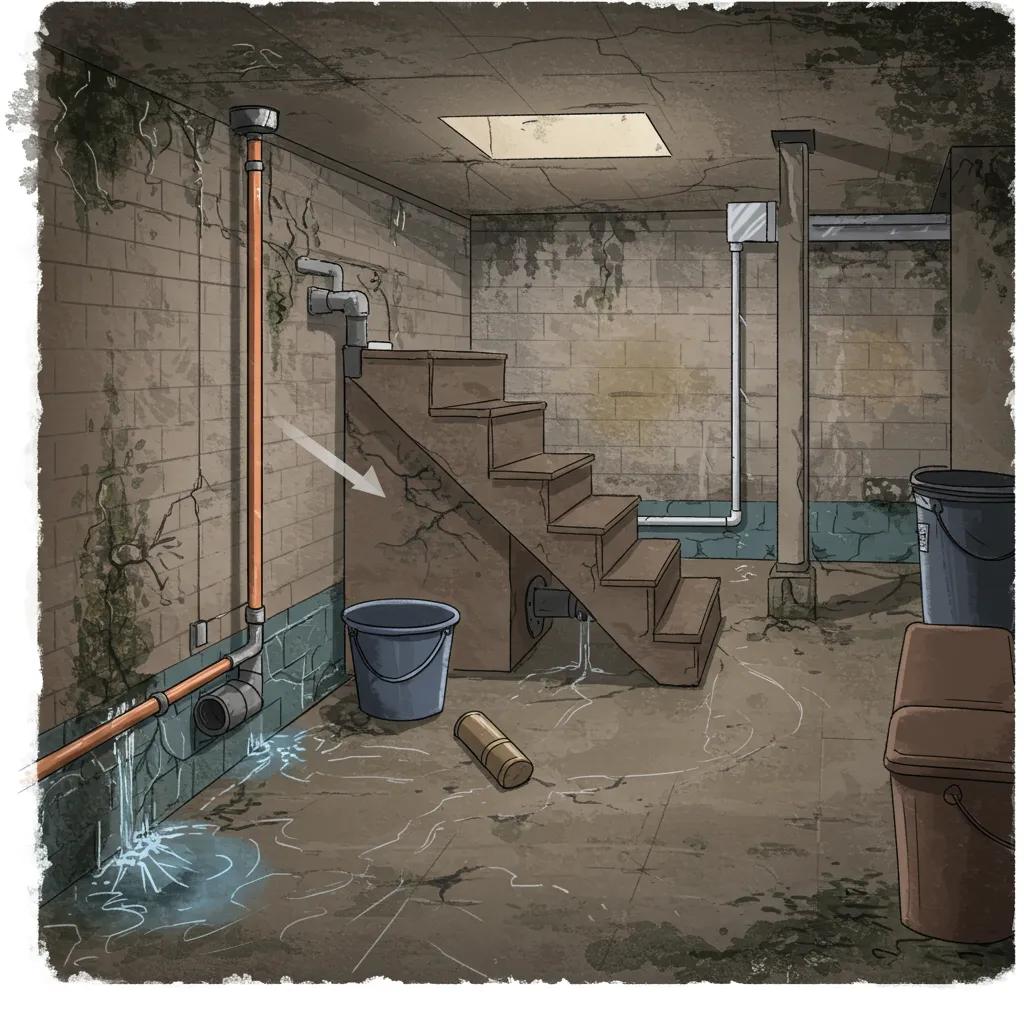
Basement problems in Short Hills typically present as visible and environmental signs that water is entering the structure, driven by local drainage, soil saturation, and freeze-thaw cycles. Understanding these problems begins with identifying the symptoms and linking them to likely causes so homeowners can prioritize repairs that stop water at its source. The most common issues include persistent dampness, efflorescence on masonry, hairline to wider foundation cracks, musty odors from mold growth, and occasional standing water after heavy storms. Recognizing these patterns early limits structural damage and indoor air-quality decline, which leads directly into practical diagnostic steps homeowners can follow.
How to Recognize Signs of Water Damage and Foundation Issues?
Visible cues are often the first reliable indicators of basement water problems and foundation stress, and a quick visual inspection can reveal when professional assessment is needed. Look for horizontal or stair-step cracks in masonry, peeling paint or blistering on concrete, white powdery efflorescence, warped floor coverings, and mold spots near walls or windows. Environmental signs—persistent musty odors, condensation on foundation walls, or ongoing dampness despite ventilation—also indicate chronic moisture intrusion rather than one-off spills. Early detection lets homeowners schedule targeted interventions before hydrostatic pressure worsens structural problems and before mold growth becomes a health concern.
What Local Soil and Climate Factors Affect Basements in Short Hills?
Short Hills sits in a Northeast climate zone where seasonal heavy rains and freeze-thaw cycles, combined with local soil composition, can amplify basement infiltration risk through increased groundwater and surface runoff. Clay-heavy or poorly draining soils hold moisture and raise hydrostatic pressure against foundations after prolonged precipitation, while steep grades or compacted landscaping restrict lateral drainage away from foundations. Proper exterior grading and downspout extension reduce these forces, but when grading or soil conditions are unfavorable, internal systems may be needed to relieve pressure and divert water. Understanding these local drivers helps select systems—interior drainage, exterior drains, or combined approaches—that address both water source and pathway.
How Does Hydrostatic Pressure Cause Basement Leaks and Cracks?
Hydrostatic pressure is the force of groundwater pushing against foundation walls and floors, and when that pressure exceeds the strength of masonry or mortar it forces water through joints and creates new cracks. Think of saturated soil as a sponge squeezing against the house; as water volume increases, the pressure seeks the weakest points—floor-wall joints, mortar seams, and existing cracks—and forces water inward. Mitigating hydrostatic pressure requires systems that reduce groundwater buildup near foundations, such as French drains that redirect flow and interior drainage systems that relieve and collect water before it enters living spaces. Addressing pressure is essential because patching visible leaks without relieving the underlying force typically results in recurring problems.
Which Basement Waterproofing Solutions Are Best for Short Hills Homes?
Effective waterproofing in Short Hills focuses on systems that address hydrostatic pressure, finished-basement preservation, and long-term indoor humidity control; the principal solutions are interior drainage systems, French drain installation, sump pumps with battery backups, crawl space encapsulation, dehumidification systems, and structural reinforcement where needed. Each solution targets a distinct mechanism—collection and removal, diversion, moisture control, or structural stabilization—so selecting a combination tailored to the home’s construction and damage pattern produces the most reliable results. Below are concise descriptions of how each approach works, what it’s best for, and maintenance expectations so homeowners can match system choice to their basement’s condition.
How Do Interior Basement Waterproofing Systems Protect Your Home?
Interior perimeter drainage captures water seeping through joints and channels it to a collection basin where a sump pump discharges it away from the foundation, and this mechanism prevents interior flooding and mold development. Installation typically involves saw-cutting a narrow channel along the footing inside the basement, installing drain tile or a polymer channel, and tying that into a sump basin with an active pump. For finished basements, interior systems avoid large-scale exterior excavation and protect finished surfaces while reducing hydrostatic pressure at the wall-floor junction. Routine maintenance focuses on sump pump testing, float switch operation, and occasional debris removal to ensure uninterrupted operation.
Why Is French Drain Installation Essential for Water Management?
A French drain is a passive diversion system that lowers hydrostatic pressure by collecting and redirecting groundwater away from foundation footings, preventing buildup that forces water through walls and joints. It consists of perforated pipe surrounded by gravel and filter fabric placed at or below footing level, and can be installed either externally around the foundation perimeter or internally at the footing. Exterior French drains are most effective at stopping water before it reaches the foundation, while interior versions relieve pressure and manage water that has already penetrated; both reduce the likelihood of recurring seepage. Over time, proper filtration and inspection preserve function, and when combined with a sump pump the system provides both passive capture and active removal.
What Are the Advantages of Reliable Sump Pump Systems and Battery Backups?
Sump pumps actively remove collected groundwater from the sump basin and discharge it away from the house, making them essential when interior drainage or French drains channel water into a collection point. Primary pumps are typically electric and sized according to expected inflow; batteries or water-powered backups are critical during storms and power outages when groundwater risk peaks and municipal power may be unavailable. Regular testing, battery checks, and scheduled replacement (per manufacturer guidance) maintain reliability, while redundant systems ensure continuous protection during severe weather events. Choosing appropriate pump capacity and backup type translates directly into reduced flood risk and minimized insurance claims.
How Does Crawl Space Encapsulation Improve Basement Health?
Crawl space encapsulation isolates the subfloor cavity using vapor barriers, sealed vents, and insulation to prevent ground moisture from entering the home’s conditioned space and to improve HVAC efficiency. A typical encapsulation includes a polyethylene vapor barrier taped and sealed to walls and piers, closed venting, and sometimes a dehumidifier or conditioned air integration to control relative humidity. This treatment reduces radon and moisture-driven mold risks, improves indoor air quality, and can lower energy costs by stabilizing humidity and temperature beneath the house. Encapsulation is recommended when persistent crawl space moisture affects indoor HVAC performance or when mold or rot appears in floor framing.
What Role Do Advanced Dehumidification Systems Play in Moisture Control?
Whole-basement and crawl-space dehumidifiers maintain target relative humidity (RH) levels—generally below 50%—to slow mold growth and reduce musty odors, complementing drainage systems by controlling airborne moisture. Proper sizing considers conditioned volume, typical infiltration rates, and local seasonal humidity; undersized units struggle to keep RH in check, especially during humid summers. Maintenance involves periodic filter cleaning, condensate pump checks, and seasonal performance inspections to ensure continuous operation. When combined with drainage and encapsulation, dehumidification stabilizes indoor conditions and protects finishes, stored items, and HVAC systems from moisture-related deterioration.
How Can Structural Reinforcement Stabilize Foundation Issues?
Structural reinforcement addresses bowed or failing walls and significant foundation movement by installing carbon fiber straps, steel I-beams, or helical/steel piers to restore geometry and load-bearing capacity. Carbon fiber provides a minimally invasive option for inward bowing less than a certain threshold, while steel reinforcement or pier systems are selected when soil settlement or lateral loads demand higher-strength solutions. Assessment-driven selection considers crack patterns, deflection measurements, and drainage context, and durable materials combined with documented workmanship support long-term stabilization and resale confidence. After reinforcement, monitoring ensures the repair met load-transfer objectives and that ongoing water management prevents recurrence.
Below is a concise comparison of solutions and typical installation use cases to help weigh options.
Different waterproofing approaches suit specific basement conditions and installation complexities.
| Solution | Installation Complexity | Best-for Scenarios |
|---|---|---|
| Interior perimeter drainage | Moderate; interior access required | Finished basements with seepage at floor-wall joint |
| French drain (exterior/interior) | Moderate–High; excavation for exterior | High hydrostatic pressure and saturated soils |
| Sump pump with battery backup | Low–Moderate; electrical hookup | Active water removal and storm resilience |
| Crawl space encapsulation | Moderate; vapor barrier and sealing | High crawl space humidity and HVAC impacts |
This comparison clarifies how combining systems addresses both water source and pathway, improving long-term basement performance.
For homeowners evaluating options, a no-pressure inspection provides tailored recommendations; after technical evaluation, requesting a free consultation or estimate is the practical next step to match systems to a home’s specific needs.
How Much Does Basement Waterproofing Cost in Short Hills NJ?
Typical waterproofing costs vary by system type, basement condition, and access; conservative local ranges reflect installation complexity and required repairs. Key drivers include system selection (interior vs exterior), square footage, the extent of structural reinforcement, finished-basement restoration, and site access or landscaping disruption. Transparent quotes break costs into clear drivers—materials, labor for excavation or interior work, sump and pump systems, and any structural repairs—so homeowners can compare options and anticipated lifespans. Below is a quick cost-range overview and table that compares common systems and what affects pricing, followed by guidance on free inspections and how waterproofing can protect property value.
What Factors Influence the Cost of Waterproofing Services?
Several variables determine final pricing, and understanding them helps homeowners evaluate estimates and prioritize interventions. Major factors include the system type chosen (simple sump pump vs. full exterior French drain), the finished status of the basement (finished spaces add restoration costs), the presence of structural issues requiring reinforcement, and landscaping or access constraints that increase excavation labor. Additionally, pump model and backup type, dehumidifier sizing, and warranty or service package levels influence upfront cost and long-term ownership expense. Comparing these attributes across proposals clarifies value, especially when sealed warranties and maintenance plans are included.
Here is a concise EAV-style cost comparison that illustrates how attributes affect price ranges and why quotes differ.
This table compares common waterproofing systems with the primary cost drivers that influence estimates.
| System | Cost Driver | What Affects Cost |
|---|---|---|
| Interior drain + sump | Basement size, finish level | Finished basement restoration, pump capacity |
| Exterior French drain | Excavation depth, soil type | Landscaping repair, access to foundation |
| Crawl space encapsulation | Square footage, insulation needs | Vapor barrier quality, HVAC integrations |
Are Free Inspections and Estimates Available from Local Experts?
Many reputable local providers offer free inspections and estimates that include a visual assessment, moisture mapping, and a prioritized recommendation tailored to the home’s condition. A free inspection typically covers wall and floor condition review, sump system functionality checks, exterior grade and downspout evaluation, and a documented proposal outlining recommended systems, timelines, and cost ranges. Homeowners can prepare by clearing basement access and noting recurring water events to help technicians assess severity. Choosing a no-pressure inspector allows homeowners to compare technical options confidently before committing to work.
How Does Investing in Waterproofing Increase Property Value?
Waterproofing improves livability by eliminating chronic dampness and mold risk, which reduces long-term maintenance costs and makes homes more attractive to buyers who prioritize dry, usable lower levels. A dry, well-documented basement can expand functional square footage for storage or finished living areas, and many buyers view sealed basements and active drainage systems as a value-add during offers. By reducing perceived risk and costly future repairs, waterproofing contributes to property-marketability and can protect appraisal outcomes when properly documented with warranties and professional reports.
Why Choose Effective Basement Solutions for Waterproofing in Short Hills NJ?
Effective Basement Solutions is positioned as a local lead-generation and information hub offering basement waterproofing, French drain installation, sump pump systems (including battery backups), crawl space encapsulation, dehumidification, and structural reinforcement. The firm emphasizes licensed in-house crews (no subcontractors), a no-sales-pressure inspection approach, free inspections and estimates, and specialization in New Jersey homes—factors that support reliable workmanship and clear recommendations. For homeowners seeking a straightforward next step, requesting a free inspection yields an assessment-driven plan that prioritizes long-term protection and structural safety. Below we explain the company’s differentiators and what homeowners should expect from a service-oriented provider.
What Makes Our Licensed In-House Crew Different from Competitors?
An in-house licensed crew enhances quality control because trained employees follow standardized procedures and are directly accountable for workmanship and customer communication. This internal model reduces coordination issues associated with subcontracting, provides consistent on-site management, and simplifies warranty and aftercare communications because one organization owns the entire process. Clean, organized job sites and uniform training often translate to fewer delays and clearer timelines for homeowners, which increases confidence during disruptive installations. For homeowners weighing bids, in-house crews simplify post-installation support and warranty servicing.
How Does Our 20+ Years of Local Experience Benefit Homeowners?
Long-standing local experience yields refined diagnostics and familiarity with region-specific issues such as soil-driven hydrostatic pressure patterns and local building practices, enabling faster, more accurate recommendations. Experience across many local homes helps technicians anticipate common failure points and craft solutions that blend effective materials with practical installation sequencing. This institutional knowledge reduces trial-and-error and shortens project timelines while improving the likelihood of durable outcomes. Homeowners benefit from proposals that reflect local conditions rather than generic, one-size-fits-all approaches.
What Warranty and Long-Term Protection Do We Offer?
Service providers typically offer combinations of workmanship warranties and manufacturer-backed component guarantees that document the scope and duration of protection after installation. Homeowners should ask for written warranties that specify what is covered—drainage performance, pump replacement, workmanship—and the process for service calls, which supports long-term peace of mind and resale documentation. A clear warranty and a transparent maintenance plan help preserve property value and reduce unexpected lifecycle costs. When comparing proposals, documented warranty terms are a key differentiator.
How Do Personalized Solutions Address Unique Basement Challenges?
Personalized solutions begin with a full assessment—moisture mapping, wall/foundation inspection, sump performance checks, and exterior drainage review—to design a mix of drainage, mechanical, and structural measures matched to site conditions. Typical tailored responses might pair an interior drainage channel with a high-capacity sump and battery backup for finished basements, or combine an exterior French drain with targeted wall reinforcement for homes experiencing lateral soil pressure. Transparent proposals include scope, timeline, and phased options so homeowners can see how combined measures reduce risk and support long-term durability.
What Are the Best Wet Basement Solutions Available in Short Hills NJ?
The best wet-basement strategies combine active removal, passive diversion, humidity control, and structural repairs as needed — commonly a French drain paired with a sump pump and dehumidification, with crawl space encapsulation or reinforcements added depending on severity. Combining systems addresses the root cause (groundwater and pressure) and the manifestation (interior moisture and mold). Below are explanations of how systems work together, when encapsulation is recommended, dehumidification’s role, and structural repair considerations so homeowners can decide on comprehensive or staged approaches.
How Do French Drains and Sump Pumps Work Together to Prevent Flooding?
French drains collect groundwater and direct it to low points where interior or exterior systems carry it toward a sump basin; the sump pump then actively ejects this water away from the foundation, providing both passive capture and active removal. This sequencing reduces hydrostatic pressure near the footing and prevents accumulation that could force water through cracks or joints. Installation typically prioritizes the drain channel first, then sump basin placement and pump sizing to match expected inflow; maintenance includes periodic inspection of outlets and pump testing. Backup strategies such as battery systems ensure removal continues during power outages and storm events.
Below is an equipment-focused comparison that outlines maintenance expectations and ROI considerations for key components.
This table compares typical equipment, maintenance needs, and expected homeowner ROI measured in durability and value protection.
| Equipment | Maintenance | Expected ROI |
|---|---|---|
| Sump pump (electric) | Annual testing, battery checks | High; prevents interior flooding |
| Battery backup | Battery replacement, load tests | High; critical during outages |
| Dehumidifier | Filter cleaning, condensate checks | Medium; reduces mold risk and protects finishes |
When Is Crawl Space Encapsulation Necessary for Moisture Control?
Encapsulation is recommended when crawl-space humidity consistently exceeds safe thresholds, when ductwork or HVAC systems run through the crawl space, or when mold and rot are documented in floor framing. The process seals ground moisture sources and stabilizes humidity, improving HVAC efficiency and indoor air quality. Decision criteria include humidity logs, evidence of moisture-driven deterioration, and the presence of HVAC components that would benefit from a conditioned crawl space. Long-term maintenance is straightforward—periodic checks of the vapor barrier seams and a properly sized dehumidifier are typically sufficient.
How Can Dehumidifiers Help Eliminate Mold and Musty Odors?
Dehumidifiers reduce ambient relative humidity to levels that inhibit mold growth—typically below 50% and often around 45% for basements—so pairing dehumidification with drainage systems accelerates odor elimination and mold control. Proper sizing is crucial: undersized units cannot keep pace with infiltration during humid months, while correctly sized units maintain steady RH and support remediation efforts. Maintenance includes cleaning filters, ensuring condensate drainage, and annual performance checks; combined with encapsulation and drainage, dehumidification helps preserve finishes and stored goods.
What Structural Repairs Are Needed for Bowing Walls and Cracks?
Structural interventions vary by severity: modest inward deflection may be addressed with carbon fiber reinforcement, while more serious lateral movement or settlement commonly requires steel reinforcement or pier systems to restore load paths. Assessment must measure deflection, crack progression, and underlying soil or drainage causes to recommend the least-invasive, most-durable repair. After repair, monitoring and continued water management are essential because unresolved drainage issues can undermine structural fixes over time. Warranties and documented post-repair inspections help homeowners track long-term performance.
How Can Homeowners Maintain a Dry Basement Year-Round in Short Hills NJ?
Maintaining a dry basement is a combination of seasonal exterior maintenance, mechanical system checks, humidity monitoring, and timely professional inspections; routine steps reduce risk and extend system life. A predictable maintenance rhythm includes gutter and downspout clearing, grading checks after heavy landscaping work, annual sump pump testing, and periodic dehumidifier servicing. DIY tasks can handle many preventive items, while professionals should manage interior drainage, structural reinforcement, and complex moisture mapping. The guidance below includes DIY vs. professional lists and a concise maintenance checklist homeowners can adopt.
Practical preventive measures homeowners can perform include clearing gutters, verifying downspout discharge away from foundation, and running periodic sump pump tests to confirm operation; these actions cut off common pathways for water to reach foundations. Regular humidity checks using a hygrometer, combined with dehumidifier operation when RH rises above recommended levels, keep mold risk low. When signs of structural movement, persistent seepage, or repeated pump cycling appear, homeowners should schedule professional inspections to diagnose root causes and plan repairs. This sequence—prevent, monitor, call a pro—helps sustain a dry, healthy basement.
What Are Effective DIY Tips vs. Professional Waterproofing?
Homeowners can perform several effective DIY tasks to reduce water intrusion risk while leaving invasive or structural work to professionals. DIY tasks include clearing gutters and downspouts, extending downspouts away from the foundation, verifying exterior grading slopes away from the house, and maintaining household dehumidifiers. Professional tasks include interior perimeter drainage installation, exterior excavation for French drains, structural reinforcement, and system design for finished basements where coordination with finishes matters. Recognizing red flags such as active seepage, progressive wall bowing, or recurring mold helps homeowners decide when to move from DIY prevention to professional remediation.
- DIY maintenance tasks: Clean gutters, extend downspouts, check grading, and run dehumidifiers.
- Professional services: Interior/exterior drainage, sump and backup installation, structural reinforcement.
- Red flags for pros: Active flooding, wall bowing, ongoing mold despite dehumidification.
These distinctions help homeowners allocate effort and budget to the most impactful interventions.
How to Monitor Basement Humidity and Prevent Mold Growth?
Monitoring humidity with a simple hygrometer provides early warning when conditions favor mold; aim for consistent RH below 50% and log readings weekly during humid seasons. If readings rise, increase ventilation, run a properly sized dehumidifier, and inspect for hidden water sources—behind insulation, under flooring, or near HVAC penetrations. Early mold signs such as musty smell or small black spots warrant prompt cleaning and moisture source correction to prevent spread. When mold covers large areas or recurs after corrections, professional remediation and moisture mapping are recommended.
When Should You Schedule Regular Inspections and Maintenance?
Schedule professional inspections at least annually, with additional checks before and after wet seasons, and after major storms or landscaping changes that affect grading or drainage. Annual inspections typically include sump and pump checks, perimeter drain inspection, wall and floor condition assessment, and a review of exterior drainage systems. Homeowners experiencing repeated moisture events or who have finished basements should consider semi-annual checks to catch issues early. Timely inspections reduce emergency repairs and support warranty adherence for installed systems.
What Do Short Hills NJ Homeowners Say About Effective Basement Solutions?
Homeowner feedback themes emphasize problem resolution, clear communication, and durable outcomes rather than specific endorsements, and these themes are useful when evaluating providers and proposals. Common review patterns focus on timeliness of project completion, cleanliness of job sites, transparent recommendations without high-pressure sales, and responsiveness for post-installation questions. Rather than relying on individual testimonials, homeowners should look for documented case studies, before-and-after documentation, and willingness of providers to share references or a portfolio of similar local projects. Below are generalized case study summaries and review themes that help illustrate expected results without inventing specific endorsements.
Which Local Case Studies Showcase Successful Waterproofing Projects?
Typical local case studies describe the initial problem, diagnostics performed, a combination of drainage and mechanical solutions installed, and measurable outcomes such as eliminated leaks and reduced humidity readings. For example, a finished-basement case often began with visible seepage at the floor-wall joint and high RH; the solution paired interior perimeter drainage with a new sump pump and dehumidifier, resulting in dry floors and RH stabilization. Another common project involved lateral pressure on a foundation wall treated with exterior French drain work plus targeted reinforcement to stop progressive movement. These generalized examples show how combined approaches address both source and symptom.
How Do Customer Reviews Reflect Our Service Quality?
Review patterns typically highlight technical effectiveness, on-site professionalism, and post-project communication as primary measures of quality, and these themes help homeowners choose providers who match their expectations. Positive feedback categories often mention clear explanations of findings, organized crews, timely completion, and responsiveness on warranty service requests. When comparing providers, homeowners should prioritize documented outcomes and evidence of consistent workmanship over promotional claims. Asking for references or project documentation provides added assurance of consistent performance.
What Are Common Homeowner Questions Answered by Our Experts?
Homeowners frequently ask about cost ranges, the necessity of French drains, signs of structural issues, and what a free inspection includes; concise answers help clarify next steps. Typical expert responses explain that system selection depends on water source and basement use, that French drains are essential when groundwater overwhelms surface drainage, and that free inspections provide prioritized, no-pressure recommendations tailored to each home. Homeowners are encouraged to request written proposals that outline scope, timeline, and warranty terms so they can compare options with confidence.
For homeowners ready to move from assessment to action, requesting a free inspection and estimate from a specialist provides a no-pressure path to a prioritized plan that protects structure, improves indoor air quality, and preserves property value. Effective Basement Solutions offers free inspections and tailored recommendations that align systems to each home’s unique conditions, and homeowners can use those findings to make informed, long-term decisions.

n0yk7y