

Complete Guide to French Drains Installation: Types, Costs, and Maintenance for New Jersey Homeowners
Protect Your Home with French Drain Installation NJ
More than 40% of New Jersey basements experience water intrusion each year, leading to damp walls, mold growth, and even foundation cracks. In this complete guide to French drains, you’ll discover how French drains protect your basement, estimate installation costs in New Jersey, compare different drain types, follow a step-by-step installation process, and learn maintenance strategies that extend system life. Along the way, you’ll also understand why partnering with Effective Basement Solutions can secure your home against water damage and how to request a free consultation for professional waterproofing expertise.
Basement Flooding Risks in New Jersey Homes
New Jersey’s unique geography, dense population, and prevalence of older homes contribute to a significant risk of basement flooding and water intrusion. Factors such as high water tables, heavy rainfall events, and inadequate drainage systems make properties vulnerable to water damage year-round.
This research supports the article’s initial claim about the high incidence of basement water intrusion in New Jersey, highlighting the various environmental and structural factors that contribute to this widespread issue.
What Is a French Drain and How Does It Protect Your Basement?
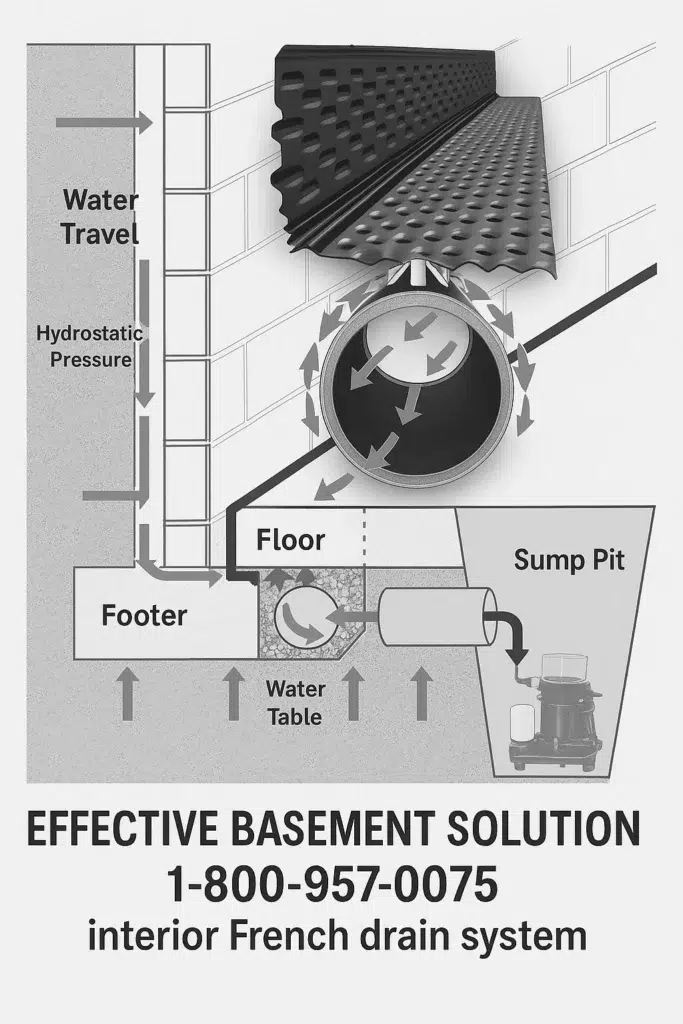
A French drain is a subsurface drainage system consisting of a gravel-filled trench and a perforated pipe that redirects water away from a foundation, preventing hydrostatic pressure and basement flooding. Understanding its components and function lays the foundation for effective basement waterproofing in New Jersey.
What Are the Core Components of a French Drain System?
A French drain comprises four primary parts that work together to manage groundwater:
- Perforated Pipe: A corrugated or PVC pipe with evenly spaced holes that collect subsurface water.
- Gravel/Aggregate: Clean stone surrounds the pipe, allowing water to percolate while filtering out larger debris.
- Filter Fabric/Geotextile: A permeable membrane lining the trench that prevents soil and fine sediment from clogging the gravel bed.
- Trench: A sloped channel excavated along the foundation or yard perimeter to guide water toward a discharge point.
These interconnected components form a reliable drainage path, guiding water safely away from vulnerable areas and establishing a protective layer around your home’s base.
How Does a French Drain Prevent Basement Flooding and Foundation Damage?
A French drain prevents basement flooding by intercepting groundwater before it exerts pressure on foundation walls. As soil becomes saturated, hydrostatic pressure builds and forces water through cracks. By channeling that water into the perforated pipe, the system relieves pressure, redirects moisture toward safe outlets such as storm drains or daylight, and thus safeguards both basement interiors and structural footings.
What Role Does a Sump Pump Play in French Drain Systems?
In interior French drain installations, a sump pump serves as the final safeguard by actively expelling collected water out of the sump pit. When the perforated pipe feeds groundwater into a pit, the pump senses rising water levels and automatically pumps moisture outside the home. Integrating a sump pump ensures continuous protection even during heavy rainfall or high water table conditions.
How Much Does French Drain Installation Cost in New Jersey?
Estimating French drain installation cost requires evaluating regional labour rates, material choices, and project complexity. In New Jersey, professional systems range from $1,650 to $12,250—exterior drains average $10–$75 per linear foot, while interior systems run $40–$100 per linear foot due to additional concrete work.
What Factors Affect the Price of French Drain Installation?
Several variables influence overall expenses:
- Location and Accessibility – Tight spaces or finished basements increase labour time.
- Soil Conditions – Rocky or clay-dense soils require more excavation effort.
- Drain Type – Interior installations involve concrete cutting and sump pump integration, raising costs.
- Permits and Codes – Municipal regulations in New Jersey may require permits that add fees.
- Material Quality – Premium PVC pipe, high-grade filter fabric, and decorative topsoil or pavers elevate budget.
Evaluating these attributes helps you anticipate cost drivers and plan accordingly for long-term basement protection.
How Do Interior and Exterior French Drain Costs Compare?
| Installation Type | Typical Cost per Linear Foot | Key Advantages |
|---|---|---|
| Exterior French Drain | $10–$75 | Preserves interior living space and finishes |
| Interior French Drain | $40–$100 | Addresses existing basement moisture and mold |
Exterior systems generally cost less per foot but require landscaping restoration, whereas interior drains entail concrete cutting and sump pump installation for comprehensive basement waterproofing.
What Is the Long-Term Value and ROI of Installing a French Drain?
Investing in a French drain yields substantial returns by preventing costly foundation repairs, mold remediation, and property devaluation. Homeowners typically recover a significant portion of the installation cost through increased home value and avoided damage expenses. Reliable drainage reduces insurance risks, enhances indoor air quality, and ultimately protects your New Jersey asset for decades.
Return on Investment for Basement Improvements
Investing in basement improvements, including addressing flooding issues with solutions like French drains, can yield a substantial return at resale. Studies indicate that homeowners can recover a significant portion of their investment, with some basement renovations showing an average return of over 90%.
This citation verifies the article’s assertion regarding the long-term value and ROI of installing a French drain, particularly as part of broader basement waterproofing and improvement efforts.
New Jersey French Drains: Types, Installation, Cost & Care
French drains come in several configurations. Selecting the optimal system depends on your property’s layout, budget, and moisture challenges.
What Are the Benefits and Use Cases of Exterior French Drains?
Exterior French drains are installed around the outside perimeter of a foundation to intercept surface water before it reaches the walls. They are ideal when:
- Yard grading directs rain toward the home
- Landscape aesthetics can be restored after trench backfill
- New construction or major landscaping is planned
By lowering the water table around the foundation, exterior drains prevent saturation and reduce hydrostatic pressure on basement structures.
How Do Interior French Drains Work and When Are They Recommended?
An interior French drain sits below the basement floor slab along the perimeter. It intercepts water seeping through walls or floor joints and channels it into a sump basin. This solution is recommended when:
- Existing landscaping prevents exterior excavation
- Basement leaks or mold issues persist despite exterior measures
- Homeowners seek minimal disruption to landscaping and yard features
Interior drains offer effective remedial action for moisture entering through older or finished basements.
What Are Gravel-Free French Drains and Their Advantages?
Gravel-free French drains use prefabricated channels with integrated filter membranes instead of loose gravel. Their benefits include:
- Faster installation and reduced labour
- Cleaner work environment with no loose stone handling
- Consistent water flow patterns through engineered channel profiles
These innovative systems deliver reliable drainage with less mess and a uniform drainage path.
How Do French Drains Integrate with Sump Pumps and Other Waterproofing Systems?
Combining a French drain with a sump pump creates a proactive waterproofing strategy: the drain collects water and funnels it to the sump pit, where the pump expels it outside. Pairing these with exterior waterproof membranes, downspout extensions, or curtain drains enhances overall performance, creating a multi-layer defence against basement flooding.
French drain installation in New JerseyHow Is a French Drain Installed? Step-by-Step Guide for New Jersey Homes
EPA guide on preventing basement mold Installing a French drain involves systematic excavation, precise component placement, and proper discharge planning. A structured process ensures reliable performance and code compliance.
What Are the Key Steps in Exterior French Drain Installation?
Begin by marking the trench path following a 1%–2% slope away from the foundation. Excavate a 12–18-inch-wide trench to the footing level, line it with filter fabric, and lay the perforated pipe with holes facing down. Backfill the pipe with gravel, fold fabric over the top, and restore soil or pavers for a clean finish. This method channels water safely away from your home’s base.
How Is an Interior French Drain Installed and What Are the Challenges?
Interior installation requires cutting a shallow trench along the basement perimeter, typically 4–6 inches wide and deep enough to reach the footing. After removing concrete, line the trench with filter fabric, place the perforated pipe toward the wall, and connect to a sump basin. Challenges include dust control, precise concrete replacement, and ensuring the sump pump capacity matches the groundwater inflow rate.
What Local Permits and Soil Considerations Affect Installation in New Jersey?
New Jersey municipalities often require permits for exterior excavation and sump pump discharges. Soil tests reveal drainage capacity: sandy soils drain quickly, whereas clay soils retain water and may necessitate deeper trenches or additional aggregate. Confirm setback requirements for discharge points and coordinate with local building codes to avoid fines.
Should You Choose DIY or Professional French Drain Installation?
Homeowners with excavation experience and basic plumbing skills may opt for a DIY approach to save on labour costs. However, professional installation offers warranties, code compliance, precise grading, and integration with advanced waterproofing systems. For interior drains or complex drainage challenges, hiring skilled technicians from Effective Basement Solutions reduces risk and ensures lasting protection.
How Do You Maintain and Repair French Drains to Ensure Longevity?
Regular upkeep preserves drainage capacity, prevents clogs, and extends system life. A combination of homeowner inspections and professional service keeps your French drain functioning optimally.
What Are Common French Drain Problems and How Can They Be Prevented?
French drains may experience sediment buildup, root intrusion, or pipe collapse over time. Preventive measures include:
- Installing high-quality filter fabric to block fine particles
- Maintaining landscaping to keep tree roots away from the trench
- Ensuring downspouts and gutters direct water away from the drain inlet
Proactive care reduces the likelihood of costly repairs and ensures uninterrupted drainage.
How Often Should You Inspect and Clean Your French Drain?
An annual inspection checks for reduced water flow, pooling, or visible pipe damage. Cleaning schedules vary by soil type, but flushing with a garden hose every 2–3 years helps dislodge sediment. Interior systems may require occasional sump pit cleaning to remove trapped debris before it clogs the pump.
What Are the Best Practices for Professional French Drain Repair?
Professional repair starts with a video inspection to locate blockages or pipe deformation. Technicians may hydro-jet clogged sections, replace damaged pipe segments, or reinforce trench walls. Advanced practitioners use root barriers and upgraded filter fabrics to improve long-term performance and prevent repeat issues.
Why Choose Effective Basement Solutions for Your French Drain Needs in New Jersey?
Effective Basement Solutions brings local expertise, proven methods, and comprehensive service to every French drain project. Our team delivers peace of mind through quality workmanship, clear communication, and ongoing support.
What Expertise and Local Knowledge Does Effective Basement Solutions Offer?
With years of experience servicing diverse soil types across New Jersey counties, our technicians understand regional drainage challenges—from coastal sandy soils to inland clay loam. We apply best practices tailored to local building codes and weather patterns, ensuring your French drain system performs reliably.
What Warranty and Consultation Services Are Available?
Every French drain installation includes a written warranty covering materials and workmanship. We offer free on-site consultations to assess basement conditions, soil types, and potential hydrostatic issues. This transparent approach empowers homeowners to make informed decisions and secure long-term protection.
How Have New Jersey Homeowners Benefited from Our French Drain Installations?
Clients report immediate relief from standing water, elimination of damp walls, and significant reduction in mold concerns. Case studies highlight homes in Monmouth, Bergen, and Essex counties where structural integrity and indoor air quality improved dramatically after our systems were installed.
What Are Frequently Asked Questions About French Drains?
Homeowners often seek clarity on installation complexity, lifespan, and effectiveness. The following concise explanations address those areas without listing questions verbatim.
Can I Install a French Drain Myself?
Yes, experienced DIYers can install an exterior French drain by excavating a proper-gradient trench, placing filter fabric and pipe, and backfilling with gravel. Interior installations demand concrete cutting, sump pump integration, and code compliance, so professional assistance is recommended for complex or enclosed spaces.
How Long Does a French Drain Last?
A well-installed French drain typically lasts 20–30 years. Factors such as soil composition, filter fabric quality, and maintenance frequency influence longevity. Proper inspection, fabric replacement, and gravel reinforcement can extend performance beyond three decades.
Lifespan and Durability of French Drain Systems
A properly installed and well-maintained French drain system typically has a lifespan of 20 to 30 years. The longevity is influenced by factors such as the quality of materials used, the precision of the installation process, and consistent maintenance practices, including regular cleaning and prevention of clogs.
This information directly supports the article’s claim about the expected lifespan of a French drain, emphasizing the importance of quality installation and ongoing maintenance for maximizing its durability.
Do French Drains Really Work for Basement Waterproofing?
French drains effectively manage groundwater and relieve hydrostatic pressure, preventing water intrusion through foundation walls and floors. When combined with waterproof coatings or sump pumps, they form a complete system that addresses the root causes of basement flooding.
What Maintenance Is Required to Prevent Clogging and Root Intrusion?
Prevent clogging by inspecting and flushing the system every two to three years, replacing degraded filter fabric, and keeping surface drains clear of leaves and sediment. Installing root barriers or choosing gravel-free channels further mitigates tree root encroachment and sediment buildup.
A strategic French drain installation delivers reliable basement protection, preserves home value, and prevents mold and structural damage. By understanding system types, costs, installation steps, and maintenance tactics, New Jersey homeowners can confidently safeguard their properties. For expert guidance and a no-obligation consultation, reach out to Effective Basement Solutions and secure a customized drainage solution tailored to your home’s needs.
