
DIY Basement Waterproofing Methods: How Homeowners Can Fix and Prevent Basement Water Problems
Discover proven DIY basement waterproofing techniques that empower homeowners to diagnose leaks, enhance drainage, seal cracks, and maintain a dry foundation. Persistent dampness undermines structural integrity, promotes mold growth, and lowers property value; addressing these issues promptly can protect health and investment. This guide maps out eight key areas—identifying water problems, exterior drainage solutions, interior sealing methods, sump pump care, professional decision points, humidity control, product selection, and service consults—so you can confidently tackle basement water issues with step-by-step instructions and clear benefits. Along the way, learn when advanced methods from Effective Basement Solutions deliver lasting protection and why a free consultation brings tailored peace of mind.
What Are the Common Signs and Causes of Basement Water Problems?
Basement water problems arise when groundwater, rainwater, or plumbing leaks penetrate foundation walls or floors, leading to damp patches, efflorescence, and structural cracks. Understanding these symptoms and their origins empowers homeowners to take targeted action before issues escalate. The following sections explain how to recognize signs of a wet basement, explore underlying causes, and offer a DIY inspection checklist to pinpoint trouble spots and inform solutions.
How to Identify Signs of a Wet Basement Yourself
A wet basement shows visible and sensory indicators that homeowners can detect without specialized equipment. Look for musty odors that emerge from lingering moisture, white powdery efflorescence on masonry surfaces, and peeling paint on walls or floors. Peeling paint reflects moisture migration through concrete pores, which encourages bacterial growth and compromises wall finishes.
Homeowners should also inspect for small puddles or damp spots near corners and along perimeter walls. Collecting water in crevices often indicates hydrostatic pressure pushing groundwater through micro-cracks. Completing this visual and olfactory survey builds awareness of infiltration patterns and leads naturally to evaluating root causes in adjacent sections.
What Are the Main Causes of Basement Water Issues?
Basement water issues primarily stem from poor exterior drainage, foundation deterioration, and mechanical failures. Soil grading that slopes toward the foundation encourages rainwater pooling at the perimeter, and clogged gutters or downspouts exacerbate runoff concentration. Foundation cracks, whether hairline or larger fissures, provide entry paths for water under pressure and accelerate wall degradation.
Faulty sump pumps or absent battery backups leave basins unable to remove accumulating groundwater during heavy rainfall or power outages. Recognizing these root factors enables homeowners to choose drainage improvements, structural repairs, or pump maintenance as the appropriate next step.
How to Perform a DIY Basement Water Inspection Checklist
A systematic inspection clarifies problem severity and DIY feasibility. Follow these steps to assess your basement’s condition:
- Check grading and surface drainage around the foundation for negative slopes.
- Examine gutters, downspouts, and splash blocks for blockages or insufficient extensions.
- Inspect interior walls and floors for efflorescence, paint blistering, cracks, or standing water.
- Test sump pump operation, confirm float switch movement, and listen for unusual noises.
- Use a moisture meter or cotton cloth pressed against concrete surfaces to detect dampness.
This structured approach highlights specific areas requiring action and prepares you for targeted waterproofing methods.
Which Exterior Basement Waterproofing DIY Methods Are Most Effective?
Effective exterior drainage solutions intercept water before it reaches the foundation, reducing pressure on walls and minimizing seepage. Improving soil grading, maintaining gutters, and installing simple French drains combine to divert rainfall and groundwater safely away. These methods boost long-term protection by alleviating hydrostatic pressure and preserving foundation integrity.
How Can You Improve Property Grading to Divert Water Away?
Correct soil grading establishes a consistent slope of at least 1:100 away from the foundation, promoting runoff rather than pooling. Begin by removing landscaping that traps water, then add topsoil to create a smooth incline extending 1–2 meters from the wall. Compact and seed the soil to prevent erosion, ensuring moisture channels follow the gradient. Well-graded terrain reduces hydrostatic pressure on basement walls and prepares the ground for further drainage installations.
What Are the Best Practices for Gutter and Downspout Maintenance?
Clean gutters and downspouts at least twice per year to prevent debris build-up that redirects water toward the foundation. Use a trowel or gutter scoop to remove leaves, then flush channels with a hose to test flow. Extend downspout outlets at least 2.4 meters away using rigid pipe or splash blocks to disperse water over a wider area. Consistent maintenance promotes efficient water conveyance and underpins exterior waterproofing efforts.
How to Install a Simple French Drain for Surface Water Control
A French drain uses perforated pipe and gravel to channel surface water along a shallow trench, preventing accumulation near the foundation. Start by marking a trench path that leads water to a safe discharge point. Dig a trench 200 mm wide and 500 mm deep, install a geotextile fabric liner, place a layer of coarse gravel, lay the perforated pipe with the holes facing down, then cover with more gravel and wrap the fabric to prevent soil infiltration.
Tools and Materials Needed for French Drain Installation
| Material or Tool | Specification | Purpose |
|---|---|---|
| Perforated Drain Pipe | 100 mm diameter, corrugated PVC | Channels water underground |
| Geotextile Fabric | UV-resistant, permeable | Filters sediment |
| Coarse Gravel | 20–40 mm aggregate | Creates drainage voids |
| Shovel and Spade | Heavy-duty, pointed | Excavate trench |
| Level | 1 meter length | Ensures proper slope |
| Garden Hose | Standard length | Test flow through pipe |
DIY Basement Waterproofing: Top Techniques to Fix Leaks
Interior sealing adds a moisture-resistant barrier on walls and floors, delivering immediate relief from dampness without major excavation. Applying waterproof paints, filling small cracks, and installing interior membranes create continuous barriers that block water migration. These methods suit minor leaks and form part of a layered waterproofing strategy for lasting dryness.
How to Apply Waterproof Paints and Sealants on Basement Walls and Floors
Waterproof paints and sealants form protective coatings that resist moisture infiltration through concrete pores. Begin by cleaning surfaces with a stiff-bristle brush to remove efflorescence and loose debris. Prime the walls with a masonry bonding agent, then apply waterproof paint in two coats, waiting the manufacturer’s recommended drying time. For floors, use a polymer-modified cementitious sealant applied with a trowel to create a durable barrier. Proper application prevents moisture absorption and enhances thermal insulation.
How to Repair Minor Foundation Cracks with Epoxy Injections and Patch Compounds
Epoxy injections seal hairline cracks by filling voids and bonding concrete edges. First, clean cracks with a wire brush, then install injection ports along the crack at 300 mm intervals. Seal the surface with epoxy paste, connect a low-pressure injector, and pump epoxy resin until it flows from adjacent ports. After curing, remove ports and sand flush for a seamless finish. This targeted repair restores structural cohesion and halts water intrusion at the molecular level.
When Are Interior Sealing Methods Insufficient and Professional Help Needed?
Interior seals address small leaks and dampness but cannot overcome high hydrostatic pressure or structural damage. If water seeps through large cracks, persistent seepage occurs during heavy rainfall, or mold returns after sealing, professional assessment is essential. Certified technicians can install exterior membranes, underpin foundations, or design comprehensive dehumidification systems, ensuring long-term performance that DIY methods alone cannot guarantee.
How Can Homeowners Maintain and Troubleshoot Sump Pumps Themselves?
Regular sump pump maintenance prevents failure during critical water events and extends pump lifespan. Cleaning the basin, testing float switches, and inspecting backup systems ensure the pump remains ready to evacuate water when needed. Effective upkeep reduces flood risk and protects basement finishes from sudden inundation.
What Are the Steps to Check and Clean Your Sump Pump?
Inspect and clean your sump pump every three months to maintain reliable operation. Start by unplugging the unit, then remove the pump from the basin. Clean debris from the inlet screen and check the impeller for obstructions. Flush the basin with fresh water to remove sediment, then reinstall the pump and test by pouring water into the basin to confirm automatic activation. Routine cleaning prevents clogs and ensures consistent pumping performance.
How to Test and Maintain Battery Backup Systems for Sump Pumps
Battery backup systems safeguard against power outages during storms. Test the backup by disconnecting the primary power and observing whether the pump activates on battery power. Check battery voltage monthly and replace batteries every two years or as indicated by performance drop. A well-maintained backup ensures continuous water removal when electric supply fails, supporting uninterrupted basement protection.
What Are Common Sump Pump Problems and How to Troubleshoot Them?
Sump pumps may experience float switch failure, motor seizure, or poor discharge flow due to frozen pipes. If the pump does not start, inspect the float arm for free movement and ensure the switch is not jammed by debris. For unusual noises, lubricate the motor shaft or replace worn bearings. If discharge is sluggish, clear ice blockages or replace undersized piping. Resolving these issues promptly restores pump efficiency and prevents basement flooding.
When Should You Hire a Professional Waterproofing Service Instead of DIY?
DIY efforts suit minor dampness and maintenance, but complex problems—such as severe hydrostatic pressure, structural cracks, and extensive mold—require professional expertise. Effective Basement Solutions’ decades of experience and comprehensive systems deliver warranties, code compliance, and peace of mind that surpass basic DIY fixes. Understanding risk factors and service benefits guides homeowners to the right choice.
What Risks Are Associated with DIY Basement Waterproofing?
DIY waterproofing misapplied can worsen leaks and void warranties. Incorrect grading may channel water toward foundations, and inappropriate sealants can trap moisture inside walls, causing spalling and mold proliferation. Overlooking structural issues leads to progressive deterioration, increasing long-term repair costs. Recognizing these risks underscores when professional evaluation is the prudent path.
Which Basement Problems Require Professional Assessment?
Advanced issues—such as bowing walls, large foundation cracks, persistent hydrostatic pressure, and widespread mold growth—demand certified assessment. Professionals use electronic moisture mapping, structural analyses, and pressure-relief systems that DIY cannot replicate. Addressing these complex problems early prevents catastrophic failure and protects indoor air quality.
What Are the Benefits of Professional Basement Waterproofing Services?
Professional services ensure comprehensive solutions designed to industry standards. Technicians install exterior membranes, interior drainage channels, and high-capacity sump pumps with battery backups, backed by multi-year warranties. Compliance with local building codes and tailored system design promote long-term dryness, structural stability, and enhanced property value.
How to Request a Free Basement Waterproofing Consultation in New Jersey
Homeowners in New Jersey can request a free, no-obligation consultation from Effective Basement Solutions by contacting our office via phone or email. Our experts will conduct a detailed inspection, discuss customized solutions—such as French drains, crawl space encapsulation, and dehumidification—and provide a transparent estimate. Securing professional guidance ensures the right strategy for your home’s specific conditions.
How Can You Control Basement Humidity and Dampness with DIY Methods?
Controlling humidity in a basement improves air quality, prevents mold growth, and enhances comfort. Strategic use of dehumidifiers, improved ventilation, and condensation management creates a healthier environment and complements waterproofing measures by reducing residual moisture levels.
What Are Effective DIY Solutions for Basement Dehumidification?
Portable dehumidifiers extract excess moisture from the air by drawing in humid air, cooling it to condense water, and reheating dry air before release. Place units near moisture hotspots, such as laundry areas or crawl space entrances, and empty collection buckets regularly. Consider installing a condensate pump if gravity drainage is impractical. This method reduces relative humidity below 50 percent, inhibiting mold proliferation and enhancing indoor comfort.
How to Address Condensation and Improve Basement Air Quality
Condensation forms when warm, humid air contacts cold surfaces. Reduce thermal bridging by installing insulation on exposed pipes and rim joists. Use exhaust fans or run ceiling fans on low speed to circulate air and prevent stagnant pockets. Adding trickle vents to exterior windows improves airflow and expels moist air outside. These measures promote balanced humidity and protect finishes from moisture-related deterioration.
What Basement Waterproofing Products Are Best for Homeowners to Use DIY?
Selecting the right products maximizes DIY success and minimizes wasted effort. From waterproof paints and tapes to membranes and drainage components, homeowners benefit from comparing features, applications, and limitations to choose solutions that match their specific basement conditions.
How to Choose the Right Waterproof Paints and Sealants for Basements
Waterproof paints vary in resin composition, VOC content, and application temperature range. Low-VOC, acrylic-based paints provide safe indoor use and flexible adhesion on concrete walls. Cementitious sealants offer high compressive strength for floors but require moisture-tolerant curing conditions. Evaluate product datasheets for coverage rates, cure times, and surface preparations. Matching paint or sealant properties to your basement environment ensures durable moisture resistance.
What Are the Benefits and Limitations of Waterproof Membranes and Tapes?
Waterproof membranes—such as polyethylene sheets or liquid-applied coatings—form continuous barriers that resist hydrostatic pressure. Self-adhesive waterproof tapes seal joints and pipe penetrations quickly without extensive surface prep. However, membranes require professional-grade installation for exterior applications, and tapes may degrade under constant pressure. Combining both products provides layered protection, with tape sealing seams and membranes covering larger wall areas.
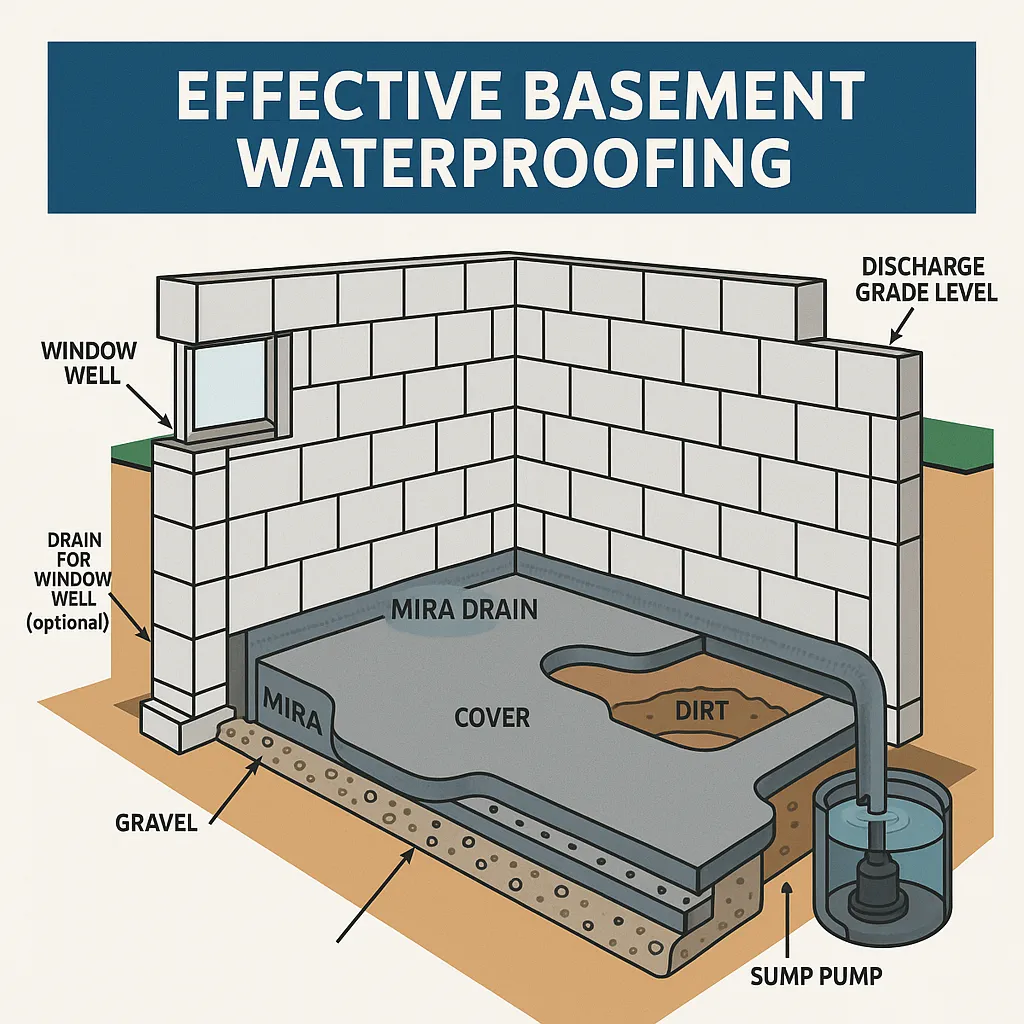
How Do French Drain Components and Sump Pumps Work Together in Waterproofing?
French drains collect groundwater and channel it into a sump basin, where a pump removes accumulated water away from the foundation. The perforated pipe and gravel filter debris and relieve hydrostatic pressure, while the sump pump ensures efficient water evacuation during heavy rain. This synergy prevents water build-up, maintains dry conditions, and supports reliable basement waterproofing over multiple seasons.
| Component | Role in System | Key Benefit |
|---|---|---|
| Perforated Pipe | Collects groundwater | Reduces hydrostatic pressure |
| Coarse Gravel | Filters sediment | Maintains flow capacity |
| Sump Basin | Temporary water storage | Centralizes drainage |
| Sump Pump | Pumps water externally | Prevents basin overflow |
A combination of exterior drainage, interior sealing, and mechanical removal represents the most comprehensive DIY-capable waterproofing approach. For complex soil conditions, high groundwater tables, or structural concerns, partnering with a professional service ensures thorough assessment and customized system design.
Homeowners equipped with practical skills, quality materials, and regular maintenance can transform a damp basement into a reliably dry, healthy space—protecting their home and investment alike.

yto6yu