
Foundation Maintenance Tips for Homeowners: How to Identify, Prevent, and Repair Foundation Issues
A shifting foundation can cost New Jersey homeowners thousands in structural repairs and lead to mold or dampness if left unchecked. With targeted foundation maintenance, you can spot cracks early, manage soil moisture year-round, and extend your home’s stability. This guide explains how to recognize warning signs, perform a DIY inspection, apply preventative measures, explore repair options, integrate basement waterproofing, and know when to call a professional. By following these steps, you’ll protect your property value, ensure structural safety, and learn how Effective Basement Solutions offers free consultations for lasting peace of mind.
Foundation Maintenance Tips: Identify, Prevent and Repair Issues
Foundation problems manifest through cracks, uneven surfaces, and moisture intrusion when soil movement or water pressure exerts uneven forces on structural walls. Early detection prevents costly damage and safeguards living spaces from dampness and mold growth. For example, a hairline crack in a basement wall may signal settlement under a heavy downpour, requiring prompt drainage or underpinning.
How to Recognize Foundation Cracks: Types and Severity Explained
Foundation cracks vary by shape and cause, each indicating a different stability concern. Vertical cracks often occur from normal shrinkage, horizontal cracks signal lateral pressure, and stair-step cracks reveal brick or block settling.
| Crack Type | Severity Level | Indicative Cause | Recommended Action |
|---|---|---|---|
| Vertical | Low to Medium | Concrete shrinkage | Monitor seasonal changes |
| Horizontal | High | Soil pressure against wall | Add interior drainage system |
| Stair-Step | Medium to High | Uneven footing settlement | Consult for underpinning |
| Hairline | Low | Minor thermal movement | Seal with polyurethane |
Each crack pattern calls for specific repair methods, laying the groundwork for assessing interior and exterior warning signs.
DIY Home Maintenance: A Guide to Foundation and Roof Care
This publication addresses residential structures, encompassing foundations to roofing, and provides guidance on executing common repairs. It features step-by-step instructions and illustrations for a range of tasks, from rectifying plumbing leaks to mending foundation cracks.
DIY for Dummies, 2010
What Interior and Exterior Warning Signs Indicate Foundation Damage?
Foundation failure presents as uneven floors, doors that bind in frames, and gaps along window or door jambs indoors, while outside you may spot bowing walls or separation at wall-to-floor joints.
- Uneven Floors: A tilted surface reflects slab settlement.
- Sticking Doors or Windows: Frame warping indicates wall movement.
- Gaps at Wall Joins: Separation between walls and ceilings signals shifting.
- Bowing Walls: Outward bulges point to lateral soil pressure.
These physical clues reveal how soil and moisture stresses translate into structural movement that demands timely intervention.
How Does New Jersey’s Soil and Climate Affect Foundation Stability?
New Jersey’s clay-rich soil expands when wet and contracts during drought, creating cyclic movement that undermines foundation support. Frost heave in winter lifts slabs unevenly, while summer drought causes voids beneath footings. Local freeze-thaw cycles and high moisture levels promote settlement, making seasonal care essential for stable foundations.
How Can Homeowners Perform a DIY Foundation Inspection Checklist?
What Tools and Steps Are Needed for a Thorough Foundation Inspection?
To inspect your foundation, you need a level, tape measure, flashlight, chalk, and a digital camera. First, clear debris around perimeter walls, then:
- Check for cracks wider than 0.3 mm using chalk to outline them.
- Measure floor slope with a level across main living areas.
- Shine a flashlight along wall joints to detect bowing or moisture trails.
- Photograph and date each defect for comparison.
Using these steps ensures consistent monitoring and early detection of stability concerns.
When Should You Escalate from DIY Inspection to Professional Assessment?
DIY inspection suffices for minor hairline cracks and small gaps, but professional assessment is essential when cracks exceed 6 mm, walls bow inward, or persistent water intrusion occurs. Engaging experts prevents misdiagnosis and secures structural integrity through in-depth analysis of soil conditions, load-bearing capacity, and underpinning needs.
How to Document and Monitor Foundation Issues Over Time?
Consistent documentation involves creating a simple log with date, crack width, location, and photographic evidence. Homeowners should re-evaluate every quarter, noting changes in crack length or width. This record-keeping clarifies urgency, guides when to apply sealants or schedule underpinning, and supports insurance or contractor consultations.
What Are the Best Preventative Measures to Avoid Foundation Damage?
Preventative foundation maintenance focuses on managing water, soil, and external forces before cracks or settlement occur. Through targeted drainage, moisture control, and seasonal routines, you shield your home from common destabilizing factors.
How Does Proper Drainage Protect Your Home’s Foundation?
| Method | Key Component | Benefit |
|---|---|---|
| Gutters | Downspout extensions | Diverts roof runoff 1.5m from walls |
| French Drains | Perforated pipe | Collects subsurface water |
| Surface Grading | Soil slope | Guides rainfall away from footings |
With balanced grading and functional gutters, moisture no longer accumulates at the base, preventing soil swelling that leads to structural movement.
Why Is Soil Moisture Control Critical for Foundation Health?
Soil moisture balance prevents soil from expanding and contracting excessively, which can crack concrete or shift footings. Installing moisture-retaining landscaping, maintaining consistent irrigation, and avoiding planting water-thirsty trees too close to walls preserves stable conditions around the foundation.
What Seasonal Foundation Care Tips Are Essential for New Jersey Homes?
In winter, clear gutters and insulate downspouts to prevent ice dams that exert horizontal pressure on walls. As spring arrives, inspect cracks after thaw, reset grading, and clean trench drains. Summer brings drought conditions—apply slow, deep watering to maintain even soil moisture and reduce shrinkage around footings.
What Are the Most Effective Home Foundation Repair Methods Available?
When preventative measures are insufficient, specialized underpinning and crack-sealing techniques restore structural support and halt further damage. Understanding each method helps homeowners choose the optimal solution for their foundation type and severity of movement.
How Do Helical Piers and Concrete Piers Stabilize Foundations?
Helical piers, composed of steel shafts with helical plates, are driven into load-bearing strata to lift and support settled foundations. Concrete piers involve digging beneath footings and pouring reinforced concrete columns to underpin the slab. Both methods transfer load to stable soils, permanently correcting settlement and preventing further movement.
What Is Slab Jacking and When Is It Used?
Slab jacking raises settled concrete slabs by pumping a high-density grout mixture beneath the foundation. This technique is ideal for minor to moderate settlement under patios, garage floors, and basement slabs.
By restoring the original elevation, slab jacking alleviates uneven floors and stops water pooling at entrance thresholds.
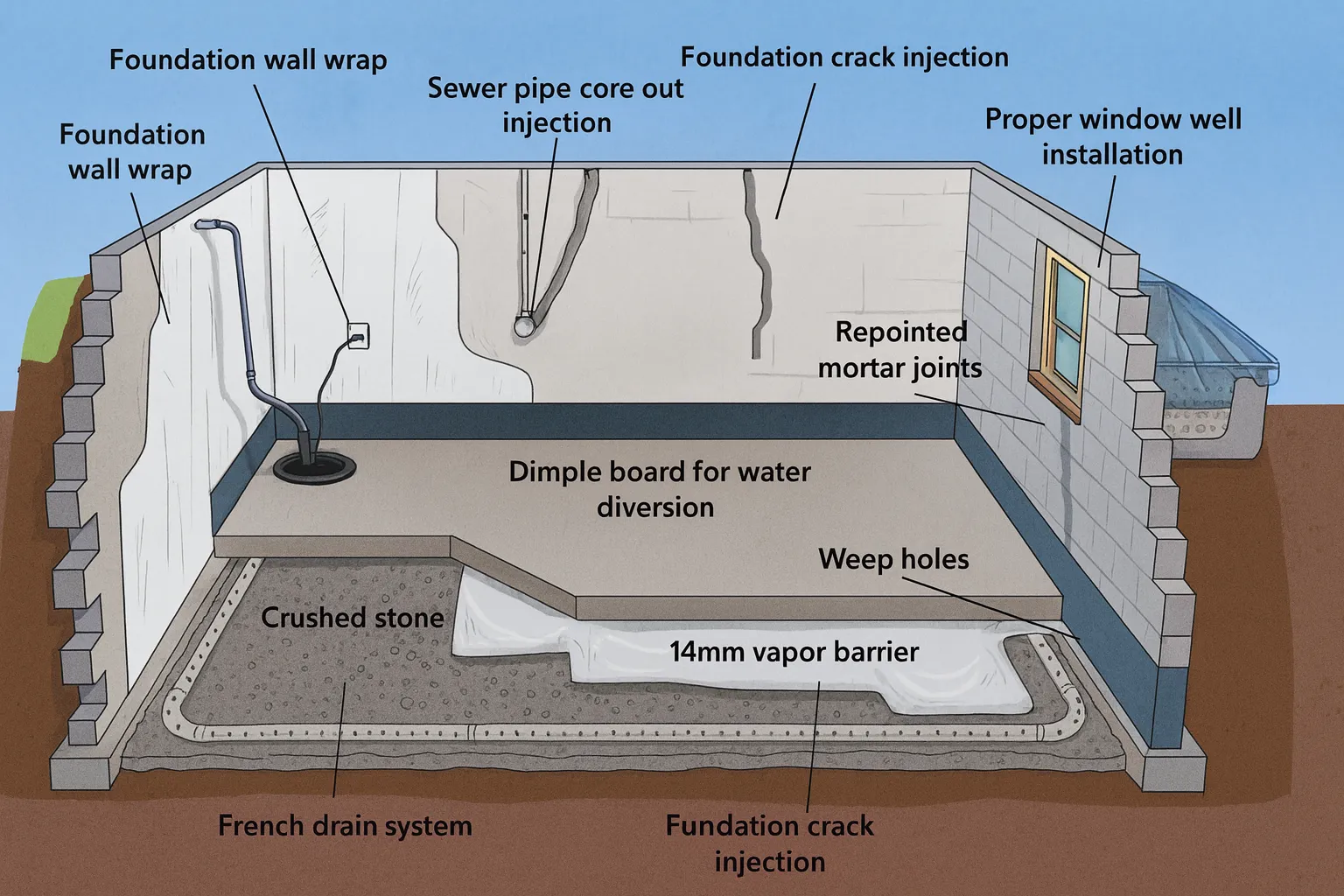
How Are Foundation Cracks Repaired: Epoxy vs. Polyurethane Injections?
Foundation crack repair through injections seals and reinforces walls from within.
| Injection Type | Characteristic | Advantage | Ideal Application |
|---|---|---|---|
| Epoxy | Rigid, structural bond | Restores tensile strength | Structural cracks in concrete |
| Polyurethane | Flexible, expansion foam | Blocks water intrusion completely | Active leaks and damp conditions |
Choosing the right injection ensures long-term protection and structural reinforcement according to crack severity and moisture presence.
Remediation of Expansive Soil Foundations Using Expanding Polyurethane Resin
The injection of expansive polyurethane resin can be employed to address issues of differential settlement. The resin is introduced into the soil beneath the foundation, where it expands to fill voids, consequently lifting and stabilising the foundation. This study presents injected expanding polyurethane as a feasible technique for the remediation of expansive soil foundations.
Use of expanding polyurethane resin to remediate expansive soil foundations, O Buzzi, 2010
How Can Basement Waterproofing Help Maintain Foundation Integrity?
Basement waterproofing addresses subsurface water that exerts pressure against walls and floors, preventing leaks, mold, and soil erosion beneath footings. A well-designed system complements repair methods by keeping moisture at bay.
What Are the Interior and Exterior Basement Waterproofing Methods?
Interior solutions include installing perimeter drains, sump pumps, and vapor barriers that collect and redirect water into a sump pit. Exterior waterproofing involves excavating around foundation walls, applying waterproof coatings, and fitting exterior French drains to intercept groundwater before it contacts concrete surfaces.
How Do Sump Pumps and Drainage Systems Prevent Water Damage?
A sump pump activates when water collects in a pit at the lowest point of the basement, pumping it away to a safe discharge area.
Combined with a subsurface drainage system, this setup prevents hydrostatic pressure buildup and keeps wall cracks dry, preserving both foundation and indoor air quality.
Why Is Crawl Space Encapsulation Important for Foundation Health?
Crawl space encapsulation uses heavy-duty membranes and sealed vents to isolate the subfloor from soil moisture. By creating a dry, controlled environment, encapsulation prevents rot, mold, and pest intrusion that can undermine wooden supports and exacerbate foundation settlement.
When Should Homeowners Call a Professional for Foundation Maintenance and Repair?
Timely professional intervention ensures accurate diagnosis and application of advanced repair methods that DIY efforts cannot achieve. Recognizing when to escalate protects your investment and avoids escalating repair costs.
What Are the Risks of Delaying Foundation Repairs?
Postponing foundation repairs allows minor cracks to widen under repeated freeze-thaw cycles, leading to wall bowing, floor separation, and increased water infiltration. These issues compound repair complexity and inflate costs by up to 200 percent if structural underpinning is deferred.
How Does Effective Basement Solutions Provide Expert Foundation Services in New Jersey?
Effective Basement Solutions offers specialized foundation inspection, tailored repair methods such as helical pier installation, slab jacking, and professional crack injection. Our local expertise in New Jersey soil conditions and free consultation process delivers accurate diagnostics and long-lasting structural stability.
What Should You Expect During a Professional Foundation Inspection?
A professional inspection includes visual assessment of wall and floor cracks, laser level readings to quantify settlement, soil moisture analysis around footings, and a comprehensive report outlining recommended repair methods and cost estimates.
What Are the Typical Costs and Considerations for Foundation Repair Services?
Foundation repair costs vary based on damage extent, method chosen, and local soil conditions. Understanding typical price ranges and financing options helps homeowners plan budgets effectively.
How Much Does Foundation Repair Usually Cost in New Jersey?
Foundation repair costs in New Jersey range from $1,800 for minor crack sealing to $7,500 for professional underpinning, with an average repair project around $4,200. More extensive settlement requiring multiple piers or full excavation can rise to $15,000 depending on house size and soil factors.
What Financing or Consultation Options Are Available for Homeowners?
Many contractors, including Effective Basement Solutions, offer free initial consultations and flexible payment plans that spread repair costs over 6–12 months. Financing through home equity lines or third-party lenders also provides low-interest options tailored to renovation budgets.
How to Choose the Right Foundation Repair Contractor?
Selecting a reliable contractor involves verifying licensing and insurance, requesting client references, reviewing case studies, and ensuring adherence to local building codes. Transparent estimates, written warranties, and clear timelines indicate professional accountability and quality workmanship.
What Frequently Asked Questions Do Homeowners Have About Foundation Maintenance?
Homeowners often wonder how to spot early warning signs, maintain long-term stability, and balance DIY care with professional help. Addressing these concerns empowers property owners to take proactive steps and secure structural health.
What Are the First Signs of Foundation Problems?
Early indicators include narrow diagonal cracks in drywall, slight door or window binding, and small gaps between baseboards and floors. These subtle changes usually stem from minor settlement and warrant seasonal monitoring before major repair becomes necessary.
How Often Should a Foundation Be Inspected?
A thorough foundation inspection should occur at least once every 12 months, with additional reviews after significant weather events or soil-disturbing activities nearby. Regular checks ensure maintenance tasks keep pace with seasonal soil movement.
Can I Fix Foundation Problems Myself?
Minor hairline cracks and surface sealant applications can be managed by homeowners using epoxy or polyurethane kits. However, structural issues such as horizontal wall cracks, significant settlement, or water-logged soil require professional underpinning and drainage solutions.
What Causes Foundation Damage?
Foundation damage typically arises from uneven soil moisture levels, poor drainage, expansive clay soils, freeze-thaw cycles, and landscaping practices that concentrate water near footings. Identifying these root causes guides both prevention and repair strategies.
How Do I Prevent Mold and Dampness in Basements?
Maintaining a dry basement involves combining interior drainage, sump pump installation, and adequate ventilation or dehumidification. Encapsulating crawl spaces and sealing foundation cracks further blocks moisture entry, reducing mold risk and preserving indoor air quality.
For personalized advice and a free consultation on foundation inspection and repair, contact Effective Basement Solutions to protect your home’s structural integrity and maintain a dry, healthy living environment.
