
Installing an Interior French Drain: Complete Guide to Basement Waterproofing and Drainage Solutions
A damp, flooded, or mold-affected basement can undermine home health, safety, and value, especially in New Jersey’s variable climate. Installing an interior French drain offers a proven solution that collects groundwater beneath the slab and channels it into a sump pump for reliable removal, relieving hydrostatic pressure and preventing leaks. In this guide, you’ll discover exactly what an interior French drain is, how it works, the core components involved, its key benefits, a step-by-step installation process, cost considerations, comparisons with other drainage solutions, common problems it solves, and essential maintenance practices. By the end, you’ll be equipped with clear insights to keep your basement dry and gain confidence to request a free consultation from a trusted waterproofing specialist.
What Is an Interior French Drain and How Does It Work?
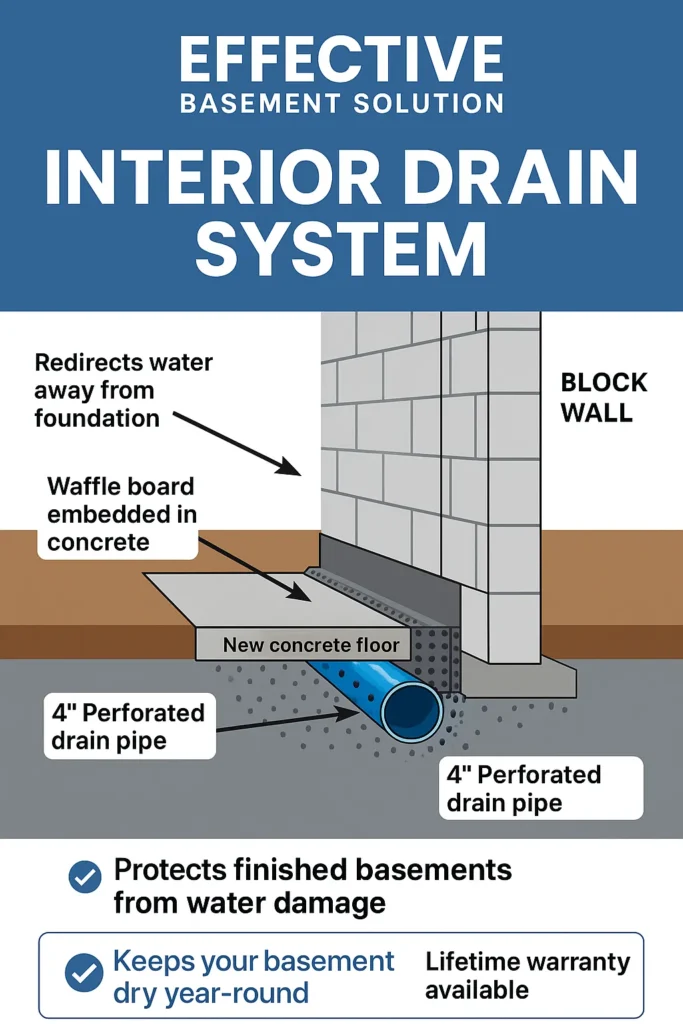
An interior French drain is a sub-floor perimeter drainage system designed to intercept groundwater before it breaches basement walls and floors. It comprises a sloped trench beneath the existing slab, a perforated pipe encased in gravel, and filter fabric—all directing collected water toward a sump pit. Once water accumulates in the pit, a sump pump ejects it away from the foundation, effectively reducing hydrostatic pressure that otherwise forces moisture inward. By creating a controlled pathway for groundwater, this system transforms uncontrolled seepage into a managed discharge process, ensuring a consistently dry basement environment.
What Are the Key Components of an Interior French Drain System?
Below is an overview of each component that makes an interior French drain function seamlessly:
- Perforated Pipe: Rigid or flexible PVC piping with holes that allow water entry.
- Gravel Envelope: Washed stone surrounds the pipe, facilitating rapid water flow into the drain.
- Filter Fabric: Geotextile wrap prevents fine soil from clogging the gravel.
- Sump Pit: A basin that collects water channeled through the pipe.
- Sump Pump: An electric pump that activates via float switch to remove water from the pit.
How Does an Interior French Drain Relieve Hydrostatic Pressure?
Interior French drains intercept groundwater at the slab’s perimeter, where saturated soil exerts upward and lateral force on walls and floors. By capturing this water in a perforated pipe and diverting it to a sump pit, the system lowers the surrounding water table and relieves the force—halting cracks, bowing walls, and efflorescence. Lowering hydrostatic pressure protects structural integrity and stops moisture migration, creating a dry, stable basement environment.
How Does the Sump Pump Integrate with Interior French Drains?
The sump pump is the active component of the system: when water in the sump pit rises to a pre-set float height, the pump automatically discharges water through a dedicated pipe out of the home. This integration ensures collected groundwater never remains stagnant, preventing back-pressure and keeping the pipe clear. A reliable sump pump with battery backup further guarantees operation during power outages and heavy storms common in New Jersey.
What Are Common Terms and Synonyms for Interior French Drains?
Industry professionals may refer to interior French drains using various terms:
- Drain tile
- Perimeter drain
- Weeping tile
- Footing drain
- Interior drainage system
What Are the Main Benefits of Installing an Interior French Drain?
Installing an interior French drain offers multiple advantages that protect your home’s health and value. It prevents basement flooding by creating a continuous water catchment and discharge path, which immediately halts wall seepage and floor ponding. By controlling moisture levels, it significantly reduces relative humidity, inhibits mold and mildew growth, and improves indoor air quality. Structurally, the system relieves hydrostatic pressure that can crack foundations and bow walls, preserving integrity. A dry basement also increases usable living space and often boosts property value. In New Jersey’s climate, professional installation can proceed year-round, ensuring homeowners solve water issues without seasonal delays.
How Does It Prevent Basement Flooding and Water Damage?
An interior French drain collects groundwater before it penetrates walls or floors and directs it to a sump pump, eliminating standing water and preventing flood damage. This controlled path stops leaks at their source, safeguarding flooring, stored items, and finished spaces from water intrusion and costly repairs.
How Does It Control Moisture and Reduce Mold Growth?
By lowering soil-moisture levels around foundation walls, the drain system keeps basement humidity below mold-friendly thresholds. With reduced condensation and consistent air circulation, mold spores cannot develop on walls or organic surfaces, improving air quality and reducing health risks.
How Does It Protect Your Home's Foundation and Increase Property Value?
Lowering hydrostatic pressure prevents foundation cracks and wall bowing, preserving structural stability. A permanent, professionally installed drainage solution demonstrates diligent maintenance, often translating into a higher resale price and stronger buyer confidence.
Can Interior French Drains Be Installed Year-Round in New Jersey?
Yes, modern excavation equipment and cold-weather concrete mixes enable effective installation in all seasons. Winter-rated concrete and heated work tents allow continuous protection against groundwater, ensuring your basement stays dry regardless of weather fluctuations.
How to Install an Interior French Drain: Step-by-Step Guide
Professional interior French drain installation follows a meticulous sequence to maximize performance and longevity.
- Initial Basement Inspection and AssessmentA certified technician examines wall and floor conditions, identifies cracks, measures moisture levels, and maps soil-water flow patterns. This diagnostic phase determines optimum trench layout and sump pit location.
- Concrete Floor Breaking and Trench ExcavationUsing controlled saw-cutting, the technician removes a narrow strip of concrete along the perimeter. The trench extends to the footing level, ensuring access to groundwater flow paths.
- Perforated Pipes, Gravel, and Filter Fabric InstallationAfter placing a geotextile liner, the team positions the perforated pipe on a gravel base, wraps it in filter fabric, and backfills with more gravel to maintain an unimpeded flow channel.
- Sump Pit and Pump IntegrationThe sump pit is set flush with the new slab elevation, anchored in concrete, and fitted with a high-capacity pump. Float-switch wiring and discharge piping are connected for automatic operation.
- Concrete Restoration and System TestingTechnicians pour fast-set concrete to seamlessly seal the trench, restoring the basement floor. A full system test cycles the pump and inspects discharge lines to confirm reliable water removal.
How Much Does Installing an Interior French Drain Cost?
Costs for an interior French drain typically range from moderate to premium, depending on site conditions and system specifications. Core factors include trench depth, basement square footage, pipe and gravel quality, sump pump features, labor rates, and any required permits. Accessibility challenges—such as furniture removal or tight crawl spaces—can add to labor hours. For a precise estimate, homeowners in New Jersey are encouraged to request a free, custom quote that covers material selection, excavation complexity, and pump capacity to match expected groundwater volumes.
What Factors Influence the Cost of Interior French Drain Installation?
The primary cost drivers include:
- Basement size and layout: More trench footage equals higher material and labor expenses.
- Excavation difficulty: Obstructions and limited access raise labor time.
- Material quality: Premium perforated pipe, gravel, and fabric increase upfront costs.
- Pump capacity and features: Battery backup and high-efficiency models command higher prices.
How Does Sump Pump Type Affect Overall Pricing?
A basic submersible pump offers reliable performance at entry-level cost, while models with battery backup, smart alarms, and energy-efficient motors carry premium pricing. Selecting the right pump ensures continuous operation and prevents costly system failures during storms.
Are There Additional Costs for Concrete Removal and Basement Accessibility?
If the concrete slab is thick or reinforced with steel, cutting and removal may take extra time. Furniture relocation, protective coverings, and cleanup also contribute to project scope. Clear, unobstructed spaces streamline installation and can reduce overall costs.
How Can Homeowners Get a Free, Custom Quote in New Jersey?
To receive a tailored estimate, contact a local waterproofing specialist for a comprehensive basement inspection. The assessment examines soil conditions, existing moisture issues, and structural factors, ensuring your quote reflects precise material, labor, and permit requirements.
How Do Interior French Drains Compare to Other Basement Drainage Solutions?
Homeowners often weigh interior French drains against exterior drains, standalone sump pumps, or surface water management. Each approach has unique advantages and limitations based on cost, disruption, and effectiveness against hydrostatic pressure.
What Are the Pros and Cons of Interior French Drains vs. Exterior French Drains?
| Installation Aspect | Interior French Drain | Exterior French Drain |
|---|---|---|
| Disruption Level | Minimal exterior landscaping impact, more indoor work | Major excavation around foundation, landscaping loss |
| Cost | Moderate–High due to indoor concrete work | High excavation and waterproof membrane expenses |
| Hydrostatic Pressure Relief | Directly relieves subsurface pressure | Prevents water from reaching basement walls |
| Maintenance Access | Easier interior pump access | Harder to inspect buried exterior system |
Interior drains offer less yard disruption, while exterior drains block water entry before it contacts walls.
How Do Interior French Drains Work with Standalone Sump Pumps?
A standalone sump pump removes water that collects naturally in a pit but lacks the perimeter collection network of a French drain. Combining both ensures groundwater is intercepted around the slab and reliably evacuated, forming a comprehensive solution that outperforms either method alone.
When Is an Interior French Drain the Best Choice for Basement Waterproofing?
When interior moisture issues stem from hydrostatic pressure under the slab, an interior French drain is ideal. It suits finished basements, tight lot lines where exterior excavation is impractical, and projects requiring year-round installation without major landscaping impact.
What Common Basement Water Problems Do Interior French Drains Solve in New Jersey?
Interior French drains directly address the region’s most persistent basement issues by intercepting and diverting water from vulnerable points.
How Does It Address Hydrostatic Pressure and Wall Seepage?
By lowering the local water table around your foundation, the drain system eliminates the force pushing through walls and floors. This preventive action stops cracks from forming and halts ongoing seepage that causes damp walls.
Can It Fix Floor Cracks, Dampness, and Musty Odors?
When groundwater infiltrates through slab cracks, it generates musty odors and persistent damp spots. Channeling this water into a subsurface drain removes the moisture source, restoring fresh, dry floors and eliminating odors.
How Does It Help Prevent Mold and Efflorescence?
With water diverted away before it contacts masonry, the conditions that feed mold colonies and leave white mineral deposits (efflorescence) on walls vanish. A consistently dry environment inhibits fungal growth and protects aesthetics.
How Should Homeowners Maintain Their Interior French Drain for Longevity?
Regular maintenance keeps an interior French drain operating at peak efficiency, extending lifespan and preventing system issues.
What Regular Inspections and Tests Are Recommended?
Inspect the sump pit quarterly, checking gravel levels and filter fabric integrity. Examine the float switch operation by pouring water into the pit to trigger pump activation.
How Should Sump Pumps Be Maintained and Tested?
Test the pump monthly by lifting the float arm and ensuring prompt activation. Clean the inlet screen and discharge line to prevent blockages, and verify battery backup readiness if equipped.
What Are Common Signs of Clogs or System Issues?
Slow pump cycles, standing water in the pit, unusual pump noises, or unexpected motor cycling can indicate gravel migration, pipe blockages, or float malfunctions. Early detection prevents basement flooding.
How Does Proper Maintenance Extend System Lifespan?
Consistent cleaning, prompt repair of mechanical parts, and periodic professional inspections ensure the drainage network and pump operate without strain, often surpassing two decades of reliable service.
A well-maintained interior French drain provides decades of dry-basement protection, improving living conditions, safeguarding structural integrity, and enhancing your New Jersey home’s value. Contact a qualified basement waterproofing specialist today to schedule your inspection and free consultation on an interior French drain system tailored to your property.
