
Foundation Repair in New Jersey: How to Identify, Fix, and Protect Your Home’s Foundation
Foundation damage can undermine the safety and value of homes across New Jersey, with foundation cracks and settling affecting one in three residences at some point. This guide offers actionable insights into foundation repair, helping homeowners recognize early warning signs, understand local causes, and explore proven repair methods. We will examine typical indicators such as wall fissures and uneven floors, deep-dive into environmental factors like hydrostatic pressure and expansive soils, and outline popular solutions including carbon fiber reinforcement and underpinning. Additionally, readers will find transparent cost estimates, complementary basement waterproofing strategies, and criteria for selecting a qualified New Jersey specialist. By following these steps, you can make informed decisions to protect structural integrity and prevent moisture-related issues. For homeowners seeking professional assessment, effectivewaterproofing.com offers free foundation inspections tailored to New Jersey soil conditions. First, we will explore the common signs of foundation problems in New Jersey residences.
What Are the Common Signs of Foundation Problems in New Jersey Homes?
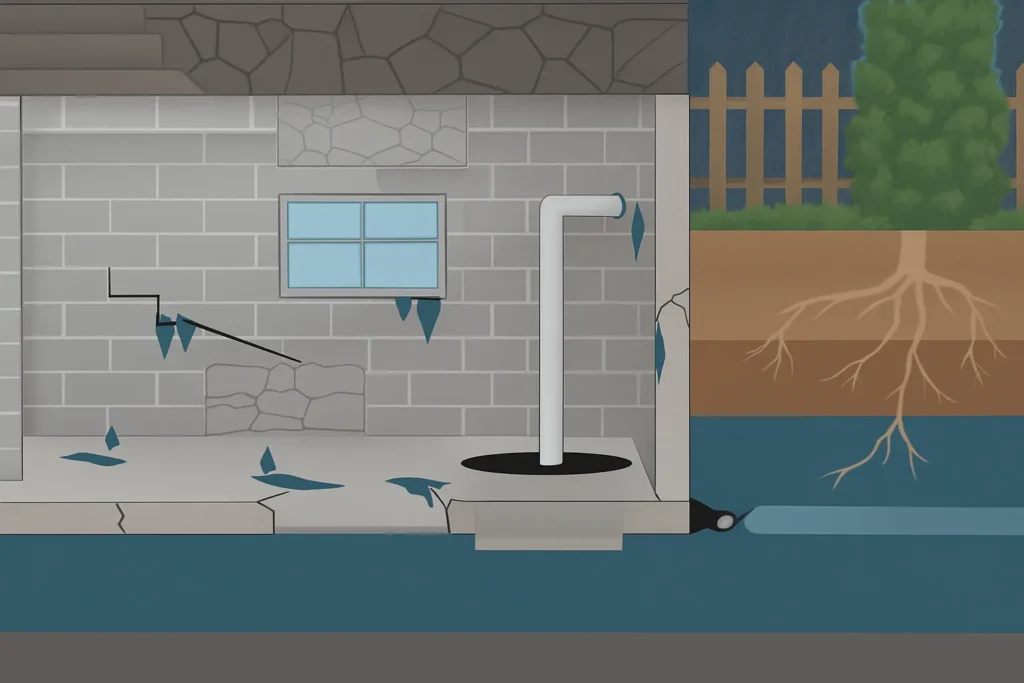
Foundation problems often present as visible and subtle disturbances that indicate shifting loads and soil movement beneath your home. These signs can progress rapidly in regions with clay soils and heavy rainfall, threatening structural stability and indoor air quality. Early recognition allows for targeted foundation repair before cracks widen or walls bow inward. Understanding these cues helps homeowners prioritize inspections and avoid escalating repair costs.
Below are five key indicators you may notice in New Jersey homes:
- Wall cracks that run vertically, horizontally or in a stair-step pattern often signify foundation movement.
- Uneven floors or sloping surfaces indicate soil settlement and shifting support under the slab.
- Sticking doors and windows reveal changes in frame alignments caused by foundation shifts.
- Bowing basement walls show lateral pressure from expansive soils and hydrostatic forces.
- Mold growth and persistent dampness can stem from foundation gaps allowing groundwater intrusion.
These indicators signal underlying movement and warrant professional evaluation to prevent further structural deterioration. In the next sections, we will examine specific crack types and other visible damage in greater detail.
How to Recognize Foundation Cracks: Vertical, Horizontal, and Stair-Step Types
Foundation cracks emerge when stress concentrations exceed material strength, producing distinct patterns that inform repair needs. Vertical cracks often result from slab settling and typically appear as narrow fissures running straight up walls, while horizontal cracks suggest lateral pressure from wet soils pushing inward. Stair-step cracks follow mortar lines in brickwork and indicate differential movement between foundation sections. Identifying the crack type helps determine whether carbon fiber reinforcement, underpinning, or steel I-beams are most appropriate. Recognizing these patterns early reduces the risk of water entry and structural compromise, and leads naturally into assessing wall bowing conditions next.
What Does Bowing Basement Walls Indicate About Structural Integrity?
Bowing basement walls reflect lateral soil pressure exceeding the wall’s capacity to resist inward movement, compromising the home’s load-bearing system. This inward deflection often progresses in phases, beginning with minor bulges and advancing to significant curvature that may crack or separate from floor slabs. Installing carbon fiber straps or steel I-beams can restore stability by counteracting these soil forces and preventing further deformation. Addressing wall bowing promptly safeguards against water infiltration and potential collapse, preparing the home for comprehensive underpinning if sinking issues persist.
How Do Uneven Floors and Sticking Doors Signal Foundation Issues?
Uneven floors and misaligned doors result from differential settlement of the foundation, where soil beneath one section compresses more than adjacent areas. As the slab tilts or sinks, door and window frames shift, causing panels to bind or gaps to appear. Monitoring these symptoms can reveal gradual settlement before major cracks develop, enabling preventative measures such as slab jacking or piering. Correcting these alignment issues restores smooth operation of openings and indicates whether more extensive underpinning may be necessary.
Can Mold and Dampness Be Signs of Foundation Damage?
Yes, mold and persistent dampness often coincide with foundation defects that allow groundwater ingress through cracks and pores. Moisture penetrating foundation walls creates ideal conditions for fungal growth, which not only damages finishes but also compromises indoor air quality and occupant health. Interior waterproofing systems like French drains and sump pumps remove excess water, while sealing foundation gaps prevents recurrence. Controlling moisture after repair enhances long-term structural performance and maintains a healthy living environment.
When Should New Jersey Homeowners Seek a Professional Foundation Inspection?
Homeowners should arrange a professional foundation inspection when multiple warning signs converge or when visible cracks exceed 1/8 inch in width. Conditions such as stair-step cracks, bowing walls, and uneven floors all warrant immediate expert assessment. A free foundation inspection from effectivewaterproofing.com provides a detailed evaluation of soil conditions, hydrostatic pressure impacts, and structural stability. Scheduling this inspection early ensures accurate diagnosis and customized repair planning, laying the groundwork for effective remediation and future protection.
What Factors Cause Foundation Damage in New Jersey Homes?
Foundation damage arises from a combination of soil characteristics, groundwater pressure, and climatic variations specific to New Jersey. Expansive clay soils swell when wet and shrink when dry, creating cyclical pressure on foundation walls and slabs. Excess rainwater generates hydrostatic pressure that pushes against basements, while inadequate drainage accelerates soil settlement under load-bearing walls. Seasonal freezes further exacerbate these processes by forming ice lenses beneath foundations, leading to heaving and subsequent voids. Recognizing these local factors guides homeowners to targeted preventative measures and repair methods that address root causes rather than symptoms.
Key contributors to foundation distress in New Jersey include:
- Hydrostatic pressure from heavy rainfall and high water tables.
- Expansive clay soils that fluctuate in volume with moisture content.
- Soil settlement due to poor site compaction and drainage deficiencies.
- Tree roots that extract subsurface moisture, causing uneven shrinkage.
- Seasonal freeze-thaw cycles that heave and settle foundation elements.
Mitigating these factors through landscape grading, gutter maintenance, and proper drainage systems reduces long-term movement and preserves foundation health. Next, we will explore how hydrostatic pressure specifically affects basement walls and structural integrity.
How Does Hydrostatic Pressure Affect Basement Walls and Foundations?
Hydrostatic pressure develops when groundwater accumulates against foundation walls, exerting force that can crack, bow, or separate masonry. As water levels rise, the increased lateral load surpasses wall strength, leading to horizontal and staircase cracks. Interior drain systems and exterior perimeter drains relieve this pressure by channeling water away from the foundation. Proper management of hydrostatic forces prevents soil saturation and reduces the likelihood of wall deformation, paving the way for combined waterproofing and structural repair solutions.
Why Are Expansive Clay Soils a Major Threat to New Jersey Foundations?
Expansive clay soils present a major threat because they absorb moisture during wet seasons and contract in dry spells, generating cyclic stress on foundation elements. This alternating expansion and contraction can destabilize footings, crack slabs, and trigger differential settlement. Underpinning techniques such as mini-piled or resin injection underpinning transfer structural loads to stable strata below the active clay zone. Addressing expansive soil behavior at its source prevents recurring foundation movement and supports lasting repair outcomes.
How Do Soil Settlement and Poor Drainage Contribute to Foundation Problems?
Soil settlement occurs when loose or poorly compacted soils beneath the foundation compress under load, creating voids that cause slabs to sink or tilt. Inadequate drainage exacerbates this issue by allowing water to pool and erode supporting soils. Slab jacking and foundation piers can lift and stabilize settled areas, restoring level floor planes and load distribution. Improving site grading and installing French drains prevents future settlement by directing runoff away from critical foundation zones.
What Role Do Tree Roots and Construction Defects Play in Foundation Damage?
Tree roots seek moisture and can penetrate foundation joints, widening cracks and undermining adjacent soils. Overgrown roots remove groundwater unevenly, causing localized soil shrinkage and tilting of slabs. Construction defects such as inadequate reinforcement, improper backfill, or missed vapor barriers also accelerate foundation distress. Addressing root intrusion and rectifying original building flaws through targeted underpinning and waterproofing cures both biotic and structural contributors to long-term damage.
How Do Seasonal Weather Changes Impact Foundation Stability in New Jersey?
Seasonal fluctuations, from heavy spring rains to winter freezes, cycle through wetting, drying, and freezing phases that stress foundations. Freeze-thaw cycles create ice lenses that lift and crack slabs, while summer droughts shrink soils and induce downward settlement. Continuous exposure to these conditions without appropriate drainage and moisture control leads to cumulative structural movement. Integrating flexible repair methods like carbon fiber straps and adjustable steel piers accommodates these cycles and maintains stability year-round.
What Are the Most Effective Foundation Repair Methods for New Jersey Homes?
Foundation repair methods vary according to the type and severity of damage, but several proven techniques deliver reliable results in New Jersey conditions. Carbon fiber reinforcement offers a minimally invasive approach to stabilize bowed walls, while steel I-beams provide robust support for significant lateral displacement. Underpinning solutions—ranging from mass concrete to resin injection—address sinking foundations by establishing load-bearing elements below unstable soils. Foundation piering and slab jacking restore settled sections, and crawl space encapsulation prevents moisture intrusion and structural decay.
| Repair Technique | Mechanism | Advantage |
|---|---|---|
| Carbon Fiber Reinforcement | High-tension straps bond to walls | Stabilizes bowing walls with minimal digging |
| Steel I-Beam Installation | Steel columns support wall loads | Provides strong resistance to lateral forces |
| Mass Concrete Underpinning | Extended footing placed below slab | Transfers load to stable strata for sinking repair |
| Mini-Pile and Resin Injection | Deep piers or resin expands in voids | Adaptable to limited access and varied soils |
| Foundation Piering & Slab Jacking | Hydraulic jacks and piers lift slab | Restores level floors and prevents further settlement |
These methods offer tailored solutions for common foundation issues, combining structural stability with moisture control. The next section will provide transparent cost estimates and factors that influence repair pricing.
How Does Carbon Fiber Reinforcement Stabilize Bowing Basement Walls?
Carbon fiber reinforcement stabilizes bowing walls by adhering high-strength strips to the interior surface, redistributing lateral loads across the wall. The composite material resists tensile stress and prevents further inward deflection without extensive excavation. Installation is quick, nonintrusive, and compatible with interior waterproofing systems, ensuring both structural support and moisture management. This approach suits walls with minor to moderate bowing and prepares them for any additional underpinning if needed.
When Is Steel I-Beam Installation Necessary for Structural Support?
Steel I-beams are necessary when basement walls exhibit severe bowing or horizontal cracking that exceeds two inches of inward deflection. The beams are anchored to the floor slab and ceiling joists, creating a continuous vertical support that counters soil pressure. This method provides immediate reinforcement for walls at risk of collapse and integrates with underpinning or carbon fiber systems for comprehensive repair. Heavy-duty steel solutions suit older homes and walls constructed without modern reinforcement standards.
What Are Underpinning Solutions: Mass Concrete, Mini-Piles, and Resin Injection?
Underpinning transfers building loads to deeper, more stable soils when shallow footings settle or fail. Mass concrete underpinning extends traditional footings below the active soil zone; mini-piles use steel or concrete columns to reach stable layers; resin injection expands to fill voids and stabilize soils. Each technique offers distinct benefits in terms of depth, load capacity, and installation footprint. Choosing the right underpinning method depends on soil profiles, load requirements, and site accessibility.
How Do Foundation Piering and Slab Jacking Restore Sinking Foundations?
Foundation piering involves driven or drilled piers installed beneath settled areas to lift and support the structure on stable subsoil. Slab jacking uses pressurized grout or polyurethane foam injected under the slab to raise uneven floors. Both methods correct settlement-related tilts and redistribute loads evenly across the foundation. Combining piering with slab jacking can achieve precise leveling and reinforce underlying soils for durable results.
What Are the Benefits of Crawl Space Foundation Repair and Encapsulation?
Crawl space repair and encapsulation seal the subfloor space against moisture, pests, and soil gases while reinforcing support piers or beams. Installing a vapor barrier and dehumidifier controls humidity, preventing wood rot and mold growth. Encapsulation complements foundation repair by eliminating groundwater intrusion and maintaining consistent interior conditions. This method prolongs structural integrity and improves energy efficiency by creating a conditioned buffer beneath the home.
How Much Does Foundation Repair Cost in New Jersey? Factors and Estimates Explained
Foundation repair costs vary widely based on damage severity, repair technique, and site conditions. Minor crack repairs and carbon fiber reinforcement may start around $2,000, while comprehensive underpinning projects can exceed $10,000. Soil accessibility, depth of required piers, and labor rates influence final estimates. A free foundation inspection from effectivewaterproofing.com provides an accurate appraisal of your project’s scope and cost drivers, enabling transparent budgeting and informed decisions.
| Repair Method | Average Cost Range | Key Factors |
|---|---|---|
| Crack Sealing | $250 – $800 | Crack size, wall thickness |
| Carbon Fiber Reinforcement | $2,000 – $6,000 | Wall length, access requirements |
| Underpinning | $1,000 – $3,500 per pier | Soil type, underpinning depth |
| Piering & Slab Jacking | $500 – $3,000 | Settlement extent, pier type |
| Crawl Space Encapsulation | $2,500 – $7,000 | Space size, drainage complexity |
These cost ranges reflect 2025 market conditions and UK-based benchmarks, offering a preliminary framework for New Jersey homeowners. Accurate quotes depend on a detailed site evaluation and method selection.
What Influences Foundation Repair Costs: Severity, Method, and Materials?
Repair costs hinge on the extent of foundation movement, the chosen repair method, and material quality. Severe bowing or deep settlement requires extensive underpinning or steel supports, increasing labor and materials expenses. In contrast, minor crack repairs and carbon fiber straps involve fewer resources and shorter installation times. Understanding how these factors interrelate allows homeowners to balance immediate needs with long-term performance.
How Do Repair Methods Like Underpinning and Piering Differ in Price?
Underpinning using mass concrete generally costs less per foot of foundation than deep piering, but piering offers higher load capacity and faster installation in difficult soils. Resin injection may lower labor costs but requires specialized materials. Pricing comparisons depend on soil accessibility, vector forces, and crew expertise. Evaluating method-specific benefits against budget constraints ensures an optimal repair plan.
Why Is a Free Foundation Inspection Essential for Accurate Cost Estimates?
A free foundation inspection identifies the exact cause and scope of damage, revealing hidden issues that influence repair complexity. Soil analysis, structural assessments, and moisture mapping guide method selection and material specifications. This no-obligation service from effectivewaterproofing.com ensures quote accuracy and prevents unexpected costs, enabling homeowners to plan with confidence.
How Can Preventative Measures Reduce Long-Term Foundation Repair Expenses?
Implementing preventative measures—such as improving drainage, maintaining gutters, and grading the landscape—minimizes soil saturation and settlement risk over time. Regular foundation monitoring and timely minor repairs stop small cracks from expanding into costly structural issues. Investing in moisture control systems and routine inspections preserves foundation health and lowers cumulative repair expenditures.
How Does Basement Waterproofing Complement Foundation Repair in New Jersey?
Basement waterproofing safeguards repaired foundations by preventing water intrusion and controlling hydrostatic pressure. Interior systems like French drains and sump pumps manage groundwater at the source, while exterior solutions such as landscape grading and perimeter drains divert surface runoff. Integrating waterproofing with structural repair enhances overall durability and reduces the likelihood of recurring damage. Implementing both strategies creates a comprehensive defense against soil-borne moisture and preserves the integrity of underpinning and wall reinforcements.
What Interior Basement Waterproofing Systems Are Available?
Interior waterproofing systems include French drains installed along the perimeter floor joint, sump pumps that eject collected water away from the foundation, and sealants that block minor cracks. These systems channel water into designated collection points, preventing seepage through basement floors and walls. Combined with dehumidifiers, interior solutions keep the subgrade environment dry and mitigate mold growth. Proper installation ensures ongoing protection following structural repairs.
How Does Exterior Waterproofing Protect Foundations?
Exterior waterproofing involves excavating around the foundation to apply waterproof membranes, install exterior drains, and regrade the soil to slope away from the home. This barrier stops water before it reaches the foundation walls and reduces hydrostatic pressure. When paired with downspout extensions and surface grading, exterior solutions create a long-lasting shield that preserves foundation repair investments and prevents water-related soil shifts.
How Can Mold and Dampness Be Controlled After Foundation Repair?
Controlling mold and dampness after repair requires sealing all foundation cracks, installing adequate drainage systems, and using dehumidification. Encapsulating crawl spaces and testing for residual moisture ensures that fungal spores are unable to establish. Regular inspections and moisture monitoring tools maintain optimal humidity levels, supporting the longevity of both structural and waterproofing solutions.
Why Is Basement Waterproofing Critical for Long-Term Foundation Stability?
Basement waterproofing is critical because it prevents water from undermining repaired walls and footings, preserving the strength of underpinning and reinforcement systems. By reducing hydrostatic pressure and soil saturation, waterproofing stabilizes the surrounding earth and minimizes future settlement. Combining waterproofing with foundation repair maximizes structural resilience, protects interior finishes, and safeguards property value over time.
Why Choose a New Jersey Foundation Repair Specialist? Local Expertise and Trust Factors
Selecting a New Jersey specialist ensures nuanced understanding of local soil conditions, weather patterns, and building codes that directly impact repair success. Local experts can anticipate expansive clay behavior, design solutions suited to freeze-thaw cycles, and navigate municipal regulations efficiently. Offering free foundation inspections and industry-backed warranties, reputable providers build homeowner confidence through transparent assessments and reliable outcomes.
Partnering with a regional specialist bridges knowledge gaps and provides tailored service that mass-market contractors cannot match. Trustworthy teams use certified materials and proven techniques to deliver long-term protection. Homeowners benefit from seamless coordination of structural repairs and waterproofing, guaranteeing unified solutions that address every aspect of foundation health.
What Makes New Jersey Soil and Climate Unique for Foundation Repair?
New Jersey’s combination of clay-rich soils, seasonal rainfall patterns, and freeze-thaw cycles creates a dynamic environment for foundation movement. Clay soils expand when wet and contract in dry periods, while winter freezes form ice lenses that lift and crack slabs. Specialists familiar with these conditions tailor underpinning depths, waterproofing strategies, and support systems to accommodate local geotechnical challenges.
How Do Free Inspections and Warranties Build Homeowner Confidence?
Free foundation inspections provide an honest appraisal of damage without financial obligation, establishing trust through expert transparency. Warranties for repair work reassure homeowners that any unforeseen issues will be addressed promptly at no additional cost. This combination of no-cost evaluation and guaranteed service demonstrates commitment to quality and cultivates lasting client relationships.
What Do Case Studies Reveal About Successful Foundation Repairs in New Jersey?
Case studies illustrate how targeted repairs restore structural integrity and prevent recurrence. In one Monmouth County project, stair-step cracks were stabilized with piering and carbon fiber straps, eliminating water leaks and halting lateral movement. These documented outcomes validate method selection and highlight the benefits of combining structural and waterproofing solutions for lasting results.
How Can Homeowners Request a Free Consultation or Service?
Homeowners can request a free consultation by contacting effectivewaterproofing.com for a comprehensive foundation inspection and estimate. This service includes soil analysis, structural evaluation, and customized repair planning. Scheduling an inspection initiates a tailored approach that aligns with local conditions and secures the home against future damage.
What Are the Frequently Asked Questions About Foundation Repair in New Jersey?
Homeowners frequently seek clarity on early warning signs, repair timelines, and the long-term value of foundation work. They wonder how soon cracks warrant professional attention, what average project durations look like, and how to balance cost with lasting performance. Questions also arise about maintaining foundations post-repair and the scope of available warranty coverage.
Understanding these common concerns helps buyers prepare for the inspection process and make informed decisions. Clear guidance on preventive maintenance, repair sequencing, and service guarantees empowers New Jersey residents to protect their investment and ensure a stable, dry foundation for years to come.
Foundation repair in New Jersey demands local expertise, strategic waterproofing, and transparent pricing. By recognizing signs of damage, addressing root causes, evaluating suitable methods, and partnering with a specialist who offers free inspections and warranties, homeowners can safeguard structural integrity and maintain property value. Contact effectivewaterproofing.com today to schedule your free foundation inspection and take the first step toward a secure, resilient home.