

Step-by-Step French Drain Installation Guide for New Jersey Homeowners
DIY french drain installation , Is your New Jersey basement plagued by water seepage, mildew, or foundation cracks? Installing a French drain system can divert groundwater and surface runoff, relieve hydrostatic pressure, and protect your home from moisture damage. In this guide, you will discover what a French drain is, explore interior versus exterior options tailored to New Jersey’s climate, follow a detailed DIY installation roadmap with professional tips, learn common pitfalls to avoid, understand maintenance best practices, compare local costs, and see why Effective Basement Solutions offers trusted, clean methods and free consultations. By the end, you’ll be equipped to safeguard your property with a reliable drainage system or know when to call in experts for lasting results.
What Is a French Drain and How Does It Work?
A French drain is a trench-based drainage system that channels water away from vulnerable structures by combining gravity flow and subsurface collection. It works by collecting groundwater through a perforated pipe surrounded by drainage aggregate and filter fabric, then conveying it to a safe discharge point. Homeowners benefit from reduced hydrostatic pressure, fewer foundation cracks, and a drier basement environment. Understanding its function lays the groundwork for selecting the right drain type and installation method.
What Are the Key Components of a French Drain System?
A French drain comprises several essential parts that together ensure effective water management:
- The perforated pipe collects subsurface water and directs it along the trench to an outlet.
- Drainage gravel facilitates even water flow around the pipe and prevents voids that can collapse.
- Filter fabric prevents fine soil particles from clogging the gravel and pipe.
- The trench provides the pathway and slope needed for gravity-driven drainage.
- An integrated sump pump can remove water from interior systems when gravity discharge is impractical.
Each component plays a critical role in channeling groundwater, setting the stage for a fully functional drainage network.
The Role of Geotextiles in Modern Drainage Systems and New Jersey's Climate Challenges
Geotextile drainage fabrics are essential components in modern French drain systems, acting as filters to prevent soil particles from clogging the drainage aggregate and perforated pipes, thereby extending the system’s lifespan and efficiency. In regions like New Jersey, characterized by heavy rainfall and diverse soil types, effective drainage solutions incorporating such materials are critical for managing stormwater runoff and protecting basements from moisture damage.
DIY french drain installation: This citation supports the article’s discussion on the function of French drains and the specific environmental challenges faced by homeowners in New Jersey.
Who Invented the French Drain and What Is Its History?
Henry Flagg French, a 19th-century American agriculturist and judge, popularized subsurface drainage in 1859 to protect farmland from waterlogging. By advocating for trenches lined with gravel and perforated clay tile, French established a method that was later refined with modern PVC pipe and geotextile fabric. His innovation addressed frost heave and erosion, principles that still guide today’s basement and landscape drainage solutions.
The Origins of the French Drain System
The French drain system, designed to divert excess water from land, was popularized by Henry Flagg French in his 1859 book, “Farm Drainage.” His work advocated for subsurface drainage using trenches filled with gravel and perforated pipes, a method that has since evolved with modern materials like PVC and geotextile fabric to protect foundations and landscapes.
This research directly supports the article’s historical account of the French drain’s invention and its foundational principles.
How Does a French Drain Prevent Basement Flooding and Protect Foundations?
A French drain relieves hydrostatic pressure by diverting groundwater before it reaches foundation walls. By collecting water through perforations and channeling it away, the system reduces soil saturation, prevents water intrusion, and averts structural cracking. For example, an exterior French drain installed below the footing can intercept soil moisture, safeguarding basements from seepage that causes mold and deterioration.
Understanding Hydrostatic Pressure and Foundation Integrity
Hydrostatic pressure, the force exerted by water-saturated soil against a structure, is a significant cause of foundation damage. This pressure can lead to basement leaks, cracks in walls, bowing, and even structural shifts, particularly in areas with heavy rainfall or poor drainage. Effective drainage systems are crucial to mitigate these forces and protect a home’s structural integrity.
This citation verifies the article’s explanation of hydrostatic pressure, its causes, and its detrimental effects on building foundations.
What Types of French Drains Are Suitable for New Jersey Homes?
What Are the Benefits of Exterior French Drains for Foundation Protection?
- Diverting rainwater away from footings
- Reducing soil saturation next to foundation walls
- Preventing frost heave under slab edges
- Alleviating lateral pressure that leads to bowing walls
Effective yard grading combined with an exterior drain enhances landscape health and long-term foundation stability.
How Do Interior French Drains Work with Basement Waterproofing Systems?
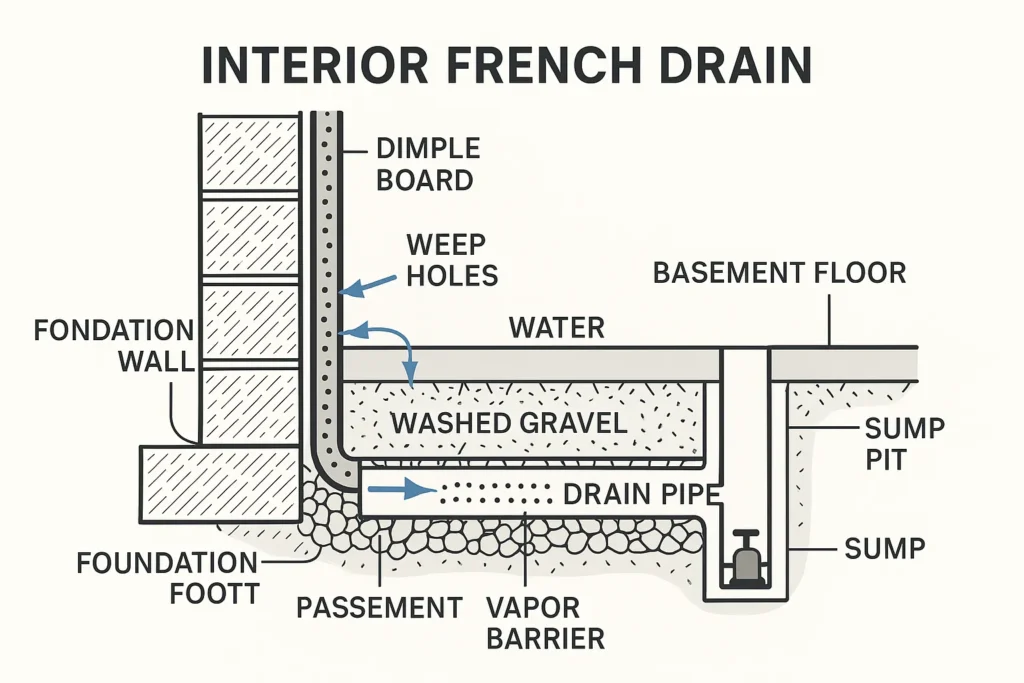
Interior French drains integrate beneath basement floors to intercept groundwater seeping through cracks or porous block walls. Water enters a perforated pipe bedded below concrete slabs, flows into a sump pit, and triggers a pump to discharge it outside. This approach complements wall sealing and becomes part of a complete basement waterproofing solution, ensuring interiors remain dry even when exterior grading is impractical.
When Is a Pipeless French Drain Appropriate?
Pipeless French drains, often called curtain drains, rely on coarser gravel layers without an installed pipe. They suit properties where shallow runoff control is needed—for instance, behind retaining walls or along shallow slopes. By creating a loose aggregate pathway, pipeless systems allow surface water to disperse laterally rather than channel through a pipe, offering a simpler solution where deep excavation or pump installation is unnecessary.
Installing a French Drain in New Jersey: Step-by-Step DIY Guide
Installing a French drain requires precise planning, the right materials, and careful execution to ensure water flows freely. A methodical approach reduces mistakes and maximizes drainage performance. Below is a section-by-section breakdown of the process, with warnings on when professional expertise is advisable for New Jersey’s varied soil conditions.
How Do You Plan and Prepare for French Drain Installation in New Jersey?
Effective planning in New Jersey involves assessing site slope, soil type, frost depth, and local permit requirements. Before excavating:
- Carry out a site assessment to map water entry points and grading issues.
- Contact utility companies for line locates to avoid underground cables or pipes.
- Obtain any necessary town or county permits related to exterior drainage work.
Completing these steps ensures compliance and prevents costly delays or damage, paving the way for a smooth installation.
What Tools and Materials Are Required for Installation?
Below is a concise overview of core supplies and equipment needed for a durable French drain:
| Component | Purpose | Specification |
|---|---|---|
| Perforated PVC pipe | Collect groundwater | 4-inch diameter, slotted design |
| Drainage gravel | Facilitate water movement | ¾-inch crushed stone |
| Filter fabric | Prevent sediment infiltration | Non-woven geotextile, 4 ft wide |
| Shovel or trencher | Excavate trench to required depth | Capable of 18–24 inch depths |
| Level and string line | Ensure consistent slope (1% grade) | Mason’s level or laser level |
| Sump pump (interior) | Pump water to discharge point (if needed) | Submersible, 1/3 HP or higher |
These tools and materials work in concert to deliver a reliable subsurface drain. With them gathered, excavation can proceed with confidence.
How Do You Dig the Trench with Proper Depth, Width, and Slope?
- Mark the trench path with stakes and string line at a 1% downhill slope.
- Excavate to 18–24 inches deep and 12 inches wide, keeping walls straight.
- Verify grade every 5 ft with a level, adjusting soil removal as needed.
Maintaining consistent slope and dimensions ensures uninterrupted drainage and avoids water pooling behind the foundation.
How Do You Line the Trench and Lay the Perforated Pipe Correctly?
- Unroll filter fabric along the bottom and up trench sides, overlapping edges.
- Place 2 inches of gravel atop the fabric for a level bedding.
- Center the perforated pipe on the gravel bed with holes facing downward or sideways.
Correct fabric lining and pipe orientation guarantee that only water enters the system, extending pipe life and performance.
How Do You Add Drainage Gravel, Wrap Fabric, and Backfill the Trench?
- Cover the pipe with 2–3 inches of gravel until it is completely surrounded.
- Fold the fabric over the gravel to encapsulate the assembly.
- Backfill with native soil or topsoil to restore the surface.
This layered structure prevents sediment entry and supports long-term stability, preparing the drain for efficient operation.
What Are the Best Discharge Point Options for French Drains?
| Discharge Point | Description | Advantages |
|---|---|---|
| Dry well | Underground stone-filled pit | Promotes infiltration, low maintenance |
| Storm drain | Connection to municipal drainage line | Immediate removal from property edge |
| Sump pit | Basin with pump for interior systems | Effective when gravity discharge impractical |
Each outlet suits different site constraints, balancing infiltration, municipal rules, and ease of maintenance.
When Should You Hire a Professional for French Drain Installation?
While DIY installation can save labor costs, professional help is recommended when:
- Soil conditions include high clay content or bedrock.
- Trench depths exceed frost-line requirements.
- Complex grading or dewatering systems are needed.
- Local regulations mandate licensed contractors.
Expert installers bring specialized equipment, experience with New Jersey soils, and guarantee compliance with building codes.
What Are Common French Drain Installation Mistakes and How Can You Avoid Them?
Avoiding installation errors is crucial for long-term system performance. Understanding the most frequent mistakes helps homeowners and installers sidestep failures.
Why Is Proper Slope and Grading Crucial for Drain Effectiveness?
What Happens If You Use the Wrong Gravel or Skip Filter Fabric?
Using fine or mixed aggregates clogs over time, while skipping fabric allows silt to enter pipe perforations. Both errors lead to reduced flow rates and early system failure. Always select clean, ¾-inch crushed stone and wrap assemblies in geotextile.
How Does Incorrect Pipe Placement Affect Drain Performance?
Placing the perforated pipe too high in the trench or with holes facing upward creates air pockets and limits water collection. Proper placement on a level gravel bed with holes facing downwards captures maximum groundwater and prevents sediment buildup.
Why Should You Avoid Routing Downspouts Directly into French Drains?
Direct downspout connections can overload the system during heavy rain, overwhelming gravel capacity and transporting debris into the pipe. It’s better to direct roof runoff to separate splash blocks or diverters before it reaches the French drain.
How Does Neglecting Maintenance Lead to Drain Failure?
Ignoring periodic flushing and sediment removal allows gradual clogging of pipe and gravel. Without routine inspection and cleaning, flow diminishes and backups occur. Scheduled upkeep ensures the system remains clear and effective over decades.
How Do You Maintain and Troubleshoot a French Drain System?
Routine maintenance and prompt troubleshooting preserve drainage efficiency and protect foundations from renewed water intrusion.
What Are Routine Maintenance Tasks for French Drains?
- Inspecting discharge points and cleanouts twice a year.
- Flushing the pipe with a garden hose from the cleanout to clear sediment.
- Checking fabric exposures and repairing tears to prevent soil infiltration.
Regular attention keeps sediment from building up and sustains optimal flow rates throughout the drain.
What Signs Indicate Your French Drain Needs Repair or Cleaning?
- Slow or pooling water at discharge points.
- Strange odors from stagnant water in interior drains.
- Visible sinkage or settling along the trench line.
Early detection of these signs allows targeted repairs before more extensive and costly issues develop.
How Can Preventative Measures Extend the Life of Your French Drain?
- Installing cleanouts at intervals for easy access.
- Adding debris guards to catch sediment before it enters the pipe.
- Protecting the trench area from heavy traffic or compaction.
Proactive design enhancements reduce maintenance frequency and prevent premature failures.
What Is the Cost of French Drain Installation in New Jersey?
Understanding local pricing helps homeowners budget effectively and weigh DIY against professional services.
What Factors Influence French Drain Costs in New Jersey?
Several variables affect total project costs:
- Trench length and depth required.
- Soil conditions, such as rock or clay content.
- Accessibility and required dewatering.
- Choice of discharge method and permit fees.
These factors determine labor intensity and material needs, shaping the per-foot and overall investment.
How Do DIY Costs Compare to Professional Installation Prices?
| Option | DIY Materials Cost | Professional Service Cost |
|---|---|---|
| Exterior Drain | $15–$30 per linear foot | $25–$50 per linear foot |
| Interior Drain | $30–$60 per linear foot | $40–$100 per linear foot |
While DIY saves on labor, professional installation ensures proper slope, warranty coverage, and code compliance, delivering long-term value.
What Is the Long-Term Value of Professional French Drain Installation?
Investing in expert installation yields benefits:
- Guaranteed workmanship and materials.
- Reduced risk of future leaks or structural damage.
- Increased home resale value due to reliable waterproofing.
In many cases, professional systems last 30–40 years, offsetting initial costs through avoidance of costly repairs.
Why Choose Effective Basement Solutions for Your French Drain Installation in New Jersey?
Effective Basement Solutions combines local expertise, proven methods, and a commitment to clean, hassle-free installations. As a New Jersey-based contractor focused on basement waterproofing, we understand regional soil challenges and frost-line requirements. Our in-house team uses non-corrosive materials and leaves work areas neat, delivering lasting protection without cutting corners.
What Makes Effective Basement Solutions the Trusted NJ Basement Waterproofing Contractor?
- Over 15 years of experience with New Jersey’s unique soil and climate
- Licensed and insured professionals employing proven waterproofing techniques
- Customized drainage and foundation repair plans tailored to each property
- Clean-work protocols that minimize disruption and protect landscaping
These strengths ensure homeowners receive dependable solutions and peace of mind.
How Can You Request a Free Consultation for French Drain Services?
To discuss a tailored French drain plan, visit effectivewaterproofing.com and complete the consultation form, or call our office to schedule a no-obligation site assessment. Our specialists will evaluate your basement, explain options, and provide a clear, written estimate—free of charge.
Maintaining a dry foundation starts with expert advice and quality installation. Reach out today to protect your New Jersey home from water damage.
A well-installed French drain transforms a wet, vulnerable basement into a dry, usable space by channeling water away and relieving foundation pressure. By following proper planning, excavation, lining, backfilling, and maintenance protocols, homeowners can enjoy decades of protection with minimal upkeep. Effective Basement Solutions stands ready to guide you through each step, offering local expertise, transparent pricing, and a free consultation to ensure your property remains safe and dry. Trust in a proven approach rather than risking common DIY pitfalls—secure your home’s foundation with a professional French drain solution today.