
Basement FAQs: Waterproofing, Dampness, Mold & Foundation Repair
Basement waterproofing solutions NJ homeowners rely on can stop leaks, dampness, and foundation damage before they escalate. Moisture in a basement accelerates mold growth, weakens structural integrity, and reduces usable living space. Understanding causes, prevention, and repair options helps protect your property’s value and indoor air quality.
Basement solutions FAQs empower New Jersey homeowners to tackle persistent water intrusion, dampness, and structural issues with confidence. Moisture in a basement accelerates mold growth, undermines foundation integrity, and diminishes usable living space, so understanding causes, prevention, and repair is essential. This guide maps out root triggers of leaks, proven waterproofing methods, dampness control strategies, foundation repair techniques, maintenance best practices, cost factors, and the benefits of professional services from Effective Basement Solutions. By the end, you’ll know when to act, which solutions deliver lasting protection, and how to secure a free consultation for tailored support.Most Effective Basement Waterproofing Solutions NJ Homeowners Trust
Basement water problems arise when soil pressure, cracks, or drainage failures allow groundwater to infiltrate living spaces, leading to damp walls and potential structural damage. Identifying these issues early prevents costly repairs and health hazards. Inspecting your basement regularly for telltale signs clarifies the extent of intrusion before waterproofing becomes urgent.
What Are the Common Causes of Basement Leaks and Dampness?
Basement leaks and dampness most often result from excessive hydrostatic pressure, foundation cracks, and inadequate exterior water management, each accelerating water entry.
| Source of Moisture | Entry Mechanism | Resulting Issue |
|---|---|---|
| Hydrostatic pressure | Soil water pushes against walls | Wall seepage and bowing |
| Foundation hairline cracks | Concrete shrinkage or settlement creates fissures | Steam-like damp patches on walls |
| Poor drainage and grading | Water pools against foundation instead of draining | Seasonal wet spots and efflorescence |
Addressing these root causes keeps basements dry and prevents further wall damage or mold growth. Recognizing those sources leads to clear indicators of water intrusion.
How Can Homeowners Recognize Signs of Water Intrusion in Basements?
Visible damp spots, musty odors, and white, powdery deposits often reveal hidden moisture problems in basements.
- Walls develop discolored patches where seepage collects.
- A persistent earthy or damp smell signals mold-friendly humidity.
- Efflorescence forms when mineral-laden water evaporates, leaving salts on masonry.
Monitoring these symptoms ensures that protective measures can follow before structural repairs become necessary.
When Is Basement Flooding an Emergency and What Should I Do?
Basement flooding qualifies as an emergency when water depth exceeds a few inches, threatens electrical systems, or jeopardizes personal safety. Respond immediately by:
- Shutting off power at the breaker panel to prevent electrocution.
- Using a portable pump or wet/dry vacuum to extract standing water.
- Placing sandbags at doorways and window wells to halt further ingress.
- Contacting a certified basement waterproofing specialist for rapid assessment.
Swift action minimizes property loss and reduces the risk of long-term damage to your foundation and belongings.
What Are the Most Effective Basement Waterproofing Methods?
Effective basement waterproofing combines interior drainage systems, exterior membranes, and active water removal to create a comprehensive barrier that stops leaks before they start. Choosing the right mix of solutions transforms a vulnerable space into a dry, usable extension of your home.
What Are the Differences Between Internal and External Waterproofing Solutions?
Interior and exterior waterproofing both defend basements against moisture, but they operate at different strategic points.
| Approach | Primary Component | Key Benefit |
|---|---|---|
| Exterior waterproofing | Flexible waterproof membrane | Prevents water from reaching the foundation |
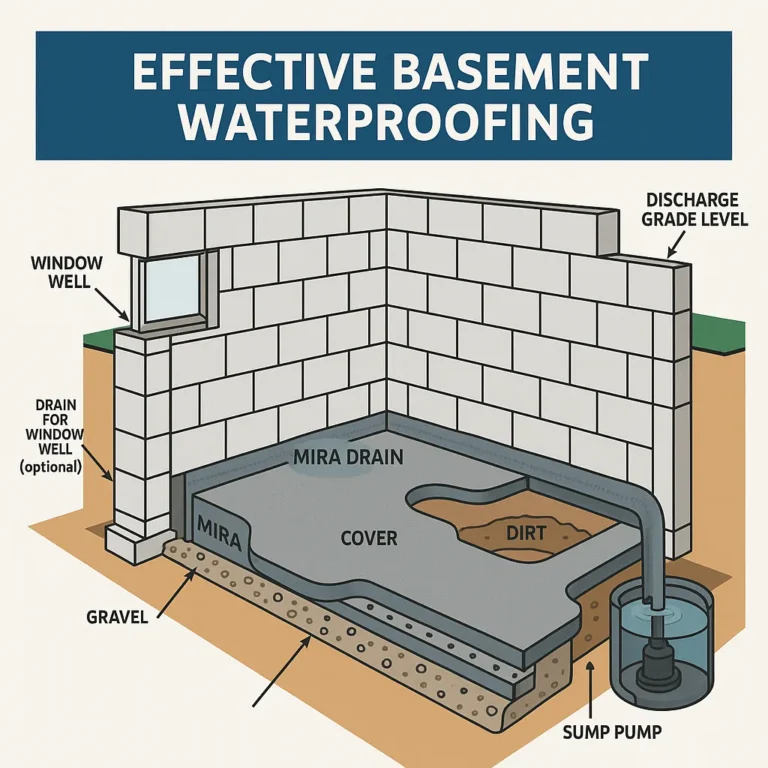
| Interior cavity drainage | Perimeter drainage channel | Channels infiltrating water to a sump pump |
While external membranes defend the outside of the structure, interior systems capture residual moisture that migrates through concrete, ensuring a dual layer of protection against water damage.
How Does a Sump Pump Work and When Is Installation Recommended?
For a complete overview of professional waterproofing methods, visit our Basement Waterproofing Services page to see how New Jersey homeowners prevent water intrusion, dampness, and foundation damage.
To better understand flood-risk zones and basement moisture control, review FEMA’s official guidance on flood maps and mitigation strategies. This trusted federal resource explains how groundwater pressure and poor drainage contribute to basement flooding across the U.S.
- It detects rising water and activates to keep your space dry.
- It prevents hydrostatic pressure build-up that can crack walls.
- Pairing it with a battery-backup system maintains protection during power outages.
Integrating this component with a cavity drainage system provides reliable, continuous flood defense.
What Is Basement Tanking and How Do Type A, B, and C Systems Compare?
Basement tanking involves applying protective coatings or membranes directly onto basement walls and floors to create a waterproof seal.
| System Type | Application Method | Typical Use Case |
|---|---|---|
| Type A | Surface-applied tanking paint or slurry | Light dampness prevention |
| Type B | Structural waterproofing with water-resistant concrete | New construction or major rebuilds |
| Type C | Internal drainage with sump pump support | Retrofitting existing basements |
Selecting the correct system aligns waterproofing intensity with the severity of moisture threats, offering tailored performance for any basement scenario.
How Can Basement Dampness and Mold Be Prevented and Treated?
Controlling basement humidity and eliminating mold requires a combination of ventilation, moisture removal, and routine monitoring. A balanced approach not only protects indoor air quality but also preserves structural components from microbial decay.
Building Characteristics and Dampness-Related Risks
A systematic review highlights a strong correlation between building characteristics, such as age, materials, and ventilation systems, and the risk of dampness-related issues and mold growth. Effective remediation strategies include proper ventilation and maintaining sufficient air-exchange rates to reduce humidity.
This research supports the article’s guidance on preventing and treating basement dampness and mold by emphasizing environmental control and ventilation.
What Causes Basement Dampness and How Does It Lead to Mold Growth?
Basement dampness typically begins with elevated humidity levels, condensation on cool surfaces, or stagnant air that encourages moisture accumulation.
- Excess air moisture condenses on cold walls.
- Poor ventilation traps humid air, keeping it wet.
- Groundwater intrusion raises relative humidity above 60%.
Sustained damp conditions create an environment where mold spores thrive, compromising air quality and promoting wall and floor deterioration.
How Can Mold Be Identified and What Are the Health Risks?
Mold appears as fuzzy spots, often in shades of green, black, or white, and grows in hidden corners where moisture persists.
- Stachybotrys chartarum and Cladosporium are common basement mold genera.
- Exposure can trigger respiratory irritation, allergic reactions, and headaches.
- Long-term contact with spores may exacerbate asthma or sinus conditions.
Recognizing mold early and addressing its source safeguards both structural integrity and occupant health.
What Are the Benefits of Using a Basement Dehumidifier?
A dehumidifier reduces airborne moisture by drawing humid air across a cooled coil, condensing water, and depositing it into a tank for removal.
- It lowers relative humidity below 50%, deterring mold growth.
- It accelerates drying of walls and floors after leaks or floods.
- It improves indoor air quality by filtering particulates alongside moisture removal.
Controlling humidity prevents condensation cycles that can undermine insulation and finishes.
What Are the Common Basement Foundation Problems and Repair Solutions?
Foundation issues often stem from soil movement, water pressure, and construction flaws, leading to cracks, bowing walls, and uneven floors. Timely repair restores structural stability and prevents progressive damage.
What Types of Foundation Cracks Should Homeowners Watch For?
Different crack patterns signal varying levels of concern and urgency:
- Vertical cracks follow mortar joints or form where concrete shrinks and generally pose lower risk.
- Horizontal cracks indicate lateral soil pressure and can compromise wall integrity.
- Stair-step cracks in block walls reveal differential settlement and require professional evaluation.
Monitoring crack progression and pattern informs the selection of appropriate reinforcement methods.
What Are the Most Effective Foundation Repair Methods?
Basement foundations regain strength through injection, reinforcement, and external support schemes.
- Epoxy or polyurethane injection seals and bonds smaller cracks from within.
- Carbon-fiber straps reinforce bowed walls by adding tensile support without excavation.
- Helical anchors secure and stabilize walls by tying them to undisturbed soil outside the structure.
Combining these techniques addresses both immediate cracks and underlying pressure forces.
Modern Foundation Repair Techniques
Modern foundation repair techniques, such as helical piers and polyurethane foam injection, are increasingly utilized for their effectiveness in stabilizing structures. Helical piers are screwed into the ground to transfer weight to a more stable soil depth, while foam injection lifts and stabilizes foundations by filling voids.
This information validates the article’s discussion of effective foundation repair methods for addressing structural issues.
When Should I Call a Foundation Repair Expert?
Professional intervention is critical when signs suggest structural compromise:
- Cracks wider than 3 mm that continue to expand.
- Bowing or tilting walls that deflect inward.
- Doors and windows that become difficult to open due to shifting frames.
Engaging certified technicians ensures accurate diagnosis and long-term stability.
How Can Homeowners Maintain and Prevent Basement Problems Long-Term?
Regular maintenance of water-management systems and foundation elements prevents recurrence of leaks, dampness, and structural strain, preserving a dry, safe basement environment.
How Does Proper Gutter and Downspout Maintenance Protect Basements?
Keeping gutters clear and downspouts directed away from the foundation diverts roof runoff, reducing soil saturation near walls and limiting hydrostatic pressure.
- Clean leaves and debris at least twice a year.
- Extend downspout outlets at least 1.5 m from the house.
- Inspect brackets and seams for leaks that can leak onto foundation walls.
Consistent upkeep channels roof water where it cannot undermine basement walls or encourage dampness.
Why Is Correct Grading and Landscaping Important for Basement Health?
A properly sloped landscape ensures surface water flows away from the foundation rather than pooling against it.
- A minimum 150 mm grade drop within the first meter prevents water accumulation.
- Permeable planting beds near the house reduce runoff volume.
- Hardscaping features, such as French drains, guide excess water into safe discharge areas.
By shaping ground contours thoughtfully, homeowners protect basements from recurring seepage and erosion.
What Should a Regular Basement Inspection Checklist Include?
A proactive checklist combines visual, mechanical, and environmental checks to catch early warning signs:
- Test sump pump operation and backup battery function.
- Examine walls and floors for new cracks, stains, or efflorescence.
- Measure humidity levels with a hygrometer and review dehumidifier performance.
- Inspect gutters, downspouts, and surrounding grading conditions.
- Verify ventilation openings and insulation seals for consistent airflow.
Consistent inspections enable preventive action before moisture or structural concerns escalate.
How Much Does Basement Waterproofing and Repair Typically Cost?
Costs for basement waterproofing and foundation repairs vary based on project scope, materials, and labor intensity, but understanding cost drivers helps homeowners plan budgets effectively.
What Factors Influence the Cost of Basement Waterproofing Services?
Several components determine total investment in a dry basement:
- The extent of existing damage and soil conditions around the foundation.
- Choice of waterproofing system (interior drainage, exterior membrane, or tanking).
- Accessibility and excavation requirements for external solutions.
- Materials quality, including sump pumps, membranes, and drainage channels.
Accurate site assessment by specialists ensures homeowners receive tailored estimates that reflect real-world conditions.
How Do Foundation Repair Costs Vary by Problem Type?
Repair expenses align with crack severity and reinforcement method selection:
| Problem Type | Typical Repair Method | Estimated Range |
|---|---|---|
| Hairline shrinkage cracks | Epoxy or polyurethane injection | $400–$800 per crack |
| Bowed wall sections | Carbon-fiber reinforcement | $1,200–$2,500 per wall |
| Shifting foundations | Helical anchors or push piers | $3,500–$8,000 total |
Investing in appropriate repair techniques preserves structural integrity and maximizes long-term value.
Are There Financing or Free Consultation Options Available?
Many homeowners benefit from flexible payment solutions and initial site evaluations at no cost:
- Zero-interest financing spreads project costs over manageable installments.
- Free consultations provide an expert site review and detailed proposal.
- Warranty-backed offers guarantee lasting performance, adding peace of mind.
Exploring these options empowers homeowners to protect their basements without undue financial strain.
Why Choose Professional Basement Solutions in New Jersey?
Opting for local experts ensures tailored solutions that address New Jersey’s unique soil profiles, rainfall patterns, and building code requirements, delivering durable results backed by industry certifications.
What Certifications and Guarantees Does Effective Basement Solutions Offer?
Effective Basement Solutions deploys certified waterproofing specialists and provides:
- A multi-year transferable warranty on all waterproofing installations.
- Compliance with regional building codes and quality standards.
- Use of premium brands for membranes, sump pumps, and drainage systems.
These credentials reinforce trust and demonstrate commitment to reliable, long-term protection.
How Do Local Climate and Soil Conditions Affect Basement Problems?
New Jersey’s mix of clay-rich soils, spring rains, and freeze-thaw cycles creates persistent moisture challenges:
- Clay soil expands when wet, exerting additional pressure on foundation walls.
- Seasonal storms generate heavy surface runoff that must be diverted away.
- Winter freeze and thaw cycles can widen cracks and compromise concrete integrity.
Awareness of these factors guides the selection of robust waterproofing and repair strategies.
Understanding Foundation Challenges in New Jersey
Research indicates that New Jersey’s diverse soil composition, particularly expansive clay soils, and distinct seasonal weather patterns significantly contribute to foundation damage. These conditions lead to soil expansion and contraction, increasing hydrostatic pressure against basement walls and causing issues like cracks and structural compromise.
This research directly supports the article’s explanation of how local climate and soil conditions in New Jersey exacerbate basement water problems and foundation issues.
What Are Some Real Case Studies of Successful Basement Repairs in New Jersey?
In Trenton, a flooded basement was transformed by installing a Type C cavity drainage system paired with a high-capacity sump pump, eliminating recurrent leaks. In Newark, bowed walls regained stability after carbon-fiber reinforcement and exterior grading adjustments. These local examples illustrate tailored interventions that restore functionality and comfort.
A permanently dry and structurally sound basement safeguards your property’s value, health, and livability. By understanding causes, applying effective waterproofing, managing humidity, and investing in foundation repairs, you can reclaim this space confidently. For an expert evaluation and free consultation, the certified team at Effective Basement Solutions stands ready to design a solution tailored to your home’s specific needs.
