
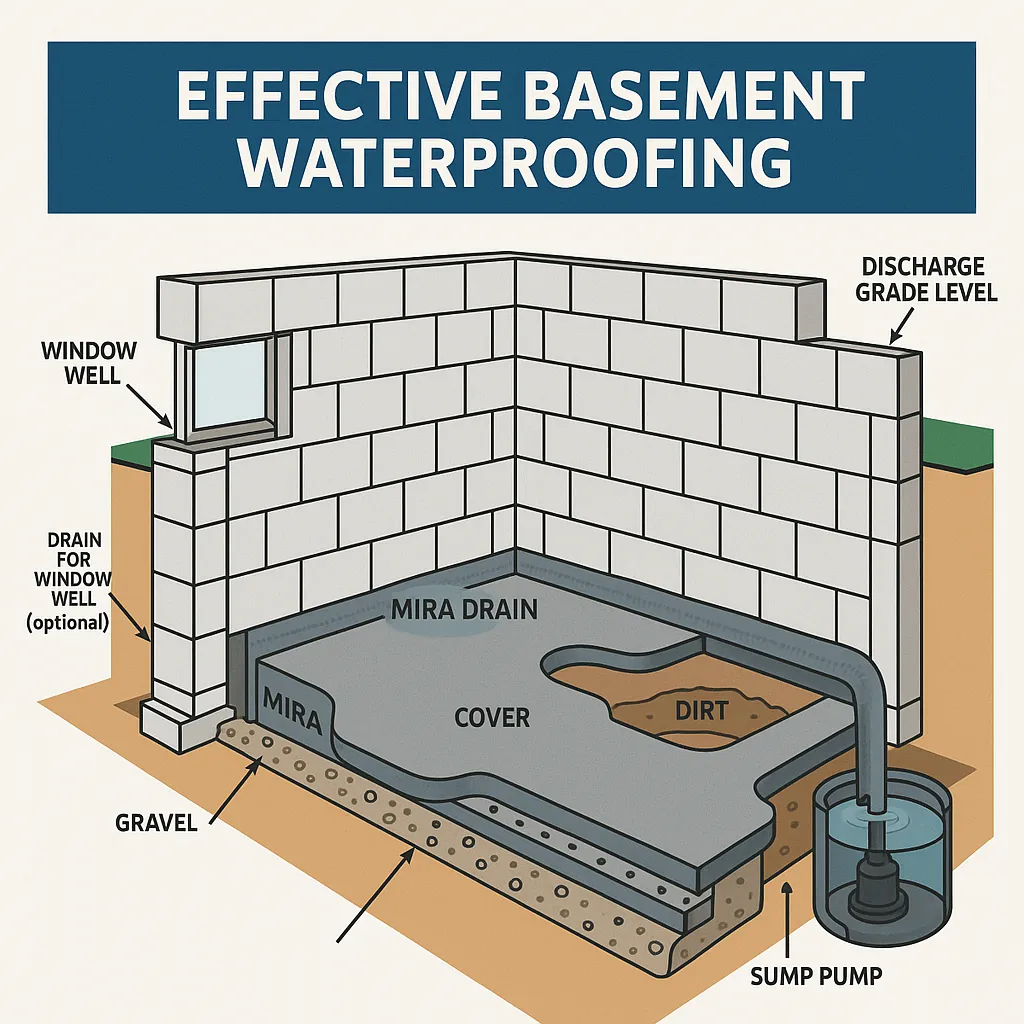
Basement Waterproofing — Denville, NJ | Reliable, Lasting Solutions
Keeping your basement dry is essential in Denville, NJ. Water intrusion causes mold, odors, and foundation damage. This guide outlines common causes, the local climate’s role, proven waterproofing methods, and realistic cost ranges so you can choose the right solution.
Key Takeaways
- Professional waterproofing prevents water entry and protects structural integrity.
- Common causes: foundation cracks and poor surface drainage.
- Local weather—heavy rain and freeze‑thaw cycles—raises moisture risk.
- Sump pumps and French drains are effective for many homes.
- Interior systems manage water inside; exterior systems stop water before it reaches the foundation.
- Sump pumps lower hydrostatic pressure and flood risk.
- Repairing foundation cracks improves overall performance.
- Typical project range: $1,500–$5,000; financing may be available.
- Watch for visible cracks, uneven floors, and sticking doors as early signs.
Common Causes of Basement Water Intrusion in Denville, NJ
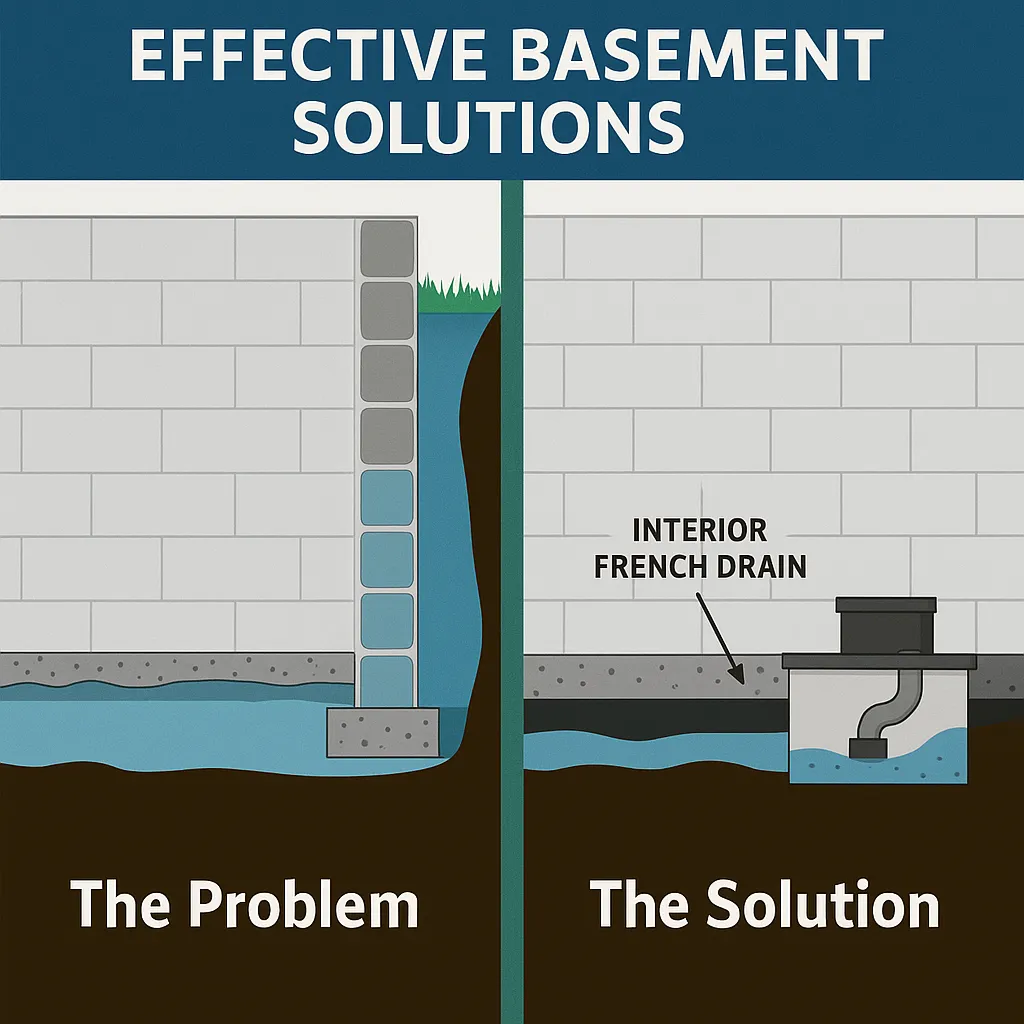
Basement leaks typically result from soil and structural forces: hydrostatic pressure, foundation cracks, and poor surface drainage. Addressing grading, gutters, and foundation openings prevents most water entry.
Foundation Cracks
Cracks from settling or seasonal movement let water penetrate; sealing them early reduces leaks and future damage.
Hydrostatic Pressure
Saturated soil increases outward pressure that can force water through joints and small openings, causing persistent seepage or flooding.
Poor Surface Drainage
Yard slopes toward the house, clogged gutters, or short downspouts direct runoff to the foundation—simple fixes that often prevent basement problems.
How Local Climate Affects Basement Moisture
Denville’s heavy rains and freeze‑thaw cycles increase groundwater levels and stress foundations. Soil type (clay versus sand) also affects how long pressure persists against walls.
Heavy Rainfall Effects
Intense rain events quickly saturate soil and raise hydrostatic pressure; maintaining exterior drainage reduces the chance of leaks.
Freeze‑Thaw Cycles
Freeze‑thaw movement shifts soil and can open new cracks—inspect foundations after cold seasons.
Soil Conditions
Clay retains water and prolongs pressure on foundations; sandy soils drain faster. Your soil profile should guide waterproofing choices.
Structural Issues That Lead to Basement Leaks
Many leaks trace back to structural issues or failing drainage. Early detection and repair limit damage and repair costs.
Foundation Cracks
Horizontal, vertical, or stair‑step cracks indicate stress; monitor them and consult a pro if they widen.
Hydrostatic Pressure
Persistent drainage problems raise pressure on walls, causing chronic seepage or sudden entry during extreme weather.
Poor Drainage Systems
Blocked gutters, missing extensions, or damaged exterior drains let water pool at the foundation; routine maintenance helps avoid bigger repairs.
Best Basement Waterproofing Methods for Denville, NJ Homes
Choose methods based on site drainage, soil, and foundation condition; often a combination gives the best protection.
- Sump Pump Installation: Removes collected groundwater and prevents basement flooding.
- French Drain Installation: Channels water away from the foundation to relieve hydrostatic pressure.
- Crawl Space Encapsulation: Seals and insulates crawl areas to cut moisture and mold risk.
Our team can assess conditions and recommend the right mix of these measures for long‑term protection.
Interior vs. Exterior Waterproofing: What’s the Difference?
Interior solutions control water already inside; exterior solutions stop water before it reaches the foundation. Exterior work is more preventive but more disruptive and costly; interior options are quicker and less invasive.
Objectives of Each Method
Use interior systems (crack sealing, interior drains, sump pumps) to manage existing leaks; use exterior membranes, excavation, and perimeter drains to prevent entry.
Methods of Execution
Interior work avoids excavation; exterior work requires digging but can provide longer‑term prevention.
Maintenance Requirements
Sump pumps need periodic checks; exterior systems require occasional inspection of membranes and drainage paths.
The Role of Sump Pump Installation in Flood Prevention
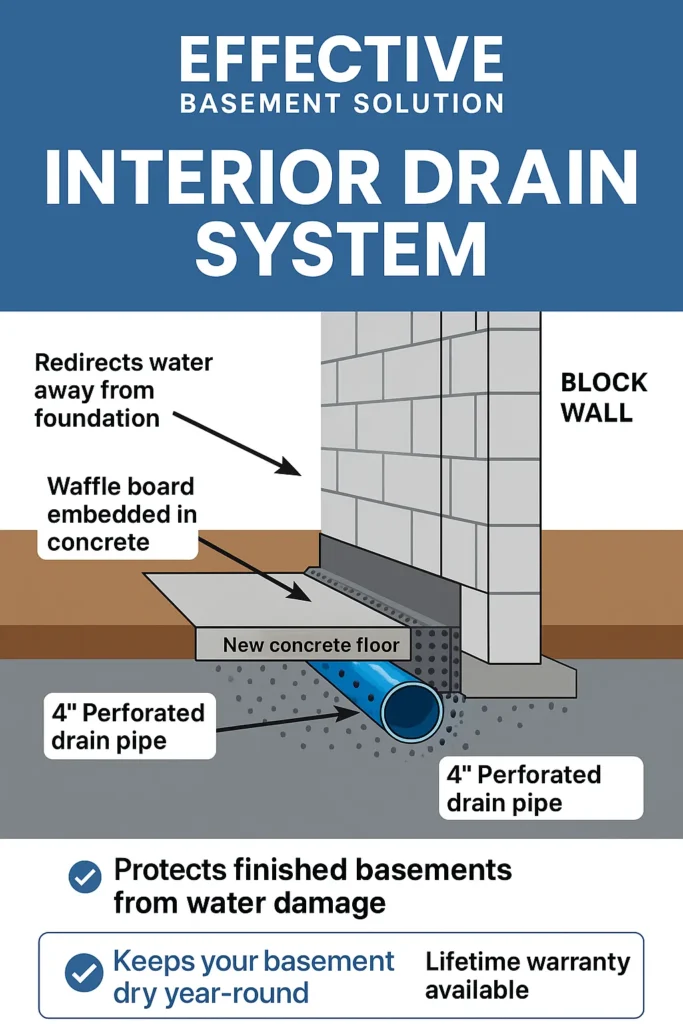
Sump pumps pump collected groundwater away from the foundation and are an effective, compact flood‑control measure for low‑lying or urban sites.
A well‑designed pump sump is an effective, compact solution for flood control in urban and low‑lying locations.
Pump Sump Design for Flood Control & Inundation Mitigation
Pump stations are critical flood‑control assets designed to reduce inundation in lowland urban areas. Because space is limited in cities, pump sumps are often engineered to be compact while maintaining hydraulic performance.
Numerical analysis of the effects of anti-vortex device height on hydraulic performance of pump sump, SW Park, 2017
Water Removal
The pump sends water through a discharge line away from the foundation, preventing pooling and related moisture issues.
Technical studies further explain how sump systems work for groundwater lowering and site dewatering.
Sump Pumping & Groundwater Lowering Techniques
Groundwater lowering methods—such as sump pumping, wellpoints, deep wells, ejector wells, and electro‑osmosis—are used to reduce pore water pressure in low‑permeability soils. Typical systems recirculate or eject groundwater to achieve the needed drawdown.
Pumps for Groundwater Lowering Duties, 2020
Hydrostatic Pressure Relief
Lowering water levels near the foundation reduces hydrostatic pressure and the likelihood of leaks or structural strain.
Mold Prevention
Consistent dryness is one of the most effective ways to prevent mold and improve indoor air quality.
How Foundation Crack Repair Improves Waterproofing
Repairing cracks stops leaks at their source and improves the effectiveness of waterproofing systems.
Sealing Cracks
Sealing fills gaps that allow water in, especially when combined with proper drainage.
Restoring Load‑Bearing Capacity
Repairs can restore load capacity and slow further deterioration—important for long‑term stability.
Enhancing Waterproofing Effectiveness
Tackling cracks before installing drainage or pumps makes those systems more reliable and cost‑effective.
Signs of Foundation Damage in Denville, NJ
Early detection reduces risk. Watch for these common indicators:
- Visible Cracks: Monitor cracks in walls, floors, or foundations and seek assessment if they widen.
- Uneven Floors: Sloping or bouncy floors may indicate settling.
- Sticking Doors and Windows: Difficulty opening or closing often signals foundation movement.
Repair Techniques That Ensure Long‑Term Structural Integrity
Choose a repair method that matches the severity of damage to preserve structural integrity.
- Epoxy Injections: Fills and bonds small to moderate cracks to seal out water and restore strength.
Epoxy injection is a widely used and effective approach for sealing cracks in concrete foundations and structural elements.
Epoxy Injection for Concrete Crack Repair in Foundations
One common crack‑repair method is epoxy, applied by injection or gravity feed. Epoxy restores continuity in concrete structures—columns, beams, walls, slabs, and foundations—helping to seal and strengthen damaged areas.
Experimental study of epoxy repairing of cracks in concrete, CA Issa, 2007
- Carbon Fiber Reinforcement: Bonded strips add tensile strength for bowed or cracked walls.
- Underpinning with Helical Piers: Transfers loads to deeper soils to correct significant settlement.
Costs and Financing Options for Basement Waterproofing in Denville, NJ
Costs vary by method and scope. Knowing typical ranges and available financing helps homeowners plan.
Cost Range for Services
Comprehensive projects commonly fall between $1,500 and $5,000, depending on repairs and systems chosen.
Financing Options Available
Contractors and partners often provide payment plans or loan options to spread costs over time.
Free Inspections Offered
Many companies offer free on‑site inspections to diagnose problems and recommend targeted solutions.
Typical Professional Basement Waterproofing Costs
Costs depend on basement size, damage severity, and chosen methods.
Typical Cost Range
Expect a general range of $1,500–$5,000, with variation for complex work.
Factors Affecting Cost
Severity of intrusion, foundation repairs, and interior vs. exterior systems increase costs.
Specific Method Costs
Sump pump installs often run $1,000–$3,000; French drains commonly range $2,000–$5,000 depending on excavation.
Financing Plans for Homeowners
To make projects manageable, many providers offer multiple financing choices.
- Flexible Payment Plans: Spread payments over months to reduce upfront costs.
- Third‑Party Financing Options: Home improvement loans and other products can help cover larger jobs.
- Contractor In‑House Plans: Some contractors provide internal financing or payment arrangements.
Clear estimates and financing let homeowners move forward with confidence.
Frequently Asked Questions
What are the long‑term benefits of basement waterproofing?
Waterproofing prevents damage, reduces mold risk, improves air quality, and helps preserve property value.
How often should I inspect my basement for water issues?
Inspect at least twice a year—spring and fall—and after heavy storms or rapid snowmelt.
Can I perform basement waterproofing myself?
Minor work (sealing small cracks, redirecting downspouts) is DIY‑friendly; sump pumps, drains, and structural repairs are best left to professionals.
What maintenance is required for sump pumps?
Test the pump annually, keep the pit and discharge line clear, and check the float and power source.
How can I tell if my basement waterproofing system is working?
Signs of success: dry walls and floors, no musty odors, and a functioning sump pump. New damp spots or constant pump operation indicate problems.
What should I do if I find mold in my basement?
Stop the moisture source. For small areas, clean with detergent while using protection; for widespread mold, hire a remediation specialist and fix the underlying leak.
Are there any government programs or grants for basement waterproofing?
Some local/state programs and non‑profits offer assistance or low‑interest loans for flood mitigation—check with local housing or community development offices.
Conclusion
Waterproofing your basement in Denville, NJ protects your home, improves indoor air quality, and preserves value. By identifying causes, repairing cracks, and combining sump pumps, French drains, and other measures as needed, you can keep your basement dry for years. Ready to safeguard your home? Explore our professional waterproofing services today.