
Professional vs DIY Basement Waterproofing in New Jersey
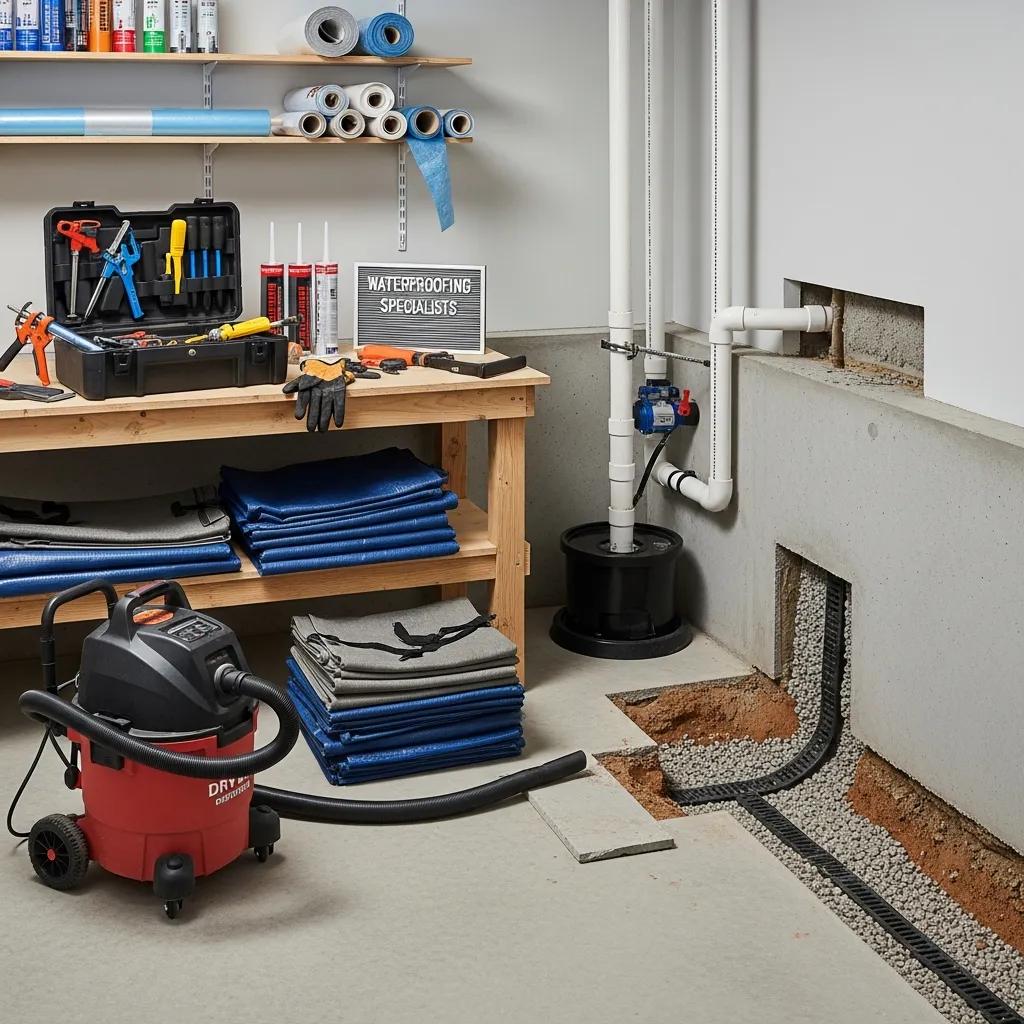
Basement waterproofing decisions in New Jersey hinge on understanding the technical difference between surface-level DIY fixes and integrated professional systems that address root causes like hydrostatic pressure and foundation movement. This article explains what common DIY methods do, why they often fall short for groundwater-driven problems, and how professional approaches — interior drainage, exterior membranes, structural repairs, and crawl space encapsulation — stop water at its source. New Jersey’s varied soils, freeze-thaw cycles, and coastal weather patterns change how water behaves around foundations, so choosing the right approach protects home value and indoor air quality. You will learn the practical pros and cons of DIY quick fixes, the component-level breakdown of professional systems, a lifecycle cost comparison, signs that require expert intervention, and maintenance steps owners can take after installation. Throughout, the guide uses clear comparisons, EAV-style tables, and checklists to help you decide when a temporary patch is sufficient and when a permanent, warranty-backed repair is the prudent choice for long-term dryness.
What Are the Advantages and Limitations of DIY Basement Waterproofing?
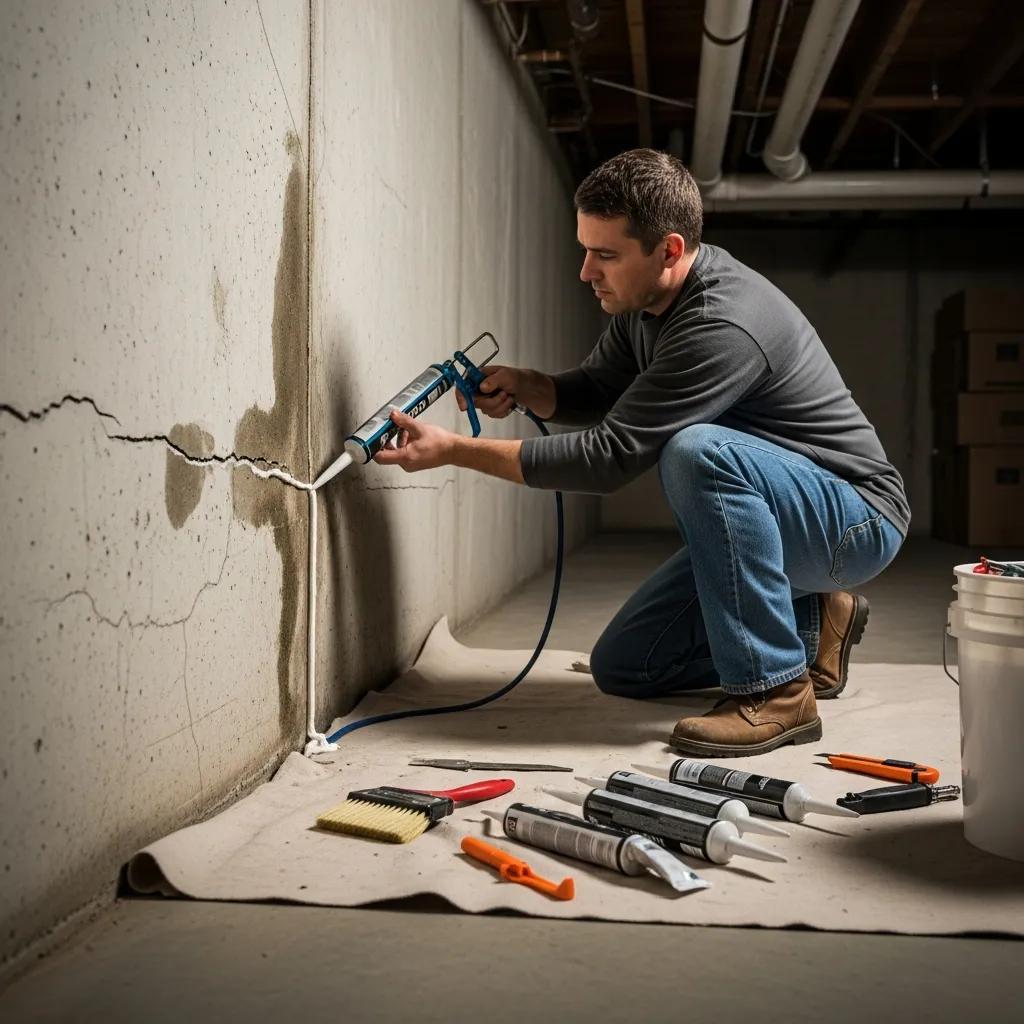
DIY basement waterproofing covers a range of homeowner-applied products and tactics intended to stop visible leaks or slow moisture intrusion. In essence, DIY fixes such as sealants, masonry paints, and small submersible pumps provide a barrier or remove localized water, but they typically address symptoms rather than the hydrostatic pressure or exterior drainage issues that drive recurring leaks. The immediate benefit is lower upfront cost and rapid availability of products at local stores, which can be sufficient for minor, isolated seepage. However, DIY approaches have limited lifespans, inconsistent installation quality, and often fail to halt groundwater movement or structural cracks, leading to repeated interventions and higher lifetime costs. Understanding these limits clarifies when a stopgap is acceptable and when a professional diagnostic and system design are needed to protect structural integrity and indoor air quality.
DIY homeowners most often select simple materials and tools to control visible moisture or condensation. Common DIY products include sealants for hairline cracks, epoxy injections for small concrete fissures, waterproof paints, window well covers, and compact sump pumps that fit into existing basins. These items are hyponyms under the broader category of waterproofing services and home improvement; they are meronomically composed of sealant compounds, polymer membranes, and mechanical pumps. For small-scale, non-pressurized leaks, such measures can improve usability and reduce dampness temporarily, but they rarely stop groundwater driven by hydrostatic pressure, which requires systematic drainage and sometimes foundation repair. The next section explains the typical homeowner motivations for DIY and where these choices are sensible.
Why Do Homeowners Choose DIY Basement Waterproofing?
Homeowners often choose DIY basement waterproofing to save money and get fast results for minor issues, especially when a visible drip or paint blistering signals a problem. The perceived simplicity of applying a sealant or painting a wall makes DIY attractive, and many products are designed for non-specialist installation. In scenarios such as isolated hairline cracks or condensation caused by high humidity and poor ventilation, DIY dehumidification and surface coatings can provide immediate relief while a longer-term plan is considered. That said, the choice is frequently informed by urgency and budget constraints rather than a full diagnostic of root causes like grading, downspout discharge, or hydrostatic pressure. Recognizing when DIY is a stopgap rather than a cure leads directly to common mistakes that escalate damage if left unaddressed.
What Are the Common Mistakes and Risks of DIY Waterproofing?
Many DIY mistakes stem from treating symptoms without diagnosing the water source, which allows underlying issues such as hydrostatic pressure or exterior drainage failures to worsen. Typical errors include applying surface sealants over active seepage, installing inadequate interior drains without proper slope or aggregate, selecting undersized pumps with insufficient capacity, and ignoring exterior factors like poor grading or blocked gutters. These mistakes can conceal progressive foundation movement or mold growth until repairs are more extensive and costly. Homeowners who skip moisture mapping, fail to monitor water table influence, or mix incompatible products often face repeated failures that increase lifecycle costs and risk indoor air quality problems. The following section contrasts these DIY limitations with what licensed professional systems can accomplish.
The scale of basement water issues is significant, often involving multiple contributing factors that DIY methods may not fully address.
Leaking Basement Causes, Cures, and Consequences: A Case Study
One need only consult the local Yellow Pages under ‘Waterproofing Contractors’ to appreciate the scale of the leaking basement epidemic in the United States. This paper draws from a detailed case history to look at its causes, financial ramifications, and ideas on mitigation. It concludes that most often the failures are systemic involving multiple factors, but that very significant among these is the role of the downspout drain, its frequent deterioration over time and consequent loss of functionality. This is compounded by poor design decisions that have resulted in walls unable to support the lateral loads that are created when hydrostatic pressures develop. Solutions range from proactive maintenance to strengthening of walls. However, there must first be more public awareness of the causes and liabilities involved, and this may best be accomplished through more focused attention when property transfers occur.
How Do Professional Basement Waterproofing Services in New Jersey Compare?
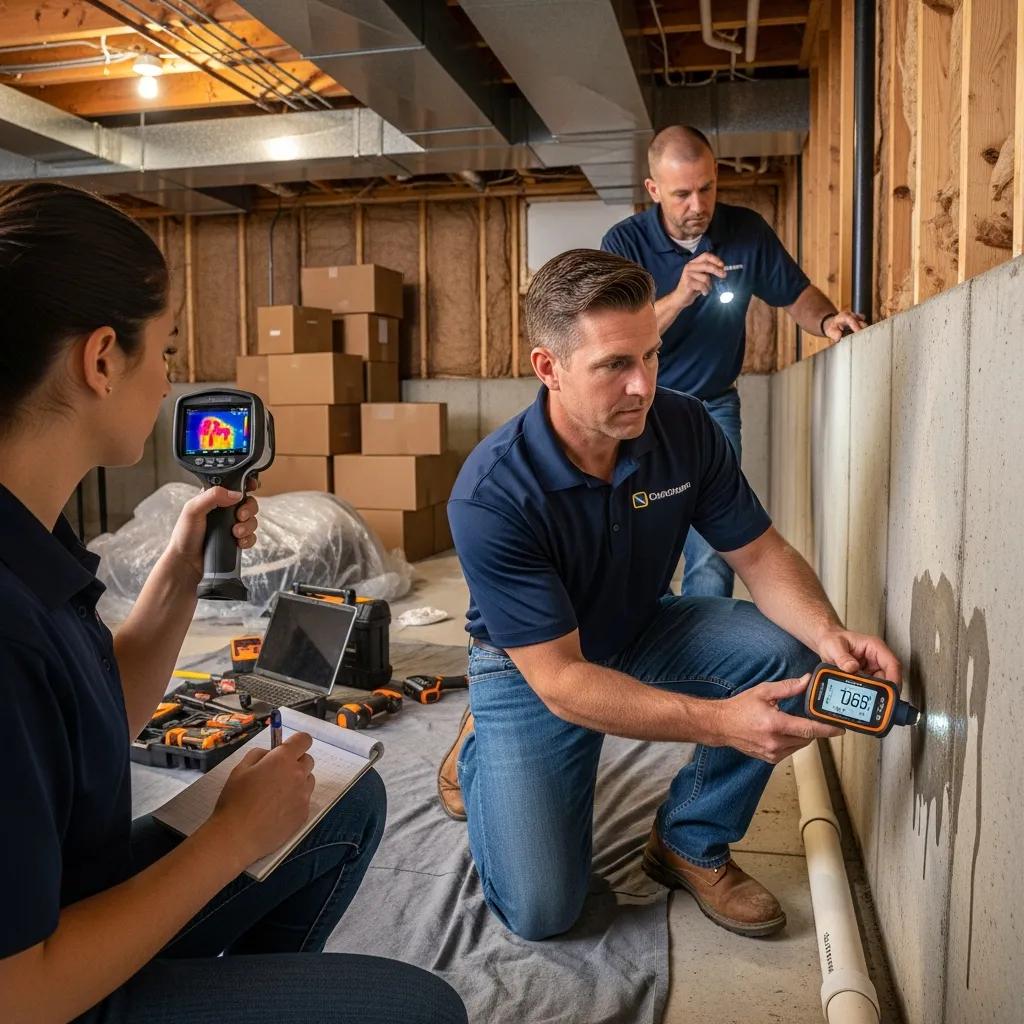
Professional basement waterproofing in New Jersey combines diagnostic assessment, engineered interior or exterior systems, and structural repairs when necessary to address hydrostatic pressure, grading, and foundation defects. Professionals evaluate moisture patterns, use moisture meters and visual inspection, and design solutions that may include interior French drains paired with sump pumps, exterior excavation with waterproof membranes, foundation crack repair, and reinforcement methods such as carbon fiber wall strengthening or steel I-beam bracing. The primary advantage is that professional systems are designed to manage water at the source and reduce long-term failure modes, providing longevity, predictable maintenance, and often workmanship assurances. Understanding component-level differences clarifies why an interior drainage system plus sump pump is the right hyponym in some cases while exterior membranes or structural reinforcement are required in others.
Before presenting detailed system components, here is a focused breakdown of common professional systems and their parts to compare function and benefits.
| Professional System | Components (Entity Parts) | Primary Function | Typical Benefits |
|---|---|---|---|
| Interior French drain + sump pump | Perimeter channel, perforated pipe, gravel bed, sump basin, submersible pump | Collect groundwater entering through floor/walls and move it to discharge | Less exterior disruption, effective for redirecting hydrostatic pressure inside the footprint |
| Exterior membrane + drainage | Excavation, waterproof membrane, exterior perimeter drain, backfill with drainage aggregate | Block water at foundation wall and divert it away from the foundation | Stops water before it contacts foundation, reduces moisture transmission through walls |
| Foundation repair & reinforcement | Epoxy/urethane crack injection, carbon fiber strips, steel I-beam bracing | Restore structural integrity and resist lateral/bowing loads | Repairs structural damage, prevents progressive wall movement |
| Crawl space encapsulation + dehumidification | Vapor barrier, seam sealing, insulation, dehumidifier | Control vapor intrusion and humidity under the home | Improves air quality, prevents mold, complements basement waterproofing |
This table shows how professional systems are composed of meronomic parts—pumps, drains, membranes—that play specific roles in moisture control. Professional approaches differ from DIY in scope, diagnostic depth, and focus on root-cause mitigation. After comparing systems, the next subsection explains interior approaches in more detail before we discuss exterior and structural options.
What Interior Waterproofing Systems Do Professionals Use?
Interior waterproofing systems commonly center on interior French drains and sump pump installations that manage groundwater entering the basement slab or through wall joints. An interior French drain consists of a recessed channel around the perimeter, a perforated pipe, and a sump basin where a submersible pump ejects collected water; this meronomic assembly converts uncontrolled seepage into predictable discharge. Professionals also install interior wall drainage plates, vapor barriers, and dehumidification systems to stabilize humidity and prevent condensation. These solutions are often chosen when exterior excavation is impractical or when you need to control water while planning a larger exterior project; they prioritize less disruption while addressing hydrostatic pressure by intercepting water before it spreads. Proper sizing, correct slope, and reliable pump selection are key to performance, which contrasts with many DIY installations.
What Exterior Waterproofing Methods and Foundation Repairs Are Available?
Exterior waterproofing methods include excavating around the foundation, applying waterproof membranes, and installing exterior perimeter drains to divert water before it reaches the wall, while foundation repairs can involve injecting cracks, adding carbon fiber reinforcement, or installing steel bracing for bowed walls. Exterior membranes act as a continuous barrier; paired with proper site drainage and positive grading, they reduce water load on foundation walls and mitigate hydrostatic pressure. Foundation repair techniques restore structural capacity where cracking or movement has occurred, addressing causes that interior-only solutions cannot fix. Exterior work is more disruptive and typically more expensive upfront, but it often yields the most durable prevention of groundwater infiltration. Understanding the trade-offs between interior and exterior strategies helps homeowners select the right system for soil, climate, and structural conditions.
After this technical comparison, the article examines cost differences between DIY and professional choices and provides an EAV-style lifecycle cost table to help homeowners evaluate long-term value. Additionally, for readers seeking professional help, Effective Basement Solutions’ service capabilities relevant to New Jersey conditions are summarized immediately below as a factual reference to typical professional options.
Effective Basement Solutions provides a range of professional systems commonly used in New Jersey: interior and exterior basement waterproofing, sump pump installation, French drain installation, structural reinforcement including carbon fiber wall strengthening and steel I-beam bracing, crawl space encapsulation, dehumidification systems, and battery backup pumps. The company emphasizes an in-house licensed crew (no subcontractors), a no-sales-pressure approach, free inspections, and over 20 years of experience. These factual service options illustrate the kinds of engineered interventions professionals use to address root causes like hydrostatic pressure and foundation defects.
How Does the Cost of DIY Basement Waterproofing Compare to Professional Services in New Jersey?
Comparing costs requires evaluating initial outlay, expected lifespan, maintenance demands, and risk-adjusted replacement or repair expenses over time. DIY materials such as sealants, waterproof paints, and small pumps typically have low initial costs but short expected lifespans and higher failure probability under groundwater pressure. Professional systems require higher upfront investment—interior drain and sump installations or exterior membrane systems—but deliver longer service life, lower failure rates, and often include warranties and thorough diagnostics that reduce downstream structural repair costs. Lifecycle cost analysis that includes warranty value, potential mold remediation, and resale protection frequently shows professional solutions to be more cost-effective for groundwater-driven or structural problems. Below is an EAV-style table comparing typical solution types with their initial cost characteristics and applicability.
| Solution Type | Initial Cost | Expected Lifespan / Maintenance | When Appropriate |
|---|---|---|---|
| Sealants / Masonry paint (DIY) | Low | 1–3 years; reapplication likely | Minor, non-pressurized cracks or cosmetic moisture |
| Small portable sump pump (DIY) | Low–Moderate | 3–7 years; limited capacity, no backup | Temporary relief for small basins without high water table |
| Interior French drain + sump (pro) | Moderate–High | 10–25 years; regular pump maintenance | When groundwater enters interior or exterior excavation is impractical |
| Exterior membrane + drainage (pro) | High | 20+ years with proper exterior drainage | Persistent groundwater infiltration and severe hydrostatic pressure |
| Foundation repair & reinforcement (pro) | Variable (high) | Permanent structural correction if done correctly | Bowing walls, large cracks, or settlement requiring structural repair |
This comparison shows the expected lifecycle and maintenance differences that influence long-term value. After reviewing these cost categories, consider the specific initial price bands and long-term protective value.
What Is the Initial Cost Difference Between DIY and Professional Solutions?
Initial cost differences are pronounced: DIY fixes typically involve purchasing materials and a few tools, keeping upfront spending low, while professional systems require engineered design, labor, and sometimes excavation, increasing initial expense. For example, a DIY sealant job or a consumer-grade pump can be done for a modest outlay, but the homeowner must account for repeat applications and possible escalation. Professional installations internalize diagnostics, permitting considerations, and durable components—perimeter drains, submersible pumps, and waterproof membranes—so the higher initial investment often buys reduced failure risk. Because precise prices vary by project scope, soil conditions, and system selection, obtain local estimates and free professional inspections to determine the appropriate cost band for your basement. The next subsection explains how professionals’ warranties and inspections affect long-term value.
Common cost factors homeowners should consider:
- Material and labor complexity, which raises professional bids.
- Site conditions such as soil type and grading that impact excavation needs.
- Warranty terms and service options that reduce future replacement costs.
What Are the Long-Term Benefits and Value of Professional Waterproofing?
Professional waterproofing delivers value by lowering the probability of recurring leaks, reducing mold risk, and protecting structural elements that impact home resale value and occupant health. Warranties and free inspections provided by many professional firms shift some failure risk away from homeowners and encourage scheduled maintenance of pumps and drains, which increases system lifespan. In addition, integrated approaches like crawl space encapsulation and dehumidification improve indoor air quality and reduce the likelihood of condensation-driven degradation. When comparing lifecycle costs, factoring in potential mold remediation, structural repair, and lost property value often shows that engineered solutions provide better long-term financial outcomes than repeated DIY repairs. With this lifecycle context, homeowners can more clearly decide when to invest in professional systems.
When Should New Jersey Homeowners Call Professionals for Basement Waterproofing?
Some signs clearly indicate the problem exceeds the scope of DIY remedies and require professional intervention. Persistent or pattern-based leaks, bowing or cracking foundation walls, ongoing mold growth, efflorescence along walls, and sump pump failure during storms are red flags that point to systemic issues like hydrostatic pressure, poor site drainage, or structural defects. Professionals use diagnostic tools—moisture meters, camera inspection, grading and downspout analysis—to distinguish between surface-level moisture and groundwater pressure requiring engineered solutions. Early professional assessment prevents escalation and helps prioritize interventions that protect structural integrity and indoor air quality. The checklist below helps homeowners decide when a pro is needed and what to expect from a diagnostic visit.
- Visible bowing or bulging walls, or widening foundation cracks.
- Persistent seepage that recurs after DIY patches or heavy rain.
- Extensive mold or musty odors despite dehumidification.
- Sump pump failure during high-water events or no functioning backup.
- Water pooling outside foundation or poor site grading.
What Are the Signs of Basement Water Damage That Require Expert Help?
Concrete signs of water damage that warrant expert help include continuous seepage lines, widening cracks in foundation walls, inward wall movement or bowing, extensive mold colonization, and persistent efflorescence indicating ongoing moisture migration. These patterns reveal water flow paths and pressure points, helping distinguish between transient surface runoff and pressurized groundwater infiltration. When such signs appear, DIY surface treatments often fail to prevent progression, and delaying professional assessment increases the risk of structural deterioration and hazardous indoor air quality. Recognizing these severity markers prompts timely inspection and targeted intervention to halt damage escalation.
How Does Professional Assessment Identify Root Causes Like Hydrostatic Pressure?
Professional assessment starts with a structured inspection: visual mapping of moisture patterns, moisture meter readings, camera inspection of drains and sump basins, and evaluation of exterior grading and gutter/downspout discharge. These diagnostic steps form semantic triples—inspection → identifies → hydrostatic pressure; grading review → reveals → poor runoff; moisture mapping → shows → seepage patterns—that guide the selection of interior versus exterior solutions. Professionals may test for soil saturation and inspect for structural signs that necessitate reinforcement. This diagnosis determines whether interior drainage, exterior membranes, foundation repair, or a hybrid approach best addresses the root cause, ensuring the selected system targets the actual driver of basement water problems.
After assessing when to call a pro, the next section summarizes the specific services a local New Jersey provider offers and how their in-house, licensed approach benefits homeowners.
What Unique Services Does Effective Basement Solutions Offer for New Jersey Basements?
Effective Basement Solutions offers a focused set of waterproofing and foundation services tailored to New Jersey homes, including interior and exterior basement waterproofing, sump pump installation, French drain installation, structural reinforcement such as carbon fiber wall strengthening and steel I-beam bracing, crawl space encapsulation, dehumidification systems, and battery backup pumps. The company positions these services with several factual value propositions: an in-house licensed crew that limits subcontractor variability, a no-sales-pressure approach to customer interactions, free inspections to help homeowners understand root causes before committing to work, and more than 20 years of experience addressing regional conditions. These capabilities represent the practical professional options described earlier and illustrate the service menu homeowners can expect when seeking engineered solutions for hydrostatic pressure and foundation issues.
How Does an In-House Licensed Crew Benefit Homeowners?
An in-house licensed crew provides consistent workmanship, centralized training, and clearer responsibility for quality control, which reduces the complications and handoff issues that can occur when multiple subcontractors perform different aspects of a repair. This structure supports easier warranty fulfillment and accountability over time because the same organization that installs systems typically services them. For homeowners, the meronomic benefit is continuity: the crew that installs the sump pump, French drain, or encapsulation system is accountable for performance and follow-up service. These procedural and organizational benefits often translate into more reliable long-term results compared with fragmented subcontracted approaches.
What Do Client Testimonials Reveal About Effective Basement Solutions’ Results?
Client testimonials and documented project case studies provide evidence of system performance over time, showing how integrated repairs and waterproofing have achieved sustained dryness, improved indoor air quality, and resolved structural concerns. While specific quoted testimonials are not reproduced here, homeowners should look for before/after photos, descriptions of the problem scope, and measured outcomes—such as reduced moisture readings or restored wall alignment—when evaluating provider results. Testimonials on a contractor’s site complement technical diagnostics and can confirm that proposed solutions work in local soil and weather conditions, reinforcing the decision to pursue professional waterproofing when root causes demand it.
How Can New Jersey Homeowners Maintain a Dry and Healthy Basement After Waterproofing?
Maintaining a dry basement after installation relies on scheduled maintenance, monitoring, and complementary systems that control vapor and humidity while ensuring pump reliability during storms. Key practices include routine sump pump testing and maintenance, keeping discharge lines clear and directed away from the foundation, seasonal inspection of grading and gutters, and using dehumidifiers and crawl space encapsulation to manage vapor intrusion. These measures form a layered defense: structural or drainage systems manage groundwater, while encapsulation and dehumidification preserve indoor air quality. Adopting a regular maintenance schedule extends system lifespan and prevents minor issues from becoming structural problems.
Use the following maintenance checklist to preserve system performance and indoor air quality:
- Test sump pump operation monthly and inspect float switches.
- Schedule annual professional inspections for pumps and drainage.
- Maintain positive grading and clear gutters/downspouts seasonally.
- Run dehumidifiers to keep basement relative humidity below recommended thresholds.
- Inspect encapsulation and vapor barrier seams annually for integrity.
What Role Do Crawl Space Encapsulation and Dehumidification Systems Play?
Crawl space encapsulation installs a continuous vapor barrier and seals vents to control ground moisture entering the home, while dehumidification systems actively remove water vapor to maintain stable indoor humidity. Together these measures act as hypernyms under the broader category of foundation maintenance and indoor air quality control, reducing mold risk and preventing condensation on plumbing and ductwork. Encapsulation components include vapor barriers, seam sealing, and often conditioned air or dehumidification to keep the space dry; dehumidifiers then maintain relative humidity at levels that inhibit microbial growth. Regular inspection and maintenance of both systems sustain their benefits over the long term.
How Do Battery Backup Pumps Ensure Continuous Protection During Power Outages?
Battery backup sump pumps provide an independent power source that keeps sump pumps operational during grid outages, which commonly occur during storms when basement water risk is highest. These backup systems include a battery bank and a secondary pump or integrated backup unit sized to match expected inflow and runtime needs; they are meronomically composed of battery, control panel, and pump. Homeowners should test backups periodically and replace batteries according to manufacturer guidance to ensure reliable operation. Installing a battery backup is recommended when the basement is at high risk from storm-driven water events, and it complements main pump maintenance strategies to provide continuous protection when power is lost.
This final section ties maintenance back to lifecycle cost and system longevity: regular testing, scheduled professional inspections, and integrating backups and dehumidification materially reduce the chance of catastrophic failure and mold remediation costs over time. For homeowners ready to evaluate options, a free inspection from a licensed in-house crew can clarify which combination of interior drainage, exterior membranes, structural repair, encapsulation, and backup systems best suits local New Jersey conditions. For service inquiries, Effective Basement Solutions can be contacted by phone for factual information about inspections and service options.
