
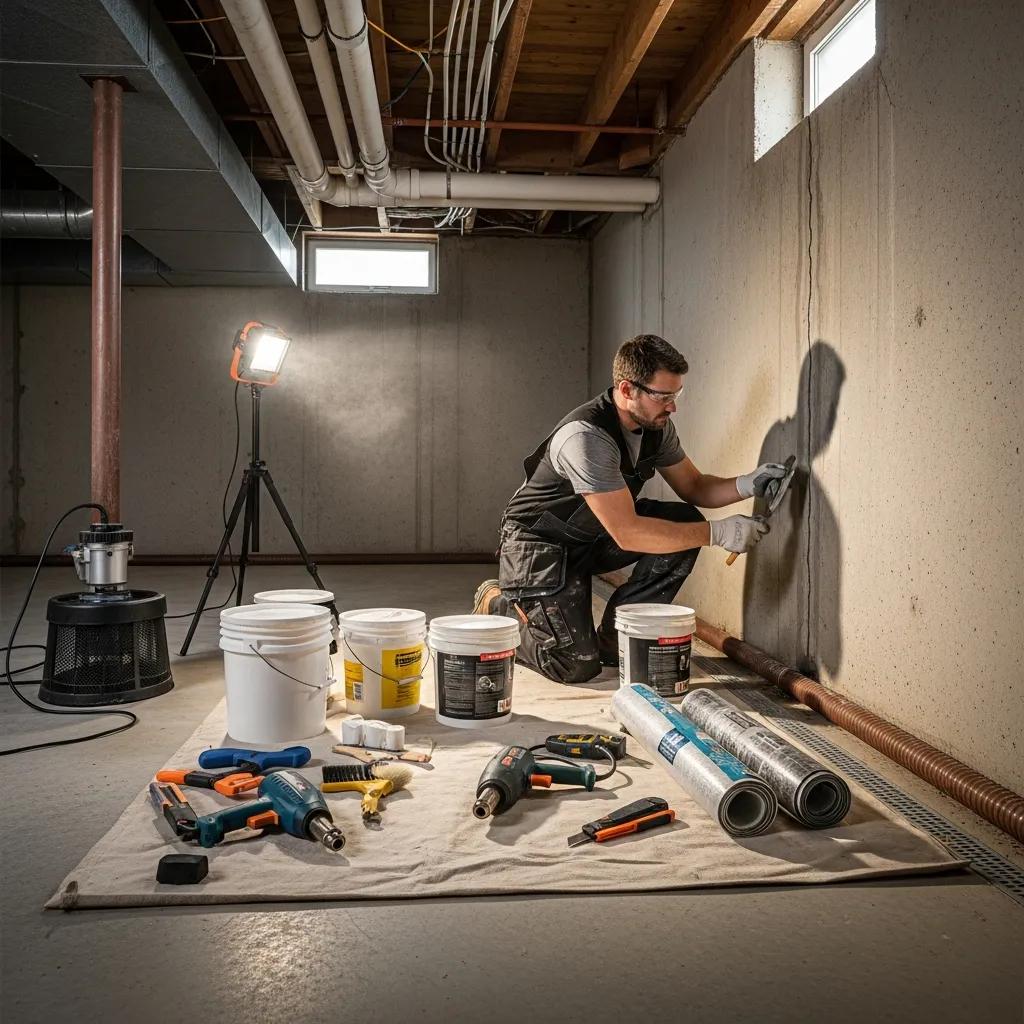
Basement Waterproofing & French Drain Installation in Hackensack, NJ: Comprehensive Solutions and Cost Insights
Basement water intrusion occurs when groundwater, surface runoff, or plumbing leaks find pathways through foundation materials, creating dampness, staining, and structural risk; proper basement waterproofing and French drain installation control those pathways and protect a home’s value. This article explains why Hackensack basements get wet, how interior and exterior waterproofing systems work, and why drainage solutions like French drains and sump pumps are essential for flood prevention and humidity control. Homeowners will learn diagnostic signs to watch for, the mechanisms behind interior versus exterior systems, a step-by-step French drain process, sump pump options and failure indicators, and realistic local cost expectations to guide contractor conversations. Throughout, the focus is on technical explanation, practical steps, and cost drivers for Hackensack, NJ properties, with brief, clearly labeled information about local service capabilities and how to request a free inspection. Read on for diagnostic checklists, installation steps, comparison tables, and actionable questions to bring to estimates for basement waterproofing and French drain installation in Hackensack.
What Are the Common Causes and Signs of Wet Basements in Hackensack Homes?
Basements in Hackensack commonly get wet when surface water, high groundwater tables, hydrostatic pressure, or plumbing leaks overcome the foundation’s defensive systems, allowing water to seep through floors, cove joints, and cracks. Water entry mechanisms include poor exterior grading, clogged gutters directing runoff to the foundation, and saturated soils that increase lateral pressure against foundation walls. Recognizing both obvious and subtle signs early reduces the risk of mold, structural damage, and costly repairs, so homeowners should inspect basements seasonally and after heavy storms. The following lists summarize top causes and common visible or hidden signs to watch for and to share with contractors during inspections.
- Poor exterior grading or downspouts that direct water toward the foundation rather than away.
- Clogged or dysfunctional gutters and leaders that allow concentrated runoff near footings.
- High groundwater or poor soil percolation (clay soils) that raise hydrostatic pressure against walls.
- Foundation cracks, cold joints, or plumbing leaks that provide direct entry points for water.
Visible and hidden signs of basement water intrusion:
- Water stains, efflorescence (white mineral deposits), or active pooling on floors or at cove joints.
- Musty odors, visible mold growth, peeling paint, or warped trim indicating chronic dampness.
- Elevated humidity, condensation on pipes or windows, and increased allergy symptoms from hidden mold.
- Staining of insulation or small recurring damp spots that appear after storms or thaw cycles.
These diagnostic signs lead to selecting targeted solutions; understanding local climate and soil behavior clarifies whether interior drainage, exterior waterproofing, or combined measures are most appropriate for a given property.
How Does Hackensack's Climate and Soil Affect Basement Water Issues?
Hackensack’s seasonal precipitation patterns and freeze-thaw cycles increase the risk of basement water problems by alternately saturating soils and subjecting foundations to movement, which can widen small cracks and expose weak points. Local soils often include finer particles like clay that reduce natural percolation and raise local groundwater pressure, so prolonged wet periods push water toward foundation walls rather than away from them. In combination, heavy spring rains, periodic coastal storm surges, and winter thaw events elevate hydrostatic pressure and increase the frequency of seepage episodes in basements. Recognizing these local drivers helps determine whether an interior French drain tied to a sump pump or a more invasive exterior membrane and drainage excavation is the optimal choice.
What Are the Visible and Hidden Signs of Basement Water Intrusion?
Visible signs like staining, standing water, and efflorescence are immediate indicators that water is breaching the basement envelope and require prompt attention to prevent mold growth and structural deterioration. Hidden signs—such as rising indoor humidity, condensation, increased pest activity, or corrosion of mechanical equipment—signal chronic moisture that can harm finishes and indoor air quality over time. Homeowners should document when signs appear (after storms, following snowmelt, or during warm humid periods) and use simple in-home checks—humidity meter readings, visual inspection of cove joints, and monitoring of wall discoloration—to track patterns. Photographing problem areas and noting timing helps contractors diagnose the primary drivers and recommend targeted waterproofing or drainage solutions.
How Do Basement Waterproofing Solutions Protect Hackensack Homes?
Basement waterproofing solutions protect Hackensack homes by managing water before it causes damage—either by preventing water from reaching foundation materials (exterior systems) or by collecting and removing water that enters (interior drainage + sump pumps). The mechanism is straightforward: exterior membranes and grading redirect surface water, while interior French drains, perforated pipe, and sump pumps address groundwater and hydrostatic pressure from below. Structural measures like crack repair and wall reinforcement complement drainage by closing entry paths and stabilizing load-bearing elements to prevent repeat failures. The table below maps common basement problems to recommended solution types and expected outcomes, helping homeowners evaluate what combination of measures best suits their property.
The following table summarizes common problems and practical solutions for Hackensack basements:
| Problem | Solution Type | Expected Outcome |
|---|---|---|
| Hydrostatic pressure under slab or around footings | Interior drainage system (weeping tile) + sump pump | Active water removal, drier floors, reduced pressure on walls |
| Foundation wall cracks with active leaks | Crack repair (epoxy/injection) + drainage | Sealed entry points, minimized seepage, longer-term stability |
| Surface runoff pooling near foundation | Exterior grading + exterior French drain or membrane | Water redirected away from foundation, reduced infiltration risk |
| High humidity and mold growth | Dehumidification + vapor barrier + drainage | Improved indoor air quality and inhibited mold growth |
Interior systems are typically faster and less invasive to install, while exterior solutions address the source before water reaches the foundation; choosing between them depends on access, landscaping, severity of groundwater, and long-term goals. For homeowners seeking professional inspection and tailored recommendations, Effective Basement Solutions provides licensed in-house crews, free inspections, and customized plans that prioritize clean workmanship and durable materials—contact details are available for scheduling a no-pressure consultation to assess which system suits a Hackensack property. Understanding the balance between prevention and active removal leads naturally into the specific methods available for interior and exterior waterproofing.
What Interior and Exterior Waterproofing Methods Are Available?
Interior waterproofing options focus on capturing and removing water that reaches the basement interior, most commonly using an interior French drain (perforated pipe in a trench along the perimeter), a sump pit, and a pump to discharge water to a safe outlet. These interior methods are less invasive to landscaping and finish work, making them suitable for finished basements or sites where exterior excavation is impractical. Exterior waterproofing consists of excavating around the foundation to apply waterproof membranes, install exterior drains, and regrade soil; this stops water before it contacts foundation materials and is preferred when moisture originates from saturated soils or when extensive wall damage exists. Maintenance implications differ: interior systems require periodic sump checks and pump testing, while exterior solutions often require less active maintenance but involve higher upfront cost and landscape restoration.
How Does Foundation Waterproofing Address Structural Concerns?
Foundation waterproofing that includes crack repair and reinforcement targets the actual pathways water uses to enter, restoring structural continuity and reducing the chance of recurring leaks. Techniques such as epoxy injections or polyurethane foam sealants close active cracks and bond concrete, while structural reinforcements—like wall anchors or carbon fiber straps—address lateral movement or bowing that lets soil pressure force water through weakened areas. Combining waterproofing membranes with these repairs prevents new moisture-driven deterioration and preserves foundation integrity by reducing freeze-thaw cycling and soil-driven pressures. Coordinating waterproofing with structural repair ensures that moisture control measures do not mask deeper load-bearing issues and supports long-term stability for Hackensack homes.
What Are the Benefits and Process of French Drain Installation in Hackensack, NJ?
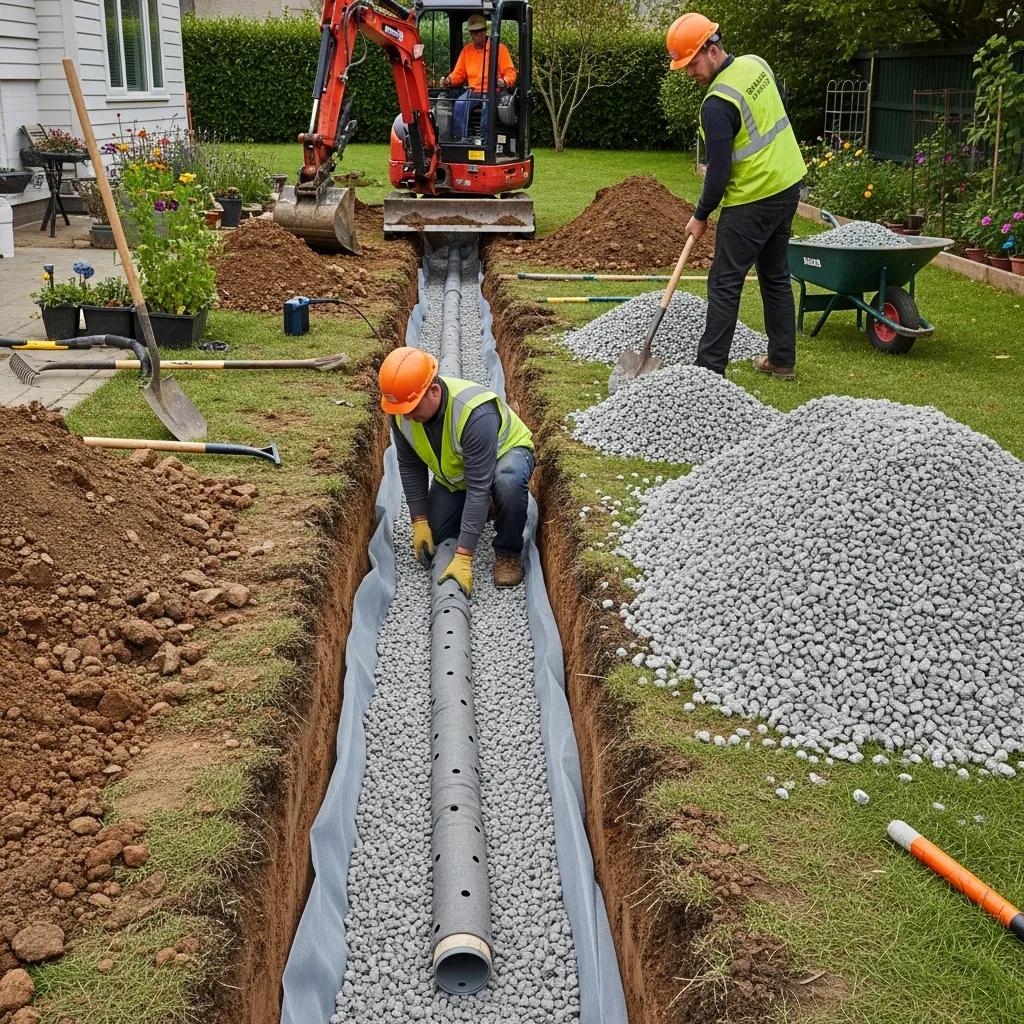
A French drain is a gravity-assisted drainage system that collects subsurface water and redirects it away from the foundation, reducing hydrostatic pressure and preventing seepage through cove joints and cracks. Benefits include flood prevention, reduced interior humidity and mold risk, and protection of structural elements by lowering groundwater levels adjacent to foundations. The installation process typically follows a multi-step sequence: inspection and diagnosis, selective excavation (for exterior systems) or interior trenching, placement of perforated pipe and drain rock, connection to a sump or daylight outlet, and backfill with proper grading to restore surface drainage. Below is a concise step-by-step process designed to capture the installation flow for both interior and exterior variants.
A typical French drain installation process includes:
- Inspect and map water entry points and grading to determine interior vs exterior approach.
- Excavate the trench (exterior) or cut a perimeter channel (interior) at the footing or cove joint level.
- Install a perforated pipe on a bed of clean drain rock, wrap with fabric filter, and connect to a sump or outlet.
- Backfill and regrade to ensure surface runoff is directed away from the foundation and finish the surface.
Benefits of a well-installed French drain:
- Reduces hydrostatic pressure against foundation walls.
- Lowers frequency of seepage, dampness, and mold formation.
- Can prolong the life of interior finishes and lower long-term maintenance costs.
What Is the Difference Between Interior and Exterior French Drains?
Interior French drains, installed just inside the perimeter at the slab edge, route water to a sump pump and are less disruptive to landscaping and exterior finishes; they are ideal when exterior excavation is limited or when a finished basement must be preserved. Exterior French drains are installed outside the foundation at footing level and intercept groundwater before it reaches the foundation wall, offering a preventive solution that is often more permanent but requires excavation and landscape restoration. Decision factors include the source of water (surface vs subsurface), access limitations, budget considerations, and the severity of groundwater pressure; homeowners and contractors should weigh installation impact against long-term effectiveness when choosing the right approach.
How Does a French Drain Prevent Basement Flooding and Water Damage?
A French drain prevents flooding by providing a low-resistance path for groundwater to flow away from a foundation; perforated pipe and surrounding gravel collect subsurface water, allowing gravity (or a connected sump pump) to remove collected water to a safe discharge point. By lowering the local water table and reducing hydrostatic pressure, the system mitigates the forces that push water through small cracks and cove joints, significantly decreasing the frequency of seepage events. Properly designed French drains, combined with correct slope and discharge planning, also manage surface runoff and reduce the chance that heavy rains overwhelm the foundation’s defenses. The next section explains why sump pumps are essential companions to French drains in many Hackensack installations.
Why Is Sump Pump Installation and Repair Essential for Hackensack Basements?
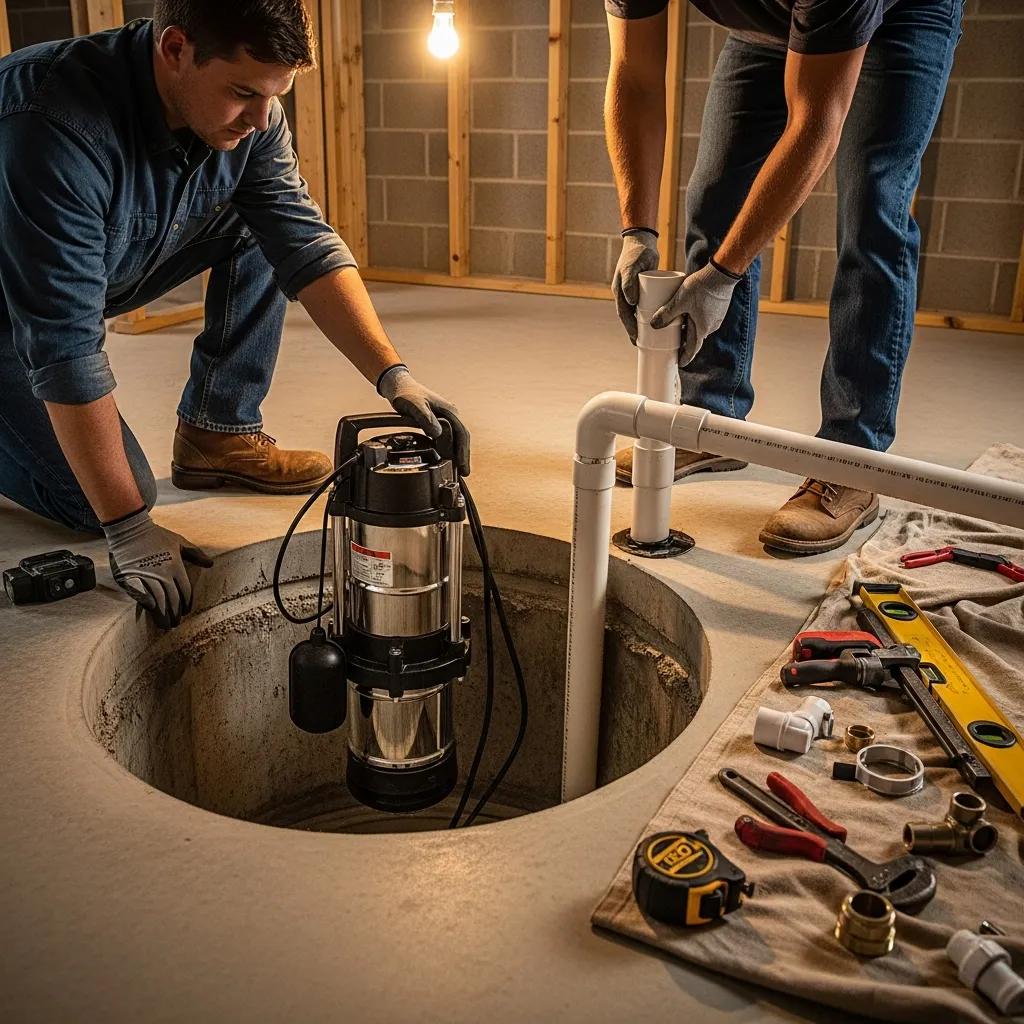
Yes—sump pumps are essential for many Hackensack basements because they provide active removal of water collected by interior drainage systems and prevent accumulated groundwater from overtopping basements during heavy rains or rapid snowmelt. Sump pumps maintain a low water table around the foundation by transferring water from a sump pit to an exterior discharge or storm drain, directly reducing the risk of flooding, reducing humidity, and protecting finishes. Backup systems—including battery backups or water-powered backups—ensure operation during power outages when storm-driven failures are most likely to occur. Understanding pump types, runtimes, and failure signs allows homeowners to choose the right system and arrange preventive maintenance to avoid emergency replacements.
Before the comparison table, here is a concise checklist of why a sump pump matters:
- Actively removes collected groundwater to prevent floor flooding.
- Reduces hydrostatic pressure that causes seepage and wall bowing.
- Protects mechanical equipment and finishes from water damage during storms.
- Enables interior French drains to function effectively by providing a discharge point.
The table below compares common sump pump types and typical attributes for homeowner decision-making.
| Pump Type | Characteristic | Typical Value |
|---|---|---|
| Primary sump pump (electric submersible) | Power source and location | Electric, installed in sump pit |
| Battery backup system | Runtime during outage | Several hours depending on battery size |
| Water-powered backup pump | Advantage/limitation | Runs without electricity but requires municipal water pressure |
Recognizing signs of pump failure—unusual noises, constant running, failure to start, or frequent short cycling—should trigger immediate testing and, if unresolved, professional inspection. Simple homeowner checks include testing the float switch, ensuring the discharge line is clear, and confirming the backup system is charged or functional. For installation or repair, homeowners may request a professional inspection and estimate to verify pump sizing, float type, and reliable backup options; Effective Basement Solutions offers installation and repair services with licensed in-house crews and can schedule a free inspection to evaluate sump pump needs and backup configurations via phone or email.
What Types of Sump Pumps and Battery Backup Systems Are Recommended?
Submersible pumps, mounted inside the sump pit, are typically quieter and better protected from debris but require a larger pit and periodic removal for service, while pedestal pumps have the motor above the pit and are easier to service but can be noisier and more exposed. Battery backup systems are recommended for Hackensack homes prone to storm-related outages; battery capacity should be sized for expected pump cycles and the homeowner’s risk tolerance, with run times varying by battery amp-hour rating and pump power. Water-powered backups provide continuous operation without electricity if municipal water pressure is available, but they use potable water and may be subject to local restrictions. Key features to prioritize include automatic activation, dual float switches for redundancy, and a solid warranty and maintenance plan.
How to Identify Signs of a Failing Sump Pump and Schedule Repairs?
Common warning signs of a failing sump pump include persistent noise, frequent on-off cycling, failure to start during tests, visible corrosion, or a pump that runs continuously without lowering water levels effectively. Homeowners can perform quick checks: pour water into the sump pit to verify activation, inspect the float and sensor for obstructions, and ensure the discharge line is not frozen, clogged, or blocked. If simple in-home tests do not restore proper operation, schedule a professional inspection to test electrical circuits, measure pump performance, and recommend repair or replacement; preventive maintenance visits can extend pump life and reduce emergency repair costs. For service requests, contact Effective Basement Solutions by phone or email to arrange a no-pressure inspection and professional assessment tailored to Hackensack conditions.
How Much Does Basement Waterproofing and French Drain Installation Cost in Hackensack, NJ?
Cost ranges for basement waterproofing in Hackensack vary based on system type, site access, and the extent of structural repairs; interior drainage systems and sump pumps are generally more affordable per linear foot than full exterior excavation and membrane systems, while exterior solutions tend to carry higher upfront costs with potential for longer-term prevention. Primary cost drivers include foundation type, need for structural repairs, soil conditions, landscape restoration, permits, and local labor rates. Below is a practical cost-comparison table to guide homeowner expectations and to prepare questions for contractors when requesting estimates.
This table provides typical ranges and attributes for common systems:
| System | Attribute | Typical Range |
|---|---|---|
| Interior French drain + sump pump | Cost basis | $5,000 – $15,000 per project (varies by scope) |
| Exterior waterproofing | Average project cost | $15,000 – $30,000 (higher due to excavation and restoration) |
| Sump pump + battery backup | Typical price | $1,000 – $3,000 depending on capacity and backup type |
When evaluating bids, request itemized quotes that separate drainage materials, labor, structural repairs, and landscape restoration to compare apples-to-apples. The following list explains the principal factors that most strongly influence price and what homeowners should ask prospective contractors to document.
- Project scope: interior versus exterior approach and total linear feet requiring work.
- Structural repairs: foundation crack injections, wall reinforcement, and floor replacement.
- Site access and landscaping: excavation complexity, driveway removal, and restoration.
- Local permits and disposal: permit fees, soil disposal, and regulatory constraints.
- Material quality and system components: pipe type, membrane grade, and sump pump specifications.
What Factors Influence the Cost of Waterproofing and Drainage Systems?
The extent of necessary excavation and whether the project requires exterior membrane application or interior trenching will typically have the largest impact on cost due to labor intensity and landscape restoration. Foundation geometry, such as poured concrete versus block foundations or the presence of finished interiors, changes accessibility and labor requirements. Soil composition—clay versus well-draining soils—affects both design choices and installation difficulty, while the need for structural stabilization or crack repair adds specialized labor and materials. Understanding these drivers helps homeowners evaluate trade-offs between short-term cost and long-term performance when comparing contractor proposals.
How to Get Accurate Estimates and Maximize Return on Investment?
To get accurate estimates, request written, itemized scopes of work that include system components, labor, warranties, and post-installation maintenance plans; ensure bids specify whether the system connects to a daylight discharge, storm drain, or municipal connection and clarify responsibilities for permits and landscaping restoration. Maximize ROI by prioritizing solutions that address root causes—grading correction and exterior drainage where feasible—and by choosing quality materials and proven components like reliable sump pumps and properly wrapped perforated pipe. Compare warranties and ask for local references or project snapshots, then weigh immediate cost against projected maintenance savings and reduced risk of mold, structural damage, and future repair expenses.
What Makes Effective Basement Solutions the Trusted Choice for Hackensack Homeowners?
Effective Basement Solutions positions its services to complement the topic-first guidance above by offering licensed, in-house crews (no subcontractors), free inspections, precision clean workmanship, and customized solutions tailored to New Jersey home conditions. Their approach emphasizes transparent, no-pressure consultations where crews diagnose water entry mechanisms and recommend interior or exterior systems based on site-specific factors rather than pushing unnecessary work. The team supports homeowners through the process—inspection, written estimate, and installation—using high-quality materials and clear maintenance guidance to maximize long-term protection and structural safety. To request a complimentary inspection or discuss project options, homeowners can contact Effective Basement Solutions by the provided company phone or company email.
The following list summarizes the key differentiators homeowners typically seek when selecting a waterproofing partner:
- Licensed in-house crews that enable direct quality control and consistent workmanship.
- Free inspection and tailored solution recommendations without sales pressure.
- Emphasis on durable materials and clean, contained installations to protect interiors.
- Clear documentation, itemized estimates, and maintenance recommendations after installation.
These attributes support reliable outcomes for Hackensack properties and align with best practices described throughout this article. Below are short anonymized project snapshots that illustrate the company’s methodology and expected outcomes, useful as decision aids for homeowners planning work in similar conditions.
| Project Snapshot | Problem | Outcome |
|---|---|---|
| Suburban Hackensack basement | Interior seepage at cove joint during storms | Installed interior French drain, sump pump, reduced seepage and humidity |
| Finished basement with surface runoff | Grading funneled water toward foundation | Regraded soil, installed exterior drain segments, eliminated pooling near foundation |
| Basement with intermittent mold growth | High humidity and minor wall leaks | Combined drainage, dehumidifier recommendation, and crack sealing; improved air quality |
How Do Licensed In-House Crews and Customized Solutions Ensure Quality?
In-house crews allow consistent training, direct supervision, and standardized quality checks that reduce variability compared to models relying on subcontractors; this control supports cleaner installations, timelier communication, and clearer accountability during warranty periods. Customized solutions begin with a free inspection to map water entry points and soil behavior, then select the least invasive effective approach—interior drainage and sump pumps where practical, exterior membranes where prevention at source is necessary, and structural reinforcement when wall movement is present. Post-installation, documented maintenance guidance and clear operational testing (sump activation, backup checks) ensure systems perform as designed and protect the homeowner’s investment.
What Do Local Customer Testimonials and Case Studies Reveal?
Local project summaries consistently report outcomes such as elimination of recurring flooding, reduction in basement humidity, and the cessation of mold recurrence after combined drainage and dehumidification measures were implemented. Homeowners often cite improved usability of previously damp spaces and greater confidence in property resilience during heavy rainfall as primary benefits. Including dates, before-and-after photos, and measured reductions in humidity or frequency of seepage provides the strongest validation for prospective customers to evaluate outcomes. To learn more or arrange a no-pressure, free inspection, contact Effective Basement Solutions using the listed phone or email for a tailored assessment of your Hackensack property.
Frequently Asked Questions
What is the best time of year to install basement waterproofing systems in Hackensack?
The ideal time for installing basement waterproofing systems in Hackensack is during the dry seasons, typically late spring to early fall. This timing allows for easier excavation and minimizes the risk of water intrusion during the installation process. Additionally, scheduling installations during these months can help ensure that any necessary landscaping restoration can be completed before winter. Homeowners should also consider having inspections done before heavy rainfall seasons to address any existing issues proactively.
How long does the installation of a French drain typically take?
The installation of a French drain can vary in duration based on the complexity of the project and the specific site conditions. Generally, a straightforward installation can take anywhere from one to three days. Factors influencing the timeline include the length of the drain, the need for excavation, and whether any additional waterproofing measures are required. Homeowners should consult with their contractors for a more precise estimate based on their unique circumstances.
Are there any maintenance requirements for French drains and sump pumps?
Yes, regular maintenance is essential for both French drains and sump pumps to ensure they function effectively. Homeowners should inspect sump pumps at least once a year, checking for debris in the sump pit, testing the float switch, and ensuring the discharge line is clear. French drains should also be monitored for blockages, especially after heavy rains. Cleaning gutters and ensuring proper grading around the foundation can help prevent issues with both systems.
What are the signs that a sump pump needs to be replaced?
Signs that a sump pump may need replacement include unusual noises during operation, frequent cycling on and off, failure to start when needed, or visible corrosion on the unit. Additionally, if the pump runs continuously without effectively lowering water levels, it may indicate a malfunction. Homeowners should conduct regular tests by pouring water into the sump pit to ensure the pump activates properly. If issues persist, consulting a professional for inspection and potential replacement is advisable.
Can basement waterproofing systems help with mold prevention?
Yes, basement waterproofing systems play a crucial role in mold prevention. By effectively managing moisture levels and preventing water intrusion, these systems reduce the conditions that foster mold growth. Properly installed French drains and sump pumps help maintain a dry environment, which is essential for inhibiting mold development. Additionally, combining waterproofing measures with dehumidification can further enhance indoor air quality and protect against mold-related health issues.
What should homeowners look for when choosing a waterproofing contractor?
When selecting a waterproofing contractor, homeowners should prioritize experience, licensing, and customer reviews. It’s essential to choose a contractor who specializes in basement waterproofing and has a proven track record in the local area. Requesting detailed, itemized estimates and warranties can also help ensure transparency. Additionally, look for contractors who offer free inspections and consultations, as this indicates a commitment to understanding the specific needs of your property before recommending solutions.