
Expert NJ French Drain Installation for Basement WaterproofingFrench Drain Installation in New Jersey: Complete Guide to Effective Basement Waterproofing
Basement flooding and chronic dampness are common risks for New Jersey homeowners because heavy rains, seasonal high water tables, and hydrostatic pressure push groundwater toward foundations. This guide explains how a French drain—a trenched, perforated pipe wrapped in filter fabric and set in aggregate—redirects subsurface water away from foundations, relieves hydrostatic pressure, and prevents wall seepage and structural damage. You will learn what components make a reliable drain, the pros and cons of interior versus exterior installations, how professional installation works, cost drivers in New Jersey, complementary systems like sump pumps and dehumidifiers, and practical maintenance steps to extend system life. The article draws on practical basement waterproofing principles and uses regional considerations for New Jersey soil and climate to help you choose and maintain the right perimeter drain system for your home. Read on to compare options, understand installation timelines, and prepare for an informed on-site estimate.
What is a French Drain and How Does it Protect Your New Jersey Home?
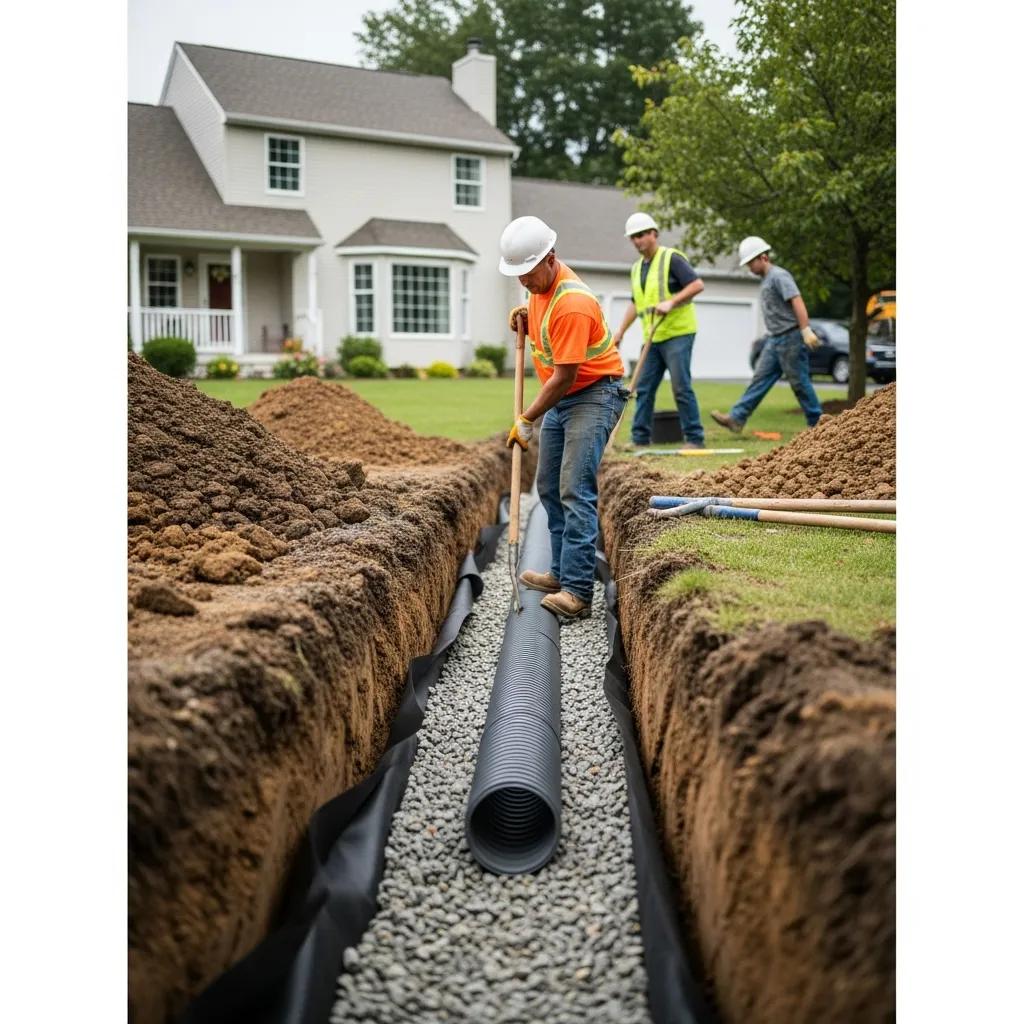
A French drain is a subsurface drainage system consisting of a trench, filter fabric, aggregate (gravel), and a perforated pipe that collects and redirects groundwater away from a foundation, reducing hydrostatic pressure and preventing seepage into basements. The system operates by intercepting lateral groundwater movement and channeling water by gravity or to a sump pit, which lowers soil saturation adjacent to foundation walls and reduces the force that drives water through cracks. By relieving hydrostatic pressure, a properly installed French drain decreases the risk of wall leaks, reduces mold growth risk, and protects structural elements from moisture-driven deterioration. Understanding these basics clarifies why drainage is a core element of basement waterproofing and why pairing drains with discharge or sump systems is often necessary for reliable results.
Effective Basement Solutions evaluates site conditions and designs tailored French drain systems as part of a professional assessment; they offer a free inspection to determine the best approach for New Jersey homes. This professional evaluation naturally leads into the components that make drains effective and the ways those components work together to prevent basement flooding.
What are the key components of a French drain system?
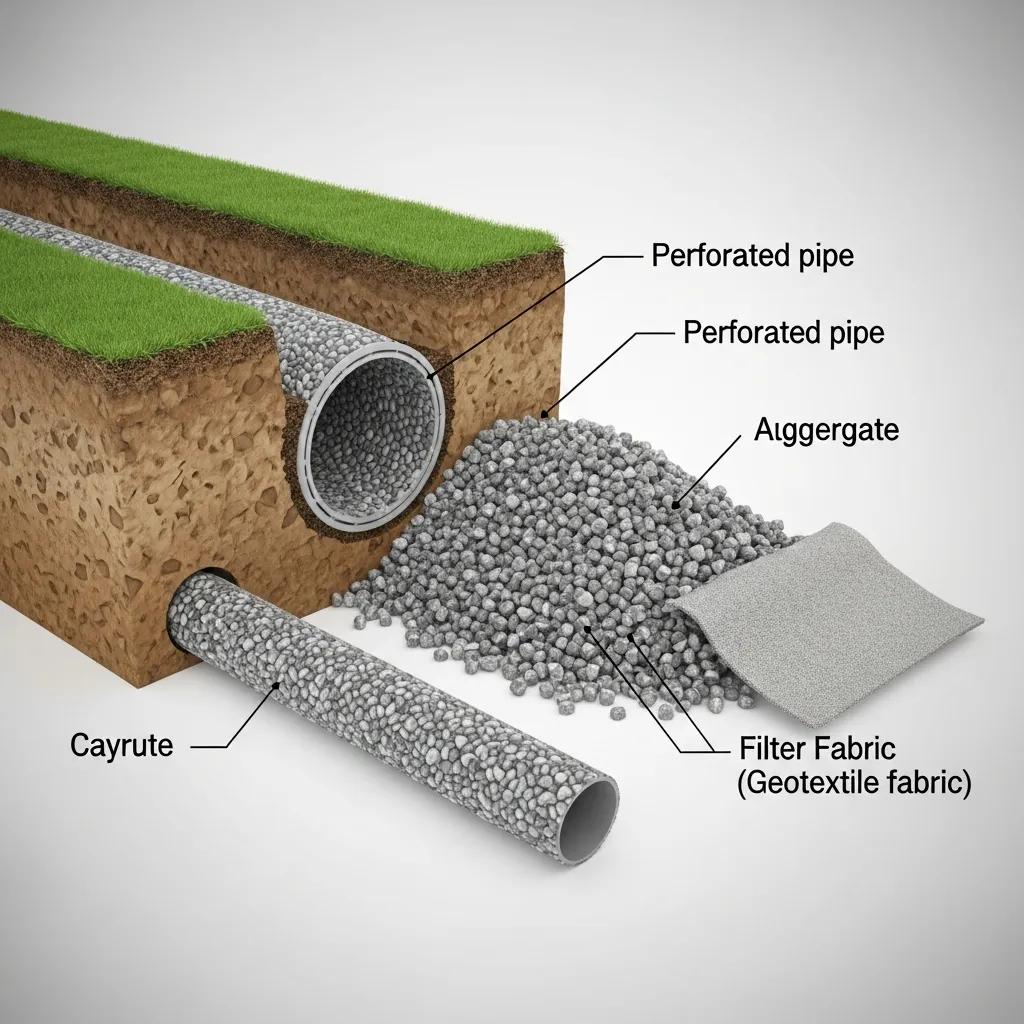
A French drain’s components work together to collect, convey, and discharge groundwater while preventing clogging and soil migration into the pipe. The primary parts include a trench excavated to the required depth, a wrapped perforated pipe that carries water, clean aggregate that promotes flow around the pipe, and filter fabric that prevents fine soils from entering the aggregate. The outlet may discharge to daylight, a storm sewer (where permitted), or into a sump pit connected to a pump for active removal; pipe material and fabric grade influence durability and clog resistance. Choosing high-quality perforated pipe and durable non-woven filter fabric increases long-term reliability and reduces maintenance frequency, which supports stable basement waterproofing outcomes.
How does a French drain prevent basement flooding and water damage?
A French drain prevents flooding by intercepting water before it reaches a foundation wall and by lowering the hydrostatic pressure that forces moisture through cracks and porous concrete. When water accumulates in saturated soil, hydrostatic pressure increases and pushes water into weak points; the drain collects that water and routes it away, thereby reducing seepage and the conditions that promote mold and efflorescence. In heavy rainfall or rapid snowmelt, drains coupled with sump pumps can handle peak flows, protecting finishes and stored items in basements. Recognizing how the system addresses both steady groundwater and episodic surges helps homeowners choose designs that match local rainfall patterns and soil behavior in New Jersey.
The key functional benefits naturally lead into a comparison of installation types and where each is best applied.
Which Types of French Drains Are Best for New Jersey Basements?
Selecting interior or exterior French drains depends on site constraints, landscape priorities, water entry points, and the local water table, with pipeless or hybrid variants suited to specific conditions. Exterior drains intercept water before it soaks the soil next to the foundation and often work best when yard grading and access permit excavation, while interior drains are installed along the basement perimeter to relieve pressure and connect directly to a sump. Pipeless or hybrid approaches combine techniques to avoid major landscaping work while still relieving hydrostatic pressure. Evaluating soil type, finished basements, and desired disruption level helps determine the most effective system for a given New Jersey home.
Below is a comparison table summarizing the main characteristics of interior versus exterior French drains to aid decision-making.
The following table compares interior and exterior French drains for clear selection guidance.
| System Type | Characteristic | Typical Impact |
|---|---|---|
| Interior French Drain | Installed inside basement perimeter, connects to sump | Minimal landscaping disruption; efficient hydrostatic relief |
| Exterior French Drain | Excavated at foundation perimeter, drains away from foundation | Prevents saturation of foundation soil; may require landscape restoration |
| Pipeless / Hybrid | Uses membranes or sub-slab routing with minimal trenching | Lower surface impact; useful where exterior access is limited |
What are the benefits of interior French drain installation?
Interior systems offer a practical solution when exterior excavation is impractical or when homeowners prefer to preserve landscaping, and they excel at relieving hydrostatic pressure directly at the foundation footings. An interior perimeter drain collects seepage that forms behind walls and routes it into a sump pit where a pump discharges water away from the home, which is especially useful for finished basements. Installation timelines are typically shorter than exterior excavation and repairs to finishes can be localized to a narrow channel, reducing landscape restoration needs. For New Jersey basements with finished walls or limited exterior access, interior drains paired with a reliable sump pump are often the most cost-effective route to a dry basement.
How do exterior French drains protect foundations and landscaping?
Exterior French drains prevent water from saturating soils adjacent to footings by intercepting and diverting runoff before it reaches the foundation zone, which reduces long-term soil moisture and protects both foundations and landscaping. Exterior systems typically require excavation along the foundation footing, placement of waterproofing membrane where needed, and proper outlet routing to daylight or storm drainage, followed by soil and turf restoration. While exterior installation can be more invasive and require landscape repair, it provides a proactive defense that lowers groundwater levels adjacent to the foundation and can reduce interior moisture issues without altering basement finishes. When possible and permitted, exterior drains are preferred for stopping water issues at their source before they affect structural elements.
How Does the French Drain Installation Process Work with Effective Basement Solutions?
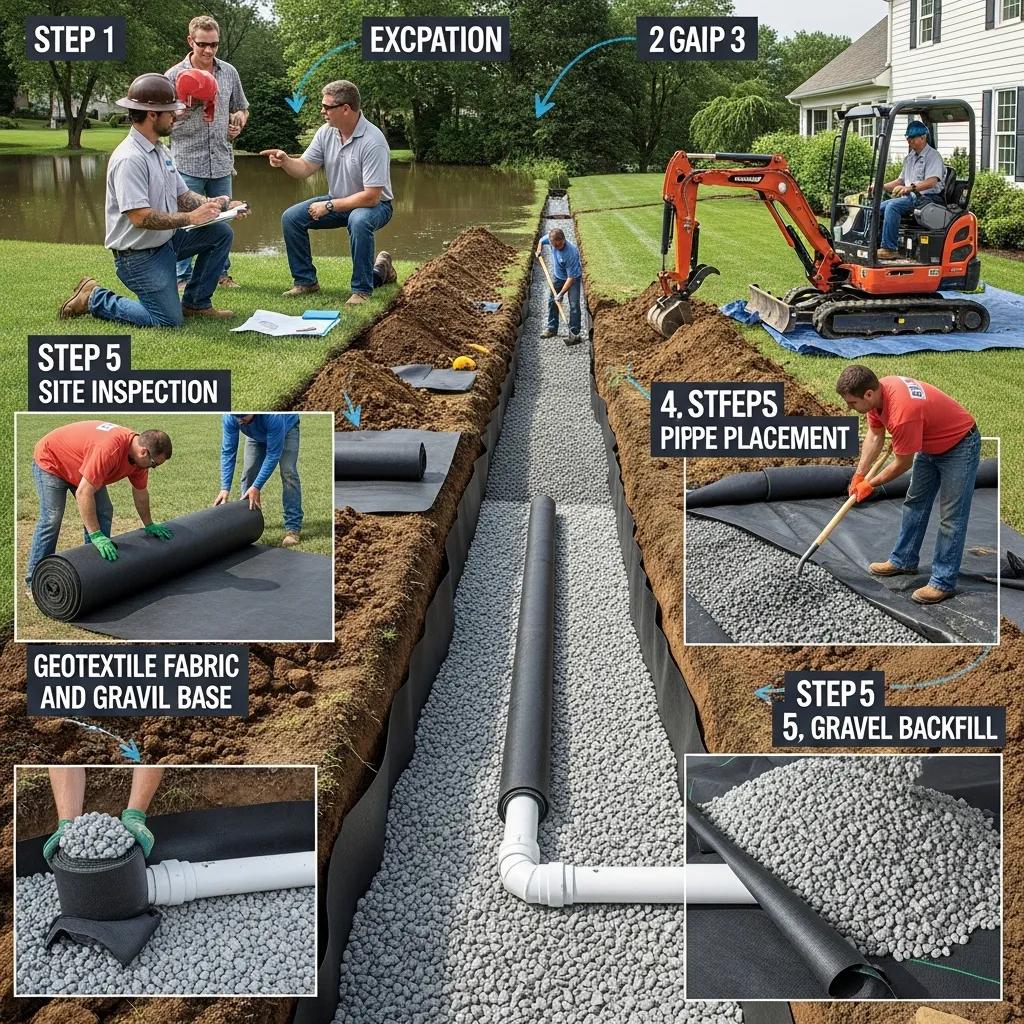
A professional French drain installation follows a methodical workflow: site inspection and diagnosis, custom design that accounts for soil and water routing, excavation, installation of fabric, aggregate, and perforated pipe, outlet or sump connection, backfill and restoration, and final testing to confirm flow. In New Jersey, design considerations also include local permitting and selecting discharge paths that comply with municipal rules and avoid oversaturating neighboring properties. Quality installations test flow lines and verify slopes to ensure gravity drainage or pump capacity will handle expected volumes, and proper backfill and compaction restore stability and settlement avoidance. These steps reduce the likelihood of premature clogging, failed connections, or improper routing that compromise long-term performance.
Effective Basement Solutions uses licensed, in-house crews to design and install high-performance French drain systems tailored for New Jersey homes, emphasizing precision, clean workmanship, and high-quality materials; the process begins with a free inspection. Below is a practical numbered workflow showing typical professional steps and homeowner expectations during an installation.
- Initial inspection and diagnosis: Technician evaluates entry points, soil, and interior signs.
- Design and permitting: Create a plan that specifies depth, outlet location, and materials.
- Excavation and placement: Trench, fabric lining, aggregate, and perforated pipe are installed.
- Connection and backfill: Route to outlet or sump, backfill, compact, and restore surfaces.
- Testing and handover: Verify flow, test sump operation if installed, and explain maintenance.
What steps are involved in a professional French drain installation?
A standard professional installation begins with a site consultation to map water sources and soil, followed by targeted excavation to the design depth, precise placement of filter fabric and aggregate, installation of a perforated pipe with correct slope, and either outlet routing or connection to a sump pit and pump. Backfilling and compaction restore structural stability, and landscape restoration or interior finish repairs complete the work; final testing confirms free flow and sump operation if applicable. Typical timelines vary by scope but professionals plan to minimize disruption with staged work and debris management. Clear communication about sequencing and post-installation care ensures homeowners know what to expect and how to maintain the system.
Why choose licensed in-house crews for your NJ basement waterproofing?
Licensed, in-house crews deliver consistent workmanship, direct accountability, and streamlined communication compared with models that rely heavily on subcontractors, reducing risks associated with uneven installation practices. In-house teams maintain unified quality standards, adhere to warranties and service protocols, and simplify follow-up for inspections or repairs because the same company handles diagnostics and remediation. For New Jersey-specific conditions—like varied soil types and municipality permitting—experienced in-house technicians can apply consistent methods across the project and ensure compliance and workmanship continuity. Choosing licensed in-house crews minimizes coordination gaps and typically improves long-term system reliability and serviceability.
What Factors Influence French Drain Installation Cost in New Jersey?
Several core factors drive cost for French drain installation in New Jersey: linear footage and trench depth, soil type (clay, sand, rock), excavation difficulty and accessibility, material quality (pipe type, fabric, aggregate), labor rates for licensed crews, and whether a sump pump and battery backup are included. Unseen issues—such as buried utilities, rock ledge, or high groundwater requiring deeper trenches—can increase equipment needs and labor time, while landscape restoration adds to exterior project costs. Interior jobs that require removal and replacement of finished surfaces add finishing costs, so distinguishing base drainage work from finish restoration helps homeowners compare estimates. Because variables differ widely between properties, on-site assessment is essential for accurate pricing.
The table below breaks down typical cost-influencing factors and clarifies how each element affects pricing so homeowners know what to ask about during an estimate.
| Cost Factor | What It Affects | How It Influences Price |
|---|---|---|
| Linear footage | Materials, pipe length | More footage increases pipe, aggregate, and labor costs |
| Soil type | Excavation effort | Clay or rock raises labor and equipment needs |
| Accessibility | Time and machinery | Tight access increases manual labor and time on site |
| Materials | Longevity and performance | Higher-grade pipe and fabric raise upfront costs but reduce maintenance |
| Labor | Installation quality | Licensed in-house crews typically carry higher but more reliable labor costs |
How do soil type, depth, and accessibility affect pricing?
Soil composition and depth directly affect excavation time and machinery requirements: clay and compacted soils slow digging and may require heavier equipment, while rock or ledge can necessitate specialized breaking tools and increase cost. Deep trenches to reach footing or to bypass high groundwater elevate material usage and labor hours, and tight access—such as narrow side yards or finished interiors—often requires manual excavation that lengthens the schedule and raises labor costs. Addressing these variables early during inspection reduces surprises and helps contractors propose solutions that balance effectiveness with budget. Determining these factors during a free estimate gives the most accurate personalized pricing for a New Jersey property.
What is the cost difference between interior and exterior French drains?
Interior installations typically avoid extensive landscaping restoration and can be faster to complete in finished homes, which may reduce overall project disruption but can add costs tied to interior finish repair if floors or walls are affected. Exterior drains often require more excavation and landscape restoration but prevent water from reaching the foundation soil and can reduce long-term interior maintenance needs; restoration of turf, irrigation, or hardscape can add a significant portion of the exterior cost. Exact differences depend on restoration scope, accessibility, and whether a sump pump or discharge piping is needed; obtaining a personalized estimate during a free inspection is the best way to compare approaches for your property.
Effective Basement Solutions provides personalized cost assessments and free estimates to evaluate these factors on-site so homeowners get an accurate scope and price tailored to their New Jersey property. This practical cost guidance transitions naturally to how complementary systems enhance French drain performance.
How Can Complementary Basement Waterproofing Solutions Enhance French Drain Performance?
French drains perform best as part of a system that includes active discharge methods and environmental controls; sump pumps, battery backups, crawl space encapsulation, and dehumidifiers each add resilience against storms, power loss, and persistent moisture. A sump pump integrated with an interior drain actively removes collected water and directs it away from the house, while a battery backup preserves pump function during outages. Crawl space encapsulation and dehumidification control ground moisture and airborne humidity, reducing mold risk and improving indoor air quality. Considering these related systems together produces a comprehensive waterproofing strategy that maintains a dry, healthy basement environment in New Jersey’s variable climate.
The following table compares complementary systems, their benefits, and basic maintenance notes so homeowners can plan a holistic waterproofing approach.
| System | Primary Benefit | Maintenance Notes |
|---|---|---|
| Sump Pump | Active discharge of collected water | Test annually; inspect float and discharge lines |
| Battery Backup Pump | Power-failure protection | Check battery and runtime before storm season |
| Dehumidifier | Controls indoor humidity | Clean filters and empty condensate or connect drain |
| Crawl Space Encapsulation | Reduces ground moisture entry | Inspect vapor barrier seams and vents seasonally |
How do sump pump systems integrate with French drains?
Interior French drains commonly route collected water to a sump pit where a sump pump moves water through a discharge line away from the foundation; pump selection balances head height, flow rate, and expected inflow volume. Proper integration includes a well-sized pit, check valve on the discharge line, and routing that avoids frozen sections or backflow during storms; in colder climates, freeze prevention for discharge lines is critical. For reliability, homeowners should consider a battery backup pump to maintain discharge during power outages caused by severe weather. Correct pump sizing and installation ensure that the drain-pump system converts passive collection into active removal for long-term basement dryness.
What role do crawl space encapsulation and dehumidifiers play in moisture control?
Crawl space encapsulation seals the ground and walls with a vapor barrier to stop moist soil gases and capillary moisture from entering living spaces, while dehumidifiers control relative humidity to inhibit mold and protect finishes and stored items. When paired with perimeter drainage, encapsulation reduces the amount of moisture the drain must manage and stabilizes indoor humidity levels, improving energy efficiency and system performance. Routine dehumidifier maintenance and vapor barrier inspections ensure these components continue to support the overall waterproofing system. Integrating these measures completes a whole-house moisture management strategy that complements the French drain’s subsurface role.
What Maintenance Tips Ensure Longevity of Your French Drain System in New Jersey?
Regular inspection and proactive maintenance keep a French drain system functioning for many years by spotting issues early, preserving pump operation, and preventing blockages that reduce flow. Homeowners should visually inspect discharge points, monitor sump pump cycles, and confirm that grading continues to direct surface water away from foundations; seasonal freeze-thaw cycles in New Jersey make winterization of discharge lines and sump pit checks particularly important. Simple maintenance reduces the risk of costly failures and extends the service life of both passive and active components. The recommendations below provide a practical schedule and signs that warrant professional attention.
Follow this practical maintenance checklist to keep your drain system performing reliably.
- Inspect discharge points after storms: Ensure outlets are clear and water is flowing away from the foundation.
- Monitor sump pump cycles monthly: Unusual cycling frequency can indicate changing inflow or pump issues.
- Seasonal checks in spring and fall: Verify float operation, clean debris around pit, and inspect for sediment.
- Annual professional inspection: Hire a technician to camera lines, test pump performance, and evaluate overall system health.
How often should French drains be inspected and cleaned?
Inspect drains and sump systems seasonally—ideally in spring and fall—and after major storms to verify discharge, check for standing water near foundations, and observe sump pump cycling; these regular checks address New Jersey’s freeze-thaw and heavy-rain seasons. Homeowners can perform basic visual inspections and clear visible debris, but professional camera inspections and cleaning are recommended when flow slows or after several years to remove sediment that can reduce capacity. A proactive schedule reduces the likelihood of emergency failures and ensures the system continues to relieve hydrostatic pressure effectively. When inspections reveal reduced performance, scheduling professional cleaning or repair prevents escalation to interior damage.
What signs indicate the need for repair or replacement?
Warning signs of a failing French drain system include recurring basement dampness or new wall seepage, increased sump pump activation frequency, standing water near the foundation, or visible settlement and cracks in foundation walls. Additional indicators include slow drainage at discharge points, unusual noises from pumps, and persistent musty odors that suggest hidden moisture. If these signs appear, homeowners should limit interior exposure to affected areas and schedule a professional inspection to diagnose root causes and recommend remediation. Rapid response to early signs minimizes repair scope, prevents mold growth, and protects structural elements from progressive moisture damage.
For homeowners ready to secure long-term protection, scheduling a professional inspection is the next practical step; Effective Basement Solutions offers free inspections and maintains licensed in-house crews with a New Jersey specialization and free inspections to ensure tailored, high-quality waterproofing solutions.
Licensed in-house crews, NJ specialization, free inspections.
Frequently Asked Questions
1. How long does a French drain installation typically take?
The duration of a French drain installation can vary based on several factors, including the complexity of the project, the type of drain being installed, and site conditions. Generally, a straightforward installation can take anywhere from one to three days. Interior installations may be quicker due to less excavation, while exterior installations often require more time for excavation and landscape restoration. Homeowners should discuss timelines with their contractor during the initial assessment to set realistic expectations based on their specific situation.
2. Can I install a French drain myself, or should I hire a professional?
While some homeowners may consider a DIY approach to installing a French drain, it is generally recommended to hire a professional. Proper installation requires knowledge of local building codes, soil conditions, and drainage principles to ensure effectiveness. Mistakes in installation can lead to inadequate drainage, increased costs, and potential damage to the property. Professionals have the necessary tools, experience, and expertise to design and install a system that meets the specific needs of your home, ensuring long-term performance and reliability.
3. What maintenance is required for a French drain system?
Maintaining a French drain system involves regular inspections and proactive care to ensure optimal performance. Homeowners should check discharge points for blockages, monitor sump pump operation, and inspect for sediment buildup in the drain. Seasonal checks, especially before and after heavy rain, are crucial to identify any issues early. Additionally, an annual professional inspection can help assess the system’s health and address any potential problems before they escalate, ensuring the longevity and effectiveness of the drainage system.
4. Are there any environmental considerations when installing a French drain?
Yes, environmental considerations are important when installing a French drain. Homeowners should be aware of local regulations regarding drainage systems, as improper installation can lead to water runoff issues affecting neighboring properties. Additionally, the drain’s outlet should be positioned to prevent erosion or flooding in nearby areas. It’s also essential to consider the impact on local ecosystems, ensuring that the system does not disrupt natural water flow or harm local wildlife. Consulting with professionals familiar with local environmental regulations can help mitigate these concerns.
5. How do I know if my French drain is working properly?
To determine if your French drain is functioning correctly, monitor for signs of water accumulation in your basement or around the foundation. Regularly check the sump pump to ensure it activates and discharges water as needed. After heavy rainfall, inspect discharge points to confirm water flows away from the foundation. Additionally, look for any unusual noises from the pump or signs of sediment buildup in the drain. If you notice persistent dampness or other issues, it may be time to schedule a professional inspection.
6. What are the common mistakes to avoid during French drain installation?
Common mistakes during French drain installation include improper slope, inadequate drainage capacity, and neglecting to use high-quality materials. Failing to ensure the drain is sloped correctly can lead to water pooling instead of flowing away from the foundation. Additionally, using subpar materials can result in clogs and reduced system longevity. It’s also crucial to consider local soil conditions and water table levels, as these factors influence the design and effectiveness of the drain. Consulting with professionals can help avoid these pitfalls.
7. Can a French drain help with mold prevention in my basement?
Yes, a French drain can significantly aid in mold prevention in your basement. By effectively redirecting groundwater away from the foundation and reducing hydrostatic pressure, it minimizes moisture levels in the basement environment. Lower moisture levels help inhibit mold growth, which thrives in damp conditions. However, for optimal mold prevention, it is also essential to combine the French drain with other moisture control measures, such as dehumidifiers and proper ventilation, to maintain a dry and healthy indoor environment.
Conclusion
Implementing a French drain system is a proactive measure that effectively protects New Jersey basements from flooding and moisture damage. By understanding the components and installation processes, homeowners can make informed decisions that enhance their property’s resilience against water intrusion. Regular maintenance and complementary systems further ensure long-term performance and peace of mind. Take the first step towards a dry basement by scheduling your free inspection with Effective Basement Solutions today.