
Montclair's Premier Waterproofing Solutions
Basement water intrusion in Montclair, NJ presents a persistent threat to health, property value, and foundation integrity due to seasonal heavy rainfall and clay-rich soils that raise groundwater levels. This article explains the mechanisms that drive leaks—primarily hydrostatic pressure—and the combined solutions that reliably protect basements: targeted waterproofing, French drain systems, and sump pumps. You will learn how to recognize wet-basement indicators, compare interior and exterior waterproofing options, understand realistic cost ranges, and evaluate sump pump types and maintenance needs for Montclair homes. The guide provides practical homeowner checklists, cost-driver breakdowns, and EAV-style comparison tables to simplify decision-making. Read on for actionable diagnostics, recommended interventions for clay soils, and when to seek free professional estimates or schedule an inspection to prevent escalating damage.
What Are the Common Signs of Basement Water Problems in Montclair, NJ?
Basement water problems show predictable signs that signal moisture intrusion or active leaks; recognizing these early prevents structural and mold issues. Visible indicators often include staining, peeling paint, and efflorescence where mineral salts deposit, while hidden signs include persistent musty odors and elevated humidity that encourage mold growth. These symptoms typically result from hydrostatic pressure, poor exterior grading, clogged gutters, or insufficient drainage—common in Montclair’s clay soils. Homeowners should perform simple inspections after heavy rain and track recurring issues to determine whether DIY fixes or professional intervention is needed; the next subsection explains hydrostatic pressure mechanics so you can link symptoms to causes.
Common signs to watch for in Montclair basements:
- Musty odor: Persistent damp smell indicating elevated humidity or hidden mold growth.
- Efflorescence and white deposits: Mineral salts that show water is moving through masonry.
- Wall and floor cracks or bulging: Structural stress points where water can enter.
- Damp spots, puddles, or peeling paint: Direct evidence of active leaks or condensation.
These indicators suggest underlying pressure or drainage problems and should prompt targeted inspection or remediation to avoid escalation.
How Does Hydrostatic Pressure Cause Basement Leaks and Mold?
Hydrostatic pressure is the force of saturated soil pressing against foundation walls and slabs, and it drives groundwater through cracks, porous masonry, and seams in slabs. In Montclair, heavy rains saturate clay soils, increasing this pressure and forcing moisture inward where it condenses on cooler basement surfaces and feeds mold colonies. Relief strategies focus on removing or redirecting groundwater—exterior grading, French drains, interior drain tile, and sump pumps reduce pressure and stop persistent seepage. Understanding hydrostatic pressure connects directly to selecting appropriate waterproofing: low-level moisture may respond to sealants and vapor barriers, while pressure-driven leaks typically need drainage and sump systems to fully resolve.
What Visible and Hidden Indicators Should Homeowners Watch For?
A thorough inspection combines visible signs with measurements of indoor humidity and material condition to detect concealed problems early. Visible indicators include staining, peeling paint, rust on supports, and active puddles, while hidden signs include warped flooring, spalling brick faces, and elevated relative humidity levels above 50–60% that foster mold. Homeowners can use a hygrometer, inspect after storms, and monitor for recurring dampness; persistent or worsening signs require professional assessment because they often indicate system-level drainage failures. Early detection enables targeted fixes that prioritize relieving hydrostatic pressure, which is essential for durable, long-term protection.
How Much Does Basement Waterproofing and French Drain Installation Cost in Montclair, NJ?
Typical cost ranges for basement waterproofing and French drain installation in Montclair reflect method, access, and local soil conditions; homeowners should expect varying prices depending on chosen approaches and repair scope. Interior systems such as interior French drains paired with a sump pump are often more budget-friendly and less disruptive than full exterior excavation, while exterior waterproofing generally costs more but addresses water at its source. Factors like basement square footage, finished interiors, foundation cracks, and clay soil complexity all increase costs; the table below breaks down common components, typical price ranges, and what affects each cost element. After reviewing costs, requesting a free estimate from local waterproofing specialists is recommended to get a site-specific quote tailored to Montclair conditions.
Cost drivers for Montclair basement waterproofing:
- Basement size and finish level: Larger or finished basements require more labor and remediation for interior systems.
- Soil type and drainage complexity: Clay soils increase excavation time and drainage requirements.
- Access and landscaping impact: Difficult access or extensive landscaping restoration raises costs.
- Structural repairs needed: Foundation crack repair or underpinning increases overall scope and price.
This breakdown clarifies why estimates vary and when a free, on-site evaluation is the most reliable way to determine final pricing.
Intro to cost comparison table: The table below compares common methods and cost drivers to help homeowners evaluate options.
| Approach | Typical Price Range | What Affects Price |
|---|---|---|
| Interior French drain + sump pump | $3,500 – $8,000 | Basement finish, pit excavation, pump quality, access |
| Exterior excavation + waterproofing membrane | $8,000 – $20,000+ | Soil removal, landscaping restoration, foundation condition |
| Sump pump installation or replacement | $800 – $2,500 | Pump type, battery backup, pit work, check valve |
| Crack repair (epoxy/sealant) | $300 – $1,500 | Crack size, injection access, structural vs cosmetic |
This table highlights how method choice and site conditions change cost outcomes and why combined-system quotes can be more economical over time.
What Factors Influence Basement Waterproofing Cost Montclair NJ?
Several interrelated factors determine final job costs, and their combined effect often explains wide price ranges seen in estimates. Severity of leakage and required structural repairs such as foundation crack injections or wall stabilization directly increase labor and materials. Basement square footage and whether the space is finished dictate interior demolition and restoration costs, while accessibility—narrow yards or limited driveway space—raises labor time and equipment needs. Local permitting, disposal fees, and Montclair-specific soil conditions (notably heavy clay) also contribute to higher excavation or drainage complexity, so homeowners should factor these local realities into budget expectations.
Key examples that affect price include driveway removal for exterior access, need for underpinning in severe settlement, and restoration of finished interiors after interior drain installation. Understanding these drivers helps homeowners prioritize options that deliver durable results for their budget.
How Do French Drain Installation and Sump Pump Repair Costs Compare?
Comparing French drain installation and sump pump services clarifies when both are needed and how they interact financially and functionally. Interior French drains paired with sump pumps are commonly used together: the drain captures perimeter groundwater and the sump pump expels it, so combined costs cover both drainage and discharge. Exterior French drains focus on redirecting water away from the foundation and are typically more expensive due to excavation. Sump pump repairs or replacements are lower-cost but essential maintenance items; investing in a higher-capacity pump or battery-backup increases initial spend but reduces failure risk during storms.
Short comparative list of typical cost ranges:
- Interior French drain + basic sump pump: moderate combined investment with minimal yard disruption.
- Exterior French drain + membrane: higher upfront cost with long-term source control.
- Sump pump replacement/repair: lower immediate cost but critical for system reliability.
Balancing initial cost against long-term risk reduction is essential; in many Montclair homes, combined solutions offer the best life-cycle value.
What Are the Best Basement Waterproofing Solutions for Montclair Homes?
Selecting the best waterproofing strategy depends on whether moisture entry is pressure-driven, surface runoff-related, or due to plumbing faults; Montclair’s clay soils and rainfall patterns favor drainage-first approaches. Interior systems (perimeter drains and sump pumps) are effective at managing hydrostatic pressure that has already reached the foundation and are less disruptive for finished basements. Exterior methods prevent soil saturation at the foundation face and reduce long-term load but require excavation and landscape restoration. Complementary measures—sealants, vapor barriers, and proper exterior grading—work best as part of an integrated system that addresses both water management and indoor humidity control.
A comparative EAV table below clarifies when each method is best and its limitations for Montclair homes.
| Method | Best-for / Limitations | Notes |
|---|---|---|
| Interior French drain + sump | Best for finished basements, less yard disruption / won’t stop exterior saturation | Reliable relief from hydrostatic pressure when combined with pump |
| Exterior excavation + membrane | Best to stop water at source / invasive and costlier | Long-term source control; may require major landscaping work |
| Sealants & vapor barriers | Best for minor seepage and humidity control / not adequate for pressure-driven leaks | Useful for finished spaces as part of an integrated system |
| Sump pump upgrades | Best for discharge reliability / requires maintenance and possible backup | Battery backup strongly recommended in storm seasons |
This comparison shows that integrated drainage and pumping solutions typically deliver the most reliable protection for Montclair’s soil and climate conditions.
After evaluating technical options, homeowners often benefit from professional site assessments. Local waterproofing and French drain specialists commonly offer free estimates and can inspect soil and foundation conditions to recommend an appropriate system; requesting a free consultation after reviewing options helps match solution scope to risk level without committing to unnecessary work.
How Do Interior and Exterior Waterproofing Methods Differ?
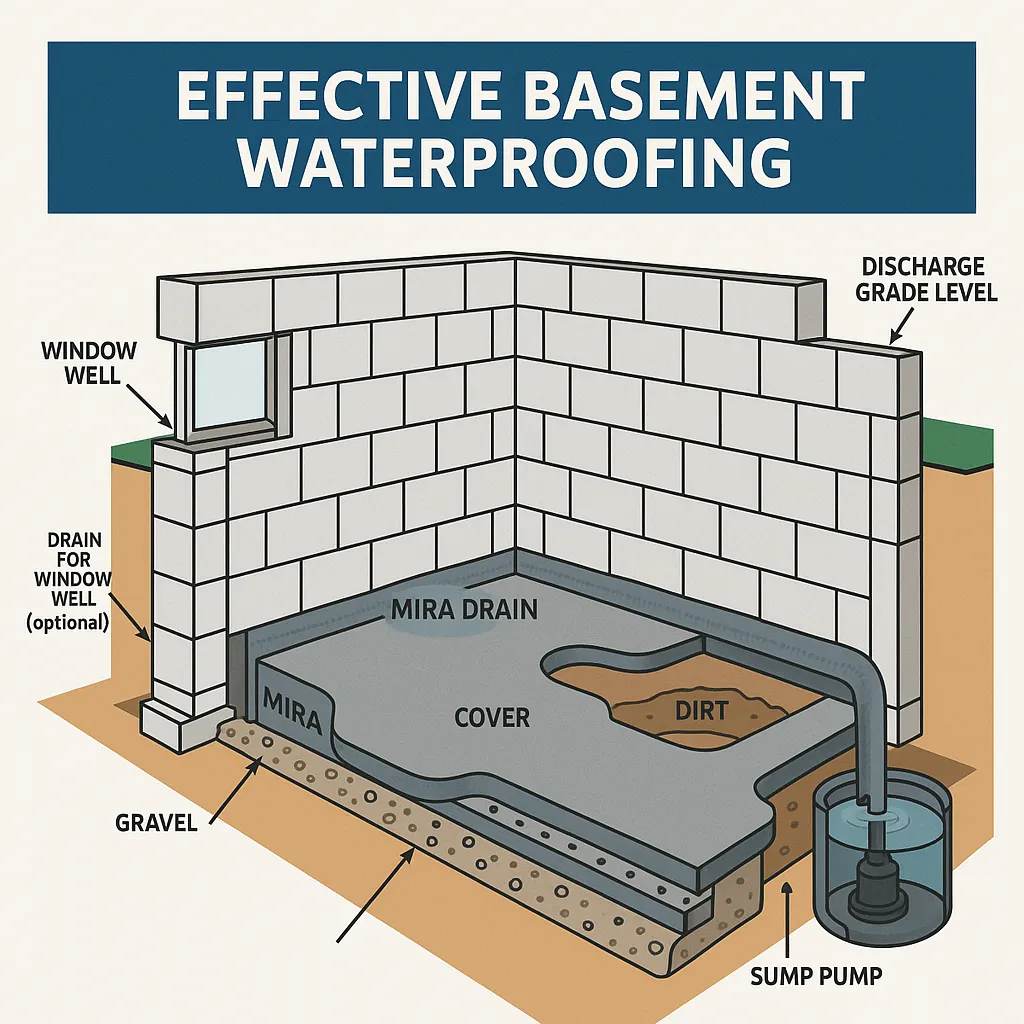
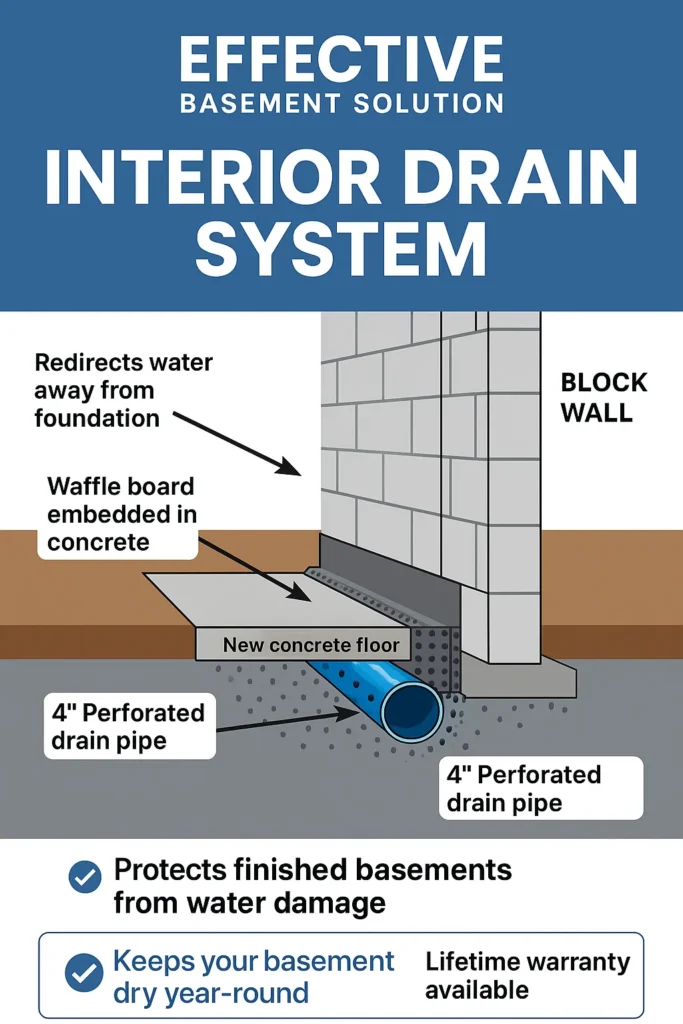
Interior and exterior waterproofing differ in objective and execution: exterior methods aim to stop water before it reaches the foundation, while interior systems manage water that has already entered or is pressing through walls and slabs. Exterior solutions include excavation, membrane application, and exterior French drains, which prevent soil saturation but require significant disruption and cost. Interior approaches install perimeter drain tile, channel water to a sump pit, and are faster to implement with less landscaping impact; however, they do not reduce the external hydrostatic load on the foundation. Choosing between them depends on factors like yard layout, foundation condition, and long-term budget priorities.
Understanding this trade-off illuminates why many Montclair homeowners opt for interior systems when yards or access limit exterior work, while exterior waterproofing is preferred where complete source control is required.
What Role Do Sealants, Vapor Barriers, and Drainage Systems Play?
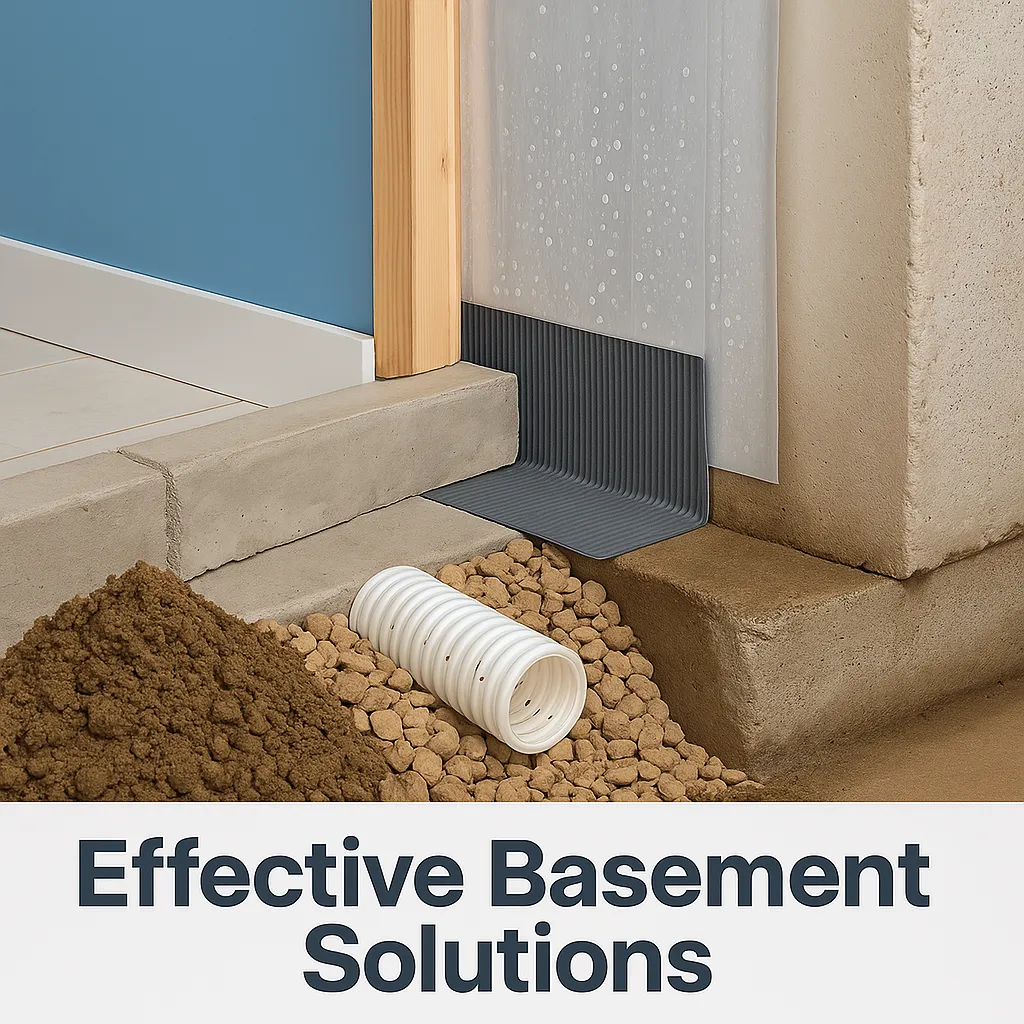
Sealants, vapor barriers, and drainage systems each address distinct aspects of moisture control and are most effective when used together. Sealants and crack injections block small water pathways and are useful for minor seepage, but they don’t relieve hydrostatic pressure from saturated soils. Vapor barriers and interior finishes control humidity and protect living spaces from condensation, improving indoor air quality and mold prevention. Drainage systems—French drains and sump pumps—remove and redirect water, addressing the root cause by lowering groundwater levels and reducing pressure on foundation walls. Combining these components yields both immediate symptom relief and durable pressure control for Montclair basements.
Integrating these elements into a coordinated plan ensures surface moisture is sealed, interior humidity is controlled, and groundwater is actively managed to prevent recurrence.
Why Is French Drain Installation Essential for Montclair's Soil and Climate?
French drains are essential in Montclair because they relieve hydrostatic pressure created by clay-rich soils and frequent heavy rainfall, directing groundwater away from foundations where it would otherwise exert damaging force. The mechanism is straightforward: perforated pipe collects subsurface water and channels it to a safe discharge point or sump pump, reducing saturation around foundation walls. This reduces seepage, lowers interior humidity, and mitigates mold growth while preserving foundation integrity. Given Montclair’s tendency toward soil compaction and slow drainage, French drains form a primary defense that complements surface grading and gutter management.
The next subsection compares interior and exterior French drains so homeowners can choose the most appropriate installation for site conditions.
How Do Interior and Exterior French Drains Manage Water Effectively?
Interior French drains collect groundwater that has already passed through the foundation perimeter and route it to a sump pit, where a pump expels water away from the property; this method is efficient for finished basements with limited exterior access. Exterior French drains intercept groundwater before it reaches the foundation, typically placed at footing level and tied to a storm drain or daylight discharge; this method reduces soil saturation directly but requires excavation. Both types use perforated pipe, gravel, and filter fabric to prevent clogging, and both reduce hydrostatic pressure when designed and installed correctly. Regular inspection and maintenance keep these systems functioning through Montclair’s seasonal cycles.
What Are the Benefits of French Drains in Preventing Foundation Damage and Mold?
French drains provide multiple long-term benefits by reducing groundwater contact with foundation walls and floors, thereby lowering the risk of structural damage and moisture-driven mold. By managing subsurface water, drains reduce the likelihood of expansion-contraction cycles in clay soils that cause foundation movement and cracking. Reduced interior moisture also decreases mold growth potential and protects finished basement areas and stored belongings. Over time, properly installed drainage systems can lower repair costs by preventing progressive deterioration and preserving resale value, making them a prudent investment for Montclair homeowners facing recurring moisture issues.
How Does Sump Pump Installation and Repair Protect Montclair Basements?
Sump pumps remove accumulated groundwater from a dedicated pit and discharge it away from the foundation, serving as a critical backup for French drain systems and interior perimeter drains. Properly sized sump pumps prevent basement flooding during heavy rain events and relieve the system when infiltration rates exceed passive drainage capacity. Selection of pump type, inclusion of battery backups, and installation of check valves impact reliability during storms and power outages—factors particularly relevant in Montclair. Routine maintenance and timely repairs keep pumps operational when needed most, and the following table outlines common pump types and recommended specifications for local conditions.
Intro to pump EAV table: This table compares typical sump pump options, recommended specs, and maintenance considerations for Montclair homes.
| Pump Type | Recommended Spec | Maintenance Interval |
|---|---|---|
| Submersible pump | 1/2–1 HP, 40–60 GPM rating | Annual professional inspection; clean yearly |
| Pedestal pump | 1/3–1/2 HP, accessible motor | Annual inspection; more prone to noise |
| Battery-backup system | 12–24V battery, automatic switchover | Test battery before storm season; replace every 3–5 years |
| Check valve | PVC-rated valve to prevent backflow | Inspect after storms; replace if leaking |
This comparison shows submersible pumps with battery backup are often the best balance of capacity and reliability for Montclair’s heavy-rain conditions.
What Types of Sump Pumps Are Best Suited for Montclair Homes?
For Montclair homes facing significant stormwater and hydrostatic load, submersible pumps with adequate horsepower (commonly 1/2 HP or greater for high inflow) and a reliable battery-backup system are often recommended because they operate quietly and handle larger volumes. Pedestal pumps can be used where motor access is a priority, but they typically offer less aesthetic appeal and are louder. Battery-backup systems are crucial because storms that overload drainage systems often coincide with power outages; backups ensure continued discharge until power is restored. Consider pump capacity in gallons per minute (GPM) relative to expected inflow to avoid frequent cycling and premature wear.
How Can Regular Maintenance Extend Sump Pump Lifespan?
Regular maintenance keeps sump pumps functional and extends their operational life, reducing the risk of basement flooding when drainage demand spikes. Monthly visual checks should confirm that the pit is clear of debris, the float moves freely, and discharge lines are unobstructed, while annual professional service should include motor testing, switch inspection, and cleaning of the pump inlet. Battery-backup systems require seasonal testing and battery replacement per manufacturer guidance, typically every 3–5 years. Early signs of failure—strange noises, frequent cycling, or reduced discharge—warrant immediate service to prevent catastrophic flooding.
Following a consistent maintenance schedule ensures pumps respond reliably during intense rain events and supports long-term system performance.
How Can Homeowners Maintain and Protect Their Basement Waterproofing Systems?
Long-term protection relies on proactive maintenance across drainage components, gutters, grading, and indoor humidity control to prevent recurrence and preserve system performance. Regularly clearing gutters and downspouts, maintaining positive grading away from the foundation, and ensuring exterior discharge points remain unobstructed all reduce load on French drains and sump pumps. Inside, maintaining vapor barriers, monitoring humidity with a hygrometer, and inspecting for new cracks or efflorescence help catch problems early. Adopting a seasonal checklist and scheduling annual inspections balances homeowner prevention with professional oversight to catch developing issues before they become expensive repairs.
To help homeowners act, the next subsection provides concrete maintenance tasks for drains and pumps, then outlines when to call a professional.
What Are Effective Maintenance Practices for French Drains and Sump Pumps?
Effective maintenance combines routine homeowner tasks with periodic professional servicing to ensure drainage components remain clear and functional. Homeowners should keep gutters and downspouts free of debris, verify downspout extensions direct water at least several feet from the foundation, and inspect visible interior drain channels for signs of blockage. Sump pits should be checked monthly for debris and tested by pouring water to confirm pump activation; battery backups require seasonal testing. If access allows, inspect exterior discharge points for erosion or clogging and ensure filter fabric remains intact where visible. Addressing small issues promptly prevents clogging and mechanical strain that can lead to system failure.
These practices reduce the likelihood of emergency failures and prolong the effective lifespan of installed systems.
When Should Homeowners Schedule Professional Inspections and Repairs?
Homeowners should escalate from DIY maintenance to professional inspection when they observe persistent or worsening signs such as recurring puddles after rain, new or expanding cracks, active leaks despite simple fixes, or frequent sump pump cycling. Annual professional inspections are advisable for high-risk properties—particularly those with clay soils, finished basements, or a history of prior repairs—because specialists can test system capacity, evaluate pump performance, and detect early foundation movement. Professional assessments typically yield a prioritized repair plan and cost estimate; scheduling service after an inspection can provide warranty-backed work and long-term maintenance options that protect the investment.
Professional inspections are especially important following major storms or if a sump pump has recently failed; timely service can prevent extensive water damage and mold remediation costs.
- Monthly tasks: Clear gutters, inspect downspouts, test sump pump activation.
- Seasonal tasks: Test battery backups, inspect exterior discharge points, check grading.
- Annual tasks: Professional pump service, interior drain inspection, foundation crack assessment.
After following these homeowner maintenance steps, many owners arrange ongoing maintenance plans or one-time repairs with local specialists who provide inspection services and free estimates; scheduling an inspection or repair through a local professional is the final step for homeowners who prefer expert diagnosis and implementation.
Frequently Asked Questions
What are the long-term benefits of installing a French drain in Montclair homes?
Installing a French drain offers significant long-term benefits for Montclair homeowners. By effectively managing groundwater, French drains help prevent foundation damage caused by hydrostatic pressure, which is particularly relevant in clay-rich soils. They also reduce the risk of mold growth by lowering interior humidity levels, protecting both the structure and stored belongings. Over time, these systems can lead to lower repair costs and preserve property value, making them a wise investment for those facing recurring moisture issues.
How often should homeowners perform maintenance on their sump pumps?
Homeowners should conduct monthly visual checks on their sump pumps to ensure they are functioning properly. This includes clearing debris from the sump pit, ensuring the float mechanism moves freely, and checking discharge lines for blockages. Additionally, an annual professional inspection is recommended to test the motor, inspect the switch, and clean the pump inlet. For battery backup systems, seasonal testing and battery replacement every 3–5 years are crucial to ensure reliability during heavy rain events.
What should homeowners do if they notice new cracks in their basement walls?
If homeowners observe new cracks in their basement walls, it is essential to address them promptly. Small cracks may indicate minor settling, but larger or expanding cracks can signal more serious structural issues. Homeowners should first monitor the cracks for changes and document their size. If cracks widen or if water intrusion occurs, it is advisable to consult a professional for a thorough inspection. Early intervention can prevent more extensive damage and costly repairs down the line.
Are there any DIY methods for preventing basement water intrusion?
Yes, homeowners can implement several DIY methods to help prevent basement water intrusion. Regularly clearing gutters and downspouts ensures proper drainage away from the foundation. Maintaining positive grading around the home directs water away from the basement. Additionally, sealing small cracks with appropriate sealants can help block moisture entry. Installing a dehumidifier can also control indoor humidity levels, reducing the risk of mold growth. However, for significant issues, professional assessment and solutions are recommended.
What are the signs that indicate a sump pump needs repair or replacement?
Several signs may indicate that a sump pump requires repair or replacement. Homeowners should be alert for unusual noises, frequent cycling on and off, or reduced discharge capacity. If the pump fails to activate during heavy rain or if water accumulates in the sump pit, these are clear indicators of malfunction. Additionally, if the pump is older than 10 years, it may be time to consider a replacement to ensure reliable performance during critical weather events.
How can homeowners assess the effectiveness of their waterproofing systems?
Homeowners can assess the effectiveness of their waterproofing systems by conducting regular inspections and monitoring for signs of moisture intrusion. This includes checking for damp spots, efflorescence, or musty odors in the basement. Using a hygrometer to measure indoor humidity levels can also provide insights into system performance. If any signs of water intrusion are detected, it may be necessary to consult a professional for a comprehensive evaluation and potential adjustments to the waterproofing strategy.
What should homeowners consider when choosing between interior and exterior waterproofing methods?
When choosing between interior and exterior waterproofing methods, homeowners should consider several factors, including the source of water intrusion, the condition of the foundation, and the layout of the property. Interior systems are typically less disruptive and quicker to install, making them suitable for finished basements. However, exterior methods provide more comprehensive protection by preventing water from reaching the foundation. Homeowners should evaluate their specific needs, budget, and long-term goals to determine the best approach for their situation.
Conclusion
Implementing effective waterproofing solutions in Montclair not only protects your home from water damage but also enhances its overall value and longevity. By understanding the signs of moisture intrusion and the various methods available, homeowners can make informed decisions that safeguard their properties. Don’t wait for water issues to escalate; take proactive steps today by consulting with local waterproofing experts. Explore our resources and schedule a free inspection to ensure your basement remains dry and secure.