
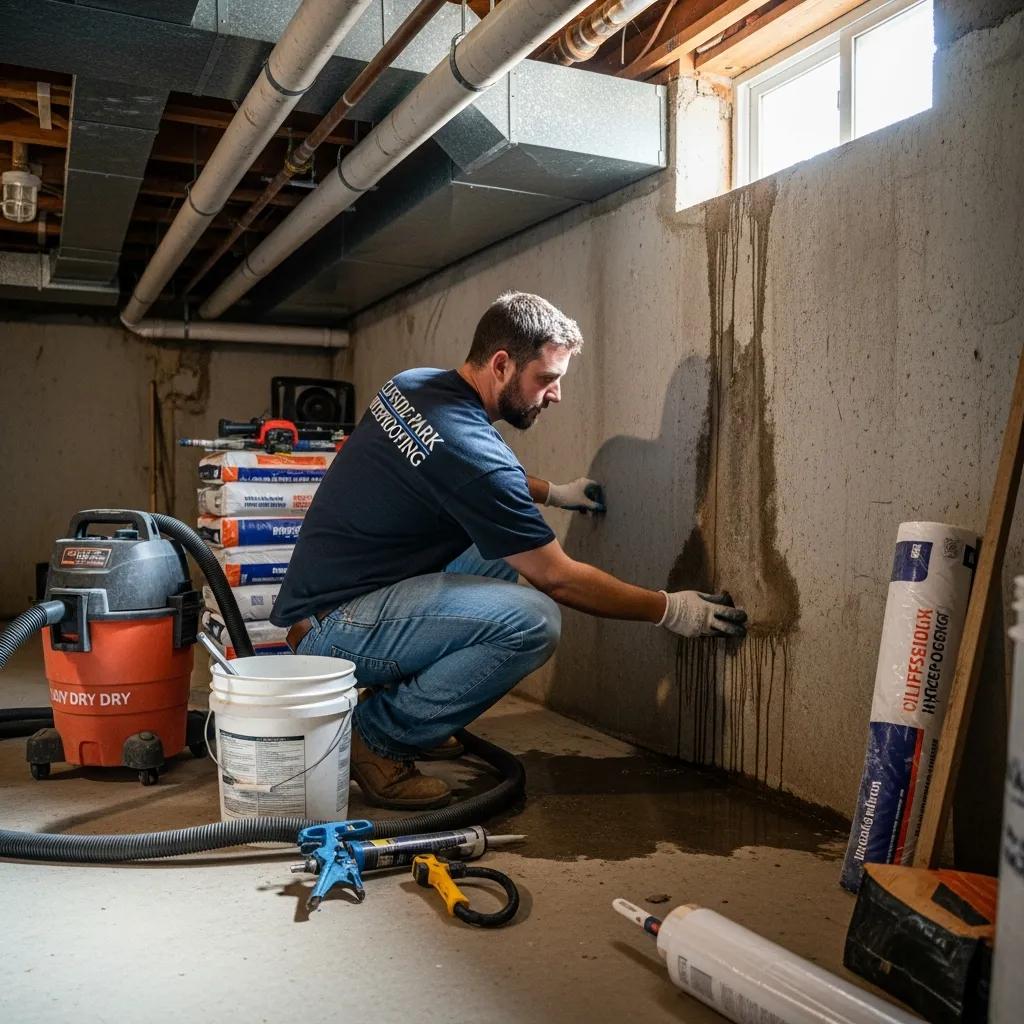
Professional Basement Waterproofing & French Drain Installation in Cliffside Park, NJ
Basement waterproofing and interior French drain installation protect homes from recurring water intrusion by intercepting and removing subsurface water before it damages the living space or foundation. In Cliffside Park, NJ, where steep slopes and the Palisades influence surface runoff and groundwater, targeted interior systems—like perimeter French drains tied to a sump pump—are often the most effective way to keep basements dry and protect structural elements. This article explains the local causes of wet basements, how water actually finds its way into below-grade spaces, and the technical repairs and drainage systems commonly used to mitigate hillside runoff, saturated soil, and hydrostatic pressure. You will learn to recognize wall-floor joint leaks and foundation crack symptoms, understand how interior French drains and sump pump systems operate, and evaluate solutions by foundation type. The following sections cover causes, diagnostic signs, solution options (with component comparisons), the professional installation process used for long-term dryness, and concise answers to common homeowner questions about timeframe and investment.
What Causes Wet Basements in Cliffside Park, NJ?
Wet basements in Cliffside Park are driven by four local drivers: hillside runoff, saturated soils, high groundwater, and hydrostatic pressure. Each driver increases the volume of water near foundations or the pressure against foundation walls and joints, which in turn forces water through joints, cracks, or porous materials. Because many properties sit at the base of slopes near the Palisades, overland flow concentrates at foundation grades and subsurface flow increases where soils remain saturated after storms. Understanding these mechanisms helps homeowners target the right mitigation measures—surface grading and gutters address runoff but interior drainage and joint sealing are critical where groundwater and pressure are primary issues.
Homes facing these conditions commonly experience both flow-related and pressure-driven entry modes; the next paragraphs explain how slope-runoff and saturated soil create flow concentrations, and why hydrostatic pressure demands drainage rather than only surface fixes. These specifics help determine whether an interior French drain and sump pump, targeted joint repairs, or a combination will resolve recurring basement moisture.
How Do Hillside Runoff and Saturated Soil Affect Basements?
Hillside runoff occurs when rainwater or snowmelt travels downslope and concentrates along the uphill side of foundations, creating sustained overland flow that pools at foundation grades. Saturated soil compounds this problem because once pore space is full, additional water cannot infiltrate and instead moves laterally, increasing lateral soil pressure against basement walls and around footings. As a result, seams, wall-floor joints, and small cracks become preferred pathways for water to enter interior spaces. On Cliffside Park properties where driveways, terraces, or landscape channels funnel water toward the house, grading corrections and interception combined with subsurface collection are essential to stop repeated interior seepage.
Addressing hillside flow begins with diverting surface water away from the foundation and continues with measures that manage subsurface movement; the following section on hydrostatic pressure clarifies why interior drainage often becomes necessary when groundwater rises near the Palisades.
What Is Hydrostatic Pressure and Its Impact Near the Palisades?
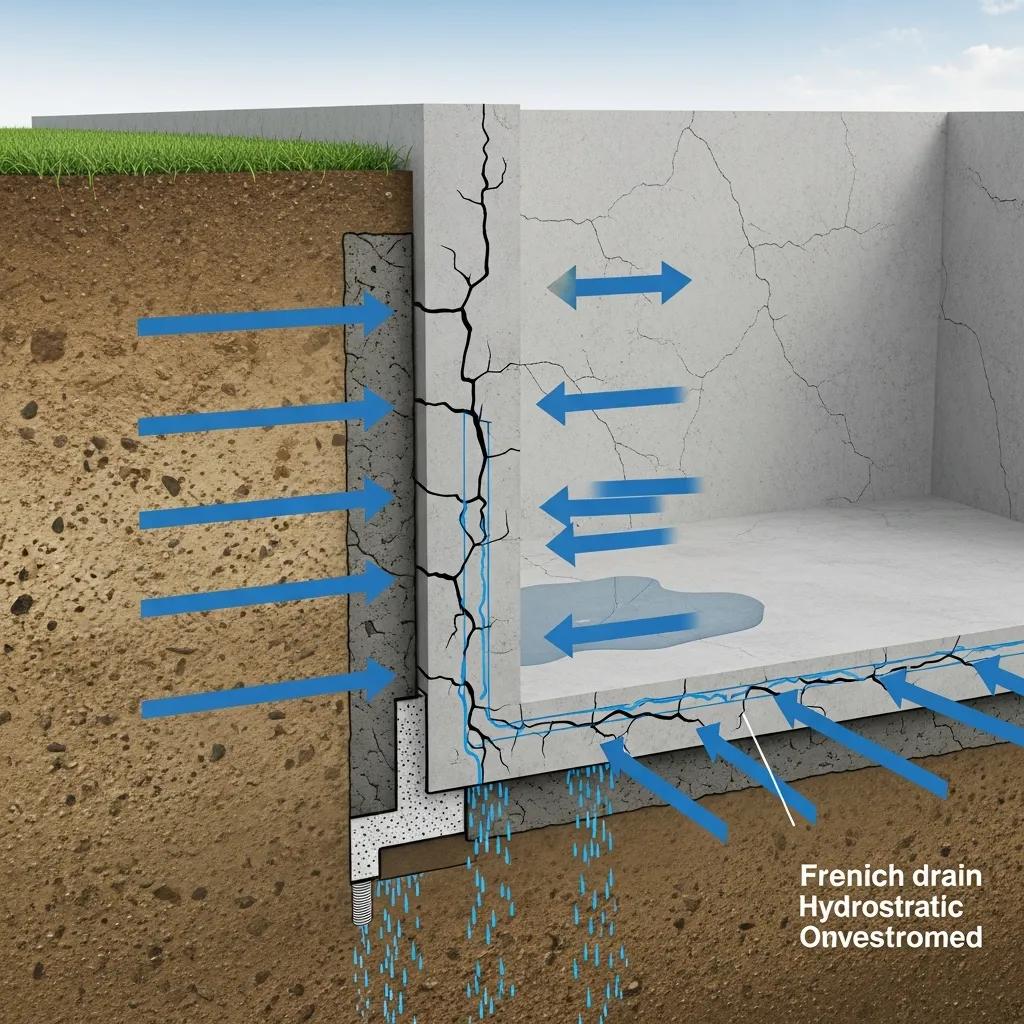
Hydrostatic pressure is the force exerted by standing or slowly moving groundwater against buried structures; as groundwater elevation rises, pressure increases proportionally and pushes water into any available openings in foundations. Near the Palisades, high seasonal groundwater or perched water tables can elevate pressure behind basement walls, driving moisture through even hairline cracks and through mortar joints in block or stone foundations. Symptoms of hydrostatic-driven infiltration include diffuse weeping across foundation walls, slow persistent dampness after storms, and pooling that does not respond to surface dry-out measures. Because pressure forces water from the outside in, the most reliable remedy is to relieve the external or internal pressure—commonly done with an interior perimeter drain routed to a sump pump that actively removes collected water.
Relieving pressure converts a persistent driving force into manageable flow; next we examine the specific entry points where hydrostatic pressure and runoff exploit vulnerabilities at the wall-floor interface and cracks.
How Do Wall-Floor Joint Leaks and Foundation Cracks Contribute to Basement Water Issues?
Wall-floor joint leaks and foundation cracks are the most common internal entry points for water once external drivers place pressure on the foundation system. The wall-floor joint is a construction seam where vertical wall materials meet the horizontal slab and it can separate over time due to settlement, shrinkage, or backfill pressure, creating a channel where water can move into finished basements. Cracks—whether vertical, horizontal, or stepped—provide direct paths for pressurized groundwater or redirected runoff to reach the interior. Diagnosing which entry mode is active is critical because sealing visible cracks without addressing surrounding drainage or pressure often yields only temporary relief.
Homeowners should evaluate symptoms carefully before choosing a remediation path, and the following H3 lists practical signs to watch for and how foundation type changes recommended methods. Proper diagnosis informs whether targeted crack injection, joint sealing, or a comprehensive interior drainage system will provide durable results.
What Are the Signs of Wall-Floor Joint Leaks in Cliffside Park Homes?
Recognizing wall-floor joint leaks helps homeowners prioritize inspections and repairs. Typical signs include localized damp seams where baseboard or carpet edges darken after rain, salt-like white efflorescence on concrete near the joint, and staining patterns that trace a seam rather than a single crack. You may also notice a musty odor concentrated along the perimeter or spotty dampness that appears only after heavy rainfall or during prolonged wet periods. If interior drainage has not been installed, these signs often precede more significant water accumulation and should trigger a professional assessment to determine whether sealing alone will suffice or whether a perimeter drain and sump are required.
Detecting these symptoms early allows for less invasive repairs; understanding how foundation type influences vulnerability will guide the choice between injection, sealing, or interior drains.
How Do Different Foundation Types Influence Waterproofing Needs?
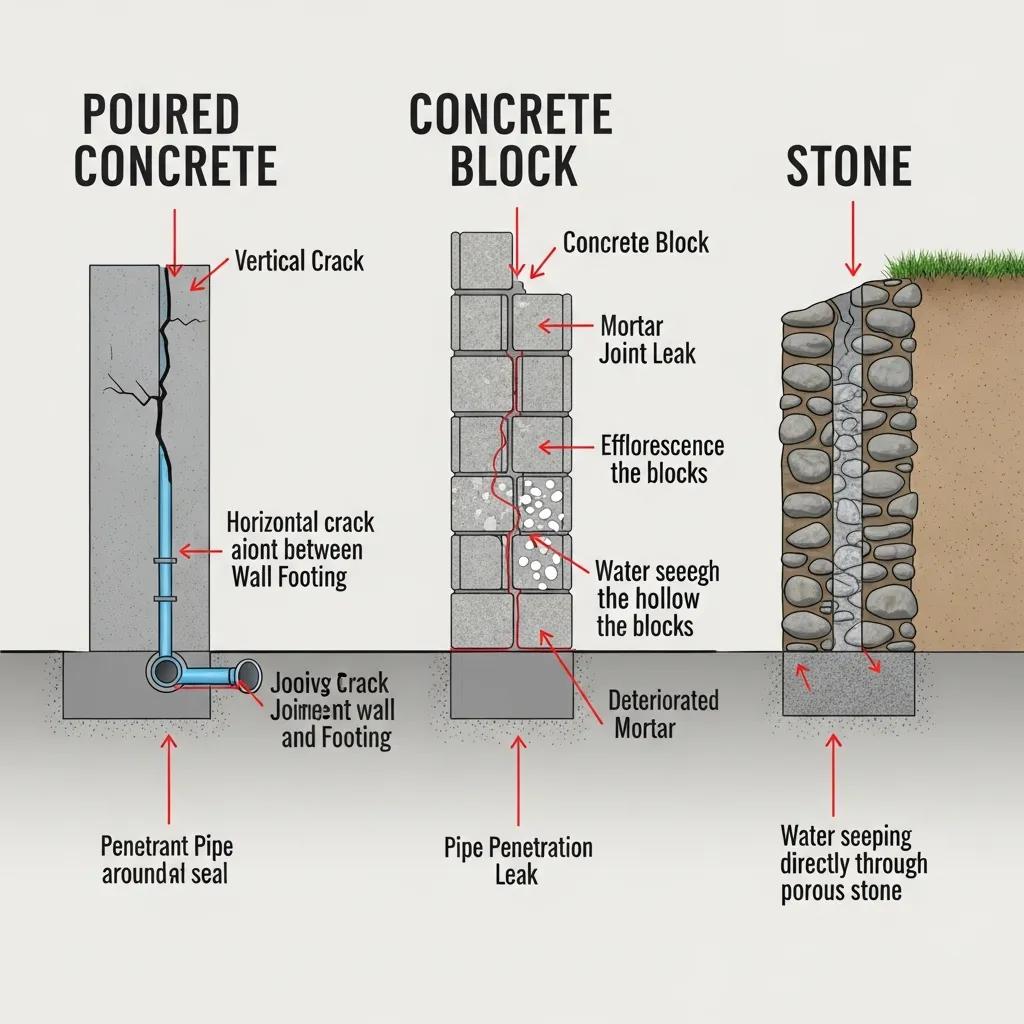
Foundation construction dictates common failure modes and therefore the most effective waterproofing strategy. Poured concrete foundations typically develop hairline cracks and may allow seepage at cold joints; interior French drains that relieve hydrostatic head are usually effective. Concrete block foundations have multiple mortar joints and vertical seams that increase permeability; block walls often need joint injection or parging combined with drainage. Stone foundations are highly variable and porous with irregular joints; they frequently require a combination of targeted repairs and interior collection systems when exterior excavation is impractical. Recognizing the foundation type helps professionals choose appropriate materials and whether interior-only solutions will provide long-term dryness.
To clarify recommended approaches by foundation type, the table below summarizes typical challenges and the most commonly recommended interior-focused strategies for Cliffside Park homes.
| Foundation Type | Common Challenge | Recommended Interior Approach |
|---|---|---|
| Poured concrete | Hairline cracks and construction joints | Interior perimeter French drain to reduce hydrostatic head; targeted crack sealing |
| Concrete block | Multiple mortar joints and porous cores | Joint injection/parging plus interior drain to capture through-wall flow |
| Stone or rubble | Irregular joints, high porosity | Localized sealing where possible and continuous interior drainage to sump |
This comparison shows why foundation-specific diagnosis directs the choice between sealing, injection, or a perimeter drain integrated with a sump pump to manage both flow and pressure.
What Comprehensive Basement Waterproofing Solutions Do We Offer in Cliffside Park?
Comprehensive solutions for Cliffside Park address both the source of water and its interior pathways by combining drainage, collection, and targeted repairs. Interior French drain systems intercept subsurface water at the slab-wall interface and route it to a sump basin, where a correctly sized sump pump removes water to an approved discharge point. Sump pumps can be configured with battery backups and smart monitoring to maintain operation during outages, and wall-floor joint sealing or crack injection complements drainage where pinpoint repairs are needed. In many hillside and high-groundwater situations near the Palisades, combining these approaches creates redundancy—relieving hydrostatic pressure while closing known entry points.
Below is a concise component comparison to clarify how each system part functions and what value it provides for homes facing hillside runoff, saturated soils, or hydrostatic pressure.
| Component | Role | Typical Value |
|---|---|---|
| Interior French drain | Collects subsurface water at perimeter | Redirects water to sump to reduce hydrostatic head |
| Perforated drain pipe | Allows inflow from surrounding gravel | Continuous collection conduit to sump basin |
| Sump basin & pump | Collects and ejects water from the drain | Active removal; prevents standing water |
| Battery backup | Provides pump operation during power loss | Maintains protection during storms and outages |
| Wall-floor joint seal | Blocks direct seam infiltration | Reduces localized leaks and dampness |
This table helps homeowners compare core elements so they understand how each part contributes to a complete interior solution. For properties in Cliffside Park with slope-driven inflow or high groundwater, interior French drains combined with reliable sump pump configurations are often the most practical long-term strategy.
Below is a practical checklist that explains how an interior French drain is installed and why each step matters.
- Perimeter trenching: A narrow trench is cut along the interior slab edge to intercept water at the wall-floor joint.
- Gravel bed and filter: Clean aggregate surrounds the perforated pipe to promote flow into the drain and prevent silting.
- Perforated pipe routing: The pipe leads to a sump basin positioned for easy pump access and discharge routing.
- Sump pump selection and testing: A pump sized for expected inflow is installed and tested; backup power is considered for reliability.
These steps convert subsurface pressure into controlled flow that is actively removed; the following H3 details the mechanics of interior French drains in plain steps.
How Does an Interior French Drain System Work to Keep Basements Dry?
An interior French drain is a subsurface collection system installed along the perimeter where the slab meets the wall; it captures water that emerges at joints or migrates through porous foundation materials. During installation, a trench is cut at the slab edge, the perforated drain pipe is bedded in aggregate, and the pipe is sloped to a sump basin where water accumulates. A sump pump then expels collected water away from the foundation, breaking the hydrostatic head that pushes water inward. Because the system intercepts water before it tracks across the floor, it controls seepage and reduces pressure on wall joints; when combined with joint sealing, it creates a robust interior defense against both flow and pressure-driven infiltration.
Understanding each installation step clarifies why interior drains are often less disruptive and more practical on hillside homes than full exterior excavation, and it leads directly into the role of reliable sump pump selection and backup options.
What Are the Advantages of Reliable Sump Pump Installation and Battery Backups?
A properly sized sump pump actively removes collected groundwater, preventing the sump basin from overflowing and stopping basement flooding during prolonged events. Primary pumps powered by AC handle routine discharge, while battery backup systems provide redundancy during power outages—critical when storms both produce heavy rain and cause utility interruptions. Modern smart monitoring adds remote alerts for pump failures or high-water conditions, giving homeowners time to respond before damage occurs. Routine maintenance—periodic testing, float inspection, and debris clearing—ensures pumps perform when needed; combined with an interior French drain, a reliable pump system is the final line of defense against hydrostatic and runoff-driven water.
Choosing the right pump capacity and backup method ties directly to a professional assessment of expected inflow rates; the next section explains the professional process used to size and install these systems.
Why Choose Our Expert Basement Waterproofing Services in Cliffside Park, NJ?
Selecting an experienced basement waterproofing provider matters because local geology, slope, and foundation type determine which measures will be effective. A professional process begins with a site inspection that identifies source(s) of water, maps flow paths, and assesses foundation construction and interior finishes. From that diagnostic base, a tailored solution is designed—selecting an interior French drain layout, pump capacity, and targeted repairs such as joint sealing or crack injection. During installation, technicians follow industry best practices for drainage slope, pipe bedding, sump location, and pump testing; post-installation checks verify that the system reduces hydrostatic pressure and eliminates visible interior seepage.
Presenting a clear inspection-to-installation pathway helps homeowners set realistic expectations and ensures work addresses the root causes rather than surface symptoms. The following H3 outlines the typical professional steps and what homeowners can expect in terms of documentation and follow-up.
What Is Our Professional Process for Long-Term Basement Dryness?
A consistent, professional process ensures durable results: first, a thorough site inspection identifies runoff paths, groundwater behavior, foundation vulnerabilities, and interior finish constraints. Second, a diagnostic plan specifies an interior drainage layout, pump sizing (with backup options), and any localized repair work like crack injection or joint sealing. Third, installation is executed with attention to drainage slope, aggregate filter layers, correct pipe placement, and sump pump commissioning; technicians then test the system under simulated inflow conditions. Finally, providers typically document the work, explain maintenance steps to homeowners, and recommend an inspection schedule to preserve long-term performance.
Clear documentation and homeowner orientation reduce the risk of misunderstandings and ensure the installed system is used and maintained properly; customer feedback and project summaries help illustrate real outcomes without relying on fabricated testimonials.
How Do Customer Testimonials Reflect Our Commitment and Quality?
Customer testimonials and project summaries should focus on the problem, the applied solution, and the measurable outcome—this format demonstrates the effectiveness of tailored drainage solutions without embellishment. Short case snapshots that link the initial issue (for example, seepage after heavy rains on a slope lot), the chosen interventions (interior French drain, sump pump with battery backup, joint sealing), and the result (no recurrent interior dampness, verified post-installation testing) give prospective homeowners concrete context. When included on service pages, these summaries provide reassurance about workmanship and local experience, especially when they reference similar geological conditions like hillside runoff near the Palisades.
Collecting and presenting real client project snapshots helps future customers compare scenarios similar to their own and understand why specific combinations of drainage and repairs were selected.
What Are Common Questions About Basement Waterproofing in Cliffside Park?
Homeowners frequently ask about installation timeframes, cost justification, and long-term benefits; concise factual answers help set expectations before scheduling an inspection. Below are direct answers to two high-interest questions, followed by brief elaboration on the factors that influence timelines and investment outcomes in Cliffside Park conditions.
How Long Does French Drain Installation Take?
Typical interior French drain installation ranges from one to four days for most single-level basements, with the median home often completed in two days when access is straightforward and no major obstructions exist. Factors that extend the timeline include larger square footage, finished basements that require careful floor repair, structural complications that mandate additional repairs, and the need to coordinate electrical work for sump pump wiring or battery backup integration. Permitting and inspections (if required) can also add time when exterior work or new discharge routing is involved. A professional inspection before scheduling provides the best estimate based on foundation type, interior finishes, and anticipated flow rates.
Knowing these timing factors helps homeowners plan for temporary disruption; the following H3 explains the financial reasoning behind investing in a permanent waterproofing system.Is Basement Waterproofing a Good Investment for Cliffside Park Homes?
Basement waterproofing is often a sound investment because it prevents recurring damage, reduces mold risk, and preserves structural elements that would otherwise require costly repairs. For hillside or high-groundwater properties, the immediate benefits include avoided interior damage and reduced maintenance costs, while longer-term advantages include improved marketability and lower risk during inspections. The precise return on investment depends on the property’s condition, local market expectations, and the chosen scope of work; a professional assessment provides the data needed to quantify benefits for a specific home. In many cases, preventing progressive foundation damage pays for itself over time compared with repeated patch repairs and secondary remediation.
For homeowners uncertain about next steps, scheduling a diagnostic inspection yields a tailored scope and prioritizes interventions that deliver the most value for the prevailing site conditions.
This article explained local causes of wet basements in Cliffside Park and demonstrated practical interior solutions—interior French drains, sump pump selection and backup, joint sealing, and foundation-specific strategies—that together mitigate hillside runoff, saturated soils, and hydrostatic pressure. By combining diagnostic inspection, targeted repairs, and properly engineered collection and pump systems, homeowners can achieve reliable, long-term basement dryness in settings influenced by the Palisades and steep local topography.
Frequently Asked Questions
What are the benefits of installing a sump pump in my basement?
Installing a sump pump in your basement offers several key benefits. Primarily, it actively removes accumulated water, preventing flooding and water damage during heavy rains or snowmelt. A sump pump can also help reduce humidity levels, which minimizes the risk of mold growth and improves indoor air quality. Additionally, modern sump pumps often come with battery backup systems, ensuring continued operation during power outages. This added layer of protection is especially crucial in areas like Cliffside Park, where groundwater levels can fluctuate significantly.
How can I tell if my basement needs waterproofing?
Signs that your basement may need waterproofing include visible water stains on walls or floors, musty odors, and the presence of mold or mildew. You might also notice dampness or puddles after heavy rain, or efflorescence—white, powdery residue on walls caused by moisture. If you experience frequent humidity issues or see cracks in your foundation, these are also indicators that waterproofing measures should be considered. A professional inspection can provide a thorough assessment and recommend appropriate solutions based on your specific situation.
What maintenance is required for a French drain system?
Maintaining a French drain system is essential for ensuring its effectiveness over time. Regular inspections should be conducted to check for clogs or blockages in the drain pipe, which can be caused by sediment buildup or debris. It’s also important to ensure that the outlet of the drain is clear and directing water away from the foundation. Additionally, homeowners should periodically check the sump pump for proper operation, including testing the float switch and cleaning the sump basin. Routine maintenance helps prevent costly repairs and ensures long-term performance.
Can I install a French drain myself, or should I hire a professional?
While some homeowners may consider installing a French drain themselves, it is often advisable to hire a professional. Proper installation requires knowledge of local drainage patterns, soil types, and building codes. A professional can ensure that the drain is correctly positioned and sloped to effectively collect and redirect water. Additionally, they can assess the specific needs of your property, including the type of foundation and potential hydrostatic pressure issues. Investing in professional installation can save time and prevent future complications associated with improper drainage systems.
What is the average cost of basement waterproofing in Cliffside Park?
The average cost of basement waterproofing in Cliffside Park can vary widely based on several factors, including the size of the basement, the type of waterproofing system needed, and the extent of repairs required. On average, homeowners can expect to pay between $2,000 and $10,000 for comprehensive solutions, including French drains and sump pump installation. A professional assessment can provide a more accurate estimate tailored to your specific situation, helping you understand the investment required for effective waterproofing.
How long can I expect my waterproofing system to last?
The longevity of a waterproofing system largely depends on the quality of materials used, the installation process, and ongoing maintenance. Generally, a well-installed interior French drain and sump pump system can last 10 to 20 years or more with proper care. Regular maintenance, such as checking for clogs and ensuring the sump pump operates correctly, can significantly extend the lifespan of the system. Homeowners should also be aware of any changes in their property’s drainage patterns that may necessitate adjustments to the waterproofing system over time.
Conclusion
Implementing effective basement waterproofing solutions in Cliffside Park safeguards your home from water damage and enhances its structural integrity. By understanding local water intrusion causes and utilizing targeted systems like interior French drains and sump pumps, homeowners can achieve lasting dryness and peace of mind. Investing in professional waterproofing services not only prevents costly repairs but also improves property value and marketability. Schedule your diagnostic inspection today to take the first step towards a drier, healthier home.