
Comprehensive Drainage Solutions for Basement Water Control and Foundation Protection in New Jersey
Basement water control and foundation protection hinge on effective drainage solutions that tackle groundwater, surface runoff, and structural vulnerabilities in New Jersey homes. Homeowners facing dampness, mold, or flooding can eliminate up to 95 percent of moisture problems by choosing the right system and installation expertise. This article examines the most common causes of basement water issues, compares interior and exterior drainage methods, guides decision-making factors, and highlights the advantages of professional installation by Effective Basement Solutions in New Jersey. You will learn:
- Why hydrostatic pressure, grading, and cracks drive water intrusion
- How interior French drains, sump pumps, and proprietary WaterGuard systems prevent flooding
- Which exterior strategies—curtain drains, channel drains, grade adjustments, and rain gardens—preserve foundations
- The criteria for selecting systems based on severity, home type, and budget
- The health, structural, and warranty benefits of expert installation
- How crawl space moisture prevention complements basement drainage
What Are the Causes of Basement Water Damage in New Jersey Homes?
Basement water problems originate when groundwater and surface water overwhelm your home’s defense systems. Hydrostatic pressure, poor grading, foundation cracks, and failing gutter components each create pathways for moisture intrusion and compromise foundation integrity. Recognizing these factors enables targeted drainage solutions that restore dryness and structural stability.
How Does Hydrostatic Pressure Affect Basement Flooding?
Hydrostatic pressure builds when water saturates soil around the foundation, exerting force against basement walls and floors. This pressure drives water through microscopic pores and joints, leading to damp spots, wall leaks, and periodic flooding during heavy rain. Reducing hydrostatic pressure with subsurface drainage relieves wall loads and prevents ongoing moisture migration. Understanding this mechanism clarifies why perimeter drains must sit below the water table to intercept groundwater before it presses into the basement cavity.
Moisture Control Strategies for Habitable Basements in Cold Climates: Building Envelope, Ventilation, and Drainage
Climate change is anticipated to elevate the risk of moisture-related damage in basements. The principal moisture control strategies for habitable basements in cold climates are presented. These encompass strategies pertaining to the building envelope, ventilation, and drainage. The study further examines the significance of appropriate installation and upkeep of these systems to guarantee their efficacy.
Moisture control strategies of habitable basements in cold climates, T Kvande, 2020
What Role Does Poor Yard Grading and Surface Water Runoff Play?
Yard grading dictates the direction and speed of rainwater flow away from your home. When soil slopes toward the foundation, rainwater pools against walls, increasing hydrostatic pressure and seeping through seams. Regrading to achieve a slope of at least 50 mm over the first meter diverts runoff outward. Improving surface drainage with swales or channel drains prevents accumulation and complements subsurface systems by controlling water at the source.
How Do Foundation Cracks Contribute to Water Infiltration?
Foundation cracks—whether shrinkage, settlement, or structural—create direct conduits for water entry. Even hairline fissures can admit significant moisture under pressure, leading to efflorescence, spalling, or mold growth. Repairing cracks with epoxy injections or polyurethane foam seals the interior barrier, but effective drainage must accompany crack repair to eliminate the driving force pushing water inward and protect the foundation long term.
Why Are Faulty Gutters and Downspouts a Drainage Concern?
Gutters and downspouts form the first line of defense against roof-collected rainwater. When clogged, misaligned, or too short, these components dump water near the foundation, overwhelming soil absorption and raising hydrostatic pressure. Extending downspout outlets at least three meters from the house and installing leaf guards ensures continuous performance. Coupling proper gutter maintenance with sub- and surface-drainage systems prevents overflow and foundation deterioration.
Which Interior Drainage Systems Effectively Control Basement Water?
Interior drainage systems intercept water entering the basement and channel it to a sump pump or dry well. These solutions work from inside the perimeter to protect finished basements without disturbing exterior landscaping. Key options include French drains, sump pump assemblies, wall membranes, and baseboard channels.
How Do Interior French Drains Prevent Basement Flooding?
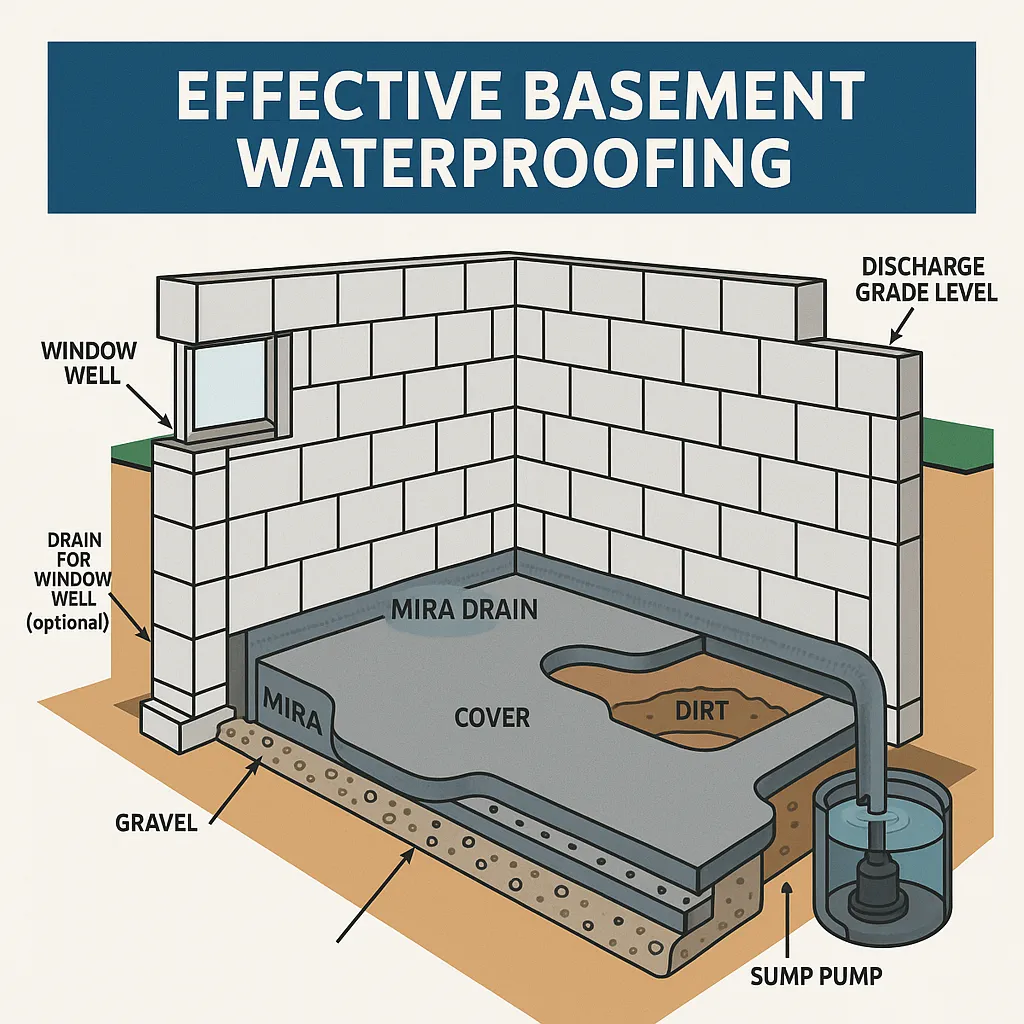
Interior French drains consist of perforated pipe surrounded by gravel and filter fabric, placed along the basement perimeter just beneath the floor slab. Water seeping through walls or flooring enters the system, travels along the pipe, and collects in a sump basin for removal. This mechanism keeps basement surfaces dry and anchors the foundation against hydrostatic pressure. French drains are ideal for homes with limited exterior access or finished interiors.
What Are the Benefits of Sump Pump Systems and Their Backup Options?
Sump pump systems remove collected water from interior drains or low-lying basement areas by automatically activating when water reaches a predetermined level. Battery backup pumps provide operation during power outages, and water-powered units offer fail-safe drainage when electricity fails. These backup options ensure continuous protection against flooding during storms or electrical disruptions, safeguarding belongings and structural components.
How Do Basement Wall Membranes and Baseboard Drainage Systems Work?
Basement wall membranes adhere to foundation walls to repel moisture and direct it downward into an underlying drainage channel. Baseboard drainage systems combine a discreet channel behind removable trim with a membrane-protected wall surface, guiding water to the interior French drain or sump. These integrated solutions maintain finished wall aesthetics while providing robust moisture management.
What Is the WaterGuard System and How Does It Improve Drainage?
The WaterGuard system is a low-profile interior drainage channel designed to sit flush with the basement floor. Its modular design installs quickly and captures water at the wall-floor junction before it can spread across the slab. WaterGuard connects directly to a sump pump, reducing installation time and delivering efficient moisture removal that integrates seamlessly with epoxy-coated floors or tile finishes.
Interior Drainage Systems Comparison
| System | Mechanism | Primary Benefit |
|---|---|---|
| Interior French Drain | Perforated pipe with gravel and filter fabric | Redirects groundwater to sump pit |
| Sump Pump with Backup | Automated pump with battery or water-powered backup | Continuous water removal during power failures |
| Wall Membrane & Drains | Waterproof barrier directing moisture downward to channel | Preserves finished walls and prevents wall leaks |
| WaterGuard Channel | Low-profile polymer drain at wall-floor joint | Rapid installation and discrete moisture collection |
These interior solutions form a comprehensive moisture control network that prepares foundations for effective long-term protection.
What Exterior Drainage Solutions Protect Your Home’s Foundation?
Exterior drainage systems intercept and redirect water before it reaches the foundation walls. By combining subsurface and surface channels with grading adjustments, homeowners create a dry perimeter that reduces hydrostatic pressure and prevents water infiltration.
How Do Exterior French Drains and Curtain Drains Manage Groundwater?
Exterior French drains and curtain drains are subsurface trenches filled with gravel and perforated pipe installed around the foundation perimeter. Curtain drains are positioned several feet from the wall to intercept water upstream, while perimeter French drains sit directly adjacent to the foundation footing. Both redirect groundwater to a discharge point or drainage swale, keeping soil around the foundation dry and reducing wall loads.
What Are Trench and Channel Drains and When Should They Be Used?
Trench drains and channel drains are surface-level channels covered by grates that collect rainwater and surface runoff. They are ideal for driveways, patios, and areas with high foot traffic. By capturing water before it ponds, these drains protect basement entries, garage floors, and walkways from flooding. Combining surface channels with underground piping ensures efficient rapid removal of excess water.
How Does Yard Grading and Landscaping Improve Drainage?
Recontouring the yard to slope away from the foundation minimizes water accumulation at the base of the house. Incorporating swales, berms, and permeable planting beds further disperses runoff. Native, drought-tolerant plants stabilize soil and absorb moisture, while raised beds draw water away from vulnerable areas. Thoughtful landscaping transforms drainage into an attractive and sustainable solution.
What Role Do Downspout Extensions, Dry Wells, and Rain Gardens Play?
Extending downspouts directs roof water deep into the yard, reducing saturation near the foundation. Dry wells collect and infiltrate runoff into subsoil, preventing surface erosion. Rain gardens use shallow depressions planted with moisture-loving perennials to capture and filter stormwater naturally. Together, these techniques manage stormwater on-site, protect foundations, and support ecological benefits.
Exterior Drainage Solutions Overview
| Solution | Function | Advantage |
|---|---|---|
| Subsurface French Drain | Redirects groundwater away from footings | Reduces hydrostatic pressure on walls |
| Trench/Channel Drain | Collects surface runoff along paved areas | Prevents driveway and patio flooding |
| Downspout Extension | Directs roof discharge away from foundation | Limits soil saturation next to walls |
| Rain Garden | Natural stormwater collection and filtration | Enhances landscape and supports biodiversity |
These outdoor measures safeguard foundations by eliminating water before it can compromise structural materials.
How Can Homeowners Choose the Right Drainage Solution for Their Basement?
Selecting an appropriate drainage strategy depends on problem severity, home construction, and budget constraints. By weighing interior versus exterior systems, cost factors, and the need for foundation repair, homeowners can make informed choices that balance effectiveness and investment.
What Factors Affect the Choice of Interior vs. Exterior Drainage Systems?
The decision between interior and exterior solutions hinges on access, landscaping impact, and foundation type. Finished basements often favor interior drains to preserve exterior aesthetics, while homes with extensive yard space can deploy exterior systems to intercept water before it reaches the foundation. Soil composition, groundwater depth, and long-term maintenance requirements also influence the optimal approach.
How Does Budget Influence Drainage System Selection?
Drainage costs vary based on trench length, system complexity, and required backup features. Interior installations typically incur lower landscaping disruption costs but may require perimeter slab removal. Exterior systems involve excavation and landscape restoration expenses. Budget planning should include contingency for unexpected foundation repairs and warranty coverage to maximize value over the system’s lifetime.
When Is Foundation Repair Necessary Alongside Drainage Solutions?
Foundation repair becomes necessary when water damage has caused structural cracks, bowing walls, or settlement issues. Combining crack injection, wall anchoring, or underpinning with drainage installation addresses both cause and effect. A comprehensive evaluation reveals whether moisture control alone suffices or if reinforced foundation remediation is required to ensure lasting stability.
Key Decision-Making Factors
- Severity of water intrusion and frequency of flooding
- Finished interior limitations and landscaping considerations
- Soil type, hydrostatic pressure, and groundwater level
- Available budget for excavation, materials, and professional labor
Choices grounded in these criteria guide homeowners toward tailored drainage systems that deliver durable basement protection.
What Are the Benefits of Professional Drainage Installation by Effective Basement Solutions?
Professional installation elevates drainage performance through precise engineering, quality materials, and adherence to New Jersey building codes. Effective Basement Solutions combines local expertise with proven methods to safeguard your basement and foundation against moisture threats.
How Does Professional Installation Ensure Long-Term Basement Protection?
Certified installers map soil conditions, groundwater flow, and foundation configuration to design custom drainage layouts. Precision trenching, correct pipe slopes, and seamless sealant applications eliminate weak points. Industry-leading warranties guarantee ongoing performance, while maintenance guidance extends system life and prevents premature failures.
What Health Benefits Come from Proper Drainage and Mold Prevention?
Effective water removal stops mold spores from colonizing damp surfaces and dramatically improves indoor air quality. Healthy basements reduce respiratory irritants, allergens, and potential radon infiltration. Families benefit from a dry, hygienic environment that supports occupant well-being and minimizes costly mold remediation projects.
Why Choose Local New Jersey Experts for Drainage and Waterproofing?
Local experts understand New Jersey’s soil types, climate patterns, and municipal regulations. Timely response during peak storm seasons, familiarity with regional building codes, and established relationships with suppliers ensure efficient project completion. Community-focused service delivers peace of mind through transparent pricing and dedicated aftercare.
What Are the Most Frequently Asked Questions About Basement Drainage Solutions?
Homeowners often seek clarity on the most effective drainage methods, system functionality, and maintenance best practices. Addressing these top concerns reveals actionable guidance that empowers informed decisions and improves basement resilience.
What Is the Best Way to Drain Water from a Basement?
The best approach combines an interior French drain with a reliable sump pump, backed by secondary battery or water-powered systems for uninterrupted operation. This hybrid strategy captures groundwater at the wall-floor junction and swiftly expels it, maintaining a dry basement even during heavy rainfall and power outages. Adding a wall membrane seals moisture pathways for comprehensive protection.
How Do French Drains Work to Prevent Basement Flooding?
French drains prevent basement flooding by intercepting groundwater through a perforated pipe encased in gravel and filter fabric. Water migrates into the trench, travels along the pipe, and collects in a sump pit for removal. This continuous interception halts water before it spreads across the slab or enters wall joints.
What Are the Signs of Poor Yard Drainage?
Signs of inadequate yard drainage include standing water after rainfall, saturated soil against foundation walls, grass dying in low spots, and water marks on the basement exterior. These indicators signal the need for grading adjustment, surface channels, or subsurface drains to divert moisture away from vulnerable areas.
Is a Sump Pump Necessary for New Jersey Basements?
Yes, a sump pump is essential for New Jersey basements prone to heavy rain or high water tables. It actively removes water collected by perimeter drains, preventing flooding and structural damage. Battery or water-powered backups ensure continuous protection during storms and power interruptions.
How Does Crawl Space Moisture Prevention Complement Basement Drainage?
Controlling crawl space moisture reduces humidity levels throughout the home, prevents wood rot, and enhances overall foundation health. Integrating crawl space solutions with basement drainage creates a holistic waterproofing strategy that addresses all below-grade vulnerabilities.
What Crawl Space Drainage Systems Are Available?
Crawl space drainage options include perimeter channel drains leading to a sump pump, dimpled plastic floor mats that direct water to collection channels, and gravel-lined trenches under plastic sheeting. These systems intercept moisture and channel it out of the crawl space, keeping subfloor structures dry.
How Does Crawl Space Encapsulation Help Control Moisture?
Encapsulation entails sealing walls and floors with vapor barriers and installing dehumidifiers to regulate humidity. By isolating the crawl space from outside air and groundwater, encapsulation prevents condensation and fungal growth. Combined with drainage, it forms a complete barrier against moisture infiltration.
Why Is Crawl Space Moisture Control Important for Foundation Health?
Excessive crawl space moisture leads to wood rot, pest infestation, and uneven floor settlement, all of which undermine structural integrity. Proper moisture control preserves subfloor materials, reduces radon entry pathways, and complements basement drainage by eliminating an additional source of dampness around the foundation.
A coordinated approach to basement and crawl space drainage ensures your entire below-grade envelope remains dry, stable, and protected against water-related damage.
