
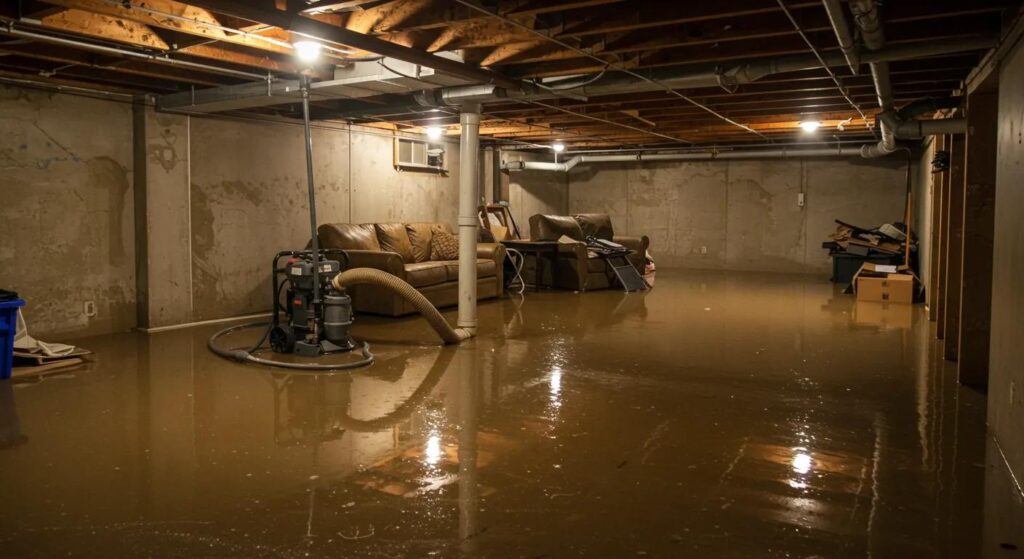
NJ Basement Flooding Repair: Water Damage & Foundation Solutions
Basement flooding in New Jersey happens when water overwhelms foundation barriers, causing interior pooling, damaged finishes, and potential structural risks; homeowners need practical, local solutions that protect property value and indoor air quality. This article explains causes, signs, available repairs, cost drivers, and emergency response so you can act quickly and choose systems that produce long-term protection. Many readers will learn how hydrostatic pressure, failed sump pumps, foundation cracks, and sewer backups interact to create repeat flooding, and which interventions stop water at the source. Effective Basement Solutions is presented here as a trusted New Jersey resource that offers free inspections and tailored plans to diagnose problems and recommend durable fixes when you’re ready to request a consultation. The sections that follow map causes and signs, describe repair services and emergency water removal, outline cost factors with comparative tables, and explain why a licensed in-house crew and warranty-backed service matter for lasting home protection.
What Are the Common Causes of Basement Flooding in New Jersey?
Basement flooding in New Jersey commonly stems from a handful of mechanical and geologic causes that raise water levels against foundations and force intrusion. Hydrostatic pressure, heavy seasonal rainfall, clogged or failed sump pumps, foundation cracks, and internal plumbing or sewer backups each contribute to water entering basements. Understanding these root causes helps homeowners prioritize repairs that address the driving mechanism rather than treating symptoms repeatedly. The next list summarizes the most frequent causes with concise explanations to aid quick recognition and triage.
- Hydrostatic pressure: Saturated soil raises groundwater, pushing water through walls, joints, and floor seams.
- Sump pump failure: Power loss, clogging, or float switch issues allow accumulated water to remain and overflow.
- Foundation cracks and porous materials: Cracks and porous masonry provide direct pathways for soil moisture to enter.
- Plumbing leaks and sewer backups: Internal plumbing failures or municipal sewer surges introduce water or sewage into basements.
These causes often act together, so diagnosing one should lead to checking the others to build an effective waterproofing plan that prevents recurrence.
How Does Hydrostatic Pressure Lead to Basement Flooding?
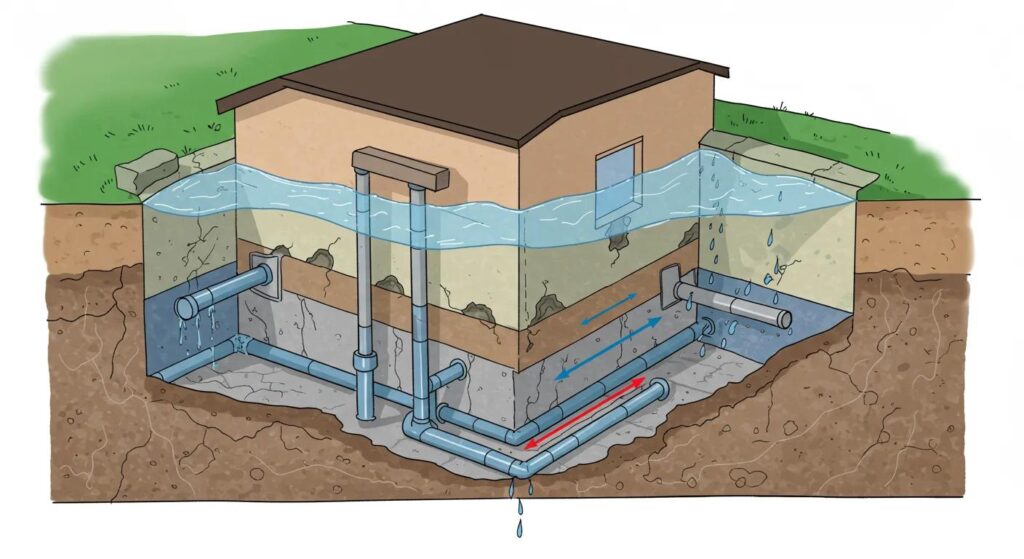
Hydrostatic pressure is the force exerted by groundwater when soil becomes saturated, and it creates a continuous push against foundation walls and slabs that can force water through any weakness. When soil around a foundation reaches field capacity after heavy rain or rapid snowmelt, the resulting pressure raises the effective water table and squeezes moisture through mortar joints, micro-cracks, or porous concrete. Preventative measures that reduce hydrostatic load include improving drainage (interior/perimeter systems), installing properly sized sump pumps, and applying wall-to-floor junction sealing; these actions address the mechanism rather than solely drying surfaces. Homeowners observing damp walls, weeping mortar, or recurring seepage should prioritize hydrostatic mitigation because resolving pressure sources prevents many future flooding events. Understanding hydrostatic pressure leads directly to evaluating mechanical protections like sump pumps and drainage systems, which are covered next.
What Role Do Sump Pump Failures and Plumbing Leaks Play?
Sump pump failures and hidden plumbing leaks are frequent triggers for sudden or chronic basement flooding because they remove or add water faster than passive drying can manage. Common failure modes include power outages without battery backup, impeller clogging from debris, float switch malfunctions, and undersized pumps that can’t handle surge inflows; each failure leaves a home vulnerable during storms. Plumbing leaks—ranging from small supply-line weeps to major drainage or sewer backups—introduce steady moisture that fosters mold and degrades finishes long before visible pooling appears. Routine checks, battery backup sump pumps, and professional plumbing inspections help catch these issues early and ensure mechanical systems function when needed. When mechanical failures are suspected, combining rapid repair with a broader waterproofing assessment reduces the risk of repeat incidents.
How Can You Identify Signs of Basement Water Damage and Mold Growth?
Recognizing both visible and hidden signs of water damage and mold is essential to stop deterioration and protect indoor air quality before conditions escalate. Visible indicators such as water stains, efflorescence, peeling paint, and horizontal water lines point to past or ongoing intrusion and often indicate the route water took through the structure. Odors—especially musty or sewage-like smells—and occupant symptoms like persistent allergy-like reactions can signal active microbial growth or contaminated water. The following numbered checklist helps prioritize inspection steps and informs whether immediate drying, remediation, or structural repair is the appropriate next move.
- Look for stains and water lines on walls and floors that mark historical or active seepage.
- Check for efflorescence (white mineral deposits), peeling paint, or blistering which indicate moisture migration.
- Note persistent musty odors, visible mold growth, or health symptoms that suggest microbial contamination.
This checklist helps homeowners assemble the evidence professionals use during moisture testing and leads naturally to closer visual inspection of cracks and mold-prone areas next.
What Are the Visible Signs of Basement Flooding and Wall Cracks?
Visible signs of basement flooding and structural compromise include staining patterns, differential paint failure, spalling concrete, and cracks whose form indicates urgency; recognizing types of cracks differentiates cosmetic issues from structural threats. Hairline, vertical shrinkage cracks are often less urgent than horizontal or stair-step cracks near corners, which can indicate lateral soil pressure or foundation movement requiring structural attention. Water lines and residue on finishes show past flood heights and help estimate drying needs and material loss, while rusted mechanicals and displaced insulation signal hidden moisture pathways. Immediate homeowner actions include moving valuables above flood lines, running dehumidification if power and safety allow, and documenting damage with photos for insurance—steps that prepare the site for professional assessment. Knowing what visible clues mean guides whether a simple waterproofing upgrade or a combined structural-and-waterproofing solution is needed.
How Does Mold Develop and Affect Indoor Air Quality?
Mold develops when organic surfaces stay damp for extended periods, using cellulose-based materials like drywall, wood framing, or paper-faced insulation as food; persistent humidity above about 60% relative humidity and periodic wetting events accelerate colonization. As mold produces spores and volatile organic compounds, indoor air quality declines and occupants may experience nasal irritation, coughing, headaches, or aggravated asthma; vulnerable populations such as children, elderly, or immunocompromised individuals face higher risks. Remediation decisions hinge on whether mold is active and surface-level (cleanable) versus growth within wall cavities or HVAC systems (requiring professional abatement). Preventing mold centers on moisture control—encapsulation, dehumidification, and repaired water entry paths—so pairing moisture mitigation with targeted remediation protects air quality long-term.
What Basement Flooding Repair Services Are Available in New Jersey?
Basement flooding repair and waterproofing services address both the pathways water uses and the mechanical systems that remove it, providing layered protection against future events. Common services include sump pump installation and battery backup systems, interior French drain systems tied to sump pits, structural reinforcement for cracked walls, crawl space encapsulation, and dehumidification system installation to control humidity and prevent mold.
The following table links common basement problems with the usual solution components installers deploy.
| Problem | Typical Service(s) | Key Components |
|---|---|---|
| Hydrostatic pressure and seepage | Interior French drain + sump pump | Perimeter channel, perforated pipe, sump pit, discharge line |
| Sump pump failure | Sump pump installation/upgrade | Pump unit, float switch, check valve, battery backup |
| Foundation cracks and wall bowing | Structural reinforcement + waterproofing | Carbon fiber straps, wall anchors, piering, crack injection |
This quick-reference highlights how services combine mechanical, drainage, and structural elements to stop water and stabilize the foundation; the next paragraphs describe each service and when it is recommended.
How Does Sump Pump Installation Prevent Basement Flooding?
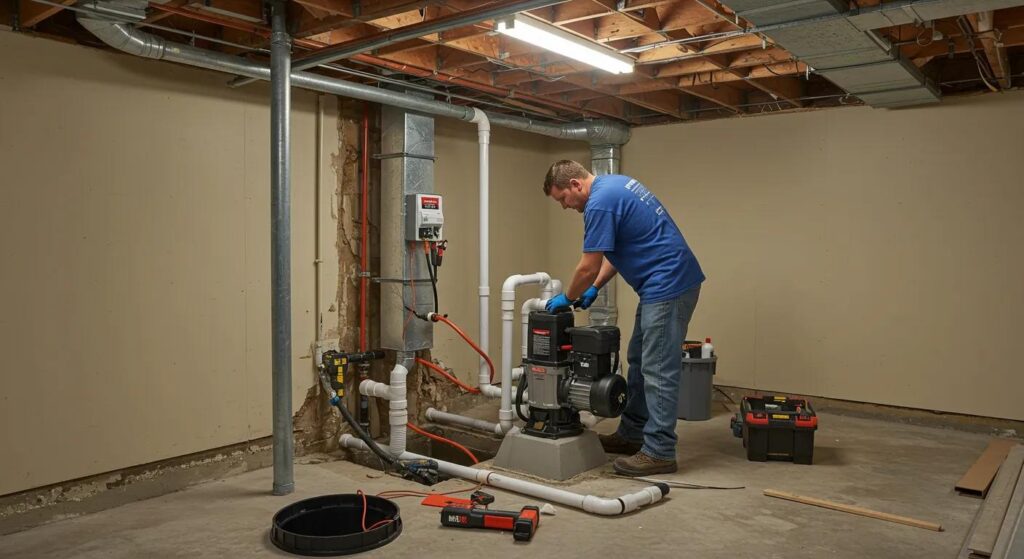
A properly installed sump pump removes collected groundwater from interior drains or low points and discharges it away from the structure, thereby breaking the hydrostatic pathway that forces water into basements. Modern installations include the pump unit, float switch that activates automatically, check valve to prevent backflow, discharge piping routed to safe release points, and often a battery backup or water-powered backup to operate during grid outages. Sump pump selection must match anticipated flow rates and debris conditions—oversized or undersized pumps both create long-term reliability issues—so sizing and a professional install ensure consistent protection. Effective Basement Solutions installs licensed in-house crews to set up pumps with quality components and offers free inspection-based recommendations so homeowners receive a tailored pump solution tied to their basement’s drainage plan.
What Are the Benefits of Interior French Drain Systems?
Interior French drain systems intercept groundwater at the foundation perimeter inside the basement and convey it to a sump pit for safe removal, making them effective when exterior excavation is impractical or where the foundation grade prevents easy exterior access. The system’s primary components—a perimeter channel, perforated drainpipe, and sump integration—collect water before it migrates through walls or floor joints, reducing hydrostatic pressure and protecting finished spaces. Interior systems typically cause minimal exterior disruption, allow targeted installation under floor finishes, and integrate with pumps and backup systems for comprehensive protection. When installed by licensed professionals, these systems complement structural repairs and dehumidification strategies to create a full waterproofing package; request a free inspection to confirm whether an interior French drain best fits your New Jersey home’s conditions.
How Does Structural Reinforcement Address Foundation Cracks?
Structural reinforcement remedies the forces that cause wall cracking or bowing rather than merely patching the visible damage, and methods vary based on the nature of movement and soil pressure. Options include carbon fiber straps for flexing walls, wall anchors to stabilize and pull walls toward plumb, and piering or underpinning to re-establish bearing capacity and stop settlement; these methods restore structural integrity and allow waterproofing finishes to last. Combining reinforcement with a waterproofing program ensures that repaired walls remain dry and the root cause—soil pressure or settlement—is managed long-term. Effective Basement Solutions uses licensed in-house crews to coordinate structural fixes with waterproofing installations, ensuring repair sequencing protects both structural safety and moisture control.
What Role Do Crawl Space Encapsulation and Dehumidification Systems Play?
Crawl space encapsulation seals and conditions the crawl area with a continuous vapor barrier, sealed seams, and vent sealing to prevent ground moisture and outside air from entering living spaces, thereby improving energy efficiency and indoor air quality. Paired dehumidification systems control relative humidity and remove persistent moisture that can travel from the crawl space into the home, preventing mold and rot and protecting HVAC efficiency. Encapsulation components include heavy-duty vapor barrier, seam tape, closed-cell insulation where applicable, and a dedicated dehumidifier sized for the space. Choosing crawl space solutions versus basement-focused fixes depends on the primary moisture source; professionals assess subsurface flow, ventilation, and building envelope conditions during an inspection to recommend the correct combination.
How Much Does Basement Waterproofing and Flood Repair Cost in New Jersey?
Basement waterproofing and flood repair costs vary widely because pricing depends on the underlying cause, the scope of work, accessibility, and any necessary structural repairs; transparent cost factors help homeowners set realistic budgets. Key drivers include severity of water intrusion, need for structural reinforcement, interior finish removal, system type (interior vs exterior), materials and labor, and whether permits or specialized equipment (e.g., piering rigs) are required.
Below is a comparative table summarizing typical cost drivers and homeowner benefits for common waterproofing services.
| Service | Primary Cost Drivers | Typical Benefit / Lifespan |
|---|---|---|
| Sump pump + battery backup | Pump capacity, backup type, discharge routing | Immediate water removal; pump lifespan varies by use |
| Interior French drain | Floor removal, drainage channel, sump integration | Reduces hydrostatic pressure; durable when installed correctly |
| Structural reinforcement | Extent of movement, piering needs, anchoring method | Restores stability; long-term structural protection |
Because each property’s conditions differ, free, on-site inspections produce accurate estimates tailored to soil, foundation type, and necessary repairs. Effective Basement Solutions offers free inspections that assess moisture sources, foundation condition, and system recommendations so homeowners receive an itemized plan rather than a vague ballpark figure.
What Factors Influence New Jersey Basement Waterproofing Costs?
Factors that influence costs include the extent of visible and hidden damage, the chosen system (interior vs exterior), required structural work, site access and excavation complexity, and local permitting or disposal needs. Soil type and site grading can increase complexity when exterior excavation or deeper drainage is required, while finished basements or limited access can raise labor and finish-repair costs. Material quality and warranty levels—such as higher-grade pumps or commercial-grade membranes—affect both upfront price and long-term value; consider lifecycle cost rather than only the initial bid. Understanding these variables helps homeowners prioritize interventions that yield the highest return in protection and resale value.
How Can Free Inspections Help Estimate Repair Expenses?
A free inspection documents moisture sources, measures humidity, tests for active leaks, evaluates sump pit sizing, and inspects wall cracks to translate observed conditions into a scoped proposal with itemized recommendations. Inspectors typically perform moisture mapping, probe cracks to distinguish active leaks from cosmetic hairline fissures, check existing pump operation and discharge routing, and evaluate crawl space or exterior drainage conditions. The resulting report clarifies which services are necessary immediately and which can be staged, enabling informed budgeting and insurance discussions. Scheduling a no-cost inspection is the most reliable way to receive an accurate, written estimate that reflects on-site realities rather than generic ranges.
What Emergency Basement Water Removal Services Are Available in NJ?
Emergency basement water removal services provide rapid response to active flooding, focusing first on safety, water extraction, and preventing secondary damage like mold growth and structural weakening. Typical emergency offerings include fast water extraction using submersible pumps and truck-mounted vacuums, emergency sump pump repair or temporary bypass systems, sewage cleanup with appropriate disinfection, and rapid drying using industrial dehumidifiers and air movers.
The following table compares common emergency responses by typical response time and core steps taken during service.
| Emergency Service | Typical Response Time | Typical Steps Taken |
|---|---|---|
| Water extraction | Same day to 24 hours | Remove standing water, document damage, begin drying |
| Emergency sump pump repair | Within hours | Install temporary pump/repair float, restore discharge |
| Sewage cleanup | Same day (priority) | Contain contamination, remove solids, sanitize surfaces |
Prompt action reduces secondary damage and preserves materials for restoration; documenting conditions during emergency service also supports insurance claims and long-term repair planning.
How Is Rapid Water Extraction Performed After Flooding?
Rapid water extraction begins with safety assessment—confirming electrical hazards and sewage contamination—then uses submersible pumps, wet vacuums, and truck-mounted extraction units to remove standing water quickly. After extraction, technicians deploy industrial air movers and dehumidifiers to lower relative humidity and prevent mold, and they monitor moisture levels until targets are met; the typical drying timeline depends on saturation and material porosity but often ranges from several days to a week. Proper documentation of water levels and affected materials during extraction supports insurance claims and informs subsequent repairs or waterproofing upgrades. Knowing the extraction process helps homeowners prepare the site for restorative waterproofing that prevents future emergencies.
When Should You Call for Emergency Sump Pump Repair or Sewage Cleanup?
Call for emergency sump pump repair or sewage cleanup when water is actively entering living spaces, when sewage odor or visible sewage is present, when water is rising despite existing pumps, or when electrical hazards make DIY response unsafe. Immediate homeowner steps while waiting for help include turning off electricity to affected areas if safe to do so, moving valuables above water lines, and avoiding contact with contaminated water to reduce health risks. Have key information ready when you call: visible water level, suspected source (storm, sewer backup, sump failure), and whether occupants have health vulnerabilities; this accelerates triage and dispatch. Rapid professional intervention stops ongoing damage and paves the way for subsequent waterproofing and structural repairs.
Why Choose Effective Basement Solutions for Basement Flooding Repair in New Jersey?
Effective Basement Solutions positions itself as a local New Jersey-focused provider of comprehensive basement waterproofing and foundation solutions, combining licensed in-house crews with free inspections and emergency response capabilities to guide homeowners from diagnosis to durable repair. Their services include interior drainage systems, sump pump installations with battery backup options, interior French drain installation, structural reinforcement, crawl space encapsulation, and dehumidification system installation paired with water damage repair and mold prevention.
- Licensed in-house crew: Ensures consistent workmanship and direct accountability for installations and follow-up.
- Free inspections: Provide diagnostic testing and scope reports so homeowners can make informed choices.
- Emergency rapid-response: Combines extraction and temporary fixes with plans for permanent waterproofing.
These points clarify why choosing a provider that couples emergency capability with preventive installations delivers better outcomes than addressing single symptoms; the following subsections explain crew reliability and warranty/inspection benefits in more detail.
What Makes Our Licensed In-House Crew Reliable and Experienced?
Licensed in-house crews provide continuity of skill, direct training oversight, and consistent quality control that subcontractor models can lack, leading to predictable outcomes throughout assessment, installation, and service. In-house teams maintain standardized installation protocols for sump pumps, interior drainage, structural reinforcement, and encapsulation, enabling tighter coordination between waterproofing and structural repairs and clearer warranty coverage. Direct supervision and continuous training reduce variation in workmanship, and the centralized project management simplifies communication for homeowners during multi-part interventions. Documented project scopes and photo records produced during free inspections illustrate the work plan and support transparency in both process and outcome.
How Do Our Free Inspections and Warranties Protect Your Home?
Free inspections combine moisture testing, crack assessment, sump pit evaluation, and drainage review to identify the root cause and produce a tailored repair plan that prioritizes lasting protection rather than temporary fixes. Warranties—on both workmanship and installed components—protect homeowner investment by defining remedies for defects and establishing maintenance expectations; these typically cover installation quality and specific parts. Together, inspection-driven proposals and warranty-backed installations help homeowners avoid repeated repairs and provide a clear path for scheduled maintenance and future service. Scheduling a free inspection is the first step toward an evidence-based waterproofing plan that pairs immediate remediation with long-term protection.

nq5kbd