
French Drain Installation NJ: Your Complete Guide to Basement Waterproofing and Drainage Solutions
Basement flooding and chronic moisture are common headaches for New Jersey homeowners, and a properly designed French drain system is one of the most effective ways to restore a dry, healthy basement. This guide explains what a French drain is, how it relieves hydrostatic pressure, and why tailored solutions for New Jersey soil and weather patterns matter for long-term performance. You will learn the differences between interior and exterior French drain systems, realistic cost factors and ranges for French drain installation in New Jersey, signs that indicate you need drainage work, and how sump pump integration and maintenance extend system life. The article also outlines inspection and maintenance schedules, contrasts sump pump backup options, and shows how professional installation protects foundations and indoor air quality. Throughout, keywords like french drain installation nj, basement drainage solutions nj, and hydrostatic pressure relief system are integrated to help you find practical, NJ-focused answers and request a free estimate if needed.
What Is a French Drain and How Does It Work in New Jersey Homes?
A French drain is a gravity-assisted drainage system that captures groundwater and channels it away from foundation walls to prevent seepage and hydrostatic pressure buildup. It works by collecting water through perforated piping set in a filtered gravel bed or behind drainage panels so water moves to a collection point such as a sump basin for removal. The main benefit is reduced foundation stress and fewer basement leaks, which improves indoor air quality and protects finished basements from moisture damage. New Jersey’s variable soils and heavy seasonal rainfall influence design choices like pipe size, filter fabric, and drainage board selection to ensure reliable performance. Understanding these components clarifies why professional assessment matters for system longevity and effectiveness.
What Are the Key Components of an Interior French Drain System?
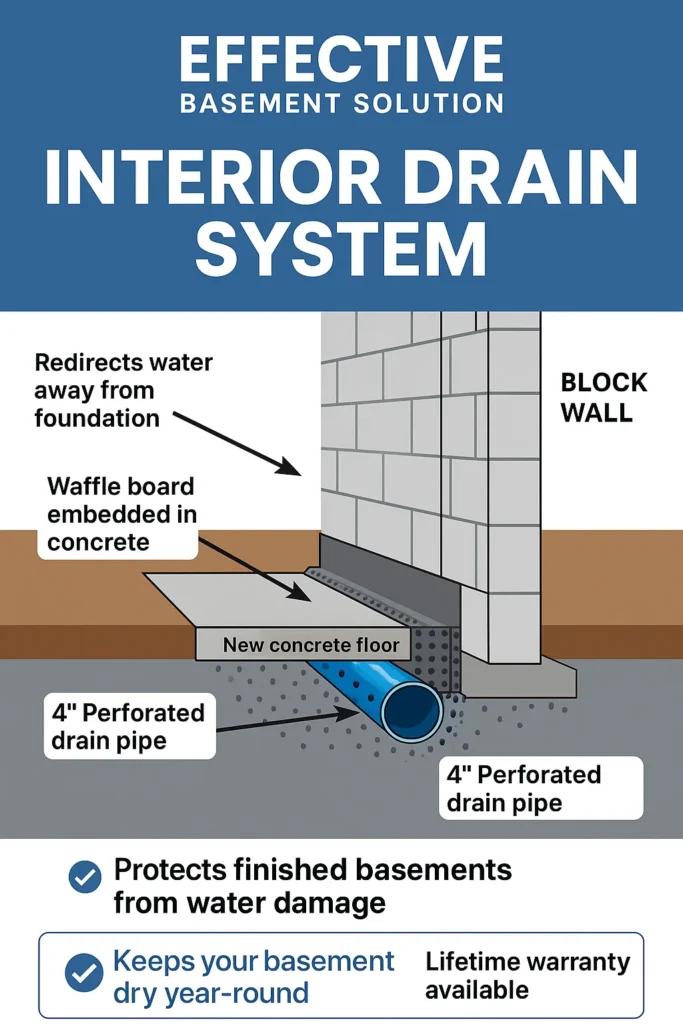
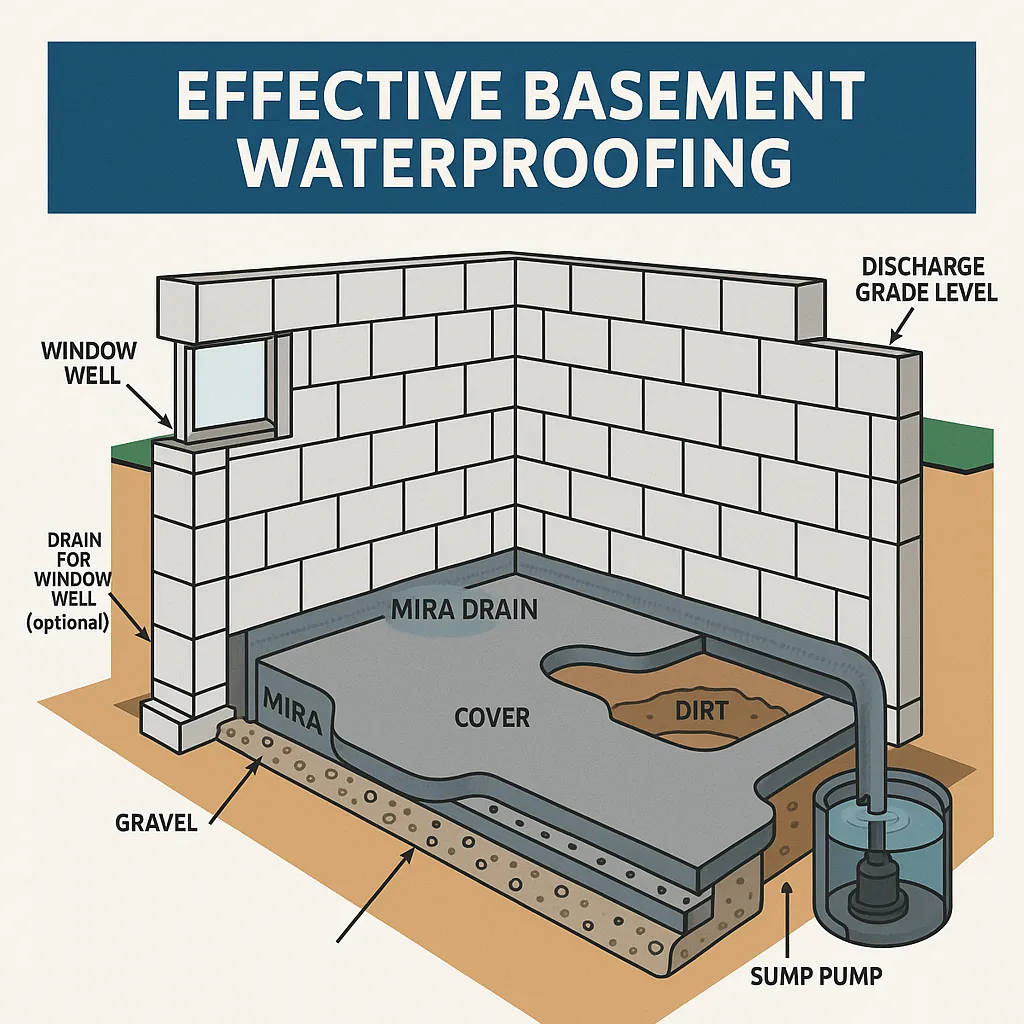
Interior French drains combine several parts—perforated pipe, gravel or bluestone backfill, filter fabric, drainage panels like MiraDrain®, and a sump pump—to create an effective path for water to exit the structure. The perforated pipe collects water, filter fabric prevents fines from clogging the aggregate, and MiraDrain® panels can be installed against foundation walls to create a continuous channel that directs water into the perforated pipe. A sump pump removes collected water to an approved discharge location, and a battery backup can provide redundancy during storms. These component functions determine performance in New Jersey soils, where clay content and high water tables require robust filtering and reliable pump integration.
How Does a French Drain Relieve Hydrostatic Pressure and Prevent Basement Flooding?
Hydrostatic pressure is the sideways force groundwater exerts against foundation walls; when pressure builds, water migrates through cracks or porous concrete and can flood a basement. A French drain lowers the water table at the foundation by intercepting subsurface flow and conveying it to a collection point, which reduces lateral pressure and the likelihood of leaks or structural movement. For NJ homes with seasonal saturation and poor surface grading, a perimeter drainage system prevents accumulation that otherwise forces water into joints and cracks. Relieving hydrostatic pressure not only stops active leaks but also slows deterioration of masonry and concrete, protecting structural integrity over time.
Why Is Professional Installation Important for NJ Basements?
Professional installation ensures proper slope, correct pipe placement, and reliable tie-in to a sump pump system—details that DIY projects often miss and that lead to premature failure. Licensed crews evaluate site-specific factors such as foundation type, existing waterproofing, soil composition, and local permit requirements to design a system that performs under New Jersey’s weather and lot conditions. Proper use of materials like perforated piping, filter fabric, and MiraDrain® panels, combined with quality backfill and compaction, prevents clogging and maintains flow capacity. Because small installation errors can nullify effectiveness, a professional assessment is the next logical step after detecting moisture issues.
Complete Guide to French Drain Installation in New Jersey
Interior and exterior French drain systems both move groundwater away from foundations but differ in installation approach, cost, disruption, and long-term landscape impact. Interior systems are installed inside the basement along the perimeter and tie into a sump pump, offering less yard disturbance and strong performance when exterior access or soil conditions prevent outside trenches. Exterior systems require trenching around the foundation and connect to a gravity discharge or surface outlet; they provide permanent exterior waterproofing but involve greater upfront landscaping and permit considerations. Selecting between them depends on yard access, finished basements, soil type, existing grading, and long-term landscaping plans for New Jersey properties.
What Are the Advantages and Disadvantages of Interior French Drains?
Interior French drains are advantageous because they minimize yard disruption and are well suited for finished basements where exterior excavation is impractical. They efficiently relieve hydrostatic pressure and work with a sump pump to actively remove water, making them effective for high water table situations common in parts of New Jersey. Disadvantages include temporary interior disruption during installation, the necessity of a reliable sump pump and discharge route, and potential reduction in usable basement floor area. Homeowners should weigh these tradeoffs when deciding between interior and exterior options, especially if maintaining finished basement spaces is a priority.
When Should You Choose Exterior French Drain Installation?
Exterior French drains are preferable when you plan major landscaping renovations, can regrade the yard to direct surface water, or when foundation walls are accessible and in need of exterior waterproofing treatment. An exterior approach prevents water from ever reaching the foundation interior and can be combined with membrane systems for maximal protection, but it requires yard access, possible tree root management, and attention to local permit requirements. Long-term effectiveness is high when properly installed because exterior drains address both surface and subsurface flow before water reaches the foundation, which is particularly valuable for homes with chronic yard ponding or poor lot grading.
Introductory comparison table shows the main differences between interior and exterior approaches for quick decision-making.
| Approach | Disruption | Effectiveness | Best For |
|---|---|---|---|
| Interior French Drain | Minimal yard disruption; basement work required | High for hydrostatic relief with sump pump | Finished basements, limited exterior access |
| Exterior French Drain | Significant yard disturbance; trenching needed | High for preventing water reaching foundation exterior | Regrading projects, new construction, major landscaping |
| Hybrid/Combined | Moderate disruption depending on scope | Very high with both exterior diversion and interior collection | Complex sites, persistent flooding problems |
How Does Effective Basement Solutions Customize Drainage for New Jersey Homes?
Effective Basement Solutions assesses each property’s soil composition, lot slope, foundation condition, and interior finishes to recommend interior, exterior, or hybrid French drain installations tailored to New Jersey conditions. Their in-house crews evaluate factors like clay or sand content, presence of groundwater seeps, and finished basement areas to choose components such as perforated pipe size, filter fabric type, and MiraDrain® panels. A customized plan balances effectiveness, cost, and disruption while prioritizing long-term performance and indoor air quality. Homeowners can request a free inspection and estimate so professionals can recommend the option best suited to the property.
What Is the Typical Cost of French Drain Installation in New Jersey?
A typical French drain installation cost in New Jersey varies by system type, linear footage, materials chosen, and site complexity, with common ranges reflecting low, median, and high tiers for interior installations tied to sump pumps. Primary cost drivers include trenching complexity, labor intensity, the use of premium components like MiraDrain® panels, and any necessary foundation repairs or landscaping restoration. Transparent budget planning accounts for linear footage, materials, labor, access, and permits, and homeowners should view example ranges as estimates pending a free inspection. Understanding these factors helps set realistic expectations and highlights why requesting a professional estimate is prudent for accurate pricing.
Before the cost table below is a brief explanation: the table breaks down typical cost factors for French drain installation in New Jersey and provides illustrative ranges to guide homeowner expectations.
| Cost Component | What It Covers | Typical NJ Range (Estimate) |
|---|---|---|
| Linear footage & trenching | Excavation, pipe, aggregate | $30 – $80 per linear foot |
| Materials & drainage panels | Perforated pipe, filter fabric, MiraDrain® | $500 – $3,000 depending on scope |
| Labor & access complexity | Crew time, confined-space work, restoration | $1,000 – $5,000 |
| Sump pump & integration | Pump, basin, tie-in, discharge routing | $600 – $2,500 |
| Permits & landscaping restoration | Local permits, yard regrading, plant replacement | $200 – $2,000 |
Which Factors Influence French Drain Cost in NJ?
Several factors influence cost: the length of the perimeter to be drained, the complexity of excavation (rocky soil or limited access), the chosen materials such as MiraDrain® panels or standard gravel, sump pump specifications, and the need for landscaping or hardscape restoration. Labor costs rise when trenching is deep or when crews must work around finished basements and utilities, and permit or contractor insurance requirements can add to the final price. Additionally, integrating foundation repair or encapsulation increases scope and cost but can be necessary when structural issues or mold are present. Assessing these factors during a free inspection yields the most accurate project estimate.
What Are the Average Price Ranges for Basement French Drain Installation?
Small interior French drain projects for limited areas or short perimeters often fall into the lower cost tier, while full-perimeter systems with high-end materials and sump pump packages are in the median-to-high tiers. For example, a short interior perimeter in a small basement might register toward the $1,500–$3,500 range, whereas full-perimeter installs with MiraDrain® panels and high-capacity sump pumps commonly reach $4,000–$12,000 depending on home size and restoration needs. Large or complex projects involving exterior trenching, major landscaping, or foundation repairs can exceed these ranges. Because variance is high, homeowners should use these as planning numbers and secure a free, no-obligation inspection to confirm pricing.
How Can You Get a Free French Drain Estimate from NJ Contractors?
To get an accurate free estimate, prepare by documenting visible signs of water intrusion, noting basement finish levels, and listing recent flooding events or sump pump behavior. During the inspection, the contractor will assess grading, foundation condition, soil type, possible permit needs, and any existing waterproofing systems; they will measure linear footage and discuss material choices. Expect an inspection timeline of a few days for scheduling and a written estimate within one week for typical residential projects. Ask the inspector about material options, sump pump capacities, warranty terms, and post-installation restoration so you can compare proposals effectively.
What Are the Common Signs You Need a French Drain in Your NJ Basement?
Recognizing the early signs of drainage failure lets homeowners act before damage becomes severe; visible stains, efflorescence, mold growth, musty odors, and recurring puddles are strong indicators that a French drain or other drainage intervention may be necessary. These symptoms reflect moisture migration driven by hydrostatic pressure or poor surface grading and should prompt a documented inspection and timely remediation to protect structural components and indoor air quality. Identifying the pattern and frequency of water intrusion helps professionals choose the right drainage strategy for New Jersey soil and weather conditions. Detecting these signs early improves repair outcomes and can reduce the need for more extensive foundation work later.
How to Identify Basement Leaks, Dampness, and Mold Issues?
Look for water stains on walls or floors, powdery white efflorescence on masonry, visible mold patches, or consistent dampness along baseboards; these are common visual cues of moisture intrusion. Smell is also diagnostic: a persistent musty odor typically indicates chronic dampness or mold growth, and areas near corners, window wells, or floor-wall joints are common leak points. Photographing affected areas and noting when leaks occur (after storms, during thaw, or after heavy watering) helps a professional identify sources and patterns. When mold is visible or occupants experience symptoms, schedule a professional assessment to evaluate both drainage and potential mold remediation needs.
What Foundation Problems Indicate Drainage Solutions Are Needed?
Foundation issues linked to poor drainage include horizontal or stair-step cracks, mortar deterioration, and differential settlement that may present as sticking doors or sloping floors. Hairline cracks can be a first sign, while widening cracks or visible displacement indicate a more urgent structural concern that drainage alone may not fully resolve. Document crack patterns and any recent changes to determine urgency, because combining drainage work with targeted foundation repair is sometimes required to restore long-term stability. A professional inspection clarifies whether a French drain will suffice or if structural remediation must accompany drainage improvements.
How Does Standing Water or Musty Odors Signal Drainage Failure?
Standing water inside window wells, persistent puddles on basement floors after rainfall, or a recurring musty odor point to inadequate water management around the foundation. Standing water increases mold risk and accelerates material decay, while musty odors often signal active mold growth sustained by chronic humidity. Short-term mitigation includes moving valuables off the floor and using dehumidification, but effective long-term resolution requires addressing the source—often by installing or upgrading perimeter drainage and sump pump systems. Prompt action prevents worsening conditions and reduces repair costs over time.
How Does Sump Pump Integration Enhance French Drain Systems in New Jersey?
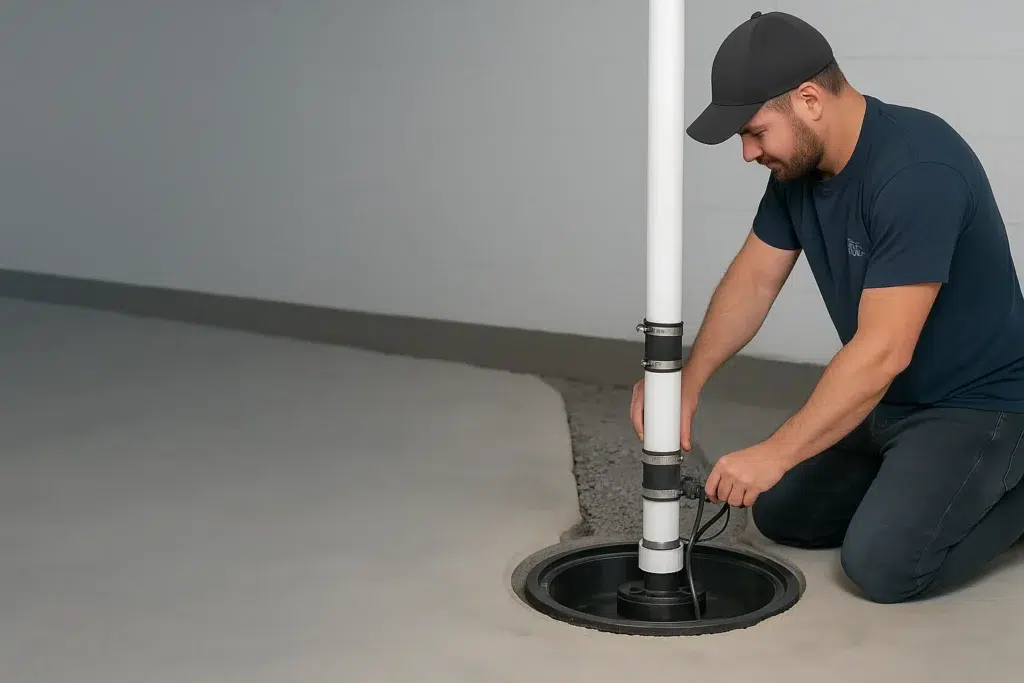
A sump pump is the mechanical heart of an interior French drain system: it removes water collected by the perforated pipe and conveys it away from the property, ensuring the system reliably lowers the water table at the foundation. Integrating a properly sized submersible sump pump with a durable basin and discharge routing prevents backups and manages storm-driven inflows that are common during heavy New Jersey rainfall. Backup systems—battery backups or secondary pumps—provide redundancy during power outages, which is critical during severe weather. Proper pump selection, installation, and maintenance determine whether a French drain performs as designed under NJ conditions.
What Role Does a Sump Pump Play in Basement Waterproofing?
A sump pump activates when collected water rises in the sump basin and pumps it to a safe discharge point away from the foundation, preventing accumulation and relieving hydrostatic pressure. In conjunction with the interior French drain, the pump keeps the collection basin low, preserving drainage capacity and minimizing seepage risk. Discharge routing must be planned to avoid creating new problems on site or violating local regulations, and an alarm or remote monitoring system gives homeowners early warning of pump failure. Regular pump maintenance ensures continued reliability and protects basements during high-rain events.
Introductory table compares common sump pump types and backup options to clarify selection considerations for NJ homeowners.
| Pump Type | Strengths | Typical Lifespan |
|---|---|---|
| Submersible | Quiet, high capacity, fits in basin | 7–10 years |
| Pedestal | Easier service access, lower cost | 5–8 years |
| Battery Backup | Keeps pump running during outages | Depends on battery capacity |
| Combination (Dual Pump) | Redundancy for high-volume events | 7–12 years with proper maintenance |
Why Are Battery Backup Systems Essential for NJ Homes?
Battery backup systems power the sump pump during grid outages, which often coincide with severe storms when water inflow is highest, making them essential for risk-prone New Jersey homes. A well-sized battery backup can run a sump pump for several hours or longer depending on pump draw and battery capacity, reducing flood risk when the primary power is down. Homeowners should consider runtime needs and integrate alarms or remote monitoring to be notified if backup activates. Because outages are unpredictable, redundancy in pump systems and backup power greatly reduces the chance of basement flooding during critical events.
How Does Effective Basement Solutions Combine Sump Pumps with French Drains?
Effective Basement Solutions integrates the Interior French Drain Installation product with properly specified sump pumps, basins, and backup options, using in-house crews to ensure correct tie-ins and reliable discharge routing. Their team customizes pump capacity to expected inflow, chooses durable components, and follows quality-control checks during installation to maintain performance under New Jersey storm conditions. Additionally, the company’s free inspection identifies appropriate pump sizing and backup needs during the estimate stage. This integrated approach ensures the French drain and sump pump operate together to manage moisture and protect the basement.
What Maintenance Is Required to Ensure Longevity of Your French Drain System?
Regular inspection and preventive maintenance are essential to keep a French drain functioning well; scheduled checks reduce the risk of clogging, pump failure, and unexpected water intrusion. Homeowners should establish a seasonal inspection routine that includes checking the sump pump operation, confirming proper discharge routing, and examining interior walls for new moisture signs. Periodic professional inspections may include camera checks of piping, pump load testing, and assessment of filter fabric or drainage panel integrity. Following a maintenance schedule protects warranty coverage, extends component lifespan, and preserves indoor air quality.
How Often Should You Inspect and Clean Your French Drain?
Inspect the system seasonally—spring and fall—and after major storms: run the sump pump, test alarms, and look for new stains or odors in the basement. Simple homeowner tasks include removing debris from outside drains, ensuring discharge points are clear, and verifying that downspouts direct roof water away from the foundation. Every 1–3 years, consider a professional evaluation that includes camera inspection of interior piping and pump performance testing. Regular maintenance prevents gradual performance loss and keeps the system ready for peak inflow periods.
What Are the Expected Lifespan and Signs of French Drain Wear?
Core components have varying lifespans: perforated pipe and filter fabric can last decades if not clogged, while mechanical parts like pumps typically last 5–10 years depending on use and maintenance. Signs of wear include reduced pump cycling efficiency, recurring damp spots, visible sediment at the sump basin, or new efflorescence and cracking; these symptoms suggest inspection and potential repair. When signs appear, prompt professional assessment can often restore performance through targeted repairs or upgrades rather than full replacement. Tracking component age and service history helps plan timely interventions.
How Can Professional Repair Services Extend Your Drain’s Effectiveness?
Professional services can perform targeted repairs—such as pipe cleaning, sump pump replacement, or reinstallation of drainage panels—and offer retrofit options like upgraded pumps or battery backups to extend system life. Scheduled service plans provide routine checks and preventive maintenance that minimize emergency callouts and often maintain warranty compliance. Professionals can also recommend improvements such as enhanced filter fabric, revised discharge routing, or supplemental exterior grading to reduce inflow. Investing in professional maintenance preserves function and reduces total lifecycle costs for drainage systems.
Why Choose Effective Basement Solutions for French Drain Installation in NJ?
Effective Basement Solutions is a New Jersey-based company focused on basement waterproofing and foundation repair, offering tailored Interior French Drain Installation backed by distinct value propositions to protect homes and indoor air quality. Their offerings include in-house expert crews (no subcontractors), a 30-year transferable warranty, a 12-month mold-free certificate, and free inspections and estimates—benefits that support long-term performance and homeowner confidence. The company emphasizes quality, safety, and customer satisfaction while customizing solutions for local NJ soils and home types. Homeowners seeking a professionally installed interior French drain can request a free inspection to determine the best approach for their property.
What Unique Benefits Do Our In-House Expert Crews Provide?
In-house crews provide control over training, safety practices, and quality assurance during every phase of installation, reducing variability that can occur when subcontractors are used. This model supports consistent workmanship, faster response for warranty service, and direct communication between project managers and technicians. With experienced teams, project timelines and installation standards are maintained to minimize disruption and ensure proper tie-ins to sump pumps and discharge systems. The result is a more predictable installation process and a reliable customer experience.
How Does Our 30-Year Transferable Warranty Protect Your Investment?
The 30-year transferable warranty offered provides homeowners with long-term assurance that core drainage components and workmanship are supported, and transferability can add value when a property is sold. The warranty outlines coverage for specified components and terms for transfer, offering a protected investment horizon for major drainage work. Homeowners should review warranty scope and maintenance requirements to ensure compliance, and they benefit from the added resale reassurance this warranty provides. Warranty protection complements maintenance plans to preserve system effectiveness over time.
What Do NJ Homeowners Say About Our French Drain Services?
Representative homeowner outcomes highlight restored dry basements, reduced mold concerns, and improved indoor comfort following Interior French Drain Installation projects managed by in-house crews. Short testimonial snippets emphasize clear communication, minimal yard disturbance when interior systems are selected, and satisfaction with the warranty and mold-free certificate provided. These homeowner experiences underscore the practical benefits of properly engineered drainage solutions and lead readers to consider scheduling an inspection to evaluate their own needs.
How Do We Ensure a Mold-Free Basement with Our Drainage Solutions?
Effective Basement Solutions pairs drainage improvements with moisture-control best practices to reduce conditions that foster mold, and they back certain installations with a 12-month mold-free certificate that reflects confidence in moisture reduction outcomes. By lowering humidity through effective drainage, proper sump pump discharge, and targeted dehumidification recommendations, the risk of mold growth is substantially reduced. The certificate is tied to installation standards and maintenance practices homeowners must follow to preserve mold-free conditions. Clear maintenance guidance and follow-up inspections help sustain a dry, healthy basement environment.