

Expert NJ Interior French Drains for Basement Waterproofing & Drainage
New Jersey basements are frequently challenged by groundwater, mold, and foundation strain without proper drainage. An interior French drain system strategically places a perforated pipe beneath your basement floor to capture water, redirect hydrostatic pressure away from foundations, and channel it to a sump pump—ensuring your living spaces remain dry and structurally sound. This guide is designed for New Jersey homeowners, offering insights into interior French drains: what they are, how they function, the common basement water issues they resolve, the detailed installation process, cost considerations, comparisons with exterior systems, complementary waterproofing services, and why Effective Basement Solutions is the premier local contractor you can trust.
What Exactly Is an Interior French Drain and How Does It Work in New Jersey Homes?
interior French drain installation NJ a drainage channel installed within the basement slab, running along the perimeter. Its purpose is to intercept groundwater before it can penetrate foundation walls, effectively relieving hydrostatic pressure and preventing water seepage. By embedding a perforated pipe within a trench filled with gravel and filter fabric at the footing level, collected water is directed to a sump basin for removal by a sump pump. This process safeguards your home’s structural integrity and maintains healthy indoor air quality. This method is particularly well-suited for New Jersey’s challenging soil types and fluctuating temperatures, ensuring dry conditions even during intense rainfall.
What Are the Key Components of an Interior French Drain System?
Before installation, each system relies on four essential components that work in unison to manage basement moisture effectively.
- Perforated Drain Pipe: The conduit that carries collected water away.
- Filter Fabric: A protective layer that prevents soil particles from clogging the pipe.
- Gravel Aggregate: Provides essential void space for water to flow into the pipe.
- Sump Pump Assembly: The mechanism responsible for discharging water away from your foundation.
These components collectively create a continuous pathway for diverting groundwater, ensuring consistent pressure relief. Understanding how each part functions is key to grasping how hydrostatic forces are managed.
How Does an Interior French Drain Relieve Hydrostatic Pressure?
Interior French drains alleviate hydrostatic pressure by establishing a low-resistance path for groundwater. This diverts water before it can exert significant pressure against your foundation walls. As water collects beneath the concrete slab, the perforated pipe, surrounded by gravel, draws it into the drainage system. This action reduces uplift forces on the slab and eliminates potential entry points for water. By redirecting this water to a sump pump, moisture levels in the soil adjacent to the foundation are lowered, preventing cracks, mold growth, and preserving the overall structural stability of your home. This mechanism highlights why these systems are indispensable for effective local waterproofing strategies.
Why Is an Interior French Drain Essential for NJ Basement Waterproofing?
New Jersey’s unique geological conditions—including a high water table, dense clay soils, and frequent freeze-thaw cycles—significantly increase the risk of basement flooding and foundation stress. An interior French drain system provides continuous, proactive groundwater management directly beneath the floor slab. This prevents water from accumulating, which can accelerate concrete cracking and foster mold growth. Relying solely on perimeter sealing is insufficient against rising hydrostatic pressure; a properly functioning interior drainage network is crucial for achieving long-term dryness and maintaining a healthy living environment. Recognizing the specific soil dynamics of our region underscores the critical need for this proven waterproofing solution.
What Common Basement Water Problems in New Jersey Do Interior French Drains Solve?
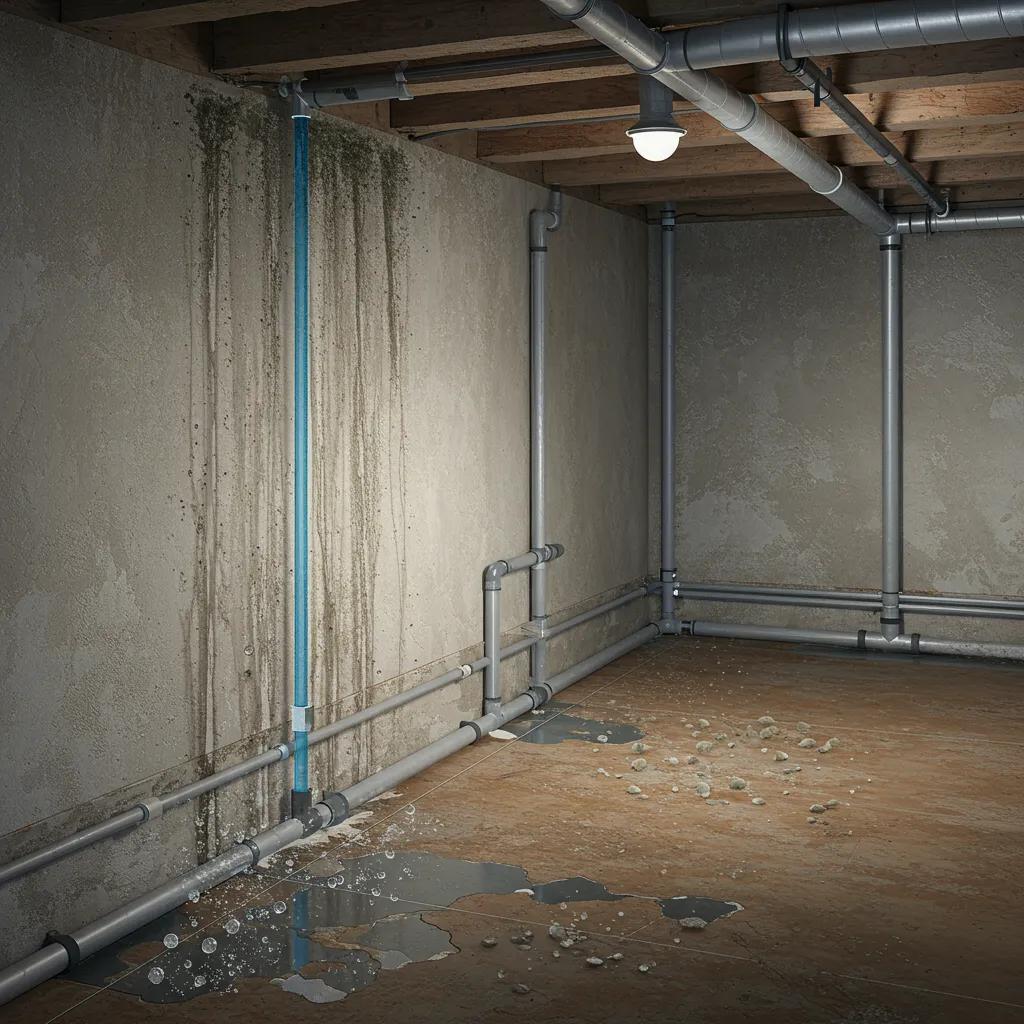
Basement moisture challenges arise from various sources, all of which an interior French drain system directly addresses through targeted water removal and pressure mitigation.
Water seepage through basement walls and under slabs is a primary cause of mold, efflorescence, and compromised foundations. Installing an interior French drain establishes an engineered pathway to effectively manage and remove accumulating groundwater, resolving these persistent issues.
What Causes Basement Water Issues in NJ Homes?
Water intrusion into New Jersey basements is often caused by a combination of local environmental factors:
- Improper Lot Grading: Landscaping that directs rainwater towards, rather than away from, your foundation.
- Insufficient Gutter Systems: Gutters that overflow saturate the soil near basement walls.
- Foundation Cracks: Even minor cracks can allow moisture to seep in under pressure.
- Elevated Water Table: Seasonal rises in groundwater can submerge basement slabs.
- Hydrostatic Pressure: Lateral forces from saturated soil push water through porous concrete.
Understanding these root causes emphasizes why targeted drainage solutions are critical before addressing the visible symptoms of a wet basement.
What Are the Signs of a Wet Basement in New Jersey?
The presence of water in your basement often reveals itself through distinct visual, olfactory, and structural indicators:
- Efflorescence: White, powdery mineral deposits appearing on walls.
- Musty Odors: A clear sign of mold and mildew growth.
- Wall and Floor Cracks: Fissures indicating stress from hydrostatic pressure.
- Visible Mold: Patches of mold, posing health risks.
- Dampness: Persistent moisture felt on carpets, flooring, or walls.
Early identification of these signs is crucial to prevent further damage and prompts the need for effective solutions.
How Does Basement Water Damage Impact Structural Integrity and Health?
Learn more about French drain installation in New Jersey. Uncontrolled moisture in your basement can significantly compromise your home’s safety, value, and your family’s health by:
- Weakening Foundations: Continuous saturation erodes the strength of concrete over time.
- Causing Structural Shifts: Uneven moisture distribution in the soil can lead to foundation settling.
- Promoting Mold Growth: Airborne mold spores can trigger allergies and respiratory problems.
- Degrading Indoor Air Quality: High humidity levels create an environment conducive to allergens.
- Reducing Property Value: Visible signs of dampness can deter potential buyers.
Recognizing these serious consequences underscores the immense value of a professionally installed interior French drain system.
How Is the Interior French Drain Installation Process Performed in New Jersey?
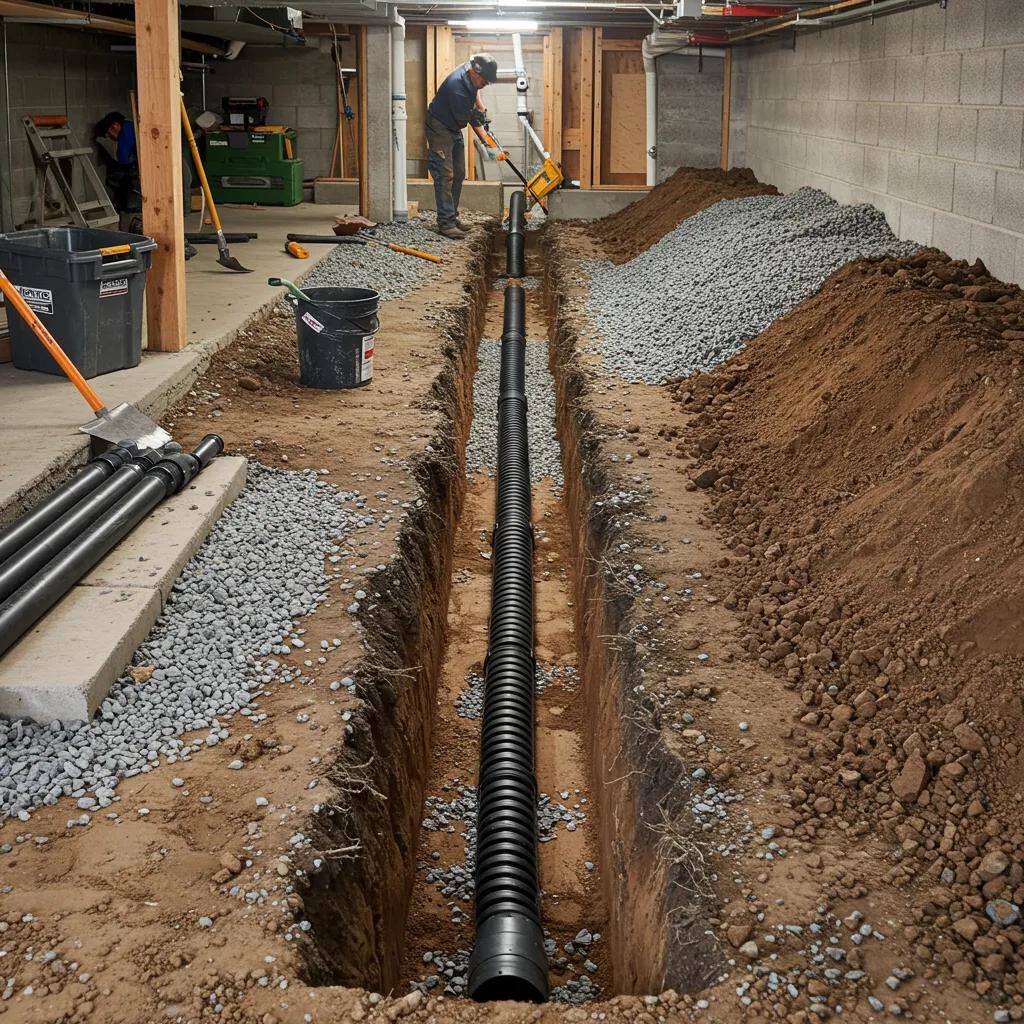
Installing an interior French drain involves precise trenching, careful material placement, and seamless sump pump integration to ensure reliable and effective basement waterproofing.
What Are the Step-by-Step Stages of Interior French Drain Installation?
The installation process is executed in five coordinated phases to ensure optimal performance:
- Trench Excavation: Carefully cutting and removing a section of the concrete floor along the basement perimeter.
- Bedding Layer: Placing filter fabric and a foundational layer of clean gravel within the trench.
- Pipe Placement: Laying the perforated drain pipe securely on the prepared gravel bed.
- Backfill and Concrete: Filling the trench around the pipe with more gravel and then pouring new concrete to restore the floor.
- Sump Pump Integration: Connecting the drain system to a sump basin and installing the sump pump.
Completing these stages with our experienced in-house crews guarantees superior quality control and minimizes disruption to your home.
How Long Does Interior French Drain Installation Take in NJ?
For a typical basement of approximately 1,000 square feet, the installation process usually takes between three to five days, encompassing:
- Day 1: Site preparation, necessary permitting, and concrete cutting.
- Day 2: Trench excavation, followed by pipe and gravel installation.
- Day 3: Pouring and initial curing of new concrete.
- Day 4: Sump pump connection, system testing, and initial cleanup.
- Day 5: Final site restoration, thorough cleanup, and a homeowner walkthrough.
Our efficient execution respects your schedule while effectively restoring your basement’s dryness.
What Professional Standards Ensure Proper Installation and Foundation Protection?
The installation of interior French drains adheres to stringent professional standards:
- Structural Integrity: We only cut the necessary width of concrete to ensure slab stability.
- Material Quality: We exclusively use high-grade corrugated pipe and clean, properly sized aggregate.
- Worker Safety: We implement rigorous dust control measures and ensure proper ventilation.
- Code Compliance: All sump pump discharge systems comply with local building codes.
- Warranty Assurance: We provide lifetime transferable warranties on our workmanship.
Meeting these exacting criteria guarantees both the longevity of your system and your complete peace of mind.
What Is the Cost of Interior French Drain Installation in New Jersey?
EPA Mold & Moisture Control Guidelines Understanding the investment required for basement waterproofing involves a clear view of cost factors and the significant long-term savings achieved.
What Factors Influence Interior French Drain Cost in NJ?
Several key variables contribute to the overall project investment:
- Linear Footage: The total length of trenching required around the basement perimeter.
- Sump Pump Selection: Choice between a standard pump or a more robust battery-backed unit.
- Soil Conditions: Difficult soil types, such as dense clay or rock, may require additional labor.
- Labor Rates: Reflecting the expertise of our local, skilled crews and prevailing wages.
- Concrete Restoration: The extent of work needed to match existing floor finishes.
Being aware of these influences helps homeowners obtain more accurate and realistic cost estimates.
What Is the Average Price Range for Interior French Drain Systems in New Jersey?
For a typical installation covering 100 linear feet, you can expect the following investment parameters:
| Project Element | Typical Cost Range | Why It Matters |
|---|---|---|
| Drain Pipe & Fabric | $2,000 – $2,500 | The core barrier preventing hydrostatic water intrusion |
| Gravel & Backfill | $800 – $1,200 | Ensures consistent water flow to the drainage pipe |
| Concrete Repair | $1,000 – $1,500 | Restores the integrity and appearance of your basement floor |
| Standard Sump Pump | $500 – $800 | Essential for removing collected groundwater from the basin |
| Battery Backup System | $600 – $1,000 | Provides crucial protection during power outages or pump failure |
| Labor & Cleanup | $1,500 – $2,000 | Skilled installation and thorough site restoration |
These figures represent average project costs; more complex basement layouts or challenging conditions may result in higher expenses.
How Does Investing in Waterproofing Save Money Long-Term?
Investing in an interior French drain system proactively prevents significant future expenses by:
- Avoiding Costly Foundation Repairs: Preventing structural damage that requires expensive remediation.
- Eliminating Mold Remediation Expenses: Sidestepping multi-thousand-dollar cleanup costs.
- Reducing Energy Waste: Minimizing dampness that increases heating and cooling demands.
- Preserving Property Value: Maintaining a dry, healthy basement enhances your home’s marketability.
- Preventing Emergency Repairs: Avoiding unexpected, high costs associated with flood damage.
Proactive waterproofing offers compounding financial benefits by safeguarding your home’s durability, health, and value for years to come.
How Do Interior French Drains Compare to Exterior French Drains for NJ Basements?
The decision between an interior and an exterior French drain system hinges on specific site conditions, your budget, and your long-term waterproofing objectives.
Interior French drains offer the advantage of easier access for maintenance and minimal disruption to your landscaping, while exterior drains are designed to manage surface water proactively before it reaches the foundation.
| System Type | Installation Location | Main Advantage | Typical Use Cases |
|---|---|---|---|
| Interior French Drain | Beneath the basement slab | Cost-effective solution for under-slab water management | High water table, foundation cracks, interior seepage |
| Exterior French Drain | Outside the foundation perimeter | Proactive diversion of surface and groundwater runoff | Poor lot grading, significant surface water accumulation |
This comparison highlights the optimal applications for each system and demonstrates how they can be integrated for comprehensive basement protection.
What Are the Advantages of Interior French Drains Over Exterior Systems?
Interior French drain systems offer several compelling benefits:
- Reduced Labor Costs: Eliminates the need for extensive exterior excavation.
- All-Weather Installation: Can be installed year-round, unaffected by landscaping or weather conditions.
- Direct Hydrostatic Pressure Relief: Effectively targets and manages water pressure at the slab level.
- Minimal Property Disturbance: Preserves your existing driveways, walkways, and lawns.
- Simplified Permitting Process: Generally involves fewer municipal requirements compared to exterior work.
These advantages often make interior French drains the preferred choice for many New Jersey homeowners seeking effective basement waterproofing.
When Is an Exterior French Drain More Suitable?
An exterior French drain system is typically more suitable when:
- Lot Grading Is a Significant Issue: Surface water consistently pools against foundation walls.
- High Volumes of Runoff Exist: Substantial surface water requires external interception.
- Homeowner Prefers Minimal Interior Disruption: Avoiding any work within the basement living space.
- Dealing with Historic Properties: Where interior excavation might be restricted or undesirable.
Understanding these specific scenarios helps homeowners make the most informed decision for their unique situation.
How Do Both Systems Work Together for Comprehensive Basement Waterproofing?
Combining interior and exterior French drain systems creates a robust, multi-layered defense against water intrusion:
- Exterior systems (gutters and French drains) intercept surface runoff, preventing it from reaching the foundation.
- Interior sub-slab drains capture any rising groundwater that bypasses exterior measures.
- Dual sump pumps efficiently manage water from both sources, ensuring continuous dryness.
- Foundation sealants can be applied to complement the drainage systems by sealing minor pores and cracks.
This integrated approach maximizes basement protection by addressing water entry points from all potential sources.
What Additional Basement Waterproofing Services Complement Interior French Drain Installation in New Jersey?
A comprehensive basement waterproofing strategy often extends beyond drainage to address related moisture issues and structural concerns effectively.
How Do Sump Pump Systems and Battery Backups Enhance Drainage?
Sump pumps are the critical mechanical components of any basement drainage system, automatically activating to remove collected water when it reaches a predetermined level. Battery backup systems are essential for ensuring continuous operation during power outages, preventing potential flooding when grid reliability is compromised. Selecting high-capacity pumps and dependable backup batteries significantly enhances the system’s resilience and provides homeowners with greater confidence.
What Are Effective Mold Remediation and Prevention Strategies Linked to Drainage?
Effective mold remediation fundamentally begins with controlling moisture sources. By expanding drainage capacity with systems like French drains, we eliminate the conditions necessary for fungal growth. Complementary services include:
- Professional HEPA Vacuuming and Antimicrobial Treatments.
- Installation of Vapor Barriers on Walls and Floors.
- Deployment of Humidity Monitoring Systems.
Combining these preventative measures with reliable French drain systems creates a comprehensive framework for mold prevention, safeguarding both your home’s health and its value.
How Does Foundation Repair Support Long-Term Basement Stability?
Structural reinforcement using methods like carbon fiber straps, epoxy crack injections, and wall anchoring systems is vital for foundations that have been compromised by pressure and moisture. By integrating foundation repair with effective drainage solutions, homeowners can preserve wall integrity, prevent future structural movement, and significantly extend the lifespan of their waterproofing systems.
What Is Crawl Space Encapsulation and Its Role in Moisture Control?
Crawl space encapsulation involves sealing the underside of your home with heavy-duty vapor barriers and installing mechanical ventilation systems to control humidity and prevent mold growth. When paired with perimeter drainage solutions, encapsulation effectively seals all potential entry points for moisture, protecting wooden joists, ductwork, and insulation from damp-related damage and improving overall indoor air quality.
Why Choose Effective Basement Solutions as Your Interior French Drain Contractor in NJ?
Effective Basement Solutions brings over two decades of specialized experience in New Jersey basement waterproofing. We utilize in-house crews and proven systems that consistently outperform conventional methods. Our unwavering commitment to quality and customer satisfaction ensures that every project meets the highest standards for structural integrity and long-term performance.
What Experience and Credentials Does Effective Basement Solutions Offer?
As a dedicated LocalBusiness focused exclusively on New Jersey foundations, Effective Basement Solutions offers a unique combination of:
- Twenty years of specialized regional waterproofing expertise.
- Certified technicians proficient in advanced drainage and waterproofing techniques.
- Proprietary installation protocols designed to protect adjacent structures.
- Lifetime transferable warranties covering both materials and workmanship.
This unparalleled combination positions us as a confident and reliable authority in basement moisture management.
What Warranty and Customer Satisfaction Guarantees Are Provided?
Every interior French drain installation performed by Effective Basement Solutions includes:
- A Lifetime Transferable Warranty on all materials used.
- An Extended Labor Warranty covering our installation practices.
- Complimentary Annual Inspections to verify system performance.
- Dedicated Customer Support for any operational inquiries.
These comprehensive guarantees reflect our deep commitment to providing enduring dryness and ensuring your complete peace of mind.
How Does the Free Consultation and Inspection Process Work?
- Schedule a no-cost, no-obligation visit at your convenience.
- A certified inspector will thoroughly evaluate your property’s grading, foundation condition, and moisture levels.
- You will receive a detailed, transparent proposal outlining the scope of work and cost estimates.
- Upon approving the plan, we will schedule your timely installation.
- Enjoy a comprehensively protected basement backed by our unwavering service guarantees.
What Do NJ Homeowners Say About Their Interior French Drain Installations?
Local residents consistently praise our precision, professionalism, and responsiveness:
- “Our basement is finally dry! These experts knew exactly what needed to be done.”
- “The team completed the work on schedule, and the warranty provides great confidence.”
- “Our home feels so much healthier, and we believe the value increased significantly after the installation.”
These testimonials highlight the trust homeowners place in our proven solutions and exceptional service quality.
Achieving a dry, healthy basement starts with expert design, meticulous installation, and responsive support from Effective Basement Solutions. Contact us today to schedule your free consultation and experience the lasting benefits of a professionally installed interior French drain system.
Research Support
“No verifiable citations available”