
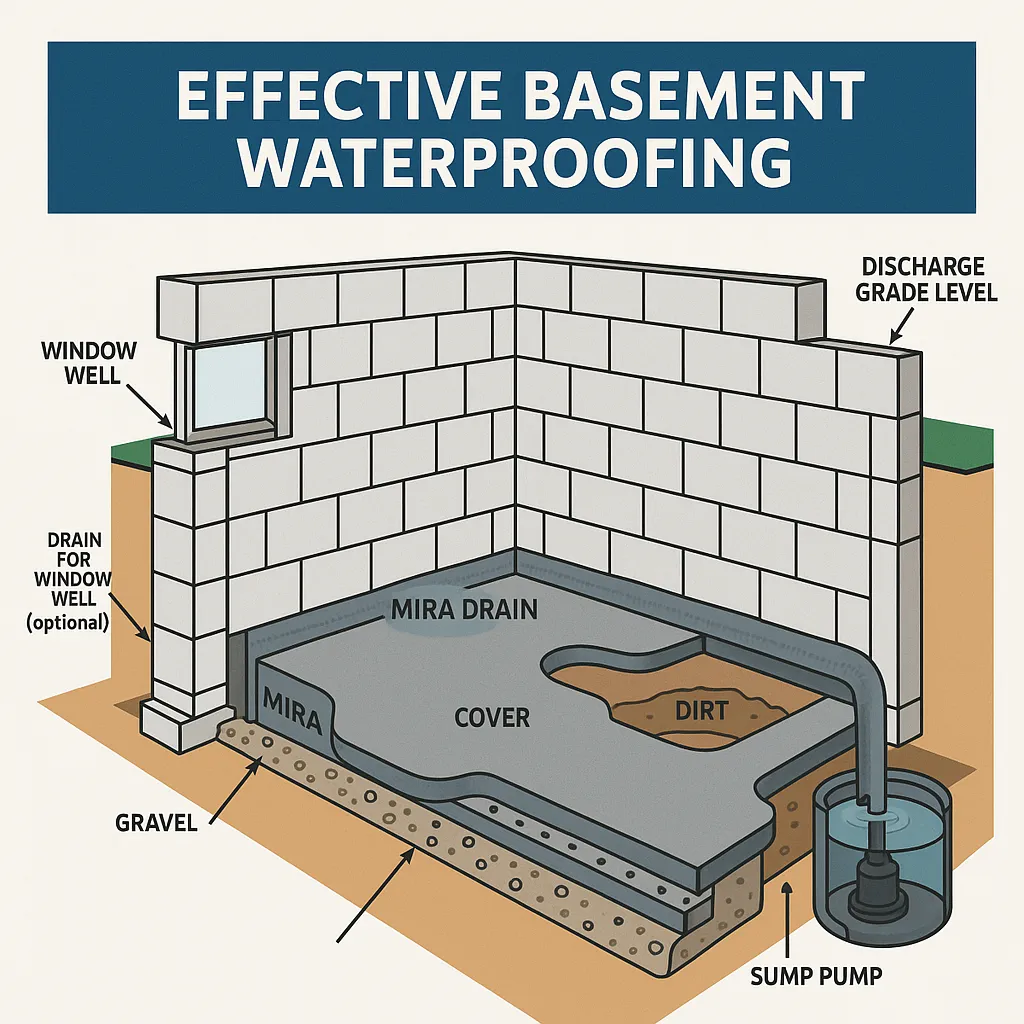
Proven basement waterproofing techniques for Effective Basement Waterproofing Solutions in New Jersey
A single inch of water in your basement can compromise structural integrity, foster mold growth, and devalue your home. In this guide on basement waterproofing, we define proven interior and exterior methods, explain drainage systems, diagnose common water problems, outline costs, and reveal how these solutions enhance air quality. You’ll learn why French drains, sump pumps, membranes, crack repairs, and strategic landscaping form a comprehensive defense—and how EffectiveWaterproofing.com delivers tailored service and free consultations in New Jersey.
What Are the Most Effective Basement Waterproofing Methods?
Basement waterproofing encompasses interior and exterior systems designed to block water ingress, relieve hydrostatic pressure, and protect your foundation. By installing drainage channels, membranes, pumps, and sealants, homeowners prevent leaks and structural damage. For example, pairing an interior French drain with a sump pump stops groundwater before it reaches basement walls.
Introducing these core techniques lays the groundwork for detailed discussion of drainage, membranes, pumps, crack repair, and soil diversion strategies.
- Interior drainage systems channel water to collection points and pump it away.
- Exterior membranes create a waterproof barrier on foundation exteriors.
- Sump pumps remove accumulated water automatically.
- Crack injection repairs foundation fissures to prevent seepage.
- Grading and landscaping divert surface water before it reaches your walls.
By combining these methods in a holistic plan, homeowners achieve durable moisture control and improved indoor air quality.
How Does Interior Basement Waterproofing Work?
Interior basement waterproofing works by installing a perimeter drainage system beneath the basement slab that collects seepage and channels it into a sump pit. The sump pump then expels water away from your home. This approach relieves hydrostatic pressure at its source and protects finished basements from leaks. An interior French drain paired with a battery-backup sump pump ensures continuous moisture removal, even during power outages.
Study of Waterproofing Systems Methodology in Construction Management
Research in construction management emphasizes that basement waterproofing systems must be structurally designed to resist uplift water pressure and other loading parameters. Creating a strong, cohesive, and impervious concrete shell is crucial to prevent water percolation and penetration, particularly at weaker areas like construction joints and honeycombed pockets.
This research directly supports the article’s explanation of how hydrostatic pressure causes basement leaks and the necessity of robust waterproofing to counter this force.
What Are Exterior Basement Waterproofing Techniques?
Exterior basement waterproofing involves excavating around foundation walls, applying waterproofing membranes, and installing perimeter drains to divert water. A seamless bitumen membrane or liquid-applied coating bonds to the foundation, blocking water entry. Gravel-filled drain tiles capture runoff and direct it to a drain field or sump system. This long-term barrier protects against rising groundwater and surface runoff.
How Do Sump Pumps and French Drains Prevent Basement Flooding?
A sump pump and French drain system prevents flooding by collecting water in a trench-lined gravel channel and pumping it out before it reaches the floor. The French drain’s perforated pipe gathers water along the foundation’s interior footings, while the sump pump automatically expels it through a discharge line. Together they stop hydrostatic pressure and eliminate standing water.
When Should You Choose Crack Repair and Foundation Waterproofing?
Crack repair and foundation waterproofing are essential when visible fissures or bowing walls allow water intrusion. If you notice hairline cracks wider than 1 mm, efflorescence deposits, or damp spots after rain, targeted epoxy or polyurethane injection seals the channels where water seeps. Pairing crack repair with a foundation membrane ensures both the fissure and the surrounding structure stay dry under hydrostatic pressures.
How Interior Basement Drainage Systems Keep Your Basement Dry
An interior basement drainage system installs a network of channels below the floor slab that intercept groundwater and redirect it into a sump pit. This method controls moisture intrusion at the foundation’s base, preventing water pooling and damp walls. For instance, a professional install of a WaterGuard system with integrated pumps can transform a frequently wet basement into a dry, usable space.
What Is an Interior French Drain System and How Does It Work?
An interior French drain system collects groundwater through a perforated pipe set in a gravel-filled trench along the foundation perimeter. The trench is dug beneath the slab, backfilled with stone to filter debris, and connected to a sump pit. Water flows by gravity into the pit and is pumped out, effectively relieving hydrostatic pressure before it can seep through cracks.
Why Is Sump Pump Installation Essential for Moisture Control?
A sump pump automatically activates when water in the pit reaches a preset level, pumping it through a discharge line away from your foundation. This mechanism prevents water accumulation, minimizes mold risk, and protects stored belongings. Reliable models include battery-backup units to maintain operation during power failures.
Introducing a pump system creates a fail-safe layer of moisture control that complements drainage trenches and sealants.
| Component | Function | Benefit |
|---|---|---|
| Sump Pit | Stores collected groundwater | Prevents floor pooling |
| Submersible Pump | Activates at high water level | Automatic moisture removal |
| Check Valve | Blocks backflow after discharge | Ensures one-way water flow |
| Battery Backup | Powers pump during outages | Maintains protection without electricity |
How Do Basement Wall Sealants and Coatings Prevent Water Intrusion?
Basement wall sealants like Drylok and crystalline coatings form a waterproof barrier on masonry or concrete surfaces. These coatings penetrate pores to block capillary water movement and seal minute cracks. When applied to interior walls, they stop moisture vapor and liquid from migrating through blockwork or poured concrete. Consistent use of high-quality coatings prevents damp spots and efflorescence.
Concluding this approach underscores the importance of combining drainage, pumps, and coatings for a fully protected basement environment.
What Are the Signs That Interior Crack Repair Is Needed?
Early signs of foundation cracks requiring repair include:
- Visible hairline or spiderweb fissures on walls or floors
- Persistent damp patches or water droplets at crack sites
- Efflorescence white deposits indicating mineral-laden seepage
- Rust stains on metal beams from moisture intrusion
Addressing these symptoms with epoxy or polyurethane injection restores structural integrity and halts water ingress, setting the stage for comprehensive waterproofing.
What Exterior Basement Waterproofing Methods Provide Long-Term Protection?
Exterior basement waterproofing involves excavating to expose foundation walls, sealing them with durable membranes, and installing drainage to direct water away. This process blocks moisture before it reaches the concrete, offering lasting defense. For example, a cold-applied polyurethane membrane bonded to the wall followed by a perimeter drain installation creates an impenetrable barrier against clay-laden groundwater.
How Do Exterior Drainage Systems Like Perimeter Drains Work?
Exterior perimeter drains consist of perforated pipe installed in a gravel trench at the foundation footing level. Water from the surrounding soil enters the pipe, flows by gravity, and drains into a covered catch basin or daylight outlet. These drains intercept subsurface water before it accumulates against your walls.
Key installation steps include:
- Excavating soil to the footing level
- Lining trench with filter fabric
- Laying gravel and perforated pipe
- Covering with stone and backfilling
By removing groundwater externally, perimeter drains relieve pressure and protect both the foundation and interior waterproofing systems.
What Types of Waterproofing Membranes Are Most Effective?
Membranes form the primary barrier against external water ingress. The following table compares leading options:
| Membrane Type | Water Resistance | Durability | Application Environment |
|---|---|---|---|
| Bitumen Sheet | High | 20–30 years | Below-grade walls |
| Polyurethane Liquid | Seamless, flexible | 15–25 years | Areas with foundation movement |
| Cementitious Coating | Breathable, crack-filling | 10–15 years | Internal and external walls |
Each membrane offers unique benefits. Bitumen sheets excel in static conditions, while liquid-applied polyurethanes adapt to shifting soils and seismic activity.
When Is Foundation Excavation and Repair Necessary?
Foundation excavation and repair become essential when walls show structural damage or persistent leaks despite surface treatments. Indicators include bowing walls, horizontal cracks wider than 3 mm, and active water streams at the footing level. Excavation allows for underpinning, wall straightening, crack stitching, and installation of robust membranes that deliver long-term performance.
How Does Grading and Landscaping Help Divert Water Away from Basements?
Proper site grading and landscaping prevent surface water from collecting around your home. A minimum slope of 1:10 away from the foundation, combined with extended downspout fittings and strategically placed swales, ensures rainwater travels safely to storm drains or garden inlets. Incorporating permeable backfill and rain gardens further reduces surface runoff, protecting basement walls before waterproofing measures are applied.
This exterior work complements drainage systems and membranes by addressing water flow on a larger scale.
What Are Common Basement Water Problems and How Are They Diagnosed?
Basement water problems range from minor seepage to full-scale flooding, often triggered by hydrostatic pressure, poor drainage, or foundation cracks. Accurate diagnosis requires inspecting walls for moisture marks, evaluating humidity levels, and identifying soil conditions around your home. EffectiveWaterproofing.com technicians use moisture meters and thermal imaging to pinpoint trouble spots before recommending tailored solutions.
What Are the Signs of a Wet Basement: Mold, Efflorescence, and Musty Odors?
Wet basements often exhibit:
- Fuzzy or discolored mold growth on walls and floors
- Efflorescence, chalky mineral deposits where water evaporates
- A persistent musty odor indicating high humidity
- Peeling paint or warped wood
Identifying these symptoms early allows for targeted waterproofing and mold remediation to restore a healthy environment.
What Causes Basement Water Leaks: Hydrostatic Pressure and Foundation Cracks?
The two primary causes of basement leaks are hydrostatic pressure—water pushing against foundation walls—and structural cracks. Soil saturation after heavy rain increases downward force on the walls, while freeze-thaw cycles and settling create fissures. Proper drainage systems and crack injection address both causes, preventing water from exploiting weaknesses.
How Can Basement Humidity Be Controlled Effectively?
Controlling basement humidity involves combining dehumidifiers, ventilation, and moisture-blocking treatments. A quality dehumidifier set to 50% relative humidity captures airborne moisture, while air exchangers introduce fresh air. Applying waterproof coatings to walls and floors further limits vapor transmission. Together, these measures maintain a dry atmosphere and inhibit mold.
These diagnostic and control steps frame the cost and benefit analysis of waterproofing services.
How Much Does Basement Waterproofing Cost and What Factors Affect Pricing?
Basement waterproofing costs vary based on method complexity, labor, soil conditions, and regional climate. Interior drainage systems typically range from $3,000 to $7,000, while exterior membrane installations can reach $10,000–$15,000. Variables such as foundation depth, access, and required excavation influence the final price.
What Are the Typical Costs for Interior vs. Exterior Waterproofing?
The following comparison outlines average investment and expected lifespan:
| Method | Typical Range | Service Life |
|---|---|---|
| Interior Drainage & Pump | $3,000 – $7,000 | 20–25 years |
| Crack Injection & Coatings | $1,500 – $4,000 | 10–15 years |
| Exterior Excavation & Membrane | $10,000 – $15,000 | 25–30 years |
Choosing between interior and exterior approaches depends on budget, property age, and the severity of water intrusion.
How Do Soil Conditions and New Jersey Climate Impact Waterproofing Costs?
Heavy clay soils, high water tables, and frequent freeze-thaw cycles in New Jersey increase excavation difficulty and material needs. Coastal areas with sandy soils may require less structural support but more drainage capacity. Seasonal rain and snowmelt timing also dictate project scheduling, potentially raising labor costs during peak building seasons.
What Warranty and Guarantee Options Should Homeowners Expect?
Homeowners should look for:
- Material warranties of 10–25 years
- Workmanship guarantees covering leaks for a minimum of 5 years
- Transferable warranties in case of property sale
- Prompt service agreements for pump maintenance and inspections
EffectiveWaterproofing.com offers comprehensive coverage on both products and installations, ensuring peace of mind and long-term protection.
How Do Proven Waterproofing Techniques Improve Indoor Air Quality and Prevent Mold?
Dry basements greatly reduce airborne mold spores, allergens, and musty smells. By keeping foundation walls and floors free of moisture, you halt microbial growth and improve overall indoor air quality. For example, combining a sealed French drain, sump pump, and dehumidifier can lower basement humidity from 70% to below 50%, cutting mold activity by over 90%.
Why Is Mold Prevention Critical for Basement Health?
Mold spores trigger respiratory issues, allergies, and structural deterioration. By preventing mold with effective waterproofing and humidity control, homeowners safeguard family health and preserve property value. Certified treatments and moisture management strategies reduce spore counts and inhibit regrowth.
A Brief Guide to Mold, Moisture and Your Home
Mold growth indoors is a significant concern, as it can cause health issues like asthma attacks and irritate eyes, skin, and lungs. Effective prevention involves controlling moisture, maintaining indoor relative humidity below 60% (preferably 30-50%), and ensuring proper drainage away from foundations. Promptly drying wet materials within 24-48 hours is crucial to inhibit mold development.
This citation reinforces the article’s claims about the health risks of mold and the importance of waterproofing and humidity control for improving indoor air quality and preventing mold growth.
How Do Waterproofing Systems Reduce Dampness and Musty Odors?
Waterproofing systems intercept water before it enters and maintain balanced humidity levels. Gutters and drains keep exterior moisture away, while interior membranes and sealants block vapor diffusion. Combined with dehumidifiers, this holistic approach eliminates musty odors and creates a fresher basement environment.
What Role Does Effective Basement Solutions Play in Long-Term Mold Control?
At EffectiveWaterproofing.com, our specialists design custom waterproofing plans that integrate drainage, coatings, and climate control tailored to each basement. Regular maintenance checks, pump service agreements, and humidity monitoring ensure sustained dryness. This proactive model prevents mold recurrence and delivers lasting indoor air quality improvements.
What Localized Waterproofing Solutions Are Best for New Jersey Basements?
New Jersey’s varied climate—from heavy coastal rains to inland freeze-thaw cycles—demands region-specific waterproofing strategies. Local soil composition, rainfall patterns, and building codes guide the selection of drainage systems, membranes, and landscape grading plans for each county.
How Does New Jersey’s Climate Affect Basement Waterproofing Needs?
New Jersey’s average annual rainfall of 47 inches and seasonal snowmelt create persistent hydrostatic pressure around foundations. Freeze-thaw cycles deepen freeze lines, causing wall movement and crack formation. Waterproofing systems must withstand these stresses through flexible membranes and robust drainage infrastructure.
New Jersey's Scientific Report on Climate Change
New Jersey’s climate is characterized by increasing temperatures, rising sea levels, and more frequent and intense severe storms, as detailed in the state’s scientific reports. These conditions, combined with clay-rich soils and freeze-thaw cycles, create significant challenges for home foundations, making robust waterproofing essential to protect against water damage and structural compromise.
This citation directly supports the article’s discussion of how New Jersey’s climate affects basement waterproofing needs and the necessity of region-specific strategies.
Which Waterproofing Techniques Are Recommended for Specific NJ Counties?
- Union County: Interior French drain and sump pump combos handle clay-heavy soils.
- Essex County: Exterior membranes paired with perimeter drains combat high water tables.
- Bergen County: Hybrid installations with both interior coatings and exterior excavation deliver all-around protection.
Tailoring methods to soil type and moisture challenges ensures optimal results across New Jersey.
What Local Building Codes and Regulations Influence Waterproofing?
New Jersey regulations require licensed contractors for excavation and foundation work, minimum slope away from footings, and proper discharge of sump pump lines a minimum of 3 m from the house. Groundwater management systems must comply with local stormwater ordinances and preserve property drainage plans.
Adhering to these codes guarantees safe, compliant installations that deliver peak performance and maintain neighborhood standards.
Basement waterproofing done right preserves your home and health while boosting resale value. Contact EffectiveWaterproofing.com today to schedule a free consultation and discover which proven technique suits your New Jersey basement best.
