
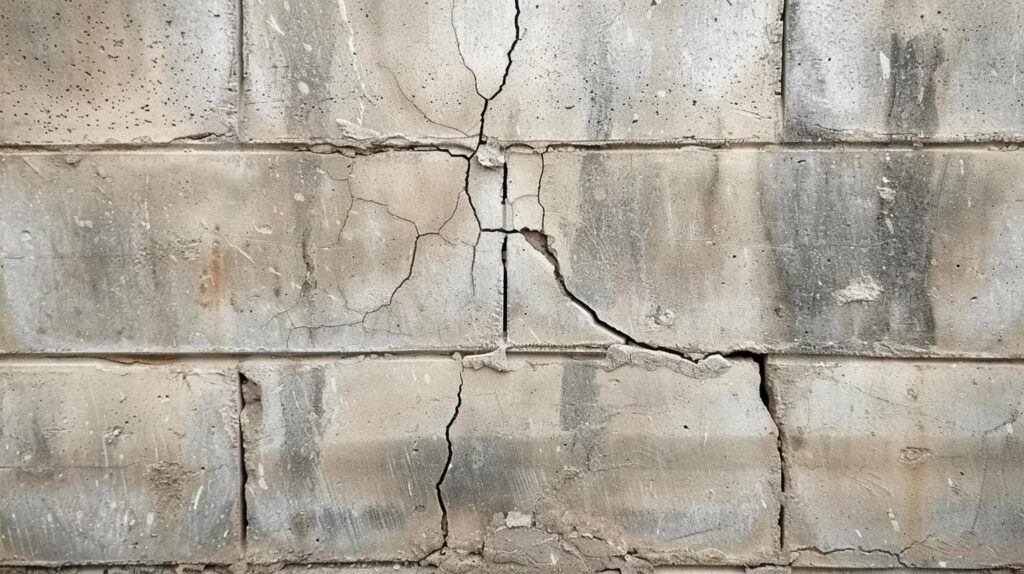
Checking Your Foundation for Cracks: A Complete Guide for New Jersey Homeowners
A single foundation crack can herald water intrusion, structural movement, and costly repairs if left unchecked. By understanding how to inspect, diagnose, and address these fissures, New Jersey homeowners can safeguard their basements from dampness, mold, and settlement damage. This guide explains what foundation cracks are, the types you might encounter, regional causes—from expansive clay soils to freeze-thaw cycles—and the signs of serious structural distress. You’ll also discover proven repair methods, cost factors, preventive maintenance tips, and why partnering with Effective Basement Solutions ensures reliable, long-term results.
What Are Foundation Cracks and Why Do They Matter?
Foundation cracks are fractures in concrete or masonry that compromise watertight integrity and load-bearing capacity. Detecting and monitoring them early prevents moisture ingress, undermining settlement, and accelerated deterioration.
What Defines a Foundation Crack?
A foundation crack is a visible split or fissure in the slab or wall concrete where tensile forces exceed material strength, creating an opening. These fissures often result from concrete shrinkage, soil pressure, or structural settlement and signal potential water pathways if left unrepaired. Understanding crack width, orientation, and location clarifies whether the issue is cosmetic or structural, saving homeowners time and money.
Stepping beyond mere appearance, evaluating crack characteristics—such as width exceeding 3 mm or irregular, zigzag patterns—guides the decision between a simple sealant or professional underpinning.
How Can Foundation Cracks Affect Your Home’s Structural Integrity?
Foundation cracks compromise slab support and wall stability by permitting soil displacement or moisture infiltration that erodes subgrade. Lateral earth pressure or freeze-thaw cycles expand these openings, leading to bowing walls, uneven load distribution, and potential collapse under heavy loads. Without timely intervention, compromised foundations can accelerate settlement, warp framing, and jeopardize interior finishes.
Maintaining a watertight, intact foundation structure ensures even load transfer and preserves the long-term integrity of flooring, walls, and roof assemblies.
When Should Homeowners Be Concerned About Foundation Cracks?
Homeowners should seek professional assessment when cracks exceed 5 mm in width, display horizontal or stair-step patterns, or coincide with additional symptoms such as bulging walls, sticking doors, or persistent damp patches. Rapidly widening fissures, cracks near floor-to-wall joints, or multiple adjacent cracks in a pattern also indicate active movement rather than harmless curing blemishes.
Early detection at these stages avoids emergency underpinning and minimizes repair scope by addressing root causes such as hydrostatic pressure or soil settlement before damage escalates.
What Are the Different Types of Foundation Cracks?
Foundation cracks vary by orientation, depth, and underlying stressor. Classifying them helps determine appropriate remedies—from epoxy injection for vertical fissures to wall anchors for lateral bowing.
How to Identify Vertical Foundation Cracks?
Vertical foundation cracks run perpendicular to the floor and typically reflect concrete shrinkage or minor soil settlement. They often appear as clean, straight lines less than 3 mm wide and may remain stable over time. These cracks usually pose minimal structural risk but warrant monitoring to prevent water seepage.
Vertical fissures frequently benefit from epoxy injection, which seals the opening and restores tensile strength without major excavation.
Why Are Horizontal Foundation Cracks More Serious?
Horizontal cracks occur when lateral earth or hydrostatic pressure exceeds wall capacity, pushing the wall inward. These fissures form continuous lines parallel to the floor, often accompanied by bowing or bulging. Horizontal cracks signal critical structural stress and demand immediate reinforcement to prevent wall collapse.
Addressing these requires robust mechanical solutions such as carbon fiber straps or wall anchors that counteract lateral loads and restore stability.
What Are Stair-Step Cracks and What Do They Indicate?
Stair-step cracks traverse block joints in a stepped pattern, reflecting differential settlement where one section of wall sinks relative to another. These angular fissures indicate varying soil support beneath footings and may lead to uneven floors or door misalignment as sections shift independently.
Repairing stair-step cracks often combines masonry crack stitching with underpinning beneath weak footings to re-level the foundation and prevent recurring movement.
When Are Hairline Cracks a Minor Issue?
Hairline cracks, typically under 1 mm wide, result from normal concrete curing shrinkage and pose little structural concern. They seldom grow wider or threaten integrity but can allow fine moisture migration if unsealed. Homeowners can monitor these cracks seasonally; if they remain stable, a simple polymer sealant restores waterproofing without structural intervention.
Identifying hairline cracks helps avoid unnecessary repair costs while maintaining an effective moisture barrier.
How to Use a Crack Comparison Table to Assess Severity?
Below is a crack comparison table that categorizes common fissure types by width, pattern, and recommended action. It helps homeowners gauge urgency and suitable repair methods.
| Crack Classification | Width & Pattern | Recommended Response |
|---|---|---|
| Hairline (≤1 mm) | Thin, straight lines | Monitor and seal with polymer filler |
| Vertical (<3 mm) | Straight perpendicular splits | Inject epoxy for waterproof seal and strength |
| Stair-Step (1–5 mm) | Jagged, block-joint pattern | Stitch with metal pins and repoint, monitor settlement |
| Horizontal (>3 mm) | Continuous, parallel to floor | Install carbon fiber straps or wall anchors |
| Wide or Zigzag (>5 mm) | Irregular, expanding fissures | Underpin footings and relevel foundation |
This categorization clarifies repair priority and prevents under- or over-treatment as you explore causes and professional solutions next.
What Causes Foundation Cracks in New Jersey Homes?
Local soil types, climate, and landscaping practices drive crack formation in New Jersey, where expansive clays, heavy rainfall, and freeze-thaw cycles test foundation resilience.
How Does Soil Movement and Settlement Lead to Cracks?
Expansive clay soils absorb moisture and swell, then shrink during dry periods, exerting cyclic stresses on foundations. Differential settlement occurs when some areas compress more than others, producing vertical and stair-step cracks where the load path shifts unevenly.
Mitigating soil movement involves pre-pour moisture conditioning or installing continuous perimeter drains that stabilize subgrade moisture levels and reduce expansion forces beneath footings.
Damage to Foundations from Expansive Soils
Expansive soils, characterized by their significant volume changes with varying moisture content, pose a considerable hazard to light building foundations. These swelling clays can exert substantial uplift pressures, leading to damage in structures. The annual cycle of wetting and drying causes these soils to shrink and swell, particularly in regions with pronounced wet and dry seasons, leading to cyclic shrink/swell behavior and deep cracks in the ground surface.
What Role Does Hydrostatic Pressure Play in Basement Wall Damage?
Groundwater accumulation generates hydrostatic pressure against basement walls, forcing moisture through microcracks and creating damp patches or bulges. Over time, persistent lateral loads from saturated soil can initiate horizontal cracks and wall bowing.
Relieving hydrostatic pressure requires a combination of external drainage systems (French drains), interior sump pumps, and proper surface grading to direct water away from the foundation.
Can Tree Roots Cause Foundation Damage?
Tree roots seek moisture and nutrients by penetrating soil beneath footings; aggressive species (oak, maple) can lift or crack concrete slabs and walls. Localized pressure from root growth may create uneven settlement or concentrate loads that trigger stair-step fissures.
Maintaining a root-free buffer zone of at least 2 m from the foundation edge and choosing non-invasive landscaping species protects structural elements from intrusive root expansion.
How Does Poor Drainage Contribute to Foundation Cracks?
Inadequate gutter systems, clogged downpipes, or flat grading allow rainwater to pool at the foundation perimeter, saturating soils and increasing lateral loads. This persistent saturation softens supporting soils, leading to uneven settlement and crack initiation.
Ensuring sloping away from the house, extending downpipe outlets, and installing channel drains prevents water accumulation and stabilizes soil support around footings.
What Are the Effects of Freeze-Thaw Cycles on Foundations?
New Jersey’s freeze-thaw cycles force moisture within concrete pores to expand when freezing, creating micro-fractures that enlarge over successive cycles. These temperature-driven expansions weaken concrete cohesion and accelerate crack propagation, especially in unsealed slabs.
Applying a high-quality waterproofing barrier and maintaining consistent subfloor moisture levels reduces freeze-thaw impact on foundation materials.
Freeze–Thaw Damage Characteristics of Concrete Based on Compressive Mechanical Properties and Acoustic Parameters
Concrete is susceptible to freeze–thaw damage, which can significantly reduce its mechanical properties and lead to premature failure. Repeated freezing and thawing cycles cause microcracks and defects in the concrete structure, leading to a decrease in compressive strength and ultrasonic wave velocity. The damage intensifies with an increasing number of freeze–thaw cycles, progressing from dense pores to severe peeling of cement mortar and exposure of coarse aggregates.
How Can You Recognize Signs of Serious Foundation Damage?
Visible cracks are only one symptom; a combination of indicators confirms deeper structural movement requiring prompt professional assessment.
What Do Uneven Floors and Sticking Doors Indicate?
Uneven, sagging floors and doors or windows that jam signify foundation settlement or heaving. As the slab shifts, framing members twist and misalign, causing friction in door jambs and an unlevel walking surface.
Noting these symptoms alongside crack monitoring highlights active movement beyond superficial surface fissures, prompting further investigation.
How to Detect Leaning or Bowing Basement Walls?
Leaning or concave basement walls often accompany horizontal cracking and result from sustained lateral earth or hydrostatic pressure. Tactile inspection—pressing against the wall surface—reveals deflection, while visual observation from corners shows curvature.
Identifying bowing early allows installation of reinforcement systems like carbon fiber straps or wall anchors before walls reach critical distortion.
Why Are Water Leaks and Dampness Warning Signs?
Persistent moisture along cracks or rising damp indicates that water infiltration exploits foundation fissures, threatening interior finishes, insulation, and promoting mold growth. Leaks often correlate with active crack widening under hydrostatic forces.
Addressing these leaks through crack repair and exterior waterproofing prevents rot, health hazards, and escalating foundation distress.
When Should You Call a Professional for Foundation Inspection?
Arrange a qualified structural assessment when two or more warning signs appear—such as wide or horizontal cracks, wall bowing, floor unevenness, or chronic dampness. A professional inspection utilizes crack gauges, moisture mapping, and soil analysis to diagnose root causes and design a tailored repair plan.
Expert evaluation ensures cost-effective solutions that restore stability and prevent recurrent cracking under regional stressors.
What Are the Most Effective Foundation Crack Repair Methods?
Selecting the right technique depends on crack type, severity, and underlying cause. Below are industry-proven methods for both non-structural and critical repairs.
How Does Epoxy Injection Repair Non-Structural Cracks?
Epoxy injection fills and bonds non-structural cracks by injecting a two-component resin under pressure, sealing the opening and restoring tensile strength. The process inhibits water entry, prevents freeze-thaw damage, and reinstates load transfer across fissures.
Epoxy repair is fast, minimally invasive, and cost-effective for vertical and hairline cracks where structural loads remain uniform.
Evaluation of Epoxy Injection Method for Concrete Crack Repair
The use of epoxy resins is a common and effective method for repairing cracks in concrete structures, aiming to restore their structural strength and continuity. Studies have shown that the performance of repaired beams varies depending on the epoxy type and application methods, with the viscosity of the epoxy being critical for ensuring full bonding and reinstating the capacity of cracked sections.
When Is Carbon Fiber Reinforcement Used for Basement Walls?
Carbon fiber straps are applied to bowed walls as high-tensile reinforcement straps. Adhesive and resin embed strips onto the interior face, providing continuous reinforcement that counters lateral soil pressure and halts further inward movement.
This method supports walls without excavation, offering a thin, unobtrusive solution for moderate horizontal cracks and bulging.
What Is Foundation Underpinning and When Is It Necessary?
Underpinning stabilizes sinking foundations by extending or reinforcing footings at greater depths or on stronger soil strata. Techniques include mini-pilings, helical piers, or mass concrete underpinning installed beneath existing foundations to lift and re-level slabs.
Underpinning is essential when widespread settlement, expansive soils, or severe stair-step and zigzag cracks indicate subgrade instability.
How Do Wall Anchors Stabilize Bowing Walls?
Wall anchors involve exterior earth anchors connected via steel rods to interior wall plates. When tightened, the system draws bowed walls back toward the anchor plane and maintains pressure to resist lateral loads.
This dual-sided reinforcement is ideal for substantial horizontal cracks and walls leaning more than 2 cm.
How Does Basement Waterproofing Prevent Future Cracks?
Basement waterproofing reduces hydrostatic pressure by installing exterior membranes, drainage boards, and perimeter drains that divert water away from walls. Inside, weeping tiles and sump systems collect residual moisture before it stresses foundation materials.
Combining waterproofing with crack repairs stops the cycle of moisture-driven deterioration and future crack formation under pressure.
How to Choose the Right Repair Method for Your Crack Type?
Selecting the best repair starts with crack classification and cause diagnosis:
- Hairline/Vertical Cracks – Epoxy or polyurethane injection
- Moderate Horizontal Cracks – Carbon fiber straps or wall anchors
- Deep Settlement or Zigzag Cracks – Underpinning combined with stitch repairs
- Water-Driven Cracks – Waterproofing integrated with structural reinforcement
Matching method to severity ensures durable solutions and prevents over- or under-engineering.
What Factors Affect Foundation Crack Repair Costs in New Jersey?
Repair pricing varies based on damage extent, method complexity, and site conditions unique to NJ neighborhoods.
How Does Crack Severity Influence Repair Pricing?
Wider, deeper, or multiple fissures increase labor, materials, and equipment needs. Simple epoxy injections for non-structural cracks may cost from £250–£600, while underpinning severe settlement can range from £4,000–£8,000 depending on pier depth and soil conditions.
Clear severity assessment during free inspections provides accurate estimates tailored to your home’s requirements.
What Are Typical Cost Ranges for Common Repair Methods?
Below are average price ranges observed in New Jersey:
| Repair Approach | Typical Cost Range (GBP) | Scope & Benefit |
|---|---|---|
| Epoxy Injection | £250–£600 | Seals non-structural cracks and restores integrity |
| Carbon Fiber Reinforcement | £1,200–£2,500 | Counters moderate wall bowing without excavation |
| Wall Anchors | £2,000–£4,000 | Provides exterior-to-interior stabilization |
| Underpinning (Mini-Piers) | £4,000–£8,000 | Re-levels foundation on deeper, stable soils |
Cost variation depends on access, crack length, and surrounding landscaping.
Why Is a Free Foundation Inspection Important Before Repair?
A free inspection uses crack gauges, soil probes, and wall deflection measurements to diagnose causes, determine severity, and recommend targeted solutions. This professional assessment prevents misdiagnosis, ensures correct repair selection, and safeguards against unnecessary expense.
Having an expert evaluate site-specific factors yields an accurate quote and avoids surprise costs during remediation.
How Do Soil and Accessibility Impact Repair Costs?
Dense clay soils often require deeper pier installation, increasing underpinning expenses, while tight crawl spaces or finished basements add labor to access repair areas. Conversely, easy exterior access and granular soils lower installation time and equipment needs.
Understanding site logistics during inspection refines cost projections and streamlines project planning.
How Can You Prevent Future Foundation Cracks?
Proactive maintenance minimizes environmental stresses and protects foundation integrity over time.
What Are the Best Practices for Proper Gutter and Drainage Systems?
Keeping gutters clear, installing sufficiently sized downpipes, and extending drainage away from the foundation stops water pooling at footings. Surface grading should slope at least 1:50 away from walls, while channel drains manage localized run-off.
Consistent water management prevents soil saturation that drives crack formation.
How Does Soil Moisture Management Protect Your Foundation?
Maintaining even soil moisture—through soaker hoses, moisture sensors, and mulched planting beds—prevents extreme shrink-swell cycles in expansive clays. Avoid planting thirsty trees close to the foundation to reduce erratic moisture extraction from subgrade soils.
Balanced moisture levels alleviate cyclic stresses that lead to settlement and fissures.
How Can Landscaping Help Shield Your Foundation?
Strategically placing shrubs and groundcover with moderate root systems away from footings reduces direct pressure on slabs. Using retaining walls to manage slope runoff and mulch beds to retain uniform moisture levels further stabilizes soils around the foundation.
Well-planned landscaping becomes a passive defense against soil-driven cracking forces.
When Should You Schedule Regular Foundation Inspections?
Annual foundation inspections, especially after extreme weather events, catch early signs of movement or moisture intrusion. Professional monitoring every two years—using crack gauges and wall deflection readings—documents trends and guides timely maintenance.
Routine check-ups prevent minor issues from evolving into complex structural repairs.
Foundation Crack Inspection Guide for New Jersey Homeowners
With deep local expertise and customer-focused service, Effective Basement Solutions delivers reliable foundation repairs tailored to New Jersey conditions.
What Local Expertise Does Effective Basement Solutions Offer?
Effective Basement Solutions understands the state’s varied soils—from coastal sandy loam to inland clay—and designs mitigation strategies that align with regional freeze-thaw patterns. Our track record with New Jersey homes ensures solutions address specific environmental stressors for lasting stability.
This local insight sets our approach apart, reducing repeat repairs under local climate variations.
How Do Free Inspections and Estimates Benefit Homeowners?
Offering no-obligation inspections lets homeowners gain clarity on crack causes, severity, and tailored repair plans without upfront fees. Transparent estimates eliminate hidden costs and guide investment decisions based on professional diagnostics rather than guesswork.
This commitment to full disclosure builds trust and helps plan budgets accurately.
What Repair Guarantees and Warranties Are Provided?
We back every repair with industry-leading warranties on materials and workmanship—typically ranging from 10 to 25 years—ensuring long-term performance. If issues reoccur under normal conditions, our team returns to resolve concerns at no additional charge.
These guarantees provide peace of mind and affirm our dedication to quality.
How Does Effective Basement Solutions Integrate Waterproofing and Repair?
Our approach combines structural crack repairs—such as epoxy injection or underpinning—with comprehensive waterproofing systems, including exterior membranes, French drains, and interior sump pumps. This synergy addresses both visible damage and root water intrusion, preventing future stress on foundation walls.
Integrating these services ensures full-spectrum protection against moisture-driven cracking.
How Can You Request a Free Foundation Consultation Today?
Schedule your no-cost inspection by calling our New Jersey hotline or visiting effectivewaterproofing.com. You’ll receive prompt service, expert analysis, and a clear, written repair proposal—empowering you to act with confidence and protect your home’s foundation.
Maintaining a crack-free foundation demands vigilance, informed choices, and proven repair solutions. By understanding crack types, regional causes, and repair options—and partnering with a trusted local expert—you preserve your home’s structural integrity and prevent costly deterioration. Effective Basement Solutions stands ready to guide New Jersey homeowners through every stage, from initial inspection to lasting waterproofing and structural reinforcement. Start today with a free consultation and ensure your foundation remains solid for decades to come.